


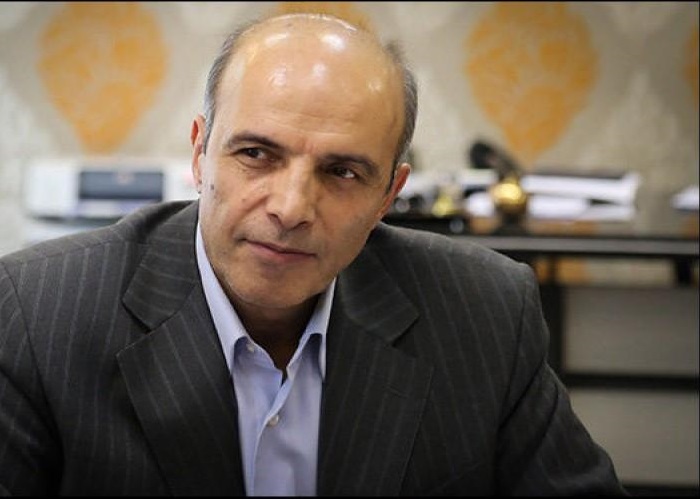
Social justice is being held captive by plunder, oppression, and inequality; in conversation with Saeed Ma’eedfar / Conversation with Siamak Malamhmoudi.

Dr. Saeed Ma’eedfar, a sociologist and former professor at the University of Tehran, who was also the president of the Iranian Sociological Association from 2004 to 2008, is now working as a social advisor to the Minister of Roads and Urban Development. Dr. Ma’eedfar has numerous publications and articles in Persian and English in the field of sociology. Some of his works include “The Foundations of Social Theory” and “Contemporary Social Issues in Iran”.
In a conversation with Khat-e-Solh, he expresses pessimism about the concept of social justice and prefers not to use it, as other terms are more scientific and less likely to be misused.
The following is a description of the conversation:
At the beginning of our conversation, I want to know your definition of social justice!
The concept of justice in its literal meaning is “placing everything in its proper place,” and in the Latin sense (justice) it mainly means that if someone is accused, they must receive a fair judgement, if innocent they should be acquitted, and if guilty they should be punished accordingly. However, since justice, like many other concepts, had a moral weight (especially among those who followed Islamic ideology, both before and after), this concept and other similar concepts were widely discussed, such as the oppressed or other similar concepts. These concepts, which were often used as slogans, not only were never achieved, but also turned against themselves. Nevertheless, we have seen how in the past years, the concept of the oppressed has been reinterpreted and anyone who thought they were included in this category has been excluded. This can also be applied to social justice. Social justice is not a scientific term, but rather has been mostly discussed in the context of ideologies and progressive or egalitarian attitudes, and is devoid of
My understanding from our conversation is that you have a historical and political experience regarding this concept, particularly from religious or leftist groups, and you do not have a positive view on this issue. However, what concerns me more is that the United Nations has designated February 20th as World Day of Social Justice under the framework of human rights. The definition we see in these documents is that there should be equal opportunities for citizens and a society free from discrimination. So, do you not agree with this concept or is this issue something different for you?
Even if the United Nations has raised the issue of social justice, it has more legal aspects than what we imagine. This means that we should not let the rights of a person, which are mostly security aspects, be overlooked in favor of economic and social obligations. So we have other concepts that can address the discussion of welfare and equality. But social justice probably creates conditions in which people cannot harm each other, meaning that the law can act equally among them and not allow anyone to be oppressed and deprived of their freedom (for example, in the areas of freedom of thought, freedom of expression, freedom in lifestyle, clothing and gender, and many other things). In my opinion, the concept of social justice should focus more on this rather than the ideological notion of equality in the economic sector or the absence of class discrimination.
Today, in our country, workers are protesting about wages and it has been reported that there may be a negotiation between workers and employers to agree on a minimum wage, and the legally required minimum wage may be abolished. Workers see this as unfair, or that religious, ethnic, and gender minorities have demands based on the current situation in Iran and are deprived of opportunities that a citizen should have. What is your opinion on this and what are the conditions in our country?
I use other words because I no longer have any interest in using the concept of “social justice” and the ugly face we have created for it. For this reason, modern terms that are more scientific, such as social policy, social policy-making, or human rights, are concepts that can at least explain the discussions you raised. For example, social policy or social welfare, which addresses class differences and differences in capital accumulation. We know that in the capitalist world, it was believed that if more accumulated production was created or if the hands of investors were opened for more investment and production, people would reach the same level of prosperity that we did not see happen. Therefore, from the early 20th century, when social policies, welfare states, social policy programs, and social policy-making were introduced, the discussion was about the fact that the higher the Gini coefficient, the more discrimination and economic problems there would be. Therefore, the Gini coefficient must be controlled, and social welfare, development
What I have realized so far is that instead of clinging to utopian ideologies and promises, we should be on a path of growth that moves society and humanity forward through scientific concepts and a scientific approach. Now that this situation has not been achieved for us and ideological domination has pushed us backwards, the question is what social changes and transformations are necessary for us to be on the right path?
The first step towards a true transformation is accepting our mistakes. Recently, I saw one of these former ministers linking the concept of social justice to ancient Iran and searching for these ideals in the past. Nowadays, these matters only produce disasters, as you can see in the Islamic world where the ideals that once led to the advancement of society and civilization have now turned into anti-civilization. My point is that before anything else, we must accept that we have entered a new world and we can no longer interpret a good life or build a suitable society with those old concepts and structures.
Now let’s go back to the new world, a world that is understood through the experience of knowledgeable and enlightened human beings who have strived to explain it, with precise concepts and structures. Now, if I sit on the pulpit of justice and someone else opposes me and plays with fabricated thoughts on this concept, the problems of our unfortunate and miserable society will not be solved on earth. While in every other field
One of the most important obstacles is political and another obstacle in my opinion is hindering the indigenization of knowledge and global achievements. For example, we usually like to turn human rights, psychology, and medicine into Islamic human rights, psychology, and medicine. I see this as a problem. What is your opinion on us trying to make this global scientific experience indigenous, Islamic, or Iranian? Is this even possible?
No, I am against nativization. Nativization is a form of harmful intervention. Nativization is a form of ideological policy in various fields. For example, if we nativize humanities, we want to nativize healthcare, these are interventionist and based on ideology and will mislead us. For example, decades ago during the Qajar period, Japan sent students to developed countries. They learned various universities, ways of life, economy, culture, and society, and returned. Without intending to nativize, they used everything they could in their country. For example, they saw that a certain organization was not compatible with their society, so they said we won’t use it for now, or they found a certain part to be very useful and used it. In practice, they were able to add to it and take a step forward.
Does it mean they looked at the functions?
In other words, they did not let all sciences and technologies pass through a specific filter, but rather implemented all the knowledge and technologies they had acquired in their own country. Some encountered problems and tried to fix them. For example, imagine they combined a type of Western industry with Japanese management and something new emerged, something even more beautiful. This is not indigenization. Instead, you use the knowledge and technology and then improve it during operation and use, adding something to it or correcting some of its aspects that have encountered problems. This is the continuation of experience.
Consider this: even in Europe or America, there is philosophy in Germany, France, and England. There are also other philosophies and knowledge in America, France, Germany, and England, but they are not the same and each has looked at the modern world from a particular angle. This angle goes back to its origin, namely Germany, England, and France. They reached something new from that angle. This is not about ind
In fact, in your opinion, interaction is the solution, not us making achievements or bypassing our own society’s ideological filter.
Yes. See, even these laws that we know as Islamic laws are not necessarily related to Islam. Many of them existed in other societies and were understood and utilized by the Islamic community at that time. Now we think that this is the end of time. No, many of these were adopted earlier, from Greece and North Africa or from Iranians. For example, they took such and such economic principle from North Africa and none of these values and laws are inherent to Islam. Of course, they say that the Quran has also confirmed many of these, so knowledge and experience are a global matter, not specific to a particular society, and everyone should use it. Isn’t it said in Islam “Seek knowledge even if it is in China”? Among all things, see the best and experience it, but do not look at it with your own ideological perspective, rather if you see it is appropriate, use it, if you encounter a problem in practice, correct and improve it, and in this way you
The final question that is critical is that, for example, we have a good experience in Northern Europe, as if we have experienced our own welfare state and society. What are the sociological and psychological differences between an Iranian and a person who experiences the welfare state in Northern Europe? What social damages does the situation we are experiencing have compared to successful societies?
It is impossible to compare an Iranian person to a European person. We can compare the current situation of our country to that of the surrounding world, but we cannot compare it to Europe and such a comparison is not necessary. You can see the most important international rankings and see where we stand. See where the inequality in our country is. See where corruption is. See where poverty is. Have you seen that our president is the last person who thinks about the economy of the people in our country? I don’t need to say these things because they are already known and published. Today, we have a very negative record that we cannot even present at a regional level. According to a twenty-year plan, we were supposed to reach the first place in the region in terms of economic, cultural, and social indicators, and compete internationally in some areas. But currently, our record is the worst in the region. This means that even if there were some positive aspects, they were mostly within the people themselves
Thank you for the opportunity you have given us to use the peace line.
 Created By: Siamak Molamohammadi
 March 21, 2021
Tags
Economic balance Justice in humanity Monthly Peace Line Magazine Number 119 peace line Saeed Maeedfar Siamak Malamhamedi Social justice پیمان صلح ماهنامه خط صلح ماهنامه خط صلح