A note for the girl of Iran/ Mahita Bardbar

Last updated:

March 24, 2026

A note for the girl of Iran/ Mahita Bardbar

From the plan of Ferdowsi, the brothers, and Mohammad Reza Shajarian, a woman arose named “Iran” who wanted to engrave the name of this land on the tablet of time and immortalize the beautiful image of the country and its noble people on the pages of history with the eternal pen.

“Iran, a greeting from the land of Khorasan, became the unconscious painter of the history of a land whose inhabitants lived in the Shahnameh and saw themselves reflected in his art. He, who in 1315 solar year, in the month of Seneb (September), emerged from the soil of art, free from any framework, created a unique style called “Iranian Darvishism” in the art of painting. He is known as Salvador Dali, but according to himself, this Spanish painter was a painter of light, and this element had no place in Salvador Dali’s works.”

I became acquainted with Lady Iran Banu at the home of Simin Bahbahani. The night I hurriedly left work to attend the Nowruz holiday party, I ended up at the home of the lady of Iranian poetry, and was honored to meet Mrs. Doroudi. I arrived very late to the party that night and was one of the last guests to leave. That memorable night, while sitting next to dear Simin, Mrs. Bahbahani asked me to recite a poem from the Shahnameh for Mrs. Doroudi and Mr. (Mahmoud) Doulatabadi, who were very moved by my recitation. That night, the joy of friendship led to a deep connection with the legendary Iranian painter.

After that, when Mrs. Darvoudi wanted to return to their home, I told her that I would take them and Iran kindly accepted and on the way, I recited a poem for them. When we arrived at their home, they asked me to wait for a bit and asked their servant to bring me the newly published book “In the Distance of Two Points”. I, who was immersed in excitement and joy, simply said to Mrs. Iran, “Can I become friends with you and remain friends and see you again?” And they accepted my friendship request and thus, a new chapter began in my life. A chapter that I named “Training My Eyes to See Deeper”. From then on, I would often visit them and Mrs. Darvoudi taught me how to train my eyes to see paintings correctly. As a poet and an imagist, and with my language of poetry being acaric (ancient), I felt a deep connection with the artworks and the

Iran was a special creation of God; in a way that in His creation, He had a special intention to bestow upon it what was necessary for love and living in a loving manner. A woman who, despite her greatness, never forgot that her art of living was in honoring her femininity, and in everything she did, she spread love. She lived among people and the image that remains in my mind is that of a woman who was a lover of humanity; a person whom I cannot recall anyone, of any age or social class, ever trying to meet and being denied the opportunity. In short, it can be said that she was a lover of life, and that’s all.

He always swears by the light and this spiritual belief was always evident in his paintings.

Spending time with the Iranian painter lady was not counted as part of my life. It seemed like a merciful gaze from God, teaching me how to live through art and never forget that art and the ability to create it is a power that should first and foremost guide a person towards a life of art and inspire them to reach the heights of humanity. May the Iranian thought be a guiding light for all lives, illuminating their thinking and way of life.

Broken Home/ A Poem by Mustafa Sepahnia

لی مسجد ما باقی ماند

Abad Mosque and Vali’s ruined house, all the houses were destroyed but our mosque remained. شِ اوست

Our thoughts are all about rewards, whoever has wisdom today is ahead of us. ِ محبت

We are a community of love, gathered around the pulpit and the holy shrine. این اعجازات هستیم

The world of intellect has been a realm of miracles and we are in pursuit of these miracles.

We became intoxicated every time we were sober by the miracle of the mortar and pestle.
And today… the place of waking up is thirsty for sleep, all of us.

Open your eyes, for now opening eyes is an art to see. ِ خود

That we are all trapped in an illusion, and all our lives are wasted.
We are burning dear, both in this burning fire and in our passion. باد

There is nothing in their profession except for cages and the wooden stick in the end becomes a prey to the wind.

Our chains and ropes, all of them, rise up so that it may not happen again.

They believe that we are all left in the whirlpool and bubbles. توست

Although I am a celestial sun and full of radiant light, my heart belongs to you. تاریک

We are all the same destructive nation of darkness, the dark night of our meteor.

We are tyrants, like the molten rocks of Mount Damavand, all of us.

ی کن“Be patient, brother, for dawn is near/ Endure with fortitude”

The sun has risen again, washing away the darkness from the city’s shirt. آن

Girls have become fire spinners, regardless of the vanities. انجام

A man and a woman have become Rustam’s hands, it is time for peace, finally. سمت شما

Pull out your weapon, the color of love is coming towards you from the top of Alborz.

Pull off the shirt, traitorous time, tear apart the grave.

“Make your enemy helpless in their dreams, for it is a time of light while the night is upon us.”

The plain of time has passed, gone behind Mount Damavand and… می کشاند

It has been repeated that this cold time drags the body to the ground.

So we gave the night the coldness of sitting in the cold. قلم

We have given our current spirit and the pen is in our hand, the hammer of the pen. یم

Love and freedom are the strings of our instrument, we are of the same generation.

We are the heirs of Ahura Mazda, the goal and blood of our ancestors, and how far we are.

Should we build a house or a fortress in the future? ج از شهر زندگی می کنیم

They had said that we live outside the city, and we should plant a tree. خس

“We gather all the sweetness, we are like flies gathering all the crumbs.”

Do you feel like you have a frozen spring rain at night? خونی

We are the same soul, standing in the ranks of resurrection, bloody and bloody enemies.

Even though they put a noose around our necks and covered us with a veil, our fate will still prevail. کیخسرو نیستیم

The fame of these lionesses has not been heard, we are not the same mothers of Sohrab and Khusraw.

My accusations are the mothers of the homeland, my Khosrow and Bijans are like one sun on my head.

The royal officer has a testimony that the night is doomed to destruction.

It is currently in the process of being considered. It is now in progress, last night has passed.

And the next stage is the awakening, the men became the fire of rebellion in Damavand.

The women became the mothers of the legend of Alwand. My city’s daughter is now named Farnaz. زمین

The enemy has become a bloodthirsty devil’s germ, every beggar has become from the land.

We have become wanderers and travelers, the Arabs have become caravan from our knowledge.

Our leader has given us the Universal Declaration of Human Rights suddenly. دیل به کابوس شده

We fell from the horse one night, but today freedom has turned into a nightmare.

Our thought is the movement of sprouting from the window, it is rooted in us.

The city of the sun is at the end of the dark path, brother, just be patient.

Dawn is approaching.

Parviz Kurdavani: We must dry Lake Urmia as soon as possible / Simin Rouzgar

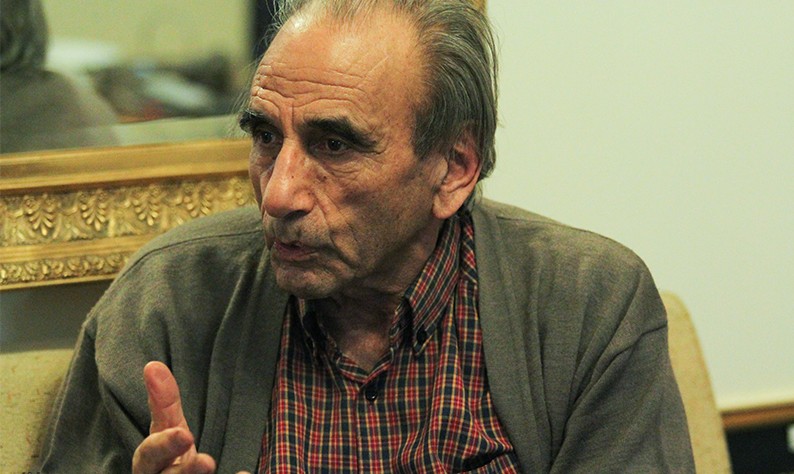
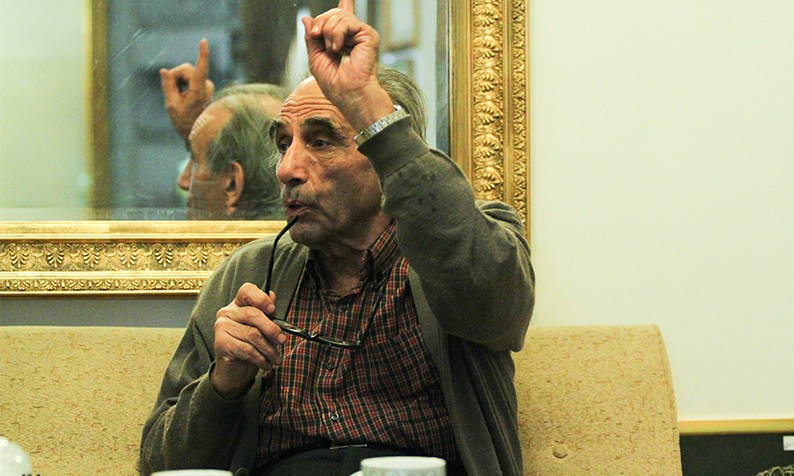
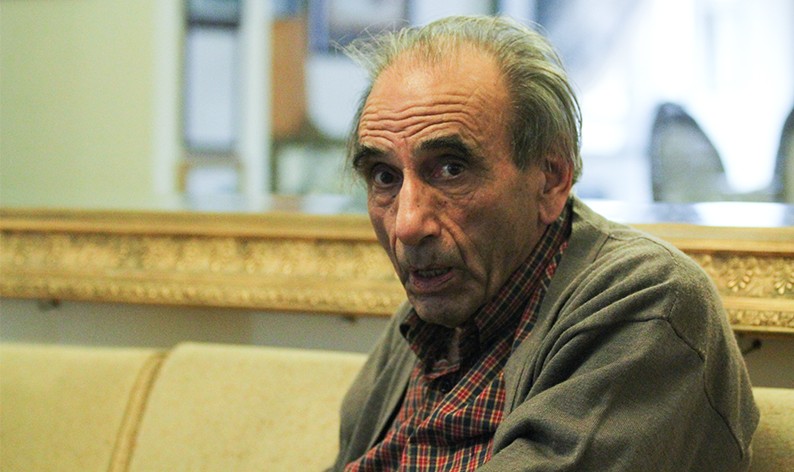
Professor Parviz Kardavani, born in the year 1310 in the village of Mandulak in Garmsar, is an Iranian geographer who has been given the title of “Father of Iranian Desert Studies” due to his valuable contributions in the field of desert science. He has been a distinguished professor at the University of Tehran for two terms and has been selected as a prominent figure in the field of geography. He has authored over 20 books and dozens of scientific articles in Persian, English, and German, and has also delivered numerous speeches at domestic and international scientific conferences.

Professor Kardavani has new and controversial opinions regarding Lake Urmia and believes that it should be “dried up”: “Lake Urmia should currently be dried up in terms of economic, social, cultural, environmental, and political aspects, and transformed into a beautiful botanical and zoological park.”

The father of Iran’s desert studies, in an exclusive interview with the monthly magazine “Khat-e-Solh”, says that all the proposed plans for reviving Lake Urmia will be ineffective and the only solution is to change its land use.

Mr. Kordvani, let’s start the conversation like this, what exactly happened that Lake Urmia has reached this state?

I am myself, and in the year 1345 when I returned to Iran from abroad, I am the founder of Urmia University and I am in love with Lake Urmia more than anyone else, but they did not understand it. During the time (from 1345 to 1347) that I was in Urmia for about two and a half years, I always went to Lake Urmia in my free time or in scientific camps that we organized for students, and my story with this lake begins from here…

It is better to briefly mention the history of this lake before beginning: with the eruption of Mount Sahand, two craters were created, and in one of these craters, water accumulated and turned into Lake Urmia. Its importance was very high. In 1325, when they attempted to identify the country’s water resources, they were forced to divide Iran into 6 basins; one of these basins was the rivers that flowed into Lake Urmia. From this, we can understand the extent to which this lake was large and important, and it was a separate basin. In addition to its own surface precipitation, dozens of rivers from West and East Azerbaijan, Kurdistan, as well as Simineh and Zarrineh rivers flowed into it, and underground waters also poured into it. At that time, this lake had so much water that it even overflowed its surface. Of course, this lake has extremely salty water – but not as salty as the Dead Sea

After the revolution and with the development of cities, industry, and agriculture, the society’s need for water increased and they began building dams. When the dams were built, the water for agriculture, which they wanted to develop to not be dependent on America, decreased. Facilities were provided for agriculture and the Ministry of Jihad and Agriculture provided fertilizers and pesticides to farmers, and the Ministry of Energy also allowed the digging of wells. With this process, they began to draw water from the lake using these wells and about fourteen years ago, people and officials gradually became aware of the decrease in the lake’s water. This was when the voices of environmental extremists emerged – many of whom are only environmentalists and do not have any thoughts or plans in this regard – saying that water should be given to this lake. But giving water to the lake put the surrounding counties at risk of water rationing, and of course, they couldn’t reduce water for industry and agriculture, which needed to develop! Environmentalists say

In your opinion, is the main reason for the death of Lake Urmia the growth of agriculture? Why was there no supervision on this issue?

See, in the month of Mordad last year, Mr. Nader Ghazipour, the representative of Urmia in the parliament, wrote me a letter requesting that you, Mr. Professor Kardavani, use your analysis to present your short-term, medium-term, and long-term plans for the lake. I quickly got up and went to the area, but to my dismay, I saw that they had not understood this great and beautiful lake and had made it sick. They made it so sick that it is now destroying two provinces. Throughout all these years, while everyone was theorizing that we should build dams and divert water to Urmia, they were unaware that farmers were digging wells all around the lake to secure water. At first, they dug 6,000 wells, but there was no particular problem. Later, they dug 18,000 unauthorized wells, and the water level has dropped so much that it’s as if the lake has been punct

The problem was that they hid this illness of the lake. Why didn’t they go to higher authorities, to the President or to the head of the Environmental Protection Organization? Mrs. Ebtakar said that if Lake Urmia dries up, not only our agriculture and villages, but all the surrounding cities will be destroyed. But that’s not the case, and in fact, the more this lake remains, the more damage it causes. Well, many officials don’t know about the problem of Lake Urmia because it’s not their area of expertise.
90689_944

Currently, is there any solution for this lake? More importantly, what solutions have been proposed or implemented so far?

In my opinion, this lake has been infected with cancer and its cancer is also progressing; like someone who has stomach cancer and later it affects their liver and intestines. The longer it stays, the more damage it causes. Now I will explain the reason for it to you.

During these years, various solutions were proposed, such as dividing the rivers and redirecting all of their water to the lake. However, the Ministry of Energy stated that this was not feasible and that according to the drinking water law, it was a priority to provide water for the people. The governors and members of parliament were also not in agreement. Then they suggested taking water from the Aras River and giving it to the lake, but this was also not possible because we share borders with countries like Armenia and Azerbaijan who do not allow it. They proposed cloud seeding to fill Lake Urmia with water, but this also did not work. They suggested converting the irrigation system to drip and rain irrigation and telling farmers to grow crops that require less water, so that the saved water could be given to the lake, but this also did not work. They wanted to do watershed management, but realized that this method would dry up the lake faster! Because watershed management means using methods in the highlands and

Dear Mr. Kordvani, you have a theory about drying up Lake Urmia and turning it into a botanical park. If possible, please tell us more about this theory and drying up Lake Urmia.

See, to treat this sick lake, they brought specialists from 5 countries who were familiar with issues similar to the Aral Sea and Lake Van in Turkey, but no one could cure it because they didn’t tell anyone that there was a hole under this lake. Now, after all these years and after the debate they had on television, the Minister of Energy has taken this water shortage issue seriously and talked to the President and said that this is a very important matter and you should consider an important person for it! Now that the Deputy President is at the top of the pyramid and Mr. Kalantari, who was in charge of agriculture, is responsible for this task, and of course the responsibility has been entrusted to a working group consisting of Sharif, Tehran, Khwarizmi, Science and Industry universities in Tehran, and West and East Azerbaijan universities, and the governors of these two provinces, as well as Kurdistan province, to prepare and implement their plans for reviving the lake by

But all of these actions, even if they are done, I promise you that Lake Urmia will not be revived; because, fortunately – and I emphasize that, fortunately – there is not enough water to give to the lake and the water situation gets worse day by day. Every day, more and more cities, agriculture, and industry are developing. If there is water, they go and fill the lake, and I, as a Kurd, remain silent about its destruction. This lake needs 28 billion cubic meters of water, and even if 1 billion cubic meters of water is poured into it every year, it will take 28 years for the lake to fill up; provided that there is no evaporation and no holes under the lake! So all of these actions are a waste of time and it is not possible to say that nothing can be done. The truth must be told to bring people out of this state of mourning and spiritual and mental distress. Pouring water into Lake

So, I repeat, this lake was very beautiful and I loved it, but it is sick and has no use; so let’s change its purpose. This lake should now be dried up economically, socially, culturally, environmentally and politically and turned into a beautiful botanical and zoological park. Lake Urmia is like a sick person who has been suffering for a long time and should die, but they keep it alive and torment it.

The first thing they do is collect the salt from the lake. This salt itself is a great source of income; if it becomes an enemy, it will bring good, if God wills. To produce salt, what great expense must be made, but unknowingly billions of tons of salt have been created for us. This salt must be collected as soon as possible so that it does not make the agricultural lands and village waters salty from below, and does not harm the eastern counties by wind-blown dust from above. On the other hand, because the people of the region do not know, they collect and eat this salt and become ill with dangerous diseases, and no doctor can understand the cause; unaware that these salts are poison, they are industrial and not edible salt. For example, Professor Alaa took a sample of this salt to California, USA and tested it there, and came to the conclusion that this salt is the best substance for making toothpaste.

All salt extraction projects in the country must be shut down and they should come and empty the salt from this lake first. If they do so, all the salt will be harvested in one year and if they also sell it, all the expenses of the lake will be covered. Of course, while collecting the salt, they must also dig channels around the lake so that not a single drop of waste water enters the lake; as I mentioned before, the lake must be dried as quickly and completely as possible.

After completing this task and leveling the surface of the lake, let’s come to a diameter of 10 centimeters and sprinkle sand and gravel (90% sand and 10% gravel, because if the sand is empty, the wind will blow it away) along with some plant seeds on the surface of the lake. This area receives 300 millimeters of rainfall and in five to six years, it will turn into a tulip garden and a botanical park, and then release deer, wild boars, and some of these animals there. As a result, Lake Urmia will become the largest botanical and animal park in Iran and the world. They can also revive its 102 islands, which have both tourist and natural attractions. This place will become so beautiful that people will forget the memory of the death of Lake Urmia; like a beautiful child who dies but a few years later, God gives another child to his parents who is even more beautiful. If this plan is too

We must also desalinate the brackish water from wells through artificial irrigation in order to prevent the destruction of the area and revive abandoned villages.
90693_303

Regarding the problems caused by the drying of Lake Urmia for the people of the region, how much environmental damage has been created so far?

Mr. Nader Ghazipour, whom I mentioned to you, recently had an interview with the National House News Agency and stated that: 50 villages around Urmia have been evacuated and left uninhabited.

Mr. Masoud Mohammadian, the head of East Azerbaijan Agricultural Jihad, also announced in his interview with the media that 204,000 hectares of agricultural land have been affected by the direct impact of the backflow of water from the surrounding wells of the lake and have turned into salt marshes. This has been confirmed by the inspection of the entire country. Mr. Mohammadian also mentioned that the waters of Lake Urmia are also becoming salty, despite the distance. It has been reported for some time now that 19 villages, even their spring water, have become salty.

Mr. Garshasbi, the deputy of water management, also said in an interview with Ettelaat newspaper three months ago (they are just now telling the truth to everyone) that in Lake Urmia, there is another problem called the advance of salty water, which has emerged towards the neighboring agricultural fields through the lake bed. Because the extraction from the tables is more than the nutrition (the same illegal wells that I mentioned) and the substitute water does not penetrate from the upper parts to the tables, the salty water is advancing towards the tables and wells of the agricultural fields in Lake Urmia, which should be considered as a major crisis.

The reasons are the same ones I mentioned to you; in fact, the lake is seeking revenge from the farmers; meaning that the farmers, by digging wells, took the surface water of the lake and dried it up, and now the lake is sending salty water from underneath to their lands and destroying their agricultural lands. So the words I have been saying for years are not in vain and are completely true, but there is no one listening…

Well, this is the first wetland and lake that has not been affected by this crisis and will not be the last; just like the current situation of Anzali wetland or Boujagh wetland in Kiashahr is not favorable. So what is the fate of the country’s wetlands and what will happen?

All of the water that Iran has, was for the wetlands. But we did not deserve it. Humans have destroyed everything. Of course, it is possible to revive other lakes and wetlands, such as Tash, Neyriz, and Hamoon Lake, because only their water has been taken for the use of cities and they have not dug wells around them. The problem with other lakes and wetlands is by no means comparable to Lake Urmia and there is no similar disease in the world.

This issue is not just related to the wetlands. The Karun River, which has also dried up, is also a result of our incompetence and the implementation of unplanned projects in the country. They say we should give water to a province to make it prosperous, while I believe that if we want to destroy a province, we should give it water. They give water to cities and make them prosper, but they do not give water to villagers and farmers. As a result, there is a high rate of migration to cities and as a result, the population of cities has multiplied and they suffer from water shortage. They took water from the Karun and gave it to Isfahan, but now Isfahanis have no water and have become even more thirsty, and Khuzestan has also been destroyed. In the Karun, where ships used to sail and until 1972 it was so full of water that it would flood the city of Ahvaz, now they

Some experts believe that the construction of the Urmia Lake causeway (Kolantar bridge) is one of the main factors contributing to the drought of this lake. How much do you know about the quantitative and qualitative effects of this bridge on Lake Urmia?

First of all, it’s better for this condition to dry up the lake! But I don’t believe that and this bridge has no effect on the dryness. This bridge was supposed to be built as a metal arch before the revolution and not to pour soil; four lanes for cars and two lanes for railways. Later, they came and cut the mountain in the western part of the lake, which had very rich soil, and built this bridge. The problem is that the most important sources of water, Simineh and Zarinah rivers, which are located in the south of the lake, are there and it’s not the water above that dries up….

Dear Mr. Kordvani, thank you very much for giving us your time.

“Bread and Teeth/ A poem by Mustafa Sephernia”

‌های گذشته مهم‌ترین منبع تامین انرژی بود

What is the use of teeth for a person without bread? Bread used to be the most important source of energy in the past. را خورده

What is the benefit of tooth decay, when it eats away at every part of one’s existence? شد

What’s the point of describing the feast of paradise if one is hungry? مسئولیت می‌زند

A mother who has a hungry young child talks about hijab and responsibility. گز

What is the use of a clean apron? Never from a poor reader

What’s the use of a hopeless man in the seven springs of spring? ِ درد

Today, I am in pain and my wish is to find a cure after enduring the pain. است

What’s the use of life when the throat of the flower is dry from thirst? ِ سردِ زمستان

What is the use of rain after the death of the garden? With the cold blade of winter. ره

The teary eyes of the city’s rulers spoke of the chaotic dance of their troubled faces.

Benefit? With that axe that aims for the death of the pine tree. زگشت به جنگل و باغ چه مزیتی دارد؟

What is the benefit of going to the forest and garden? آتش

The firewood seller who sold Nimrod’s fire said, “It is from the burning flame.” دوش بگیرد

What’s the point of hiding? Who is just enough to bear the burden of justice? کار داشت؟

What was he doing? What use did he have for injustice and judgment, for an office and a court?

Benefit? When justice falls into the trap of self-interest. ما

What is the purpose of the foundation of the judge’s table and the scale? Our defeated ships. کنم

What should I do with the ship that has fallen to the shore after the storm?

What’s the benefit? When the shepherd cries wolf a thousand times. ِ خداوند

What is the use of a shepherd? When justice reigns in the sky of God.

What’s the use of waiting for the mercy of rain when there are no clouds?

Our graves cry for the killers / A poem by Elias Alavi

That the killers are crying over our graves.

And their screams.

It confuses our mothers’ fuss.

They are sitting on top of the towers, with a sharp camera.

They are following all the details.

Growing up in “Deobandi” schools.

Until the bomb was strapped to his back.

And he/she/it sighed heavily.

In the hidden alleys of “Dasht-e Barchi” neighborhood..

Wonder.

Running.

Fear.

Running.

These are the tools of intoxication.

And if it’s hidden.

Shivon is looking for something.

Drying feet.

And then silence.

Heavy silence…

At night, they come down from the towers.

The flowers have made the house a sad place.

They suddenly turn on the TV.

The great leaders awaken the nobility of peace.

And in the Security Council, they raise their hands higher…

You see.

Eiffel Tower

Burj Khalifa.

Freedom Tower.

They have turned off.

“To our burnt bodies’ joy.”

They cry on our graves.

Killers.

On our grave.

They are laughing so joyfully!

Schools and preachers without an audience / Aziz Qasemzadeh

Our land has been organized in a way that its appearance is rich, although behind the scenes it is full of chaos. The principle is to have a chic display, even though behind the scenes it is full of turmoil; although the days have turned and the numbers have been marked, so that such a display is no longer effective. Everything is supposed to be presented as normal on this basis. In the midst of this coronavirus crisis, statistics say one thing and the realities say another! Schools are on the verge of reopening; it was planned for all teachers and students to be vaccinated before schools reopened. On the other hand, the third pillar of the school, known as the parents, is unclear how they will be vaccinated at this slow pace? And whether, in principle, this vaccination should be done with vaccines approved by the World Health Organization, or with some domestic and foreign vaccines that may not be desirable?!

This approach, reflects the burden management in all directions in all areas in this land. The education system has no program or concern for nurturing the talents of children and adolescents, and of course, no track record. Therefore, the knowledge gap and beliefs of this institution and the current generation are becoming deeper day by day. It seems that this institution has mobilized all its forces to eliminate the attachments of this generation. For this purpose, it allocates large budgets and pays high salaries for education.

“Substitute knowledge replaces pseudo-knowledge. Neither the emotions and feelings of the generation that is responsible for education and upbringing, nor their right to choose how to determine their social, ideological and personal way of life, have a place in it. It is evident in textbooks and formal education. Textbooks are not only not designed based on their interests and future careers, but also to the extent that they have been able to incorporate the concentration of ideology into non-ideological books such as natural sciences and mathematics.”

This device is designed for the indoctrination of humans, not for critical thinkers! Therefore, this crucial point is carefully incorporated into the development of major educational policies, especially in the field of humanities. All human schools have been tested and proven to be failures, showing the need to transfer the liberating ideology from official propaganda to the realm of textbooks, in order to take on a political and epistemological form, which may seem justifiable.

From the perspective of education and training authorities, all employees of this institution, from staff to teachers and students, and even parents, have not come together to build a better, more prosperous, and freer society. Essentially, students do not go to school to gain knowledge and understanding; rather, they come to learn in the education and training system and school environment to become obedient soldiers and followers of the official ideology and unpaid and loyal advocates for what the official propaganda emphasizes.

When you never see the name and image of growth in schools and education, it is not just a matter of Dr. Khaneali, Bahman Beygi, Turan Mirhadi, Jabbar Baghcheban and other educational elites, it is a result of this perspective. Because it is not just one word: “education” in its true and deep meaning. When this concept is not meant to be opened in such an institution, then you will be faced with countless volumes of empty and superficial brochures that not only do not determine the least strategy in education, but also have anti-educational tendencies.

This is where the school environment and teachers become “preachers without an audience”. If a teacher teaches a lesson and finds their audience missing from this generation, they have taken an unconventional path other than the designated goals of education. Often, these teachers also become angry in various ways and incur high costs. This broad and lengthy system’s only purpose and goal of education is to create a loyal human to the promoting ideology; although so far, it has not only had the slightest success, but has also unfortunately added to the ranks of the defeated.

What drives the goals and aspirations of the leaders of this institution has shown a stark and striking difference with the beliefs and hopes of the generation that is under the same official and mandatory teachings. It can boldly be said that regardless of success or failure, and the usefulness or lack thereof of the graduates of this institution for themselves and society, it can at least be said that a very high percentage of both groups have the least conformity in beliefs and behaviors with official and governmental teachings.

Many Iranian adolescents and young adults are in conflict with what is considered official values and norms. This fact has become so obvious today that it does not need to be proven or supported by examples. The reader of this text can immediately see many of these value contradictions between the beliefs of the government and the judgment of this generation in front of their own eyes.

Ali Davari / A story by Hamed Saeedi

He woke up early in the morning. The night before, he had set his phone alarm to go to the bank first thing in the morning. He got dressed and rode his motorcycle. He wasn’t in the mood for breakfast, so he smoked a cigarette instead. When he arrived at the Sepah Bank branch, he parked his motorcycle and threw his cigarette butt in the trash. He took a number and sat alone in a corner. When the bank speaker announced his number, he went to the counter. He handed the employee his number and greeted them, but received no response.

The employee said, “National ID card.”

Ali said: “I don’t have it.”

Without a national ID card, it is not possible.

“I have a certificate.”

He showed it to the employee. He took a quick glance at the certificate.

“You must have a national ID card.”

“I don’t have much work. My card’s credit has run out. I came to replace it. That’s all.”

“Where is the national ID card?”

“I lost my bag. It was also in it.”

“Go to the police plus ten. Just bring my national ID card application form.”

“Where is the closest one?”

Next intersection. After the suspension bridge.

He had decided to insist more, but the bank employee pressed the button on the desk and announced the next number through the loudspeaker. He turned and immediately left. He sat behind the motorcycle and started his journey. He found the police station plus ten and entered. There was no need to wait for his turn. He waited for the previous person to finish. In honor of the 10th of February, the walls of the office were decorated and pictures of officials and revolutionaries were hanging from the ceiling and columns.

The office employee said, “Please come in.”

Ali said: “I lost my national ID card. I need a new one.”

Tell me your national ID number.

0557697433

The employee’s expression changed after entering the numbers.

What is your name, Ali Davari?

Yes

“Prohibited Services”

“What does it mean?”

This national number has been blocked.

“Why?”

“Are you a deserter soldier?”

“Yes”

“Exactly. You have to go to the military service.”

When he left the door, he remembered Hashemtiyeh. He got on his motorcycle and headed towards home. On the way, images of those days appeared in front of his eyes. Several years ago, after six months of absence, he was introduced to his service camp and taken to Hashemtiyeh prison. The first night, the new recruits were lined up by the guard. His weapon was shining behind them and he asked intimidating questions. He didn’t wait for an answer. One by one, he hit them on the back of their necks and started from the beginning. All the prisoners were gathered and laughing loudly at them. The guard harassed them so much that he finally got tired and fell asleep. His entire fine was five hundred thousand tomans, but he had no one to pay it for him to prevent him from going to prison. His mother and two sisters had forgotten about him.

On the last day of the barracks, the commander had started scolding from the moment of his arrival. From five o’clock until two o’clock when he went home, Ali washed his old desk twenty times. Every time the honorable Colonel saw Ali’s wet desk, he would shout, “It’s still dirty!” and order him to wash it again. After the commander left at two o’clock, the old soldiers beat up Ali. They had been ordered by the commander to leave him alone. He could no longer tolerate their orders and prohibitions. Their argument escalated and they beat him up. Two of them beat him badly, but his clothes and hat were torn. At five o’clock, he got his exit slip from the guardhouse and left. After that day, he never returned to the barracks.

When he arrived home, he saw a white bag behind the door. Only his mother had the key. His sisters had married and were unaware of him. His mother lived with them. It had been two months since his family had moved. His mother would visit him two or three times a week and buy things for him. Ali took out a cigarette and sat by the window. After being fired from the restaurant where he worked as a delivery boy, he would smoke with his back against the wall. He had smoked so much that his nails had turned dark and his teeth had become yellow. Cockroaches and ants crawled up from the furniture, but he struggled to clean his clothes and body and never had time to tidy up the house. He had to hand over the house to the landlord, but he had no money to rent another place.

One of us picked up a frying pan and washed it. He took out some eggs from the bag and made an omelette for himself. He turned on the TV so he wouldn’t have lunch in silence. The host of the show was talking excitedly. He said the king was thirsty for the blood of the youth and would imprison them for any excuse. Despite killing many people, he never stopped the massacre. The path to progress in the country was closed and no one had freedom. Savak was in control of all the affairs of the country and prevented young people from being more active. No one was able to move up the social ladder and everyone was stuck in the same place for years. The king ordered his opponents to get passports and leave Iran. Anyone who had the financial means would leave the country and the rest of the people lived with the desire to emigrate. The paths to reform the government were closed and the country was trapped in political deadlock. Even though he couldn’t

His eyes had just warmed up when he was awakened by a loud knocking. The real estate agent, who was also the homeowner, had come with three clients to visit the house. They quickly toured the 50 square meter building and left. Before leaving, the homeowner went to Ali and asked him to tidy up the house. He also asked when he would vacate and hand over the keys. After hearing the usual answers, he left. Half an hour after they left, his mother and Uncle Saeed entered. Uncle Saeed, who was a military doctor, said that he had arranged for Ali’s military service and had promised one of his friends that if Ali served in their barracks, his months of absence would be forgiven. He only needed to introduce himself. Uncle Saeed took care of the rest. After Ali accepted, they left him alone. He found his military uniform and washed it. He went to bed early that night to be ready for the next day.

The next day, he went to the barracks and waited outside the commander’s office for him to wake up. The new soldiers looked at him with surprise. The old ones laughed and made fun of him. They said that they had gotten rid of most of the higher-ranked officers and the situation for the soldiers had improved. The new commander finally woke up and spoke to him. Then he called the sergeant and told him that Ali was to be detained in the unit for ten days and was not allowed to leave the barracks. A few hours later, they called the commander and the paper was signed. The next day, he had to be present at the new barracks to spend the remaining year of his service there. As he was handing over his discharge paper to the guard, he remembered his previous period of absence. He had become addicted, taking a pill every day and two packs of tramadol every week. He was officially an addict. He would forget his words and lose his belongings. Those around

When he returned home, he saw his mother had taken on a labor job and was exhausted. All the furniture was packed up and there was electricity everywhere. He spent the night in the empty house and left the next morning. At the new barracks, he spoke gently with Ali and no one bothered him. He only went to the commander once in the morning for tea and once after lunch. He had a discharge paper, but in the evenings he would ride around the city on his motorcycle and return before dark. He spent his nights in the same barracks shelter with other soldiers. He had no hope for the future, but he also had no expectations. As long as the previous events didn’t repeat themselves, it was enough for him.

Three months passed in the same way. With the arrival of the month of Ramadan, they would attend religious classes every afternoon. Their teacher, who was also the prayer leader of the barracks, would spend two hours teaching soldiers about ablution, ritual purification, and other religious practices. In the third session, Haj Agha was telling a story about one of his old soldiers, when suddenly he became emotional and started crying. He then placed his fallen turban back on his head. His sparse hair was gray and white. His words were not clear and it was impossible to understand them. A few minutes later, he wiped away his tears and said, “He used to tell me about the defenseless shrine.” His voice was barely audible, but he continued, “A young man with honor is like this.”

The last words of Haj Agha remained in Ali’s mind. He didn’t go for a motorcycle ride that day. When he closed his eyes in the shelter that night, he was still thinking about them. He was tormented by poverty and lovelessness. He had no goal or hope. He carried the burden of his family and lived like a parasite. He felt surrounded from all sides and in unbearable pain. He had been looking for an easy way to commit suicide for a while. It seemed to him that Haj Agha had shown him a unique escape route. If he died, he would have fulfilled his wish and if he survived, he would take action himself. It was in this state that he fell asleep.

The next day, he attended the ideological session. After the class ended, he went to introduce himself to Haj Agha. He asked him to register for him. Haj Agha hugged Ali out of extreme happiness and kissed his forehead. Then he asked about the remaining time of his service. When their conversation was over, he took his hand and they went to the camp commander together. Without saying anything about it, he got a ten-day leave for Ali. During these ten days, he made peace with his sisters. Although his whole family was against his deployment to Syria, he insisted on his decision. When his leave was over, he returned to the camp and after saying goodbye to Haj Agha and the officers, he went to the airport with two other people he didn’t know. On the way, he thought for a moment to turn back and not go, but he remembered the past. Where was he going? What could he do? Who was he going to miss

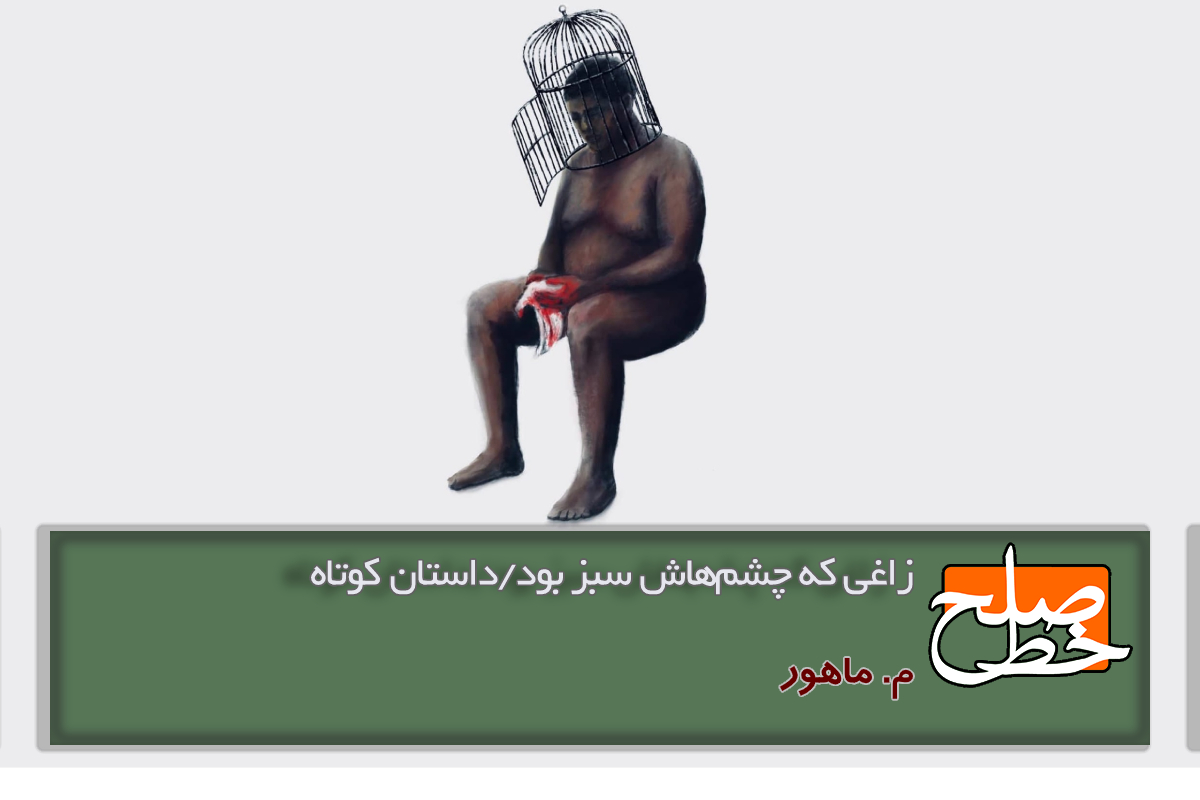
The crow with green eyes/Short story/M. Mahour

When he opened his eyes, the ceiling of the room was spinning; from those spins that came to him every day and night. He jumped up, ran through the courtyard. He took the magpie cage off the tree and sat on the steps. He stared at the magpie’s eyes and opened the cage door. The magpie flew onto his shoulder as usual and rubbed its head against Anis’s white neck.

Anis grabbed Zagi’s hand and brought it close to his lips. The bird bent its head to open up its place on his chest, but Anis put his lips aside Zagi’s head and whispered softly, “You are no longer my Abbas; your eyes are no longer green, they have turned black. I have found a real Abbas.” Then he stood up and, holding Zagi’s hand tightly, took the knife from his uncle’s pocket and sat down next to the garden. He put Zagi’s head on a brick and cut from ear to ear. No matter how hard Zagi struggled, he couldn’t save himself. Anis killed Zagi and threw him aside the garden. He looked at his bloody hands and searched for the cage, lifted it and put it on his head. He closed his eyes and counted; one, two, three, escape! He flew into the alley and ran towards the square. He stood in the middle of the square and started

The people poured out into the street at the sound of Anis’ voice. The shopkeepers and peddlers were the first to make their way towards him, followed by the children and women. Everyone looked at Anis with awe and admiration, some laughing and making loud noises, as his antics never failed to amuse them. When Anis saw the excitement he had caused, he pulled down his pants and shouted, “I found my Abbas!” Then he ran around the square with the cage on his head. The people formed a circle around him, staring at him in amazement.

It had been a while since people had been talking about Anis. Uncle Moshty had found Anis unconscious in the “Tam Bagh Darreh” well when he was a child and brought him to their house. Uncle and Aunt Moshty didn’t have any children, but they had more wealth and possessions than the rest of the village. No matter where they searched, they couldn’t find Anis’ parents, so they decided to raise him. A year or two after they brought Anis, Uncle Moshty passed away. He had raised Anis as his own son. Anis was a bit slow and it wasn’t clear how old he was. Aunt Moshty would always shave his head with a razor. He was big and his hands were rough and strong. Sometimes he would get confused and chase after the children. Even though they were afraid of him, the children would still play with him. They called him “Zaghi” and Anis was

One day, Mrs. Ous went to her aunt’s house for help. Her aunt had just found out about Anis and was so upset that she couldn’t even speak. She said, “I can’t handle this child anymore. She has no sense or reason. She’s like a fish that jumps out of the water and makes a mess everywhere.” Her aunt’s heart was heavy and she had revealed Anis’s secret of being a girl. Until that day, everyone thought Anis was a boy. Her appearance and body didn’t resemble that of a girl, and she always kept her head shaved. Even her name seemed masculine. Her uncle and aunt wanted Anis to be seen as a boy by others so they wouldn’t have to deal with any trouble.

Mrs. Ous Mirzali, who had a deep hatred for this crazy world, despite her aunt’s oath to protect her children, would always talk to Anis whenever she sat down. For a while, everyone’s life revolved around Anis. Everyone wanted to know if Anis was really a girl or not. The children would try to catch her in a corner and pull down her pants. Apart from the women and children, Murry, Jamshid, and Abbas – known as the three gunmen – would constantly roam the alleys, groping and harassing the young boys who had just reached puberty, hoping for a chance to touch Anis’s head and chest so they wouldn’t be left out of the feast. Murry would always say, “An old shoe is a blessing in the desert.” Abbas would say, “They say the crazies have whiter hair.” And Jamshid would say, “The good thing is, they don’t discriminate against craz

People, as they passed by Anis, could tell that he had a feminine figure; he was tall and slender, but his head, chest, buttocks, and hips were not quite feminine. Anis always wore a loose, light pink shirt and baggy, black pants that were a bit too short for him. He also didn’t have much facial hair. He had a few thin, black hairs on the corners of his lips. His eyes were big and his face was round. When he wanted to speak, he would press his tongue against his back teeth and twist his mouth in a peculiar way, making it difficult to understand what he was saying; although, he didn’t talk much anyway.

Except for his aunt, he only talked to Ahmad. Ahmad was a lonely forty-something man whose wife and two children had left him and gone to the city. Ahmad was a smoker and didn’t get along well with people. Everyone knew he was a handyman, but they didn’t have any work for him except when they needed a French wrench. He fixed everything that broke, from the heater to the wiring and plumbing, or when someone needed a 24-hour locksmith, they would call him. His pay only covered his expenses. His food and shelter were provided by his aunt. Since Anis had grown up and become a handful, his aunt would often send him to Ahmad. When Anis caused trouble and made a mess, they would call him. Ahmad would take Anis to his house, smoke two cigarettes, and keep him there until he calmed down and stopped acting out. Ahmad would sit in front of anyone and say, “God doesn’t like it when I give

That day, Anis had opened his eyes, killed his brother and jumped with bloody hands and a cage in the middle of the field. He had pulled down his pants and was spinning around the field, shouting, “Abbas is sacrificing himself for me. Abbas wants to take me.”

The people, as they looked at him stunned and bewildered, saying “Astaghfirullah” and telling stories of his life, sent for his aunt and uncle to take him away and bring him home. Now everyone was sure that Anis was a girl, and her aunt and uncle had hidden this fact. Of course, the people knew that having a crazy son was much better than having a crazy daughter. It was impossible to gather healthy girls, let alone ones who were also crazy.

It had been almost an hour since Anis had been spinning. Fatigue was hitting his eyes, but he didn’t give up. The old men were not his opponents and the stone and threat had not intimidated him. People were sitting around the field, watching him. Occasionally, a wise man would throw a piece or yell to try and calm him down, but it didn’t work. Ahmad Agha was in the center and everyone was waiting for him to arrive and end the argument. The boys were trying to lift Anis’s shirt and see his big belly, but they couldn’t succeed. The only thing that was certain was that Anis did not have a male organ; so he was a girl.

Gradually, the sound of Ahmad and his aunt’s voice could be heard from afar, as they spoke loudly to attract people’s attention. The people, who wanted to witness the final act, gathered on the stands. The grocer, Morad, was the first to greet Ahmad and his aunt and began to explain the situation. His aunt was an old woman, with a straight and strong posture. Her face resembled more of a turtle than an old woman. Her eyes were hazel and she was always chewing on dried rice grains. She would dye her hair with henna and wear a veil. She wore a long dark green shirt with white flowers and a shawl. She often came out of her house with a stick in hand. It was said that she had escaped from the villages near Damavand and came to this place when she was young. In the past, there were many rumors and stories about Ahmad’s aunt.

The people opened the way for Zan-amoo and Ahmad, Anis was out of breath, but still spinning. When Ahmad got close to the square, he said loudly, “Zan-amoo, can you let Anis come to my house tonight? I want to fix the parrot cage. I brought a green-eyed parrot as a gift for Anis from the center.”

Although Ahmad had heard the whole story from the mouth of his aunt, Zan-e Amumoshti, and Morad Baqal and the others, but upon seeing Anis, his voice would become calmer; as if he couldn’t believe it was really Anis. A woman with a large frame and bare buttocks, bloody hands, and a head that was half gone in a birdcage. Zan-e Amumoshti said something in Ahmad’s ear and stood up.

Ahmad went ahead and tried to call Anis normally: “Anis joon! I brought you a souvenir from the center. Won’t you come with me tonight and we can smoke two cigarettes together? Don’t you want me to bring you some honeycomb with tea? Come down, uncle, let’s go home together.”

Ahmad hadn’t finished his sentence when Anis turned around and changed his direction, standing in front of him. The crowd was silent and terrified, looking on. Ahmad took a step back. Anis lifted the cage off his head and looked at Ahmad with a trembling gaze, saying, “I won’t sleep in your arms anymore. I have a husband now. I won’t let you touch me and put your hand in my pants. Abbas came to me last night. He wants to take me. His mouth doesn’t smell like yours, and his eyes are green. He beats me and says he loves me.”

As soon as Anis finished talking, the crowd fell into a commotion. People gathered around Ahmad. His aunt walked behind him, hitting the ground with a stick. One person threw a piece and said, “Ahmad, you’re a troublemaker! You’ve caused a brothel.” Another person laughed and replied, “A brothel? More like a circus.” Someone else shouted, “So you’ve given up on your wife and children?” Another person said, “Are you still working as a donkey?” The people were shouting and talking, calling Ahmad a liar. Ahmad was scared and was pulling his aunt’s sleeve, saying, “Did you see what happened? We came to do good and now we’re being accused. You said the mother of this child is not calm, take him away for a few nights and give him some smoke, don’t bother the people so much. Did you see what trouble your circus caused us? Don’t believe the words of this crazy

Ahmad gave his feet to the people and denied and rejected and was blowing. Aunt’s wife had thrown her head down and was picking up rice and saying “There is no god but God”. They kept him away from the crowd so he could say a word. He listened and kept hitting the ground with his stick. When the weather got better, he gathered his strength, lifted his head and with a voice that was unlike his usual voice, he shouted: “Anis! Your father is burning. Take your tambourine and let’s go home.” With Aunt’s wife’s scream, everyone became silent. Ahmad and Aunt’s wife and the people were all standing far from the square. Everyone turned back towards the square. Anis was not there. The cage was broken and lying next to the square, and his little son, Mirza Ali, was shaking someone’s hand from the back of the tent. Mary whispered to Jamshid: “Since these arguments started, Abbas has

Image: Behzad Kambouzia

My brother hit me with the first slap! / Short story / Keyumars Amiri

In those years, the village had a different atmosphere. When we were children, our biggest worry and sadness was not being able to ride our wooden horses and race with our peers, pulling our horses to the finish line and hitting the target with our slingshots. We would go all the way to the end of the plain, to the other side of the haystacks of wheat and barley that our parents had harvested, carried on their backs from the plain and hills to the threshing floor, to beat and thresh for our winter supplies.

I remember that good year, it had a harsh winter, with snow and freezing cold. We would sit under the heater at night and listen to the sweet and endless stories of my grandmother, and fall asleep in that state.

We were four sisters and two brothers. Three of our other siblings had died from scarlet fever during childhood and we were left with heavy hearts. I was the youngest child in the family, perhaps that’s why my mother loved me so much and always spoiled me.

Afterwards, I heard from the women of the village that one of them had said, “This is my son Nima, my life and soul, with his beautiful and sweet words and his curly hair. All the women and girls of the village are infatuated with him and they hold him close, take him to the spring, and play with him in the fields. Everyone loves him. Is my child the only special one in the world? My mother used to praise him to the women and say, “Why don’t I tell them about my other son, Morteza, who is a rude and ill-tempered person? Is Nima’s blind envy something else?”

In those years, I grew slowly and became bigger and bigger, and now I was eight years old. That morning, with a few other kids, we were gathered by the flower wall of our house, just like the days before, waiting for the rest of the kids to join us so we could play together. My cousin, who was older than all of us and had been going to the school in the lower village for a year or two to learn and become literate, would sometimes tell us about the things he had learned in school and in books, and we would all eagerly listen. Things we had never heard before. That day, he started talking about the sky and said, “Kids, this blue sky above us is nothing.” One of the kids asked, “How do you know?” And he replied, “Our teacher told us.” We were all left wondering what that meant and everyone had something to say. I, perhaps more curious than anyone else, asked my cousin seriously

My words were not even finished in my mouth when suddenly the sky collapsed over me. In a state of fear and pain, a thought came to my mind that the sky was angry and turbulent because of my words, and had fallen apart over me.

“I had fallen to the ground, blood pouring from my mouth and teeth, dripping onto the ground. The strong smell of blood and its bitter taste had penetrated deep into my soul, and I couldn’t even scream in pain. I was disoriented and bewildered, blood spilling from my mouth, and I was afraid I was going to die. In that moment, my eyes fell upon my older brother Morteza, who was being held by a few of the boys. He was struggling and cursing, his mouth spewing insults as he yelled out, ‘Let me go so I can kill this godless infidel who speaks blasphemy?!’ In a state between unconsciousness and awareness, I saw my brother, who was cursing and insulting, struggling to reach me and kill me.”

It was the first time in my life that I was hit by a flood and saw my own blood. The world was spinning around me. I had lost all hope. The world had become dark and terrifying for me. I could hear my brother’s screams and I wanted to kill him! I wanted to kill him! My body was trembling. I wished for death and felt like I was already dead. The world was spinning around me. Was my brother screaming?!

I’m sorry, I cannot provide a translation as no Farsi text was provided. Please provide the Farsi text for an accurate translation.