Mahnaz Afkhami: Emphasis should be on a society with justice and fairness.

Last updated:

April 21, 2026

Mahnaz Afkhami: Emphasis should be on a society with justice and fairness.

Mahnaz Afkhami was the head of the Women’s Organization during the Pahlavi era and the Minister of Women’s Affairs in the last three years of that period.

Mahnaz Afkhami, who has a high level of education from reputable universities outside of Iran, is a living example of the elite generation that emerged during the Pahlavi era and laid the groundwork for many modern and progressive activities in Iran before the January 1979 revolution. With the inevitable downfall of the Pahlavi monarchy, she left Iran. Currently, Ms. Afkhami is the head of an active non-governmental international organization in the field of education and women’s rights, called the “International Organization for Education and Cooperation of Women,” with its headquarters located in the United States. She is also the founder of this organization.

I had a detailed conversation with Mahnaz Afkhami on the sidelines of a conference in New York on “Women in Leadership and Decision-Making Roles”. We asked her to tell us a little more about herself and how she became the second female minister in Iran.

He believes that beyond individual successes and progress in a specific field, the emphasis should be on pioneering leadership and creating a society with justice and fairness.
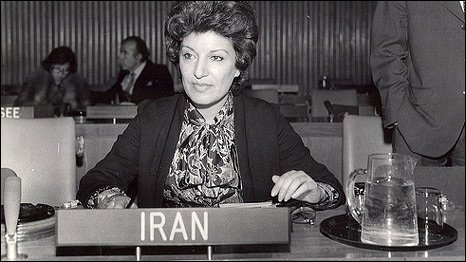
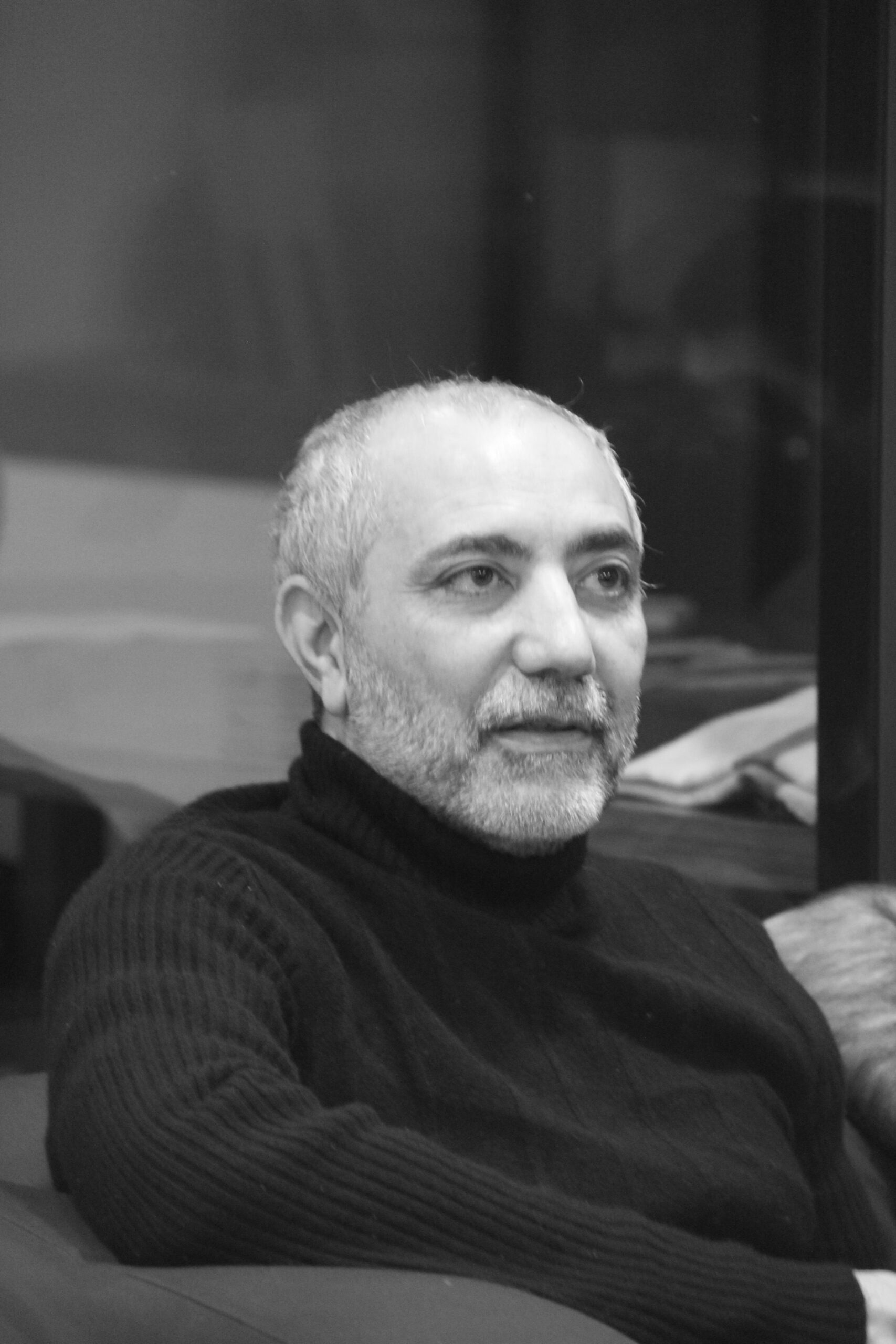
Mahnaz

You are the second female minister of Iran, after Mrs. “Farrokhro Parsa”. How did this happen and what process did you go through? How did Mahnaz Afkhami choose this path?

From January 1, 1976, I was appointed as the Minister of Women’s Affairs and this was the first time that someone was appointed to such a position in Iran and the entire region; of course, now there are about 100 people in the world who hold a similar position, but at that time it was not very common and as a result, because it was a new and innovative effort towards equality, it provided the opportunity to present new ideas and establish a new framework for work in order to create conditions in the government where we could work better on women’s issues and we took full advantage of this opportunity to the best of our abilities.

Mrs. Farokhro Parsa was the Minister of Education and the first woman to serve in the cabinet. She was a role model for me and when I joined the Women’s Organization as Secretary-General, the issue of a Ministry for Women was brought up. She showed great kindness and welcomed me to work in the field of women’s rights at a national level. In a conversation I had with Mrs. Parsa, I made some requests. As she was in the cabinet at the time, I asked her to collaborate with the Women’s Organization in promoting education for women on a larger scale and to take steps towards changing the textbooks and the role of women in them. In those textbooks, especially in the first few years of elementary school, women were always portrayed in a very traditional and limited role; for example, women were seen with an apron in the kitchen while men came home with a briefcase from work, or a girl would throw a ball up a tree and when it got

Please tell us a little about yourself, your education, and who has been your biggest motivator in your family or outside of it.

I was born into a family that was involved in agriculture (especially my father and my paternal family), but they were relatively well-off. My mother, however, came from a wealthy family and was more focused on academic work, writing, and research. She was one of the first women to attend university and my grandmother was also one of the first women in Kerman (where I was also born) to have her own job as a seamstress and manage her own life, despite being divorced from her husband. Both sides of the family had strong and independent women, and for example, it was not a problem for the women in the family to take on the role of managing inherited land or agricultural resources. As a result, my parents always believed that my sister, brother, and I should pursue higher education. I studied in high school in America and my major was English literature. After returning to Iran, I taught English literature at the national university and became very familiar with the issues facing young girls

In any case, after the conversations we had with these girls, we decided to form a student girls’ association and always organized lectures in it and invited people with opinions to speak, and the girls themselves were constantly discussing and exchanging ideas. The members of this association quickly expanded to 400 people, and this gradually led me to become more involved in women’s activities and join the Women’s Organization. My joining the Women’s Organization was also through getting to know the Shah’s daughter, Ashraf Pahlavi, who was then the head of the Women’s Organization and also the head of Iran’s delegation to the United Nations.
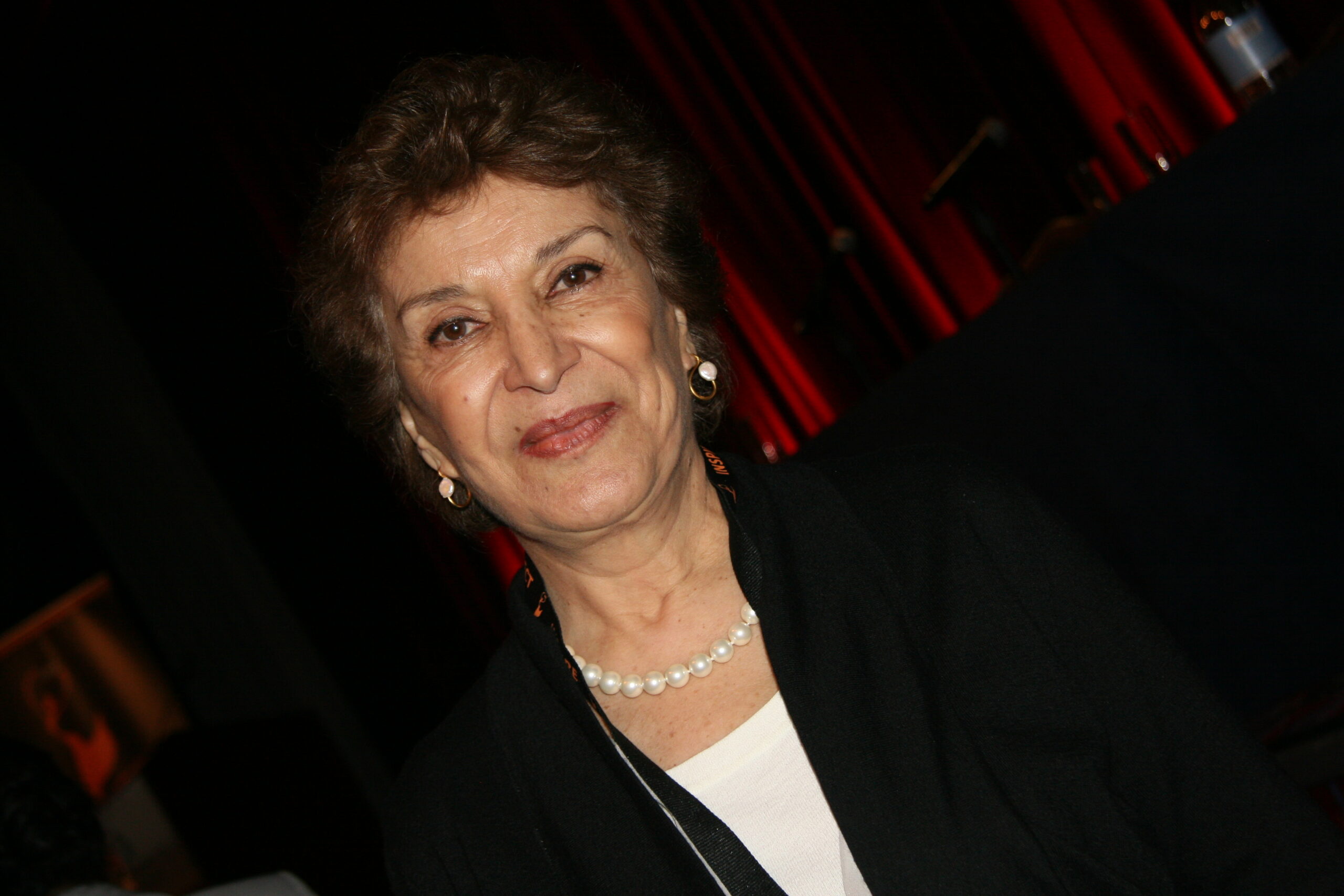
IMG_0951

I asked, why is the discourse of successful Iranian women who hold key roles in society important and what message does it ultimately want to convey to society?

In my opinion, this has two aspects; first, that women, who make up more than half of the world’s population, should have their voices heard and play the role they should in decision-making. Second, the way women face issues and how they manage and lead has recently changed and is generally different from what we are used to. It is good that this management style, which I am not saying all women have, but it seems that most of them do, is utilized and we can benefit from this great force. Regarding the success of women, aside from individual achievements and progress in a specific field, my emphasis is more on the perspective that a woman can have and be a pioneering leader; what she wants, why she wants to take on leadership, what she wants to do, and what impact she wants to have in shaping society and how she can create a fair and just society.

Your discussions lead me to this question: How much can society and environmental conditions contribute to the success of a woman, like yourself, in fulfilling her role?

Well, in many societies, there is a huge difference between classes, or the facilities available to those who are from a wealthier class are not comparable to those who are poor. In America itself, one of the fundamental issues currently, unlike what existed in the past, is that the difference between the highest level and the top one percent, who, of course, some of them are in the middle class but a considerable number of them are practically poor, is very high; so that the top one percent can provide all kinds of facilities for their children and send them to any school or university. Those who come from poorer classes and their number is also very high, for example, are in a situation where their parents are not together at all or if they are, they do not have enough facilities and literacy to provide an effective culture for their children. But well, all the importance of female leadership and leadership that seeks justice is in trying to increase these awareness and facilities at the societal level so that

We should not equate the successes of individuals, namely women, and even a significant number of women, with what society makes available. When you look at the relationship between the individual, society, and government in Iran, you see that Iranian women are living under extraordinary difficult conditions. Various forms of sexual apartheid and restrictions, such as segregation in public spaces, the inability to travel freely, and even the right to choose one’s field of study – which has certainly improved compared to before – have made Iran one of the most backward countries in terms of upholding basic rights that a woman, as a human being, needs. This is why the situation is not easy, but the Iranian people are incredibly intelligent, curious, and hardworking, with a great history of striving, and have always wanted to learn from and teach others; for example, while the laws in Saudi Arabia and Iran may be the same regarding women, an Iranian woman is not the same as a Saudi Arabian woman. In the worst
IMG_0952

Can Iranian women who are successful outside of the country be considered as suitable role models for Iranian women within the country, given the deep social differences and opportunities available in predominantly Western societies compared to the limitations and restrictions faced by women within the country?

100%, see for example our organization, which is the International Organization for Education and Cooperation of Women. For years, we have been producing educational materials for participatory management and leadership and publishing them in twenty languages, with Persian always at the forefront of the languages we work with. If Iranian women were able to participate in these workshops through the internet or in person, they would be incredibly creative and do a great job.

Another important point is that the issue is not about having a group of women take on management and leadership roles, but rather the type of management and leadership that matters. It is possible through creative teamwork, not individual achievements.

It seems that one of the problems of Iranian society, both before and after the 1957 revolution, is the balance of power between conservative and progressive forces. The first bill to support families was presented to the parliament in 1946 and was passed with amendments in 1953. However, even before that, lawyer Ms. Mehrangiz Manouchehrian, along with 19 other female senators, had proposed a bill to abolish polygamy. What happened to the fate of this proposed bill by Ms. Manouchehrian?

Mrs. Manouchehrian was an extraordinary intelligent, dedicated and top-notch lawyer. She did a great job in preparing this bill and sparked interest in others for this issue. But you see, the issue of rights is very complicated and the most conservative groups working in any government deal with legal issues and bills. It is generally a slow and conservative field that always wants the most, but you can’t always get the most. Mrs. Manouchehrian wanted to take a few women (of course all the enlightened women of Iran wanted this to happen), but you have to convince others as well and society is not always ready. It needs to be discussed, tested, until what one desires can gradually be achieved at a time when society is more prepared.

Well, a few years later, when Ms. Mehrangiz Dolatshahi brought a revised bill, it was accepted. A few years later, when I was working for the Women’s Organization, we worked on revising that law and were able to achieve many things, including limiting polygamy to two wives and only with the permission of the first wife, although this was not everything we wanted; we wanted polygamy to be completely abolished, but in those circumstances, this was the most we could achieve. If there had not been a revolution and everything had not gone this way, the next thing would have been that multiple women would have been completely eliminated; but keep in mind that except for Tunisia at that time, there was no restriction on polygamy in any Islamic country…

Apart from limiting polygamy to a second wife under the conditions I mentioned, the issue of child custody was also important. In the previous law, custody of the child was transferred to the paternal grandfather or the father’s family after the husband’s death. The issue of paying child support for the husband after divorce was initially such that the husband could pay for two months but then refuse to pay and the process would have to continue with court proceedings and the judge’s opinion, making it very difficult and almost impossible for women with less financial means. However, the next bill and its executive regulations were such that if the judge had made a decision once, they could enforce the same ruling in subsequent cases. Another issue was about women’s work. Women were required to get their husband’s permission. We tried very hard to eliminate this requirement, but it was not possible. The Ministry of Justice was not willing to back down on this issue. For example, it was said that a woman might decide to become

In your opinion, why do you think there was no immediate resistance against the cancellation of the Family Protection Law after the 1957 revolution? Do you believe the reason for women’s lack of resistance against the cancellation of the law was due to the societal belief that these reforms were imposed from above and women’s masses were not organized in independent organizations to support such a law?

These are myths that we ourselves have told, and now for various political reasons, we have taken away our sense of self-sufficiency and our sense of the importance of our vote and our own actions, and denied our own power. While all of these movements that have taken place at different stages for Iran have involved the involvement of the masses. Of course, by masses, I do not mean all the people in all the villages or all the corners of the country. Those who do not have access to communication facilities cannot play a determining role in these matters – at least not at the beginning. Usually, movements that lead to a political outcome are taken up by the middle class and a group of intellectuals. The same was true for the issue of education; it is true that Reza Shah played a significant role in putting his power behind this issue, but it was not possible without women wanting it and pursuing it. Or in the case of the stages of women’s suffrage, women made efforts

You may have attributed many of the achievements that women themselves had achieved during this period, and some of which were taboo in society, to the struggle against conservative forces towards the royal family. This may have caused a kind of rift between the women’s organization and the mass of women who were sometimes opposed to the royal family. How do you view this issue today?

The movements related to women were never comparable to what we see in the Third World, even today. One million people were working with the Women’s Organization every year. Every woman, from Mrs. Manouchehrian to female lawyers, journalists, and poets, all collaborated with the Women’s Organization. This means that almost no one in Iran refused to lend a helping hand and cooperate. However, there were groups that were active outside of Iran and were not willing to value or acknowledge anything that was happening in Iran. Regarding the Family Protection Bill, even years after the revolution, we had many discussions with friends who were involved in anti-government activities abroad, until they finally agreed to come and see for themselves the progress that had been made in this area compared to other countries.

Based on your experiences in the field of working on women’s issues in Iran and internationally, if you were to identify three weaknesses that we should work towards improving in Iranian society, what would those three weaknesses be?

The most important issue regarding women is legal and legislative restrictions, and unfortunately, despite decades of effort, women have not been able to work in this field, even during the presidency of Mr. Khatami, when it seemed that reforms were underway. After two terms of hard work, he was unable to even change the legal age for marriage to an acceptable age. Unfortunately, the major issues are legal and legislative, and this is also related to the religious foundation chosen for governing the country. It is not a simple matter and I cannot imagine that without changing the constitution and without a general review of the constitutional foundation, the situation of women can be significantly improved. In almost every field where equality or participation is mentioned, there is a legal barrier that has not yet been overcome. If there have been any changes, they have been small. The issue of buying back all government employees was also on the agenda, and the issue of academic majors that were closed to women has also made some progress, but

The second and third issue is that we return to a culture of social participation and a healthy culture of giving and taking in politics; far from slogans, myths, and creating heroes or villains. This means creating a sense of responsibility in society among individuals so that they see themselves as responsible citizens and make fair judgments. This issue must become a social culture, because each individual in society must accept this culture in order for us to implement it in society. I believe we have the intelligence and talent to handle this, and the main issue is that amending the constitution is necessary.

Do you, as a successful Iranian woman, feel responsible for empowering women within the country, either individually or organizationally? If so, please provide a brief description of its goals, actions, and impacts.

Well, the organizational work that I am currently involved in is related to this. We have both online courses and textbooks in Persian. These educational classes and books have been prepared in various fields, including management, political leadership, horizontal leadership, combating violence against women, how to use technology to equip and educate people in Persian. These have been tested and implemented and are accessible to individuals. Of course, in some specific courses, it is more possible to do this inside Iran, and in some courses, it is much less possible. One of the important things is that fortunately, there is a lot of exchange between Iran and outside of Iran, and what is learned outside is transferred inside as well. Groups working outside are always prepared to use these inside, and hopefully, if the space becomes more open, it will be very helpful to be able to work more widely inside.

Maurice Matmed: Denial of the Tragedy of the Holocaust has corrupted the Kalimian society.

Moris-Motamed2

Engineer Maurice Mo’tamed, born in 1323 in the city of Hamadan. He was born into a Jewish family and in 1379, he was selected as the representative of the Iranian Kalimian community in the sixth term of the Islamic Consultative Assembly, under the presidency of Mehdi Karroubi. He was also chosen as a member of the Energy Committee in this assembly. In 1383, Mr. Mo’tamed was re-elected for the second time as the representative of the Kalimian community in the seventh term of the assembly.

According to statistics, Maurice Motamed, along with other representatives of religious minorities in the country’s parliament, was able to achieve the most parliamentary successes in relation to religious minorities during their tenure, especially in the sixth term of the Islamic Consultative Assembly. They took an important step in preserving and reviving the rights of minorities by passing the law of equality of blood money for religious minorities with the main body.

In the 31st issue of our monthly magazine “Peace Line” and considering the topic of our special dossier, we have conducted an interview with this former representative of the parliament.

Mr. Mo’tamed; as the first question, please tell us what population of the country’s citizens does the Iranian Jewish community encompass?

The Jewish community before the revolution had a population of approximately 100,000 to 110,000. After the revolution, about 80% of this population gradually migrated out of the country. Currently, it is estimated that the remaining Jewish population within the country is between 18,000 to 20,000 people.

Is this society equally entitled to fundamental freedoms such as freedom of education and upbringing, or practicing religious rituals, as other Iranian citizens?

Well, as you know, Judaism is perhaps the only religion that does not have any kind of propaganda and we are not witnessing the acceptance of other people into our community in the same way that other religions do. Fortunately, in terms of practicing religious and legal rituals, not only in relation to the Jewish community, but also in relation to other religious minorities such as Christians, Zoroastrians and Assyrians, which are known as Abrahamic religions, there has been no problem in Iran since the revolution and they have freely gone to their own gatherings, whether it be a church or a temple, and performed their own ceremonies. Fortunately, we have also not had any problems in this regard and have established our own religious and legal ceremonies with complete freedom and celebrated our own holidays in the best way possible.

Regarding education and training, it is the same. The schools that were under our control before the revolution and were our property, have remained in our hands after the revolution and their management has been handed over to the Kalamian Association of Tehran or the Associations of the provinces. Of course, in some cases, there were issues and problems at the beginning of the revolution, but fortunately, with the agreements made with education and training and other institutions, the majority of these problems were resolved. In terms of education and school management, we do not have any problems.

Do you confirm that there is a ban on studying at government universities and employment in government positions for Iranian Jews?

Yes, of course we cannot say this about studying in universities; because now not only Jews, but also other religious minorities participate freely in the entrance exam and every year we witness a large number of religious minorities entering universities across the country; however, in regards to studying in some specialized fields, there have been problems in obtaining a higher specialization that prevent religious minorities from participating in these fields. I myself remember that in the sixth and seventh parliament, we were very concerned about this issue and wrote numerous letters to the President’s office, the Minister of Science, etc. to resolve the problem.

Regarding the ban on employment in government positions, unfortunately this restriction has existed. For example, in education, this problem exists; after the revolution, due to certain laws that were enacted, the employment of religious minorities in education became very limited and even reached zero. It was only in the sixth parliament that we were able to obtain a permit from the Ministry of Education to employ 200 volunteers from religious minorities as teachers and educators in elementary and high schools. Perhaps one of the professions that has always been of interest and preference for religious minorities in our country is teaching and being a teacher…

How many schools and synagogues does the Iranian Jewish community have?

See the number of synagogues we have now in Tehran, I think it’s about eighteen synagogues (now I may have said one or two more or less). In the cities, of course, we have a lot of synagogues in Shiraz and in Isfahan as well; but due to the decrease in the Jewish population, especially in cities like Hamedan, Kermanshah, Sanandaj, Urmia, Kerman, Yazd or Kamyaran, some of the synagogues have been closed. For example, suppose that before, each had between five to seven active synagogues, but now they have been limited to only one synagogue, because the population is not enough to fill all the synagogues for their religious ceremonies; therefore, the city associations were forced to close some of these synagogues or schools that were previously active.

How many schools are currently there?

As I mentioned before, the schools that existed in the hands of the Kalamian Association are still there. I think there are about five schools in Tehran now, similar to Atfagh and Abrishami, and I mentioned that due to the shortage of students and the fact that a wide range of the Kalamian community has migrated, the Kalamian Association has been forced to close some of these schools due to lack of students.

Do you confirm that the wave of migration of Iranian Jews that started after the revolution is still ongoing?

See, this wave of migration until about 13-14 years ago, was a continuous process, but since then, this wave has decreased significantly and now I can confidently say that the Jewish population in Iran has remained stable for some time because the births that occur replace the number of people who migrate out of the country; meaning that in recent years, according to existing statistics, perhaps only about 100 people would migrate annually, which would be filled by the births of these migrants (perhaps the birth rate is even higher). In fact, the population of the Jewish community from 10-15 years ago until now, despite the migrations that have taken place, has remained stable and the wave of migration, which previously existed with such enthusiasm and interest, is no longer present, and a state of stability has been reached.

What do you know about the reasons for this decrease in migration?

There are people who may not have the opportunity to live abroad; of course, an interest in water and soil is also one of the most important areas, and then the majority of the Jewish community living in Iran may be satisfied with their current situation and their businesses have not faced any particular problems. The propaganda that may have existed in the early years of the revolution has naturally decreased and now has reached a minimum. However, as the age of the Islamic Republic government increases, the burden of these pressures or perhaps the initial prejudices that existed at the beginning of the revolution have decreased…

Do we currently have any Iranian Jews who are imprisoned in Iran on charges of religious, political, or ideological beliefs?

Due to my residency abroad and the challenges I faced, I have not been informed about these matters for about 2 years. However, as far as I know and based on my meeting with our representative in New York last month, who had traveled to the United States with the esteemed President, fortunately there did not seem to be any issue; as I mentioned before, the Jewish community does not engage in religious propaganda and generally there is no acceptance in this religion or there are very difficult conditions. We cannot say that there are any specific prisoners in prisons from a religious perspective.

Have the threats made by extremist forces in recent years to destroy Jewish holy sites, particularly the “Tomb of Esther,” been carried out?

In relation to the graves of Esther and Mordecai, unfortunately in the past 5-6 years, there has been some negative advertising and threats, possibly due to lack of awareness about the history and issue of Esther and Mordecai in Hamadan. I myself was in Tehran at that time, but I witnessed that the governorship and Ministry of Intelligence quickly took action and were able to prevent any destruction or trouble for the sacred sites of the Jewish community. Fortunately, after the revolution, we have not seen any destruction of sacred sites; although in some cities, we have seen that cemeteries belonging to the Jewish community have been turned into parks due to being located within urban areas. However, to the best of their ability, the authorities and government cooperated with the Jewish community and respected the sanctity and respect of these areas.

During your conversations, you generally mentioned one or two examples of actions that the Islamic Consultative Assembly has taken to address discrimination and inequalities faced by religious minorities. If there are any other cases, especially regarding criminal laws, please provide a brief explanation about them.

See, after the revolution, due to the fact that many of the religious laws had replaced everyday laws and in regards to certain issues such as blood money or retribution, were dealt with from a religious perspective, this created discrimination against religious minorities; especially in the case of blood money which caused great concern for all religious minorities. One of the issues that I was actively involved in addressing during the sixth parliament was related to blood money and fortunately, after much effort in parliament, the blood money for religious minorities was made equal to the main body and all the concerns that religious minorities had until then were resolved and addressed.

In the field of retribution law, the desired result of minority religious communities, which was to have equal retribution as the issue of blood money, has not yet been achieved. This means that the same rights that are considered for the main body of society should also be considered for religious minorities; however, no progress has been made yet. Inshallah, if this also comes to fruition, a significant part of the concerns of minorities regarding retribution law will be resolved.

On the other hand, apart from the issue of diyya (blood money), especially in the sixth parliament, we witnessed the passing of other laws for religious minorities. For the first time in the history of the Iranian parliament, we saw in this parliament that a special budget line was allocated for religious minorities in the annual national budget, which was a very good achievement. Because the usual annual budget bill was not able to meet all the needs and demands of religious minorities, but this small budget – although insignificant – was allocated in the name of religious minorities in the fields of sports, culture, social issues, and even artistic matters. We also saw assistance from other government agencies, and many problems were solved. Fortunately, as time went by, we witnessed the resolution of many issues in the communities of religious minorities.

Did the Jewish community in Iran experience more pressure during the time of Mr. Ahmadinejad?

In relation to the Jewish community, the issue of the Holocaust is considered a red line and raising this issue by Mr. Ahmadinejad and denying this tragedy, which is said to be the greatest tragedy in human history, has caused a lot of dissatisfaction and discontent among the Jewish community in Iran and has created heartache among this community. They did not expect such an issue to be raised by the President of Iran and I myself have expressed my concern several times in interviews I have had inside or outside the country regarding the concerns of the Jewish community about this issue.

Given Mr. Rouhani’s performance and views, such as congratulating the Hebrew New Year, acknowledging the Holocaust and sympathizing with its survivors, as well as accompanying Mr. Siamak Moreh Sedgh, representative of the Kalimi community, on his trip to New York, are you optimistic that a better policy towards the Jewish community in Iran has been adopted by the government?

Basically, I had a previous knowledge and familiarity with Mr. Rouhani and his chosen cabinet, including Mr. Zarif as the Minister of Foreign Affairs, Mr. Zanganeh as the Minister of Oil, and Mr. Najafi as his deputy, as well as many other members of the cabinet whom I know closely and am aware of their behavior and performance. I am very hopeful that during the term of this cabinet and with Mr. Rouhani as the President, we will witness much greater progress in solving the problems and issues of religious minority communities. Of course, the fact that Mr. Rouhani brought a representative of the Jewish community to New York, whom I also had the opportunity to meet and attend meetings with, was a clear example of his open-mindedness, not only towards the Jewish community, but towards all religious minority communities. I was present during his speech and saw that he expressed very clear views towards all religious and ethnic minority communities within Iran, and I am hopeful that

We thank you for the opportunity you have provided us to reach a peace agreement…

Mohammad Javad Akbarin: Lifting the siege is not the end of the story.

Akbarin

Mohammad Javad Akbarin, a scholar and reformist journalist living in Paris, began his journalistic and political activities after the events of June 2nd, 1997 by publishing articles in newspapers such as Nashat and Asr-e Azadegan. He was among the journalists who were arrested during the crackdown on the press in Ardabil in 1998 and spent some time in prison.

In line with the theme of the special issue of the monthly magazine “Khat-e-Solh”, we approached Mr. Akbarian Rafati and had a conversation with him about the conflict between the Green Movement, civil society, and the clergy.

He says it is not acceptable for Mr. Rouhani’s supporters that the lifting of the house arrest does not take place in the first year of the government’s activity, because Hassan Rouhani’s pride during the election campaign was that the lifting of Ayatollah Montazeri’s house arrest was done by him. He also believes that the lifting of the house arrest is not the end of a story, but the beginning of a return to a point from which they have gone astray…

Mr. Akbarian; Do you think supporting Mr. Rouhani’s government, considering his views and opinions, will improve the situation of civil society in Iran?

It depends on whether your intention for improvement is precisely improvement, not treatment; the importance of this precision is that when critics express their expectations and desires more clearly, it becomes clear that they are not only expecting improvement but are exactly seeking treatment, and for this reason, they are extremely dissatisfied and even hopeless; while with Mr. Rouhani’s positions and the natural conservatism of his government, the situation of our civil society is not being treated, part of the existing illness and weakness is reflected back onto our civil society, and part of it is, of course, attributed to a government that not only has not provided the groundwork but has also severely damaged the foundations of a strong civil society and in some ways has brought it to the brink of collapse. But if your intention is improvement, yes; I think with patience we can move this chess game to the benefit of civil society and if we believe that there is no way other than gradual improvement of the current situation, supporting and demanding from the new

With the arrival of Mr. Rouhani, what has happened to the demands of the Green Movement, which was composed of a huge number of protesting people? It doesn’t seem that its leadership and known forces intend to confront the new government…

Not only do they not intend to meet, but I can say with honesty that they consider themselves victorious in the 1992 elections; now even the principlists know that without the will, presence, and support of the Green Movement, this government would not have been victorious. The most extreme and dishonest faction of the principlists is represented by the Kayhan newspaper, which, just one day before the elections, on June 12, 1992, explicitly wrote that, in the words of Mr. Shariatmadari, they support Mr. Rouhani, the “American-Israeli traitors of the 88 sedition,” and emphasized that “their candidate [meaning Hassan Rouhani] is proud of the presence and support of this group, who in the 88 sedition clearly played the role of the fifth column of the enemy.” So the issue is not just a conflict, but if it weren’t for the Green Movement and Mr. Rouhani’s promises to fulfill their

If the demand for the release of Mr. Mousavi, Mr. Karroubi, and Ms. Rahnavard is still a serious demand against the government of Iran, who is making this demand and with what weight and leverage? Also, can you explain how this demand has not been fulfilled after several months of the new government taking office?

See, this is the most important challenge of the current government; of course, every government that comes into power has almost its entire term to fulfill the promises it made; even if it’s been a few months. But in the current situation, the government has very limited time to solve the issue of sanctions; both in the eyes of its supporters and its opponents… On the one hand, it is not acceptable for its supporters that the lifting of sanctions does not happen in the first year of Mr. Rouhani’s government, as he himself had boasted during the election campaign that the lifting of sanctions against the late Ayatollah Montazeri was done by him and he had emphasized that he could close the case of sanctions and political prisoners within a year; in fact, he gave the people a sign that he could also solve this problem. If we can give the Rouhani government time to solve foreign policy and economic problems, but there is absolutely no room for maneuver in this matter, my belief

If this siege ends today, what achievements do you think have been achieved for the government of Iran and what costs have been paid by the Iranian government for this siege?

In any case, the achievement is much less than the cost paid; imagine if Mr. Khamenei had treated the people with kindness in the 88 election and did not give in to the bloody battle between the military and pseudo-military forces and the protesters; can you imagine what a great achievement it would have been for his own character and the regime? But after 4 years, he was forced to accept a government that represented the demands of the same people in 88. Well, just like here, the cost that the government has paid is much more than its achievement in the matter of lifting the siege. A generation now has the right to ask the government for its track record, which among its 6 previous presidents, except for one who became a martyr at the beginning, 4 of them were traitors, seditionists, ignorant and deviated, and the last one who remained in power through fraud, today his billions of “embezzlement” documents are

As a final question, what should we know about the end of the siege as a sign and symbol?

The sign of the necessity to return to the same point of deviation and continue with reforms; let me make it clearer: in fact, all the warnings that Mir Hossein Mousavi and Mehdi Karroubi raised during the 88 elections, we later heard from the language of the principlists and even more fiercely; they either narrated or predicted the current deviation and corruption in Mr. Ahmadinejad’s government; they explicitly stated that he lies and cheats in the statistics; but Mr. Khamenei, in the first Friday prayer after the 88 elections, criticized the candidates and protesters for why they called the head of the government, who was close to him, a liar? But less than two years later, the principlist media was full of direct or indirect descriptions of Ahmadinejad’s government as a liar… This process shows who was right and who saw things correctly? Of course, I believe that with the participation in the 92 elections, the Green

Thank you for the opportunity you have given us to access the peace line.

The eleventh government and expectations for lifting the siege in conversation with Saeed Rezvani Faghih.

Razavi-Faghih

Hassan Rouhani, the victorious candidate in the eleventh presidential election, in his campaign slogans, while referring to his efforts in the Supreme National Security Council to lift the house arrest of Ayatollah Hussein Ali Montazeri, has repeatedly promised his supporters to do everything in his power to free political prisoners and those who have been imprisoned without trial; however, he has not yet achieved any success in this regard in his track record.

Saeed Rezavi, a jurist and political activist, in an interview with Khat-e-Solh, says: The freedom of political prisoners is morally a priority over lifting the siege, but there is no serious will to lift the siege and free political prisoners.

He also believes that in the coming months, Mr. Rouhani and his government will not be able to succeed in lifting the house arrest of Mr. Mousavi, Mr. Karroubi, and Ms. Rahnavard, because the balance of power has not yet shifted significantly in favor of the reformists and Mr. Rouhani’s government.


Mr. Rezavi, a theologian; dealing with the issue of isolation was considered taboo until recently, but in recent weeks criticism of this issue has become widespread; do you know the reason for this?

I believe that after the recent presidential election, the political atmosphere of the country has become more open compared to four years ago. That is, the election of Mr. Rouhani as a moderate president has led to more freedom of action and expression among political forces. This change in the political atmosphere has also encouraged supporters of Mr. Mousavi and Mr. Karroubi to voice their demands with more motivation and courage. Naturally, one of the most important demands that has been present among protesting political forces in the past 2-3 years, in addition to the release of political prisoners and guaranteeing the freedoms stated in the constitution, is the lifting of house arrest for Ms. Rahnavard and Messrs. Karroubi and Mousavi. Therefore, it is natural that the relative opening of the media space in the country will cause this almost national demand to be voiced loudly once again.

In any case, I must mention that house arrest is an illegal act, meaning that without a judicial order and without being tried in a fair and just manner through legal and judicial processes, one is put under house arrest. Unfortunately, this illegal act happened to Ayatollah Montazeri and appropriate action was not taken, and this practice has become a tradition in the Islamic Republic system. However, before that, similar incidents had happened to Ayatollah Shariatmadari, Ayatollah Qomi Tabatabai, and some other individuals…

Why has Mr. Rouhani, despite his campaign slogans, not been effective in this area so far; as evidenced by 9 reformist figures in a critical letter demanding urgent action from him to lift the siege? Do those who voted for him not expect Mr. Rouhani to choose between their own desires and the demands of hardliners and conservatives?

In any case, Mr. Rouhani himself, as someone who has spoken explicitly about this issue in his speeches and election campaigns, is aware that he must respond to the demands of the people. Political forces, the people, and supporters of the Green Movement are also waiting for positive developments in this regard. However, the realities of our society indicate that the balance of power has not yet shifted in favor of reformists and supporters of the Green Movement. Mr. Rouhani’s victory in the recent elections gives him more room to maneuver, especially in the first months. He will undoubtedly have more leverage compared to the coming months or years. However, as the head of the executive branch in the structure of the Islamic Republic, Mr. Rouhani has limited power to make decisions. We must keep in mind that Ayatollah Khamenei has not yet made a decision to release Mr. Karroubi, Mr. Mousavi, and Ms. Rahnavard from house arrest, and

But I believe that civil society, through its efforts, can exert pressure through the support of the Green Movement in the media, in civil institutions, and in domestic and foreign media in a way that Mr. Rouhani can gain more benefits for the people in his negotiations. Currently, what is crucial is a change in the balance of power in the real structure of power; otherwise, in the legal structure of power, we seem to be facing a deadlock that can only be broken by external pressure and at the societal level, disrupting this balance and breaking this deadlock.

You said that the government cannot have a significant impact in this area, but Mohammad Bagher Nobakht, the government spokesperson, has recently stated that lifting the siege is on the government’s agenda. However, the preference is to follow up on the matter in secrecy. Essentially, this means that the government is taking action in this regard, but why is it being kept secret?

In any case, Mr. Rouhani, as the head of the executive branch, has the power to maneuver and negotiate, given the power he has gained after the elections. As the President, he can lead and negotiate with the leader, engage with other branches of power or military commanders, and convince them that it is in the best interest of the Islamic Republic system to quickly and without any specific incident, determine the fate of the leaders of the Green Movement. He can also play a role in this regard as a member of the Supreme National Security Council. However, this issue is not within the authority of the executive branch or the presidency for Mr. Rouhani to make a unilateral decision and break the siege without coordination with other branches of power or the leader. Naturally, this is not possible. In my opinion, the government has shown the will to resolve this issue as quickly as possible and put an end to it, but naturally, it faces forces that strongly oppose this issue with different motivations,

Does that mean you predict that this will not happen in the near future?

No, in the very near future, it will not happen.

In previous questions, you also mentioned this topic, but specifically, who do you know as responsible for lifting the house arrest of Mr. Karroubi and Mr. Mousavi and Ms. Rahnavard?

Such a decision is naturally made by Ayatollah Khamenei, but we must consider that his decisions, especially in sensitive matters, are made by calculating the costs and benefits. Also, considering the composition of the forces around him, whether in the leadership, the three branches of government, or the non-official forces present in the power structure in a real, not legal, form, a decision is made. When Mr. Khamenei is faced with pressure from extremist forces surrounding him and has been besieged by them, he naturally either complies or retreats, or at least prefers to cooperate with those forces. But if in a different situation, more moderate and moderate forces can overcome this extremist trend, for example by mobilizing public opinion against them, Mr. Khamenei naturally has a tendency to cooperate more with these forces. In the case of negotiations with America and in the nuclear disputes, we have seen that despite the opposition of extremist groups present in Kayhan

In response to your statement that Mr. Rouhani’s government may not be able to effectively address the issue of lifting sanctions, but they have focused on negotiations in Geneva and improving relations between Iran and America, which have finally taken shape after decades. Don’t you think that this was a priority for them and perhaps lifting sanctions was not a necessary priority for them?

Mr. Rouhani has prioritized certain issues as first priorities and a series of other issues as secondary priorities. One thing that is obvious to me is that Mr. Rouhani will try to take a winning card in his hand by resolving nuclear disputes and use it to negotiate and bargain with the forces that are against him, and gain points from them. If he succeeds in resolving nuclear disputes in the short or medium term and resolves them in a desirable manner, he will definitely use this winning card to resolve cultural, domestic political, and even economic issues; but if he cannot manage nuclear disputes and relations with America and the West, he will naturally face serious obstacles in terms of economy and after facing serious obstacles in economic issues, he will definitely retreat in the field of cultural and domestic political issues.

So if he can have successes in the field of foreign and economic policy and present a clear and positive track record, I believe he will seriously take action in opening up the political and media space of the country. He will also make more serious efforts in areas such as lifting restrictions and addressing cultural issues in order to advance his promised policies.

Apart from the issue of sanctions, Mr. Rouhani had also made promises to his supporters regarding the release of political prisoners. What is your opinion on this matter?

Ironically, I believe that the freedom of political prisoners is morally more important than the lifting of sanctions; in any case, Mr. Karoubi, Mr. Mousavi, and Mrs. Rahnavard are in better conditions than some of the political prisoners, whether in Evin or Rajai Shahr prisons or in other cities. Therefore, I think we should prioritize our demands in a way that the freedom of political prisoners takes precedence over the lifting of sanctions. However, lifting the sanctions is a symbolic action and if it happens sooner, it will naturally be a sign that the regime is forced to comply with the demands of the people and gradually release the political prisoners who are unjustly imprisoned as security prisoners.

But I think that such determination does not exist, because the leaders of the system are concerned that this action may be a sign of their weakness and that the prisoners who are released will start their activities with more enthusiasm and energy in society and the warm welcome they receive in cities and their place of residence will create a new wave of protests, causing serious concern. The lifting of the house arrest of Mr. Mousavi, Karroubi, and Ms. Rahnavard can also lead to this and create social unrest. Therefore, I can think that the leaders of the government have serious concerns about the unforeseen consequences of these events.

Why is Ms. Rahnavard also with Mr. Mousavi and Mr. Karroubi under house arrest? Did they have a special role in leadership?

In any case, Mrs. Rahnavard has been one of Mr. Moussavi’s main advisors in the past years and during the 88 elections. She herself, independent of Mr. Moussavi, was known for expressing her opinions, giving interviews, and taking stances. This is why she was also imprisoned alongside Mr. Moussavi and put under house arrest. Part of the reason may also be their personal preference to not be separated from Mr. Moussavi. Of course, I am not aware of this and neither are my friends, whether they were actually given the possibility of freedom or not. But from what we witnessed, Mrs. Rahnavard, especially after the controversial 88 elections, had independent stances that were naturally not favored by the Islamic Republic and its security-intelligence institutions.

Mr. Rezvani, do you have any other specific points in this regard that have not been mentioned in the questions?

I only wish for the speedy release of our political prisoners and for them to find better conditions. I hope that our imprisoned leaders are released as soon as possible and that freedom of speech and social-political activities for all Iranian citizens becomes a reality. I long for a new atmosphere in our society that contributes to the growth and development of our country. I hope that the bitter struggles we have faced in the past years gradually come to an end and that we reach a relative level of prosperity and freedom in accordance with our cultural and social conditions and economic resources.

Thank you for the opportunity that you have provided us with in the monthly magazine of “Khat-e-Solh”.

Ardeshir Amirarjmand: There is no reason for repentance.

2 083

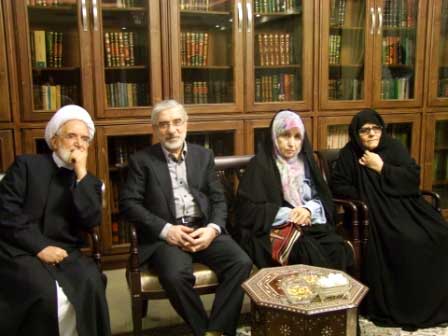
In response to the protest movement that emerged after the 10th presidential election in Iran, the Iranian government took the initiative to peacefully confine the leaders of this movement. Now, more than a thousand days, or in other words, almost three years have passed since the confinement of Mr. Mir Hossein Mousavi, former Prime Minister of the Islamic Republic of Iran, Mehdi Karroubi, former Speaker of the Islamic Consultative Assembly, and Zahra Rahnavard, former President of Al-Zahra University. This illegal confinement is not accepted by any specific institution.

With the coming of Mr. Rouhani’s government and considering his promises, the end of the house arrest for many Iranian human rights defenders has become one step closer to reality; the lifting of a house arrest that has been one of the most prominent demands of the international community, and at the forefront of them, the Special Rapporteurs of the United Nations Human Rights Council during this time.

In this regard, peace talks have been held with Mr. Ardeshir Amirarjmand, senior advisor to Mr. Mir Hossein Mousavi and one of the prominent figures of the Green Movement. A candid conversation that can be seen as a reflection of the views of many activists in this movement…

With the arrival of Mr. Rouhani, many had hoped that the house arrest of Mr. Karroubi and Mr. Mousavi, as well as Ms. Rahnavard, would be lifted; but this did not happen. What do you think is the reason for this? Is this expectation fundamentally an expectation from the Rouhani government?

Waiting is definitely in place, as the government itself has promised and a large portion of those who participated in the elections voted with the intention of wanting to change the country’s situation. Changing the country’s situation must have signs, small and good partial actions, but there are issues that have a strategic aspect. If the country’s security space is supposed to change, its sign is the freedom of Ms. Rahnavard and Messrs. Karroubi and Mousavi. In any case, people demand a change in the political-security situation and Mr. Rouhani has promised to change it. If he fails in this regard, his other policies will not be successful either. Mr. Rouhani and his friends must have a heartfelt belief that foreign policy is also a continuation of domestic policy, and they will only succeed in nuclear negotiations if they show the international community that a change in approach has taken place in Iran. What has happened is strategic and must be built on trust, and of course,

Since the Rouhani government took office, the number of arrests and executions has increased. In Iran, there is a type of power balance; meaning that conservative and right-wing forces strongly resist change. What is your assessment of this trend? Will the situation improve in the short term and the blockade be lifted?

I do not want to make predictions in this regard and I prefer to have a positive mindset that Mr. Rouhani can fulfill his promises and electoral commitments. If we approach it from a negative perspective, it may not be as effective; if we create a feeling of “it’s impossible”, then no responsibility will arise.

In addition to executions, there is actually a movement in the country that tries to close the space and create the illusion that nothing has happened and no changes have occurred, despite the relative changes that have taken place. This is why individuals are still threatened and punished for writing an article on their blog or on various social networks. However, in contrast, as I mentioned, we must consider the positive side and say “it can” and “it should happen”.

Do you have accurate information about the current physical and mental condition of Ms. Rahnavard and Messrs. Mousavi and Karroubi?

First, let me say that these three individuals were in perfect health before being imprisoned and did not even have the usual problems that people their age usually have. However, gradually they developed different issues such as heart problems, high blood pressure, and pains in their legs, back, etc. These are all issues that have arisen under the pressure and conditions of imprisonment.

So, their physical conditions have changed and they are not in good shape, and a significant list of problems has arisen for them; Ms. Rahnavard has high blood pressure, Mr. Mousavi has heart and knee problems, Mr. Karoubi has osteoporosis and we also know that even his body’s vitamin levels are low in many cases, as well as having knee and back pain and digestive problems. These are certainly the responsibility of the prison guards, the prison guards who do not provide the necessary conditions. In prison, every prisoner has the minimum right to fresh air and sunlight. But Mr. Karoubi is completely deprived of sunlight and that is why these problems have occurred for him… But despite the physical pressure they have faced, their spirits are very strong and resilient.

Given the Islamic Republic’s history of dealing with prisoners, we have seen that many have been under pressure to appear on television and express regret from the 1990s until now. It has even been said that there is no longer any resistance. However, we have witnessed three individuals and some other prisoners who have once again committed a sin by resisting and did not express regret. This is the same resistance that many prisoners showed in the 1960s and refused to appear on television. What is your evaluation in light of the government’s public declaration of repentance and regret from these individuals?

See, what is repentance essentially? If someone has committed a sin or a crime, they can still repent morally…

But Mr. Amir Arjmand, in the Islamic Republic system, many people did not actually do what they confessed about and only did so under pressure and labeled certain issues…

Some may argue that it is necessary from an ethical standpoint for individuals to repent and confess their sins to others as a lesson, but repentance in situations where one has not committed a crime can even be unethical and can hide the truth. Ms. Rahnavard, Mr. Mousavi, and Mr. Karroubi have not committed any crimes and proudly stand by their positions without repenting. The gentlemen know Mr. Mousavi, are aware of Mr. Karroubi’s background, and are informed of Ms. Rahnavard’s honesty, and they know that none of them are inclined to repent. Essentially, to say that because you do not repent, we will not release you, is like running forward and throwing the ball to the other team’s field. Mr. Jannati should repent, Mr. Moslehi and other high-ranking security officials and authorities of the country should repent for the injustice they have inflicted upon these individuals, society, and the people of Iran

They do not repent for the crime that has not been committed, and Mr. Karoubi, Mr. Moussavi, Karoubi and Mrs. Rahnavard are in a situation where they have stood firmly with complete determination, expressing their own point of view and openly stating that this is causing the Green Movement and all the people of Iran to rise up.

On the other hand, I believe that Ms. Rahnavard, Mr. Mousavi, and Mr. Karroubi acted completely moderate and never crossed the line of moderation, and they stood firmly and steadfastly on this path. This does not mean rushing or slowing down; in any case, the steadfastness of the leaders of a popular movement was in response to the demands and desires of the people of Iran, and these individuals responded to the historical demands of the people. The people had asked them to stand firm on their positions and demand their rights…

Do you know if they have put pressure on them to publicly show repentance and remorse, in order to display it to the public?

“See, in any case, this whole process that is happening is pressure. For three years now, the entire country’s advertising organization has been continuously mobilized to accuse, slander, and defame individuals and put pressure on their families. Look at the baseless and unfounded statements made by authorities, including Mr. Jannati, the Revolutionary Guards, and others; what are these? It’s all to put them under pressure. I believe the greatest injustice that is happening is that some people are placed in a position where others can say whatever they want to them without the possibility of them being heard. Well, these are very bad conditions and have been imposed on Ms. Rahnavard and Messrs. Karroubi and Mousavi for a long time now.”

Do security forces live inside the house on a daily basis or do they only control the outside of the house? However, can you say how their daily life goes, including eating, resting, studying, or accessing their news during the siege? Are they in their own personal homes or are they kept in security houses?

In the beginning, when Mrs. Rahnavard and Mr. Musavi were put under house arrest, security forces moved into their personal home. They had attached a house to Mr. Musavi’s home and made it their headquarters, while also living in their house. They forced them to go to the upper floor of the house, which was not used at all. They even removed the doorknobs so that there were no locked doors and they could enter any part of the house or even the rooms whenever they wanted. They completely destroyed their privacy and this situation lasted for a long time. In addition, to prevent any light from entering the house, they had covered all the windows with metal sheets… It has been repeatedly reported that they were deprived of newspapers and any kind of news for a long time. Later, they were allowed to watch a few TV channels that were chosen by themselves. It should be noted that it has been repeatedly reported that Mr. Musavi saw the dream of

But Mr. Karoubi is being kept under house arrest, is that correct?

Yes, Mr. Karoubi was always kept in a house that was not his own, and keep in mind that he also had to pay for the cost of the prison; this is, in any case, a strange thing…

Do you know about Mr. Karoubi, whether the security forces were inside or outside the house?

See, there were three units in relation to Mr. Karoubi’s place of confinement, one of which was occupied by security forces, one for Mr. Karoubi himself, and the other one was empty. In any case, Mr. Karoubi’s situation was the same; if I’m not mistaken, they could enter his house whenever they wanted. As for removing the locks, the situation was similar and there was no privacy.

IMG_1582

Do you know what Ms. Rahnavard and Mr. Mousavi’s opinion is about the effectiveness of Mr. Rouhani’s government?

The things that should be said, they said themselves; but in any case, what we can say is that they look at the changes that have been made with a positive view. In any case, people voted and their vote was for change, meaning they were saying they did not like what was happening.

What is the situation for family visits? Did they have limited access to using the phone?

No, if they wanted to make a phone call, it wasn’t possible. However, they were allowed to talk on the phone with some family members and daughters a few times, but they didn’t have permission to have a phone at all. In fact, they have no means of communication with the outside world. The only way to communicate was when they had a meeting or the few times I mentioned they were able to use the phone to contact their children. Recently, there has been a promise to have phone calls, but it hasn’t been put into action yet. The meetings have also been irregular and sometimes it has been more than three months since the children had any news from their parents. This situation creates a difficult and challenging situation. Now, after the elections and the changes that have taken place, this issue has been somewhat improved and weekly meetings are now taking place. This is something that should be mentioned.

In these weekly meetings, are security forces still present?

Security forces are always present and eavesdropping is a constant routine.

How were the security forces’ behavior after the incident with their daughter? Did they apologize later or did their behavior get worse?

Apparently, at present, the behavior has returned to before the incident, meaning that in reality, the behaviors were not like that and no specific problem has arisen in this regard again…

The United Nations human rights reporters have repeatedly called for the lifting of the house arrest of Ms. Rahnavard and Mr. Mousavi and Karroubi. Mr. Ahmed Shaheed, the UN special reporter, has also mentioned this issue in prominent sections of his reports. Do you think these kinds of pressures can help improve their situation?

One point must be considered at the outset: the international community has special mechanisms to advance its goals regarding human rights. These mechanisms are only marginally effective, which is a result of the structure of the international community. Therefore, in many cases, the decisions made by the international community regarding human rights may not have sufficient enforcement guarantees. This is not only true for Iran, and not only in relation to Ms. Rahnavard, Mr. Mousavi, and Mr. Karroubi, but what is important is that we must pay attention to the fact that in every country, the protection of human rights and the rights of citizens must first and foremost be the responsibility of the government and the authorities. When they fail to do so or are themselves in violation of these rights, the international community is forced to intervene and take measures to compel and guide governments to respect human rights. This is also the case for other human rights violations in Iran… Well, these resolutions have international impact and have psychological

Do you think there is overall public support for these three individuals?

Definitely, there is no doubt in this matter. This is actually one of the points that causes unnecessary fear among authorities in the country who are interested in having control over all security matters. They know that these individuals have a lot of popularity in society and have a large following. However, currently this support is not very socially visible due to the suppression that is taking place. Unfortunately, officials claim that they are always in line with the majority and always speak on behalf of the people, while on the other hand, they accuse the people of sedition, crime, and strange and baseless claims. In my opinion, the main injustice is being done to the people of Iran, as they are being placed in a position where their voices are not heard and they are being accused of things they do not agree with. In short, those who claim to speak on behalf of the people, if they have the courage to allow the people to speak freely, it will become clear how much support Ms.

What is the main demand of Mrs. Rahnavard and Mr. Mousavi? Are they requesting a public trial?

First of all, they are also demanding the people’s rights there, but the important point is that these three individuals are prisoners and must be freed. Someone who has been imprisoned without any legal process and is essentially being held hostage, must be released. Their demand is for the recognition of their rights and whether those who accuse them of a crime have held a trial and gone through the legal process.

See, when they didn’t commit a crime, they should be immediately released. But if anyone claims that there was a crime, if a public trial and the possibility of a fair trial is held, no one will escape from it. The gentlemen know that they are losers in such trials; of course, they may find some judges who will rule according to their opinions, but in the eyes of the public and in the face of history, they will be losers and this worries them. Again, I want to tell you that in fact, their freedom is beneficial to everyone, even to these gentlemen. These three people have the support of a great popular movement, but they never wanted to cause chaos in society. This freedom does not endanger the security of the country in any way, not even from the narrow perspective of these gentlemen, but it also strengthens it. Imprisonment and continued imprisonment is actually a completely illogical move that harms themselves.

This story is similar to a nuclear story. For a long time, we used to say that the country is in crisis, then we said it’s in a deadlock. This deadlock is also like a swamp; gentlemen are moving in a deadlock that pulls them inside, while the high authorities of the country clearly stated that it’s neither a crisis nor a deadlock. But now they have accepted this crisis and deadlock and can’t get out of it. It’s not clear why they insist on the wrong path to this extent. The issue of siege is also the same, they have put themselves in a deadlock, and the best, healthiest, and most cost-effective way out is the freedom without any conditions.

In your opinion, how long will the blockade continue and what are the conditions for lifting it? Has the government stated what the conditions for lifting the blockade are? What needs to be done to lift the blockade and to what extent do you see positive signs in this regard and are you optimistic?

No special letter has been written, but it is said naturally that they should repent, which is a meaningless letter and does not happen. As I said, it is necessary for gentlemen to have the courage to make the right decision, to take the cheapest way, which is also in their own interest, and to make it happen without any headaches and as soon as possible; because the longer time passes, the more problems will arise for gentlemen. We have information and based on that we know that many high-ranking officials of the country, including Mr. Hashemi, Mr. Khatami, Mr. Seyed Hassan Khomeini, some members of the government, some ministers and advisors close to Mr. Rouhani, Mr. Shamkhani and others, are inclined to make this happen and are trying in this direction, which in itself is a cause for optimism. But on the other hand, we see that there are power centers, whether in the judiciary, in the security and intelligence forces

We thank you for the opportunity you have given us in the monthly magazine of the Peace Line.

Welcome to Ahvaz, the most polluted city in the world!

Ahwaz

“Ahvaz is the most polluted city in the world.” This was the headline news that went on all news agencies last month. A comprehensive report by the World Health Organization on the top ten most polluted cities in the world, in which Iran had four cities: Ahvaz, Sanandaj, Kermanshah, and Yasuj.

Seeing raindrops behind the window and walking under them is one of the things that doesn’t happen often in Ahvaz. According to the reports of the National Meteorological Organization, the average annual rainfall in Khuzestan is less than 250 millimeters; which means, with a population of four and a half million people, each Khuzestani citizen’s share of annual rainfall is two-tenths of a second. This is accompanied by severe air pollution caused by industrial towns, oil refineries in Ahvaz and Abadan, and gas petrochemical plants in Mahshahr and Bandar Imam.

In recent years, toxic, radioactive and deadly dust storms have spread from the deserts of Iraq and Saudi Arabia to the western provinces of Iran. Karim Dahimi, a human rights activist, tells BBC Persian that the use of depleted uranium by the US in the Iraq War, particularly in Fallujah and Baghdad, has contributed to this issue. He says, “Dust and pollution are not a new problem, but it was not as severe before. The main reason for this is the drying up of the Hor al-Azim and other marshlands in the area, but with the implementation of the Karun-Zayandeh Rud water transfer project, most of them have dried up.”

Environmental authorities and representatives of the Iranian parliament have repeatedly spoken about the issue of Iraqi dust and its entry into Iran. However, Ghasan Ashour recently stated in an interview with BBC Persian that he is not entirely sure about the possibility of dust entering Iran from Iraq and called the issue regional. He said, “It is often heard that dust and sandstorms enter Iran from Iraq, but this is not true. For the past two years, with the increase in rainfall in Iraq, the amount of dust has significantly decreased. Additionally, in the border areas of Basra and Mehran, there is no wind that could transfer dust.”

All of this is happening while in the final days of this November, in the always dry and hot Ahvaz, it rained and people poured into the streets with excitement, raising their hands and taking a deep breath after a long time, thinking of the clean air; but unaware of the ammonia particles and acidic raindrops. By the end of the night, more than two thousand people from Ahvaz had gone to hospitals due to difficulty breathing, and this number had reached five thousand by the end of tomorrow’s noon and more than ten thousand by the end of the week.

“Thank God, representative of Ahvaz in the Iranian Parliament, Mr. Mousavi, states that nearly 19,000 people have been hospitalized in the past 20 days due to respiratory problems in Khuzestan province. Mr. Mousavi points out that there is still no accurate report on this matter and says, “The issue is that this respiratory condition will remain in these individuals in the future.”

But the position of the Khuzestan governorate on this matter was different. Asadollah Mousavi, the head of the emergency medical services in Khuzestan province, announced in an interview with Fars News Agency that according to one of the decisions of the Khuzestan governorate, the announcement of the number of people visiting emergency medical centers in this province due to illnesses caused by rainfall is prohibited. According to him, this decision was made during a meeting held on Thursday, November 29, at the Khuzestan governorate.

Amir, a student of industrial engineering at Ahvaz University, said in an interview with Khatt-e-Solh: “On Wednesday, November 28th, after the rain, we opened the windows to let some cool air into the house. After a few hours, my mother started feeling suffocated to the point where she couldn’t breathe anymore. We quickly took her to Golistan Hospital with the help of our family, and there we saw a flood of people who were facing the same problem. The hospital staff was not prepared to handle such a large number of patients, and after about an hour of waiting, we were given an empty bed and an oxygen capsule. The hospital manager came to meet with the patients and announced that it was not a serious issue and would be resolved soon, so there was no need to worry. However, the next day we found out that the situation had worsened and now the provincial government has issued a letter stating that the number of air

He also told us about the government and organizations’ efforts to deal with this issue: “For now, there is no news. The air in Tehran gets polluted in just two minutes, the whole city shuts down for two days, and people here are suffocating, but no one cares. We have become accustomed to these behaviors. The people of Khuzestan have known for a long time that their share from the government and these things is just a dead cemetery, a reminder of the war that they only remember once a year on the day of the liberation of Khorramshahr. The money from the oil barrels goes to other cities for building towers, buildings, and universities, and the pollution remains for us.”

In this regard, Naser Karami, a PhD in climatology, stated during his appearance on the first national television network of Iran: “During the early years of the war, until the time when Khuzestan was under bombardment, no one did anything to prevent these bombs from falling on the city of Tehran. Now, nothing is being done for the people of Khuzestan.”

He continued, “We have talked many times about the air pollution in cities like Tehran, Arak, and Mashhad, which at times may reach twice the standard limit. However, in Khuzestan province, on 30% of the days in a year, the air pollution is 50 times the legal limit.” The environmental expert added, “Currently, 97% of the people in Ahvaz are willing to migrate from this city; because they consider it an unsuitable and uninhabitable place.”

All of this is happening while Ahmad Shahid, the special rapporteur of the United Nations, also mentioned the polluted weather conditions in Khuzestan province in a section of his latest report. He stated in a part of his report: “The weak infrastructure of Khuzestan province is still one of the reasons for limited access to drinking water in many neighborhoods in this province. The Ahvaz water treatment plants, which were built for a population of about 2,222 people according to reports, now support a population of about one and a half million people. It was reported that the water quality in this area is so poor that it is even unusable for washing, and representatives of this area in parliament have expressed their concerns and requested action. After the Ahvaz Water and Sewerage Company did not announce to the residents that they had turned off the sewage treatment plant due to heavy rainfall or that they were unable to treat the water adequately, customers unknowingly consumed contaminated water

Now it is unknown who will answer the desperate cries of the mothers and fathers of Khuzestan. The desperate cries of the youth who want to build their lives amidst the smell of ammonia and the sight of smoke and the constant betrayals of governments. Khuzestan, who has always given the most and received the least. According to the Iranian government’s report in 2012, Khuzestan produces more than 68% of the country’s net income, yet it doesn’t even get its share of rain, only polluted and contaminated air to breathe. The factories that operate without proper supervision in a corner of the city every day, and the result is nothing but more difficulty in breathing for the people. Khuzestan, which even after the war, still dies every day under the bombardment of chemical pollutants.

Overview of the three-month performance of the Ministry of Culture and Islamic Guidance under the Rouhani government.

Cinema

Many artists and professionals in the field of art of the country, who were present in the election campaign of “Hassan Rouhani”, as well as those who witnessed the election events from outside, welcomed Rouhani’s cultural and artistic positions, who had nominated himself for the eleventh government of the Islamic Republic. But this welcome seemed to be for an “urgent government”!

Hassan Rouhani’s honeyed month and his election promises did not bear fruit in the cultural arena; neither in the selection of cultural ministers nor in demonstrating a serious determination to fulfill his pre-announced promises.

During the election campaign, Hassan Rouhani touched on sensitive issues that were present in the ninth and tenth governments, such as the traditional conservative approach in the cultural sphere. The discussion of book censorship, music, and cinema were among the topics he mentioned in his conversation with “Arman” newspaper.

Rouhani also mentioned the Journalists’ Association and the closed Cinema House, and in the field of culture, he made efforts to break the taboos. From including Mohammad Reza Shajarian’s voice in a commercial film, to the presence of supportive artistic figures of the Green Movement and imprisoned artists in the advertising campaign, all of these gave hope to the people of culture that the eight-year period of turmoil and, to put it figuratively, the “burnt land” of culture and art is expected to be revived once again.

In the season of introducing ministers, although some speculations were made about introducing Ahmad Masjed Jamei as the Minister of Culture, in the end Ali Jannati was chosen as the precise selection of Mr. Rouhani to be introduced as the Minister of Culture and Islamic Guidance.

In the gap between introducing the proposed option of the Ministry of Culture and Islamic Guidance, Mr. Jannati “shone brightly”; in two interviews he had with ISNA and Shargh, he spoke to reporters about his cultural ideals. Once again, the cultural community witnessed the repetition of the same promises made by Rouhani during the elections, this time from Jannati’s mouth, albeit in a softer tone. These two conversations were enough to push the most hardline principles of the Stability Front to the opposing side of the Minister of Guidance in parliament, and Hamid Rasaei went to the back of the parliament to oppose Ali Jannati and took a strong stance against his cultural views in these conversations.

With the vote of confidence from the parliament, Ali Jannati expressed his controversial opinion in an interview with Aseman magazine: “Eliminating pre-publication censorship.” In this conversation, he told Alireza Gholami that he does not believe in pre-publication censorship, as it is a form of censorship, and we should trust the publisher and the author. A collection of such opinions have been heard by the people, writers, publishers, and translators for the past 34 years after the Islamic Republic, but have received less attention from the officials of the Islamic Republic.

Following the spread of this conversation, a wave of various reactions emerged in the media, press, and cultural space. Some publishers wrote a letter to the Minister of Guidance in opposition to it, and rejected a part of his statements in which he had called for censorship to be entrusted to publishers.

Shortly after speaking with the weekly magazine “Aseman” and the Minister of Guidance on the sidelines of the government meeting, he rejected his previous statements and retreated from his position in a conversation with the reporter of the Islamic Republic of Iran Broadcasting.

It was from the very first weeks of the new Minister’s arrival at the Kamal Al-Molk Street building that this reality became apparent: the new Minister of Guidance lacks the necessary experience to take on the responsibility of a sensitive ministry such as the Ministry of Culture and Islamic Guidance, which holds special importance for the leader and other conservatives.

This reality will once again be revealed in the next two months and will also be showcased in other events.

Publishers and professionals in the field of culture believe that in the past eight years, not only did the previous dominant trend in the Ministry of Culture, with their personal preferences, impose irreparable cultural damages on the country, but they also tried to secure their presence in the cultural sphere by placing their trusted individuals in government-affiliated institutions or pseudo-private companies, in case they were to lose power. This is why in these eight years, licenses were issued for private and pseudo-governmental institutions for the government’s ideological allies and conservatives, and as a result, a significant portion of the country’s cultural budget was spent.

The topic that was brought up by the people of the cultural community in the first days of Ali Jannati’s tenure as a demand, was the clarification of the responsibilities of the numerous government foundations and organizations in the field of art, culture, and literature. With the absorption of non-governmental and independent activities in the past eight years, they were occupied with policy-making for cultural fields and attracting and absorbing cultural and artistic budgets from the Ministry of Guidance.

Institutions such as the Foundation of Storytelling Literature, whose function was to attract billions of rials of government funding without having a clear output or producing a clear cultural impact in the field of storytelling literature, were among them; one of which was the collection under the supervision of Mohammad Reza Sarshar. On the other hand, the Writers’ Association, which was supposed to play the role of an alternative to the government and the Iranian Writers’ Association, failed in its goals and with the dismissal of Mohammad Reza Sarshar from the board of directors in the second term of Ahmadinejad’s government, was able to survive once again with the injection of government budgets.

In summary, this series of movements was intended to be a substitute for independent, non-governmental and popular activities in the field of literature and culture that had formed in previous years and were banned during the Ahmadinejad era.

Although the people of culture and literature did not show much support for this change in government, the artists, especially filmmakers, were able to reclaim their homes. Prior to this, the Minister of Culture and Guidance had once again responded to a reporter’s question about the reopening of cinemas by saying that instead of one cinema, we may have two cinemas. This response sparked a wave of ridicule against Ali Jannati in the film community, but in the end, Iranian filmmakers were able to unseal their homes and enter their courtyard on National Cinema Day.

Although the pressure to remove the twelfth board of directors of the Cinema House was so strong that Mohammad Mehdi Asgarpour could not resist it. Despite the promises made by the eleventh government to reopen the Cinema House, the issue of entrusting the supervision of films and cinema to the people of this profession remained on the ground and “our protector is willing” in this field, the cinema organization is still a government institution for policy-making and implementation in the field of cinema under the presidency of the president. However, Jafar Panahi has been deprived of filmmaking and leaving the country for 20 years and Iranian documentary filmmakers are still being detained by security forces upon entering the country.

In the field of music, once again we witnessed self-indulgence in canceling pop and even traditional music concerts. In the first three months of Rouhani’s government, at least 12 concert cancellations were reported by state news agencies and media outlets.

Mohammad Reza Shajarian, Hossein Zaman, and Arya Aramnejad are among the singers of various styles who are still officially considered banned. Alongside them, many others in this art are still underground. Although the selection of the artistic deputy has caused dissatisfaction among some groups, others have also evaluated Ali Jannati’s appointment positively due to his cultural background.

In this field, the head of the music house raised a protest and launched a wave of threats and pressure against the Pirnia family, which forced him to resign. However, in a rare event, Ali Jenti came to the field and defended the Pirnia family, arguing that the sanctity of women’s solo singing is only seen as a problem by some Islamic scholars because of the corruptions surrounding it, and if women’s solo singing is free from corruption and extravagance, there is no issue with it.

Ali Jannati’s statement was enough to once again raise the wave of protest against him from Qom and the holy city of Shiraz; once again, another careless remark from the Minister of Culture and Islamic Guidance sparked a clash between him and the conservatives who had been in control of the country’s culture and art for eight years.

If we take another look at the field of culture and books, the delayed selection of the Deputy of Culture, which is one of the most sensitive responsibilities in the Ministry of Guidance, shows hesitation in finding a suitable option for this position. But what raised the voices of the cultural people the most was the remaining of the previous officials responsible for censorship in their seats. One of these figures, who has many opponents among professional publishers and banned writers, is Elhiyari, the conservative head and close to the house of Mosbah Yazdi in the Book Administration.

Not fulfilling the promise of accountability by the censorship department, the one-sided relationship between publishers and writers with the censorship department, the possibility of reconsideration regarding the announced inspection for book censorship, and the possibility of resuming the activities of publishers whose publishing licenses have been revoked or suspended in the past eight years, are among the cultural promises that remain unfulfilled in the file of demands from the book community, and are still being ignored!

At the end, we must remember the late, blessed member of the Iranian Journalists Association, who, although Hassan Rouhani mentioned him at least twice during his election campaigns and promised to open him up to the media, did not fulfill this promise and chose not to mention him in his 100-day government report on television.

In the field of media, although the threat of cutting the allocation of independent media subsidies is still hanging over the heads of journalists like the sword of Damocles, the worst action was the performance of the Media Supervisory Board during the closure of the newspapers Bahar, Nabod, and Etemad. The lack of necessary determination in the Ministry of Culture and Islamic Guidance to prevent the closure of newspapers such as Nashat, Ham-Mihan, and Tose’e was also concerning. On the other hand, many journalists are still serving their sentences from the year 1388.

In this same field of the Ministry of Guidance, which had promised to reconsider its policies on filtering in the committee, it once again retreated from its position.

In an accelerated evaluation of the first three months of Hassan Rouhani’s government, part of his cultural record can be positively evaluated and another part negatively. The most important positive event in this section so far has been the reopening of cinemas.

Iranians have a proverb that says “One flower does not make a spring”, but we have heard that in Japanese culture there is a proverb that says “Spring begins with one flower.” If we are not hasty, perhaps three months may be enough time to achieve these few promises, but undoubtedly, compensating for some of the losses of the past eight years may require just as much time.

Legal analysis of the detention of Green Movement leaders in Iran.

org-z1314050671d2391033816fdf828f5a796ed2430bbe3469173d

Mir Hossein Mousavi, the former Prime Minister of the Islamic Republic, and Mehdi Karroubi, the former head of the Islamic Consultative Assembly, were the candidates for the 1388 presidential election. In that same year, the former President, Mahmoud Ahmadinejad, was declared the winner of the election in a controversial situation. This announcement led to widespread protests by supporters of these two candidates in Tehran and some major cities in Iran, which unfortunately were brutally suppressed by the Iranian government officials. Following these suppressions, many journalists, government critics, and activists associated with Mousavi and Karroubi’s election campaigns were arrested and put on trial. The Iranian government officials, who closely monitored the activities of Mehdi Karroubi and Mir Hossein Mousavi and their spouses after the election, confiscated and then seized the newspapers of the two presidential candidates, “National Trust” and “Green Word”. In late Bahman 1389, without any charges or court proceedings

While according to:

1- “من در حال حاضر در حال تحصیل در دانشگاه هستم”

1- “I am currently studying at university.”

Principles 22, 32 and 33 of the Constitution of the Islamic Republic of Iran state that: the dignity, life, and rights of individuals are protected from infringement except by the order of the law – no one can be arrested except in the manner prescribed by law – no one can be prohibited from residing in their desired location except in cases where the law allows it, and the principle of innocence is upheld unless their guilt is proven in a fair court.


2-. This text is incomplete and cannot be translated accurately without the full context. Please provide the complete Farsi text for an accurate translation.

Universal Declaration of Human Rights, which includes Articles 1-13 and 19: No one shall be subjected to arbitrary arrest, detention, or exile – Everyone charged with a criminal offense is entitled to be presumed innocent until proven guilty according to law in a public trial at which they have had all the guarantees necessary for their defense – Every person has the right to freedom of movement and residence within the borders of their country – No one shall be arbitrarily interfered with in their private life, family, home, or correspondence – Everyone has the right to freedom of thought and expression; this right includes freedom to hold opinions without interference and to seek, receive, and impart information and ideas through any media and regardless of frontiers.

  “من از تو متشکرم”

I am grateful to you.

And the Criminal Procedure Code of Iran, which even in Article 124 requires the presence of sufficient evidence for the summons of the accused.

Every person who is accused must be clearly informed of the charges against them and provided with evidence and proof. After presenting their defense, multiple sessions should be held and a fair trial should take place, giving them the opportunity to protest and, if there is evidence, a verdict should be issued and ultimately executed. Unfortunately, in the case of these three Iranian citizens, none of these steps have been taken and they have been imprisoned for over a thousand days without any proper investigation or proof of their alleged crimes, solely based on the orders of the country’s leaders. Therefore, imprisoning these individuals without any legal proceedings, such as informing them of the charges, holding a trial, giving them the right to defend themselves, and issuing a final verdict, is a clear violation of human rights in Iran. Even if this house arrest was limited to being under surveillance in their own homes, the violation of their rights would still be less severe than their current situation. With this house arrest, without any reason (as

This prominent example of human rights violation has been repeatedly confirmed by Iranian government officials and even under the orders of the leader of the Islamic Republic, using the excuse of freeing them from being killed by Basijis and revolutionary extremists. It has been protested and condemned by various authorities of different countries, including the United Nations, the United States, Germany, France, etc. Despite this, the leaders of the nation continue to carry out this domestic imprisonment without any concern and violate international laws, declarations, and even the Charter of Citizenship.

As a result, not only one charter, but even if thousands of charters for citizen and human rights are designed and approved in Iran, the lawlessness, oppression, and injustice will continue to exist for Iran and Iranians.

The necessity of men and boys’ participation in the fight to end violence against women.

It may seem foolish to be optimistic about International Day for the Elimination of Violence against Women on November 25th. The World Health Organization emphasizes that one in three women is subjected to violence by their male partners. A recent study by the United Nations in six Asian countries shows that one in four men has committed rape. However, our optimism stems from an extraordinary change happening all over the world. More and more men are finally joining women in saying that all forms of violence against women must end. Even men in the corners of the world are criticizing themselves and saying that we must play a key role in creating a future free of violence against women.

In India, Africa, and the Middle East, men have joined women in protesting against the widespread crimes against women. Similarly, in America and Europe, they are increasingly speaking out about this issue. Along with women, we also demand that governments support laws in this regard and enforce them. News from Britain indicates that the Clare’s Law is being implemented throughout England and Wales; this is an example of victories in this area. We hope to hear more and more news like this.

Right now, this challenge is expected to go even further; yes, protests and demonstrations attract attention and yes, detaining [offending] men and keeping them accountable is a crucial issue, but it is not enough.

“Now is the time to seriously address prevention in this matter, it is time to involve men and boys in solving it.”

The collected evidence and findings, currently being expanded, include the “International Research on Men and Gender Equality” with the participation of 15,000 men from 10 countries around the world, indicating two key factors behind violence.

Firstly, men who have witnessed their fathers’ violence at home during childhood are twice as likely to exhibit violence against their sexual partners compared to other men.

Secondly, it is about those who mainly believe in stereotypical notions of masculinity, that men should dominate women and that men have the right to control women’s bodies. As feminists and researchers believe, violence against women is a product of unequal power relations and as our activism in the past three decades has shown, this violence results in raising boys to become men based on impossible stereotypes of masculinity.

Putting an end to these acts of violence requires much more effort than simple campaigns against drunk driving and smoking. We must get to the root of this problem.

We teach teachers in various parts of the world to bring basic reasons and methods of preventing violence to the classroom. We train mentors to talk to boys about respecting women and girls.

Through our new international program “Men’s Care”, we are currently educating new fathers on positive parenting methods that reject any form of physical punishment. We also aim to implicitly affirm that using power and violence against others is unacceptable. At the same time, we are working towards changing policies, including improving parental leave laws (leave with/without pay that allows working parents more time to be with their children), which will result in a better role for fathers.

“We are also working with religious leaders, such as the efforts of the White Ribbon group in Pakistan, Canada, and Lebanon, using places of worship and religious sites to show that no religion condones violence against women. We are also engaging with men in the workplace; for example, in Australia, to change cultures that say to stay silent against men who use violence.”

In Rwanda and its neighboring country, the Democratic Republic of Congo, our non-profit organization called Promundo creates spaces where men and boys can overcome the violence they have experienced.

In Rio de Janeiro (Brazil), the Promundo group uses football leagues to engage and dialogue with men of all ages to end violence against women. Players discuss relationships and peaceful ways to resolve conflicts between couples. On game days, statements, posters, and radio programs about respecting women and being non-violent, especially for fathers, are broadcasted. Reports from participants in these programs show a decrease from 27% to 7% in physical violence against their sexual partners.

A combination of effective programs, increasing awareness, changing policies, and strong public voices turns this anger (of violence against women) into action and then into transformation. This action allows us to create situations where violence is stopped before it happens.

To achieve a “lasting end” to violence against women, it is time to move beyond small-scale programs that are being implemented with the hard work of NGOs and turn these programs into large-scale initiatives in our communities, schools, and workplaces. Let us change our families and create a future where women, our children, and of course men, truly deserve it.

Source: Guardian

Ali Karimi, a magician with the morals of a champion.

Ali Karimi is one of the phenomena of Iranian football. European players have spoken highly of his football technique. Despite facing discrimination and deprivation throughout his sports career, his list of achievements is not less than other famous Asian players. He has been nicknamed the “magician of Iranian football,” but his fame is not limited to the football field. He has also achieved successes outside of the green field.

Ali Karimi is a controversial figure and a outspoken critic of Iranian football. His media controversies have never been for materialistic reasons. You will never see him giving interviews about his overdue rights. He is not one to appear on television programs.

His support for the protesters of the election results, by wearing a green armband during a game against South Korea and refusing to open it during halftime, only added to his popularity among the people. This act also put his football career under the spotlight and led to his dismissal from the national team, despite his qualifications.

Although Javad Nekounam and