“Do not let the prisoners of Qezel Hesar be alone in their fight against execution.”

Last updated:

April 21, 2026

“Do not let the prisoners of Qezel Hesar be alone in their fight against execution.”

In early December of this year, in a collective action, more than a thousand prisoners sentenced to death in Qazalhessar prison in Karaj went on a hunger strike; this strike was in response to the transfer of eleven prisoners to solitary cells for the execution of their sentences.

This hunger strike, which is in protest against the wave of mass executions and the perceived danger to the fate of prisoners sentenced to death, did not continue for more than a few days and ended with no result and disappeared from the news. Perhaps the repetition of the execution issue caused this news to not be paid attention to as it should have been; although in any case, such news and events are the best opportunity to raise awareness in society about the death penalty and to strive for its abolition and reduction.

Qazal Hasar Prison in Karaj, with approximately 15,000 prisoners, is considered one of the largest prisons in the Middle East. What is more important is that the segregation and division of prisoners in different units of this prison is such that the majority of death row inmates are imprisoned together in one of the units; Unit 2 of Qazal Hasar Prison in Karaj has a capacity of approximately 5,000 people, the majority of whom are death row inmates convicted of drug-related crimes.

This was the umpteenth mass strike in Qezel Hessar prison in Karaj. As an example, in June 2013, more than two thousand prisoners from Unit 2 of this prison went on a hunger strike in protest against the disappearance of one of the former prison guards, the management of this unit, as well as the lack of welfare facilities and lack of judicial attention.

Even prisoners refused to negotiate with prison authorities and declared that they would not end their strike until the removal of the new chief, but ultimately this strike ended with the transfer of more than thirty prisoners to solitary confinement and the threats and lies of prison officials.

According to the prisoners, this prison guard had previously issued orders to shoot at protesting prisoners in the winter of 1389 and had played a direct role in the shooting and killing of prisoners.

On February 14, 2011, a group of prisoners from Unit 2 of Qezel Hesar Prison in Karaj took control of a section of the prison for a few hours. During the clash between special forces and rebellious prisoners, some of them were killed and others were injured.

The prison organization had stated in its report that the rebellious prisoners were wicked individuals who had been sentenced to death. Additionally, at that time, the organization claimed that the prisoners intended to cause destruction in the prison, and at that moment, special prison forces intervened and were able to suppress the rebellion with great force.

According to human rights sources, the reason for this uprising was protest against the poor conditions in the prison and the halt of the execution of ten prisoners. Approximately three thousand protesting prisoners initially began their protest by going on a hunger strike and chanting slogans such as “executions must be stopped”. The protests escalated and resulted in breaking down the prison doors. The prisoners then managed to reach the prison yard and attempted to escape by climbing the prison walls.

Human rights sources mentioned “hundreds of people” as the number of casualties and injuries, and listed the cause of their deaths as direct firing of real bullets, estimating only the number of injuries caused by military bullets to be over one hundred and fifty.

Prisoners sentenced to death are held in Qezel Hesar prison, in their self-organized struggle, without any organized structures, resources, or even sufficient attention from human rights defenders in Iran, they did not settle for hunger strikes or internal prison confrontations. As an example of their efforts to bring this protest and struggle outside of the prison, last year, dozens of families of these individuals went to Pasteur Street and in front of the Leader’s house twice, to peacefully gather and make their voices of protest and demand for their execution to be heard by the authorities. However, as always, the evil alliance of the judicial and security system responded to them with iron fists and mass executions of prisoners.

Despite the fact that the prisoners sentenced to execution in Qezel Hesar are mostly from marginalized and even illiterate sectors of society, they have come to understand the power of human rights organizations and institutions as a powerful tool in this struggle. In addition to numerous daily correspondences with officials and government institutions, these organizations have recognized the power of human rights organizations and institutions as a powerful tool in this struggle. According to reliable information, human rights organizations receive daily calls and reports from Qezel Hesar prisoners and respond to their requests through all possible means.

About Qazal Hasar, the beating heart of the fight against execution in Iran, can still be written, but above all, it is enough to understand the quality and serious determination for this relentless struggle that is ongoing in prisons; an understanding that carries a clear historical responsibility for human rights defenders. In Iran, there has always been a fight to abolish execution, at least in recent decades, under various titles. However, neglect and disregard for the powerful force of prisoners who, whether based on belief or fear of death, unite and pay the cost of this struggle with their lives, will be a great mistake on the part of human rights activists.

Iran, under the rule of the Islamic Republic, has traditionally and consistently been at the top of the list of countries with the highest number of executions per year. In terms of per capita executions, it ranks first among countries in the world. This is despite the fact that with the increase in executions this year, it has also set a new record. (5)

Thousands of prisoners sentenced to execution in Iranian prisons and the aforementioned prison are the highest capital and human resources possible in the fight against execution, who have the maximum determination and seriousness to fight considering their conditions. These victims, who have portrayed their will to save themselves in every possible way for Iranian civil society, need more attention from the media, organizations, and human rights activists to become a model for other silent victims of this sentence throughout the country under the protection of Iranian society, by reducing the heavy cost of this struggle for them.

Unit 3- Ghezel

Sources:

Execution of 11 suspects of drug trafficking in Ghazl Hasar, Hrana News Agency, 5 December 2013.

2- A protest strike by 2100 prisoners at Qezelhesar Prison in Karaj, on the same day, 1st of Khordad 1392.

3- The bloody uprising of Qezel Hesar prisoners was suppressed, Voice of America website, 25 Esfand 1389.

4- Hundreds killed and injured in Qezelhesar Prison in protest against the execution orders, HRANA News Agency, 25 Esfand 1389.

5- Expressing Concern of Human Rights Groups about the Increase in Executions in Iran, BBC Persian Website, October 9, 2013.
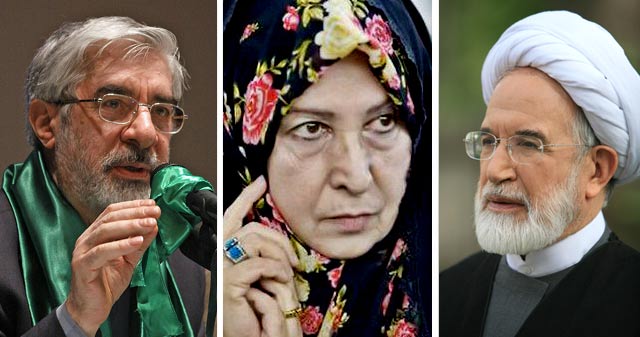

“1000 Days of Solitude: A Summary Report of the Detention of Green Movement Leaders”

UNWG_house_Arrest1

The confinement of recognized leaders of the Green Movement, which formed after protesting the results of the presidential election, is considered one of the major challenges of the Islamic Republic government in the field of human rights, which after more than a thousand days, still remains unresolved; with the change of the new government in Iran, known as the moderate government, hopes for the release of the leaders of the Green Movement have increased more than ever before.

The confinement of the leaders of the Green Movement, along with their spouses, began after their call to gather on the 25th of Bahman 1389, with the siege of the home of these two high-ranking former officials of the Islamic Republic. This became more serious with the speech of Ahmad Jannati on the Friday prayer of the 29th of Bahman, and officially began on the first of Esfand of that year.

From the early days of the siege, a flood of critical positions and statements from human rights groups, political groups, and personalities began. The first days of the siege coincided with street protests on protest Wednesdays, one of the main demands of the protesters being the release of the leaders. In the midst of this, global protests against the siege of these two presidential candidates also began; a campaign that has not yet yielded results.

By suppressing the street protests, Mehdi Karroubi was transferred to a small apartment belonging to the Ministry of Intelligence, and with this relocation, Fatemeh Karroubi separated from her husband due to the problems of the new place and practically left the house arrest. After a few days, Mohammad Taghi Karroubi and the daughters of Mir Hossein Mousavi and Zahra Rahnavard were able to meet with their parents under special security measures.

Lack of access to fresh air and walking, detention or threat of children, prevention from attending ceremonies of close relatives, presence of officials in meetings, long-term prohibition of visitation, prohibition of visitation of certain family members, insulting and sometimes physically assaulting children during entry or exit from the place of confinement, spreading false news and reports by media close to the government about their health, restrictions and sometimes prevention of phone calls and limited access to books and media are among the most important violations of the rights of these three individuals during this period. In addition, the transfer of Mehdi Karroubi to the hospital was prevented three times, which has resulted in high blood pressure, vitamin D deficiency, lung infection, heart rhythm problems, joint pain, and knee arthritis. Furthermore, Mir Hossein Mousavi also suffered a severe heart condition once.

Until today, no one has taken responsibility for the siege, but with the emergence of the Hassan Rouhani government, talking about it is no longer taboo and the new challenge of the Rouhani government and the judicial system has created contradictory statements from judicial officials in response to this question.

Gholam Hossein Mohseni Ejei, the Attorney General of the country who had previously spoken about the restriction of movement and cutting off of telephone communications without confirmation of house arrest, and considered it to be in the best interest of himself, Mousavi, Karroubi, and Rahnavard, in his current discourse raises the issue of a type of “punishment” that is expected to continue. The Minister of Justice of the Hassan Rouhani government also stated that the case of the leaders of the Green Movement has been referred to the Supreme National Security Council. Although the statement of this government official proves the illegality of the house arrest, it has still created hopes among the supporters of Mir Hossein Mousavi and Mehdi Karroubi; because the head of the National Security Council is Hassan Rouhani and its secretary is Ali Shamkhani, the former Minister of Defense during the reform period.

According to Article 176 of the Iranian Constitution, one of the goals of the National Security Council is to determine defense and security policies within the framework of the overall policies set by the leadership; in other words, the implementation of any executive restrictions will be lifted if they are in conflict with the overall policies of the leader.

In such a painting, with regard to the promises of Mr. Hassan Rouhani and the implicit confirmation of these promises in his speech on December 7th, the hope of human rights activists and his supporters remains for the end of this process and the lifting of the house arrest of Mr. Mousavi, Mr. Karroubi, and Mrs. Rahnavard.

A look at the black market for books in Iran and the absence of a legal system called copyright.

13910412000246_PhotoL

It is likely that if a German traveler takes a stroll on Enqelab Street in Tehran, which is home to the book market and also the center of book, CD, and DVD street vendors in the city, they will be amazed to see that the book “Mein Kampf” by Hitler, which is not allowed to be published in Germany itself, is being sold with an official permit from the Ministry of Culture and Islamic Guidance in bookstores; however, some novels by George Orwell, Milan Kundera, D.H. Lawrence, and others must be purchased from the black market due to their prohibition, which is also a thriving market.

Undoubtedly, this imaginary traveler of ours will be amazed that they can easily purchase the newest Hollywood films that have not yet been released in Europe from street vendors on DVD, with the best quality and Persian subtitles, for about forty cents. The price of Windows software, Photoshop, or computer games is sometimes even cheaper than this. The black market may not be as cheap, but it is still more cost-effective compared to original books with official printing licenses.

Iran has one of the most thriving black markets in the world for prohibited goods, ranging from drugs and alcohol to DVDs of movies and music, and books. One of the main reasons for the growth of this black market is the weak laws and lack of government protection for domestic products, as well as Iran’s failure to join the Geneva Convention, also known as the Copyright Treaty, which protects the rights of authors.

The widespread and organized distribution network, along with the low cost of these products, especially in terms of book quality, reinforces the belief that some government officials are involved in this highly profitable business. This suspicion and belief is also prevalent in the market for alcoholic beverages and drugs, which are much more profitable than books and electronic software. Although this underground trade is detrimental to cultural policies of the government, it still involves some government officials due to its profitability.

The effects of censorship, the top candidates of the black market book.

In Iran, works that are subject to censorship have a good chance of being released in the black market without censorship. But which areas are more likely to be censored? In Iran, especially books from certain sensitive areas are closely examined and censored with more strictness.

Criticism or having a different perspective on the political views of the Islamic Republic of Iran is considered taboo. For example, criticizing the leader of Iran or expressing opposition to the declared views of the leader, Iran’s nuclear program, proposing relations with America or Israel, and criticizing the clergy are all considered taboo subjects.

2. There are works in criticism of religion, especially Shia religion, that promote other religions, even works with a different approach from the official viewpoint of the Islamic Republic about religion (for example, in recent years, books on Eastern mysticism have not been allowed to be published, with the assumption that they are considered a rival to Islam) and are often not allowed to be published or heavily censored.

3. Works in which scenes and erotic or even private relationships outside of marriage are depicted, are censored or not allowed to be published.

4. Works that are considered by Iranian censors to promote Western lifestyle are either censored or not allowed to be published. For example, scenes of drinking alcohol, dancing, women’s nudity, and sometimes even mentioning jazz music and ties and bowties have been censored.

The intensity of censorship and sensitivity varies in each of the mentioned areas. For example, political censorship is carried out with greater intensity, followed by religious censorship, then moral censorship, and finally cultural censorship with precision and seriousness.

But the main issue in this matter is the lack of a specific guideline for censorship. As a result, censorship is carried out without clear and definite rules, and it is subject to the discretion of the censorship department employees. Therefore, most of the time, the personal interpretation and discretion of the censorship employee intensifies the censorship. For example, there have been instances where novels against fascism or other totalitarian systems have not been granted permission for publication under the interpretation that it indirectly criticizes the Islamic Republic or the system of Wilayat al-Faqih.

Examples of black market book works.

More or less, any book that is well received by readers, brings its head out of the black market. The majority of the black market is dedicated to books that are popular but not allowed to be published. Many of these books were published during the previous government and now, in the Islamic Republic, their publication is met with obstacles. For example, novels and romantic or erotic poems such as the works of Forough Farrokhzad, D.H. Lawrence, Nana by Emile Zola, romantic and popular novels by Iranian writers such as Mohammad Hjazi, R. Etemadi, Parviz Ghazi Saeed, and others; works with anti-religious themes or a critical approach to religion, such as some of the stories and writings of Sadeq Hedayat, works by Ahmad Kasravi, thirty-three years by Ali Dashti, and others; and in general, books that for whatever reason are deemed harmful by the censors, such as

Sometimes, books from the black market were allowed to be published during previous governments, for example during the presidency of Mohammad Khatami. However, with the cancellation of their publishing license in later governments, they were removed from the black market. Works such as Milan Kundera’s novels, 1984 by George Orwell, and Animal Farm by George Orwell fall into this category. Sometimes, works can be found in the black market that were initially granted a publishing license during authoritarian governments like Mahmoud Ahmadinejad’s, but were later confiscated. These include My Sad Russian Memories by Marquez, or Narcissus and Goldmund by Hermann Hesse.

One should not assume that all books in the black market are ones that have been officially banned. Sometimes, books that are in high demand are illegally copied and reproduced underground, and sold at a lower price without the permission of the publisher or the authors. This includes dictionaries, encyclopedias, university textbooks, and popular novels such as Harry Potter. Interestingly, sometimes these unofficial copies, made using different techniques such as xerox, risograph, etc., have better quality than the original versions due to the use of higher quality paper or better binding. They are also sold at a lower price due to not having to pay for expenses such as typesetting, cover design, copyright, or translation.

Most of the mentioned books can easily be obtained from street vendors, but some books are also found that no one dares to directly sell in the market. These works are books that have been written directly or indirectly against the leader of the Islamic Republic or the Islamic government, such as books by anti-Islamic Republic groups. It is therefore surprising that sometimes books criticizing or even rejecting Islam can be found in the streets of Tehran, but printing and selling even underground critical political works against the Islamic Republic is much more dangerous and is closely monitored and punished with special sensitivity.

Some observations about the black market for books in Iran.

In any case, having a book listed on the Ministry of Culture’s blacklist is a great opportunity for wider distribution in the black market. In this situation, only those who follow the law, namely the official publisher, author, and translator, suffer financially, but the work itself, which sells an average of two to three thousand copies in its legal form, reaches higher circulation (depending on market demand, sometimes up to tens of thousands of copies) and exposes its underground duplicators to considerable profits.

A humorous point in this matter is that some writers who, for whatever reason, do not have high hopes for the sale of their work, welcome the inclusion of their book’s name in the black list of the Ministry of Culture and other government institutions. It has even been seen that some writers have tried various methods, such as spreading rumors or writing critical reviews under a pseudonym against their own book, in order to make their work condemned by government institutions and gain fame, and to create demand in the black market for their work.

However, the existence of the black market and the lack of acceptance of copyright laws have not been beneficial to consumers. In addition to causing financial harm to publishers and authors, the black market and disregard for copyright laws have also caused harm to readers for various reasons. For example, the disregard for copyright laws in Iran has led to the publication of numerous low-quality translations of popular books. Sometimes, individuals have even sent a book to the market under a new translation name after making minor changes and rewriting an old translation. In a previous generation, during a period when the works of Austrian writer Stefan Zweig suddenly became fashionable, profit-seeking publishers also released the works of other authors under the name of Stefan Zweig. This misfortune also befell writers such as Agatha Christie and Aziz Nesin. It is said that the number of works published by these authors in Iran is more than the number of their own books!

Furthermore, the uncontrollable black market has resulted in never having accurate statistics on the sales or number of readers of banned works. For example, no one knows how many hundreds of thousands of copies of Sadegh Hedayat’s novel “Blind Owl”, the father of modern Iranian fiction, have been published so far. In addition, the prevalence of the phenomenon of producing electronic versions and even PDFs of books and sharing them online without the permission of the publisher or owner of the work has practically made it impossible to estimate the number of readers of a work.

ه

…and the empty space of the law is the right of the author.

Iran’s failure to join the Geneva Convention on Copyright has caused dissatisfaction and anger among publishers and writers around the world towards Iranian publishers, and has tarnished the printing and publishing industry in Iran in other countries, especially in Europe and North America. On a larger scale, Iran’s refusal to accept this treaty is also seen as a barrier to the country’s accession to the World Trade Organization.

Although many writers, translators, and even some Iranian readers are in favor of Iran joining the copyright treaty, neither government officials nor most publishers are particularly concerned about it.

Government officials know that by joining this agreement, foreign publishers will not easily be given permission to censor their books in Iran. However, the main reason for the reluctance of Iranian publishers has another cause. Due to the crisis in the book publishing industry in Iran, caused by high printing and publishing costs, low reading rates, and consequently low numbers of printed books, strict auditing by government institutions, and so on, publishers are afraid that adding another cost in the form of copyright fees will hinder their already difficult activities.

However, in recent years, some publishers have tried to convince foreign publishers of the critical state of publishing in Iran through negotiations, in order to gain their agreement to easily grant permission for their works to be published by Iranian publishers. On the other hand, many foreign publishers have also agreed to comply with symbolic copyright from Iranian publishers after becoming aware of the publishing situation in Iran.

In this way, it seems that gradually intermediate solutions will be found and more publishers will join publishers such as Ghoghnoos and Ofoq, who obtain permission to translate and publish from foreign publishers. Undoubtedly, in this case, Iranian readers will have more confidence in the quality of translations and will turn to these books.