


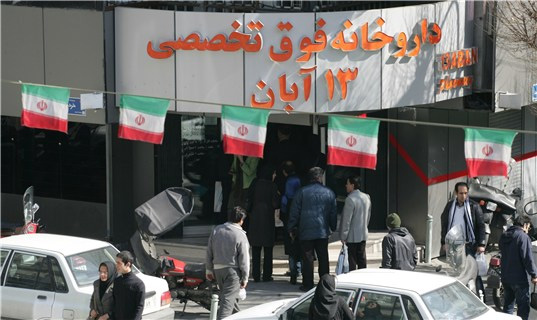
The wound of sanctions on the bodies of suffering patients.
In the past year, the decrease in production and import of medicine in Iran has reached a concerning stage; to the extent that, according to official statements from members of the Pharmaceutical Importers Union, there is a shortage of over 100 types of medicine in the country.
According to experts in this field, the drug situation in Iran is in turmoil and is affected by international sanctions and, of course, the ineffective economic policies of the tenth government, leading to an economic crisis within the country.
In addition to its military and nuclear dimensions, the economic sanctions on Iran have had a severe impact on the country’s economy. Indirectly, they have also affected the pharmaceutical and medical sector, causing serious problems for the health of patients in the country, especially those suffering from specific diseases such as cancer, as they have limited access to necessary treatments and have even resulted in the death of some patients.
Despite being repeatedly stated by Western countries that “medicine is not on the sanctions list”, the tools and instruments of the pharmaceutical industry have been subject to sanctions for purchasing raw materials and importing medicine from foreign countries.
The European Union and America have imposed strict sanctions on Iran’s banking system, financial transactions, and oil sales, which make up a large portion of the country’s exports. This has caused significant obstacles for importers of medicine and food due to difficulties in banking and transportation.
According to the claims of the authorities of the Ministry of Health of the Islamic Republic, currently 96% of the drugs consumed by the people are domestically produced. However, since only about 40% of the raw materials for these drugs are currently produced within the country, drug manufacturers are facing difficulties in importing the necessary raw materials from abroad.
Drug importers say that despite using more expensive financial methods such as changing (bank account) from a European bank to another bank, or resorting to intermediaries and unofficial transactions, drug shipments are not timely or sufficiently imported into Iran.
Siamak Afazeli, the manager of “Sahay Halal Red Crescent” pharmaceutical company, says in an interview with Fars News Agency: “It is true that they have not sanctioned the medicine, but we are dependent on oil, so we have to pay in dollars and get the raw materials for medicine. On the other hand, money transfer is expensive and it causes the cost of raw materials to become expensive, which ultimately leads to the company either suffering losses or increasing the price, both of which are harmful to the patient who needs to take the medicine.”
The newspaper “The Guardian” also writes about the relationship between Western sanctions and the drug crisis in Iran, stating that “Iran has been deprived of vital medicines due to the sanctions imposed by the United States and other Western countries. According to the publication, the volume of delivery of drugs to fight cancer and hemophilia – diseases affecting hundreds of thousands of Iranians – has significantly decreased.”
The CEO of “Darou Pakhsh” company, the largest pharmaceutical company in Iran, has also said in an interview with The Guardian: “Sometimes companies agree to sell us drugs, but we are deprived of the possibility of paying them. There was a time when our money was stuck in the bank for four months and during that time, our requests to transfer the money were rejected multiple times.”
Reuters news agency also reported on this issue in an article titled “Import Problem: From Children’s Clothing to Medicine,” addressing the problem of financial transfers and settlement of imported goods by Iranian merchants. The report mentioned items that, despite receiving permission from the US Treasury Department for export to Iran, face difficulties in sales due to banking sanctions, particularly in the case of health and pharmaceutical products.
The problem of drug shortage in Iran has become so critical that on October 5, 2012, Ban Ki-moon, the Secretary-General of the United Nations, also reacted to it and said: “The sanctions imposed against the Islamic Republic of Iran have had significant effects and consequences on the people of Iran, leading to an increase in the prices of consumer goods and energy expenses, a rise in unemployment rates, and a shortage of essential items such as medicine.”
According to Ban Ki-moon, “Even companies that have obtained the necessary license for exporting food and medicine to Iran are facing difficulties in finding intermediary banks for financial transactions. As a result, medicines for treating rare diseases, including cancer, heart and respiratory illnesses, have become scarce.”
As the Secretary-General of the United Nations has pointed out, the shortage of medicines for diseases such as cancer, asthma, and thalassemia, which are referred to as specific diseases, has greatly concerned the situation of these patients and put their lives at risk.
According to the statistics presented in Iran, the number of cancer patients reaches approximately 200,000 per year.
The important point is that many years before the start of Western economic sanctions against Iran, cancer patients in Iran were struggling with many difficulties and hardships, and now with the intensification of sanctions and the resulting economic crisis, there is increasing pressure on the families of these patients and their lives are in serious danger.
Majid Arasteh, the head of the Iranian Thalassemia Society, also said in an interview with Tehran Today newspaper that the impact of sanctions on medicine is inhumane. He stated, “All international communities know that sanctions should not include medicine and food, but when they sanction the currency supplier bank, how can we import medicine?”
Of course, this is not the only issue that has become a concern for the families of special patients, but also the strict and rigorous sanctions on the import of radiology and chemotherapy equipment, which include nuclear technology, have become another problem in the way of treating these patients.
It is very clear that individuals who are diagnosed with cancer must have a good mental state and proper nutrition in order for their chemotherapy to be effective, but in Iran, the cost of treatment is so high and obtaining medication is so difficult that some patients or their families use most of their energy to gather money for their next rounds of chemotherapy.
Alongside the difficulties of obtaining medication for special patients, the situation of sick children has also reached a critical point.
A while ago, following the death of a child with hemophilia in Dezful city due to lack of access to necessary medication, the board of directors of the Iranian Hemophilia Society sent an open letter to the President of the World Federation of Hemophilia and the Director-General of the World Health Organization, warning about the dangers of economic sanctions on Iran and their impact on the health of hemophilia patients and children.
Reuters news agency wrote in their report in April 91 that American companies, from the giant pharmaceutical company “Merck & Co.” to small baby diaper manufacturers, have faced difficulties in receiving their debts from Iranian merchants for the sale of medical items and other essential human-friendly goods.
On the other hand, reports also indicate the scarcity of dry milk for infants in the Iranian market. The shortage of dry milk has caused problems for infants, especially those with diseases such as diarrhea, leading to hospitalization in some cases. This is because if these children consume any food other than dry milk, they will experience diarrhea and vomiting.
All of this is happening while political authorities in Iran and the West are still engaged in unknown diplomatic negotiations and maneuvers, and the Iranian government has not yet untangled the knot of the nuclear dispute with the West during recent months. Patients and their families, who are currently enduring pain and suffering, are still waiting for the resolution of this dispute and the resolution of the problems caused by it.
 Admin
Admin October 24, 2013