


Leaving the homeland; reasons and extent.
Iran is considered a diverse country in terms of ethnicity and religion, with a colorful political and economic structure that is heavily influenced by its religious ideology. The Jewish community in Iran is one of these minorities, who have faced many ups and downs during their presence in the country for thousands of years. The political and social changes throughout Iran’s history have had a significant impact on the quality of life and security of these citizens.

The history of Jews’ arrival to Iran.
The history of the arrival of Jews to the land of Iran, who are known as the Kalimians, dates back to before the birth of Christ; according to historical documents and accounts, for the first time around 8 centuries before Christ, sixty thousand Jews who had been captured by the Assyrian king were relocated to the western and northwestern regions of the Iranian plateau, specifically in Jelalabad (present-day Damavand). In fact, the settlement of Jews in Iran has a history of nearly three thousand years, and during this time, their lives have been filled with many ups and downs; from living in peace and security to experiencing insecurity and forced migration.
The ups and downs of Jewish life in Iran.
During the reign of King Xerxes, who was from the Achaemenid dynasty, the Jews of Iran sought to escape a widespread massacre that had been planned for them, known in Jewish history as the “Purim Incident”. According to existing accounts, this event led to the slaughter of many Jewish plotters during the time of King Xerxes.
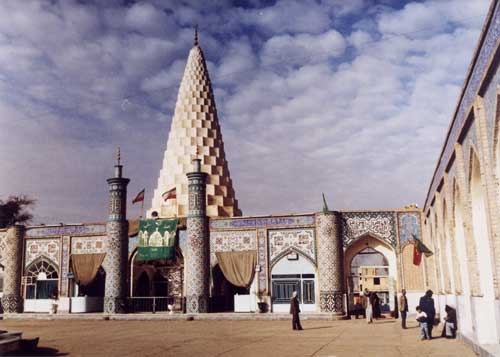
Now, the tombs of some of the religious figures of the Jewish people are also located in cities such as Kashan, Shush, Hamadan, and Touiserkan; although the border between reality and myth is not clear in historical stories, historical evidence supports the continuous presence of Jews in some regions of Iran. However, political developments have always caused instability in the situation of Jews in Iran. For example, after the death of Khosrow II, the Jews were forced to migrate from Shush to Hamadan.
On the other hand, the establishment of religious governments in the history of Iran has been a significant factor in the quality of life for Jews. Apart from the pressures that Jews endured during the rule of the Sasanian dynasty, when Zoroastrianism was the official religion, they also faced many pressures afterwards. During the Islamic era, Jews, like Zoroastrians in Iran, faced many difficulties in continuing their normal lives. Although the negative perceptions of Jews among Arab Muslims could have exacerbated the problems of Iranian Jews, it did not lead to their departure from Iran. Perhaps this was because Iranians and Jews were always seen as opponents of the caliphate and Arab rule, and therefore had many shared experiences. Additionally, during the early Islamic period, Jews were able to withstand the intensification of their problems by paying taxes under the leadership of Jewish political leaders known as “Ras Jalut” and approved by the caliphate. Timely payment of taxes by Jews throughout Iranian history has
This situation continued during the Ghaznavid and Seljuk periods, and some Jews were able to attain important government positions in Iran, which itself is a sign of the acceptance of Jewish security by the governments of that time in Iran. With the invasion of the Mongols and the disappearance of religious and geographical boundaries conquered by the invaders, this opportunity was provided for Jews to actively participate in Iranian government affairs, based on their experiences and economic capabilities.
After this period and with the emergence of the Safavids, Shia religion was chosen as the official religion of the country by this dynasty as a unifying factor for Iranians, and religion once again became the forefront of political affairs. The problems of the Jews resurfaced (4) and their persecution and harassment continued until the rise of the Afsharid dynasty. During this time, the persecution of Jews was so severe that many of them were forced to leave Iran and go to the Ottoman Empire. At that time, Jews were not allowed to leave their homes during rainfall or move around in society as usual.
This situation continued with the rise of the Qajar dynasty (5) and during this period, many Jews were pressured by the government to convert to another religion. At this time, most Jews were engaged in occupations related to trade and commerce and were considered part of the wealthy class in Iranian society. According to available statistics, the Jewish population in Iran in the early 13th century AH was around 45,000 people. However, with the downfall of the Qajar dynasty and the establishment of Reza Shah’s government, the situation of Jews in Iran improved somewhat. One of the most important actions during Reza Shah’s reign was the abolition of a law that classified Jews as unclean and forced them to endure difficult and humiliating conditions to live among Muslims. He also declared the forced conversion of Jews to Islam illegal. For the first time during this period, the teaching of Hebrew and the ability to hold religious ceremonies and activities were allowed, and Jewish and Hebrew newspapers and books were published. However
After the coup of August 19 and the overthrow of Mossadegh’s government and the rise of Mohammad Reza Shah, the Jews experienced the most prosperous period of their lives in Iran, to the extent that in the 1970s, more than 90% of them were among the affluent classes of the country. In 1978, two members out of 18 members of the Iranian Academy of Sciences, 80 out of 4,000 university professors, and 600 out of 10,000 Iranian doctors were Jewish. Before the revolution in Iran, approximately 100,000 of the population were Jews, mainly living in the cities of Tehran, Shiraz, Kermanshah, Isfahan, and also in the cities of Khuzestan, Kashan, Tabriz, and Hamadan.
However, another factor that caused turmoil in the lives of Jews during the Pahlavi era was the formation of the state of Israel and the opposition of Muslim authorities to that state, which led to a mixture of anti-Israeli and anti-Jewish sentiments and created problems for them.
The sharp decline in the Jewish population of Iran.
With the victory of the Islamic Revolution, the process of Jewish migration took on a group and widespread form, to the extent that today the population of Jews in Iran is estimated to be around 20,000 or even less than that, compared to 100,000 before the revolution. Many Jews have migrated to countries such as Israel, America, and some European countries during these years. This issue can be influenced by a combination of political, cultural, and social reasons. Currently, the majority of the Jewish population in Iran live in cities such as Tehran, Shiraz, Isfahan, Yazd, Hamadan, and Kermanshah.
The fundamental and intense conflict between the Islamic government of Iran and the government of Israel has caused difficulties for Iranian Jews in establishing relationships with their fellow Jews living in other parts of the world. This is because any suspicion of their support or relationship with the Israeli government can jeopardize their safety.
Sources:
Louie, my love, History of Iranian Jews, Volume 3, page 192.
2- Vahidmanesh, Parvaneh, The Story of Iranian Jews in Ancient Times, Website of the Kalimian Society of Iran, Esfand 1386 (February/March 2008)
3- Anvari, Mostafa, Jews at the forefront of Islam, their firmness, September 2010.
4- Khosrowshahi, Seyed Hadi, Iran and the Zionist regime during the second Pahlavi era, the website of Seyed Hadi Khosrowshahi.
5- Noghayan, Hossein, Jews in Islamic Lands, Quarterly Journal of Religious Knowledge, Issue 5
 Admin
Admin December 26, 2013