


History of Labor Union Activities in Iran
The peace line publishes a section of the history of labor syndicate activities in Iran, written by Mansour Asanloo. So far, two sections of this text have been published in previous issues.

In 1959, we are faced with the first widespread student protests after December 7th and the commemoration of the glorious December 3rd student movement. Following this, we see the strike of Tehran’s bakery workers for increased wages and coverage under social security, led by the bakery workers’ union which has benefited from previous experiences. They successfully negotiate for a slight increase in wages. After this, taxi drivers also go on a one-day strike, demanding higher wages for non-taxi drivers and coverage under insurance. These small and successful strikes lead to market workers and some other markets that have ties to the National Front and the Movement for the Freedom of the Iranian People, to voice their grievances and protests, gradually breaking the atmosphere of military dictatorship. It is after these protests that the unionized workers of the United Company, led by Saroukhani, call for another general assembly in 1960. In this assembly, with more power and experience, we witness the election of taxi drivers
During the year 8881, the workers of the Varamin sugar factory worked almost under the same feudal law (lord-serf) as the sun to sun, meaning they would go to work early in the morning and work until late at night. The night shift would also start at sunset and continue until sunrise. Even if they needed to stay for the refining and sugar production stage, they had to stay and work with the day shift. In reality, there was no set working hours.
The textile weavers and mines, such as Shemshak, underwater, and Shirgah, are among the periods that have been less talked about, including the strikes and protests of the workers of the Varamin sugar factory. 24 workers who had been active in labor and union activities before August 28th, led the movement. We will describe the history of this struggle in detail, including the historical experience and effectiveness of this struggle, the employer’s response, and how the workers were victorious in this battle and its impact on other factories and institutions in the region. In 1334, the workers of the Varamin sugar factory worked almost the same hours as the feudal era (landlord-peasant), meaning they would start work early in the morning and work until late at night. The night shift would also start at sunset and continue until sunrise, and if necessary, they would have to stay for the refining and sugar production process. This meant that there were no fixed
On one of the days when the strike continued, one of the forced migrant workers from the Haddavand tribe, who worked as a water carrier in the factory and brought tea and prepared food for the manager and employees, and performed all the duties of a servant, was Mohammad Ali Haddavand. I may not remember his full name correctly. He also wanted to do something with the other workers who were on strike, but instead, he went inside the water house and took the telephone that was connected to the factory manager’s office and pressed the manager’s extension. The manager picked up the phone and said, “Yes, please?” Mohammad Ali asked, “Mr. Manager, is that you?” – “Yes, it’s me. What can I do for you?” The manager replied. Mohammad Ali then said, “Well, then take the phone and put it behind your butt.” He then pressed the phone tightly against his butt. The sound reached the manager’s ear, and
Workers of the company unit, through practical support, meaning transportation of workers and their families on strike days without asking for tickets, and in transportation of supplies, food, bread, and daily necessities that were collected through other union workers, were helped by their buses to the homes of the bakers. The continuation of the strike of the workers of the bakers’ homes, along with the strike of taxi drivers and taxi owners and the support of teacher unions, marked days full of enthusiasm. The scope of this strike and support extended to universities, tailors, cobblers, and other trades.
Following this event, Mohammad Ali Golguzi, Baqer Asanlu, Izadi, Ajaglu, on behalf of the other 24 individuals, repeatedly traveled to Tehran and with the help of government officials and labor organizations, met with martyr Dariush Foruhar, who was representing the workers and guiding them, along with the Minister of Labor and Industry, and had several meetings and discussions. Finally, with the mediation of Dariush Foruhar and the brother-in-law of the factory manager, who was an educated and educated person from England, they were able to obtain the order for the return of 24 individuals to work. After setting conditions and obstacles, the factory manager finally accepted 20 of them to return to work. However, Mohammad Ali Golguzi, Baqer Asanlu, Abdul Hussein Asanlu and Kuchak Ali Ajaglu were not accepted and they submitted a request letter to the labor organizations and the Ministry of
Darius Farrokh coordinated with his sister’s husband, the factory manager, and asked him to get this job done. After his brother-in-law laughed and made a joke about his son-in-law, he promised to bring Mohammad Ali back to work. He managed to convince the factory manager through pressure from his sister, who was also the manager’s wife, and then through his own conversation. The factory manager agreed to accept Mohammad Ali back to work. However, he set a condition that Mohammad Ali must write a letter apologizing and admitting his mistakes multiple times.
Mohammad Ali accepted, but since he couldn’t read or write, he asked Mr. Izadi to prepare the letter and arranged for one of his elders to respectfully deliver it to the factory manager. The guards at the door were unaware of the behind-the-scenes events and arrangements, so when Hajj Vali Khan Hedayat wanted to enter the factory with a long letter in his hand, they asked him what he was doing. He replied, “I have a letter for the manager.” The guard asked, “What letter?” He answered, “For Gooz Mohammad Ali.” The guards burst into laughter and said, “Don’t bother, you can’t fix it by calling on the phone. Just go and leave it.” Hajj Vali said, “The manager himself told me to bring this letter. He made a mistake in the name.” The guards, who had just gotten a phone, called the manager’s office to confirm and were told to let him in. Haj
Of course, the cardboard factory closed down very quickly and until ten years ago, some of its machines were still on extraordinary financing. Then the Sepah and military institutions took over and sold its machines, confiscated its land, and registered it. With the cooperation of the city and the registration of the dough factory, they formed a mold and considered their wives and children as part of the workers.

The workers of the company unit, through practical support, meaning transportation for the workers and their families during the days of strike without having to pay for their tickets, and in transporting their daily necessities such as food and bread and other items collected by other unionized workers, were aided by their buses to the bakeries. The continuation of the workers’ strike, along with the support of taxi drivers and taxi owners and the support of teacher unions, resulted in lively days. This strike and support extended to universities, tailors, and other trades.
This nationwide and widespread strike in the bakeries of Tehran completely shattered the military government’s control, and as a result, we witnessed scattered gatherings and protests in the market and central areas of Tehran. The victory of the bakery workers’ strike and the taxi drivers’ strike brought about a wave of joy and excitement in the city, and all workers shared the news and encouraged each other. However, the military government sought revenge in a different way, and as a

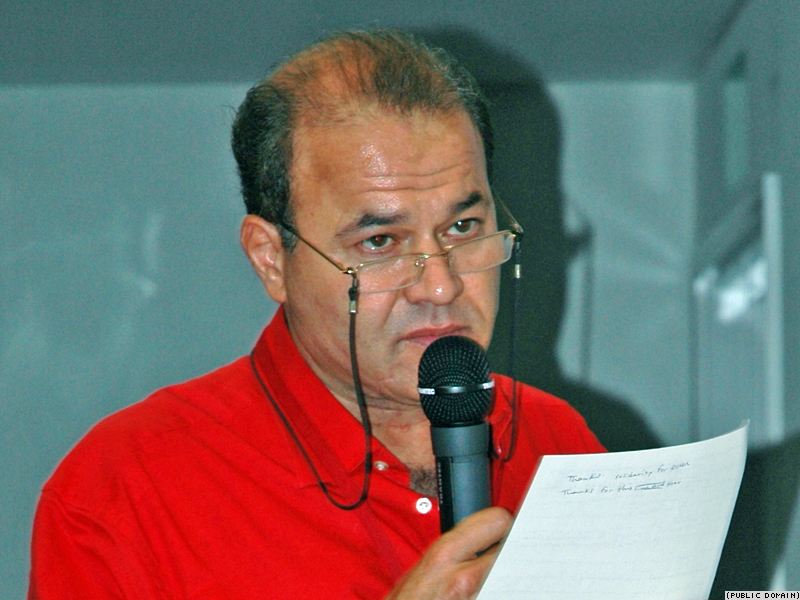 Mansour Osanloo
 October 3, 2013