


Revolutionary Court
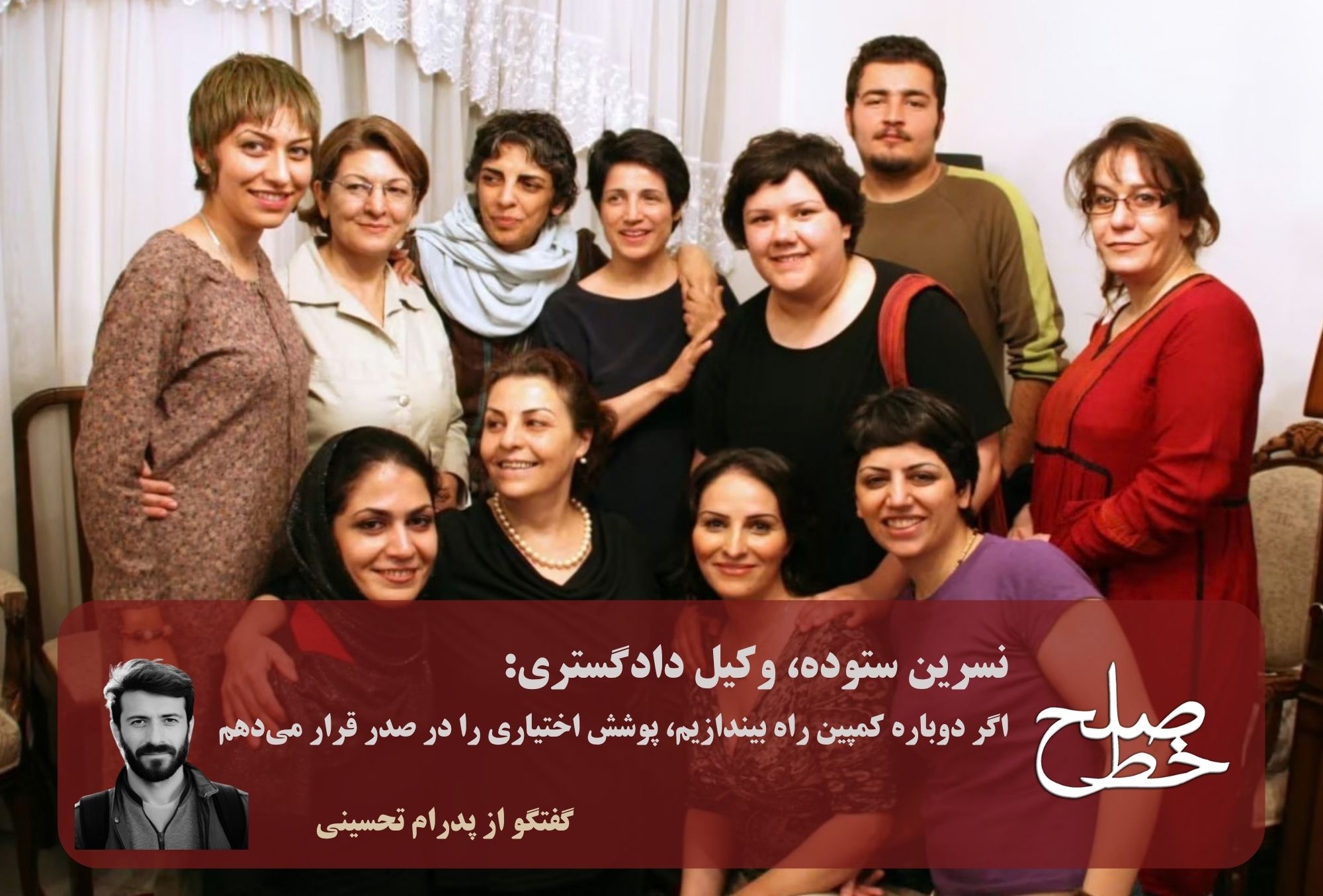
Nasrin Sotoudeh: If We Were to Launch the Campaign Again, I Would Put Optional Hijab at the Top of the Agenda/ Pedram Tahsini
The One Million Signatures Campaign can be regarded as one of the most important and influential experiences of women’s civil activism in contemporary Iran—an experience that emerged from legal demands, entered the public sphere, faced repression, and, despite the cessation of its activities, played a significant role in changing attitudes and expanding women’s demands. What […]...
Read More Created By:
Padram Tahsini
Created By:
Padram Tahsini September 23, 2026
Fair trial from arrest to trial/ Lohrasb Kouhestani
The interval between the moment of arrest and the day of trial is the most sensitive, critical, and at the same time the most vulnerable part of the criminal justice process. It is during this period that the individual is directly confronted with the powerful and organized machine of state prosecution; while his guilt has […]...
Read More
Created By:
Lohrasb Kouhestani July 23, 2026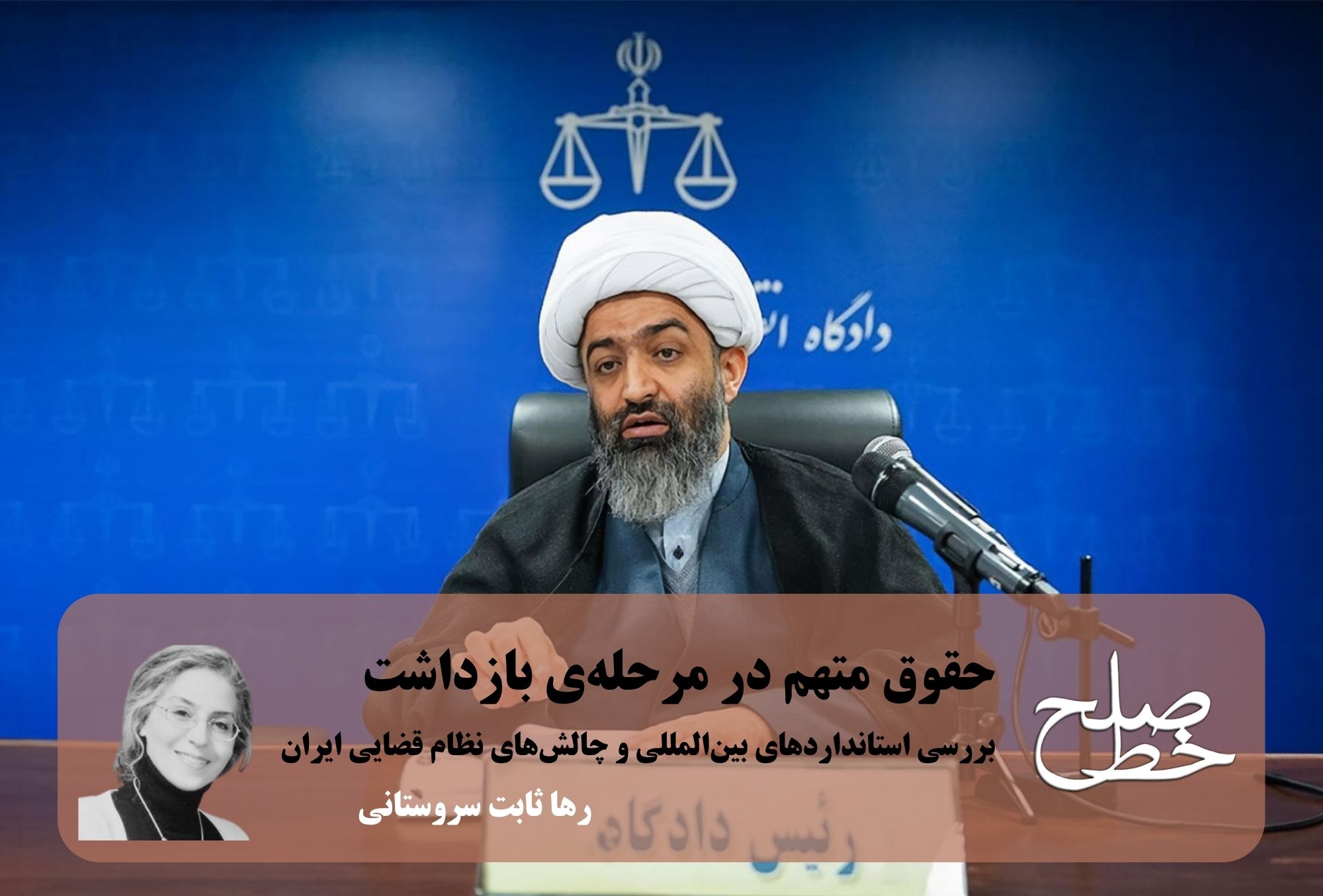
Rights of the accused during detention/Raha Sabet Sarvestani
The right to a fair trial is one of the most fundamental human rights and one of the most important guarantees for the protection of human dignity in contemporary legal systems. This right is not limited to the trial stage, but begins from the very first moments of deprivation of liberty. The experience of various […]...
Read More
Created By:
Raha Sabet Sarvestani July 23, 2026
Why no court should rely on forced confessions/Hermineh Hourdad
Forced confession is one of the most well-known tools of human rights abuse in authoritarian and totalitarian regimes. In such regimes, confession is used not only as evidence to prove a crime, but also as a means to legitimize government actions, create public fear, discredit opponents, and shape the official narrative of events. Historical experience […]...
Read More
Created By:
Hermineh Hourdad July 23, 2026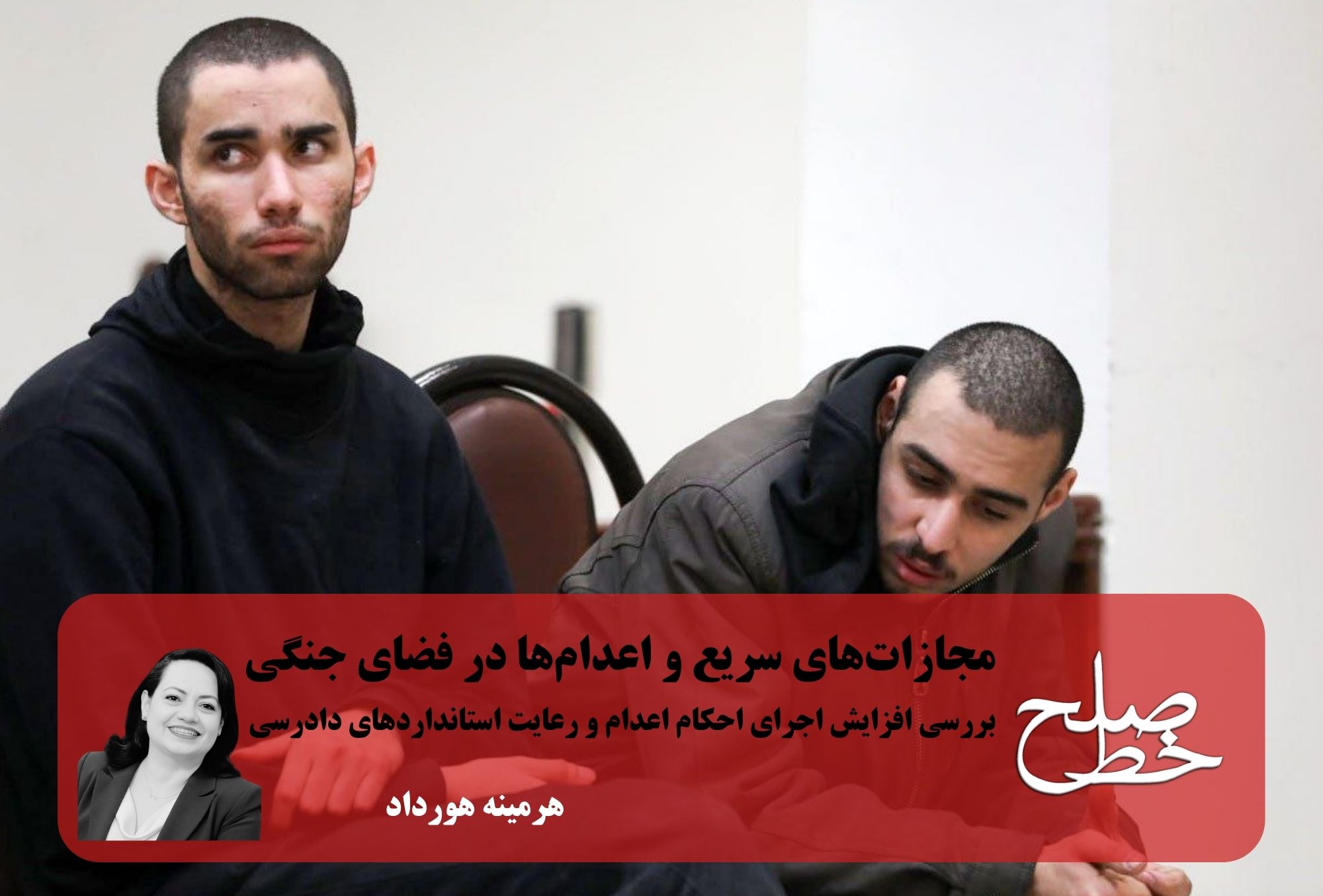
Rapid Punishments and Executions in Wartime Conditions/ Hermineh Hourdad
To understand the mechanisms of power in the Islamic Republic, no point is as significant as execution, because in this system execution is not merely a judicial punishment, but a political instrument for producing fear, silencing dissent, and pushing society toward silence and marginalization. Each time the Islamic Republic has faced crisis, war, or instability, […]...
Read More
Created By:
Hermineh Hourdad April 21, 2026
Tales from within the dark borders; a conversation with three prisoners sentenced to death / Amir Aghaei
When we talk about execution, we are not just talking about the “end of a life”, but about chains of poverty, injustice, and forgetfulness; we are talking about a path that slowly drags a “human” to a point of no return. In the depths of society, where the voices of the weakest are heard less, […]...
Read More
Created By:
Amir Aghayi April 21, 2025
Execution: Administering justice or reproducing violence? A conversation with Shahab Tajri / Azar Taherabadi
Execution has always been one of the most controversial and challenging topics in criminal justice systems around the world. In Iran, this punishment, especially in recent decades, has not only been a legal and religious issue, but also a political, social, and ethical one. In this regard, questions have been raised that go beyond the […]...
Read More
Created By:
Azar Taherabad April 21, 2025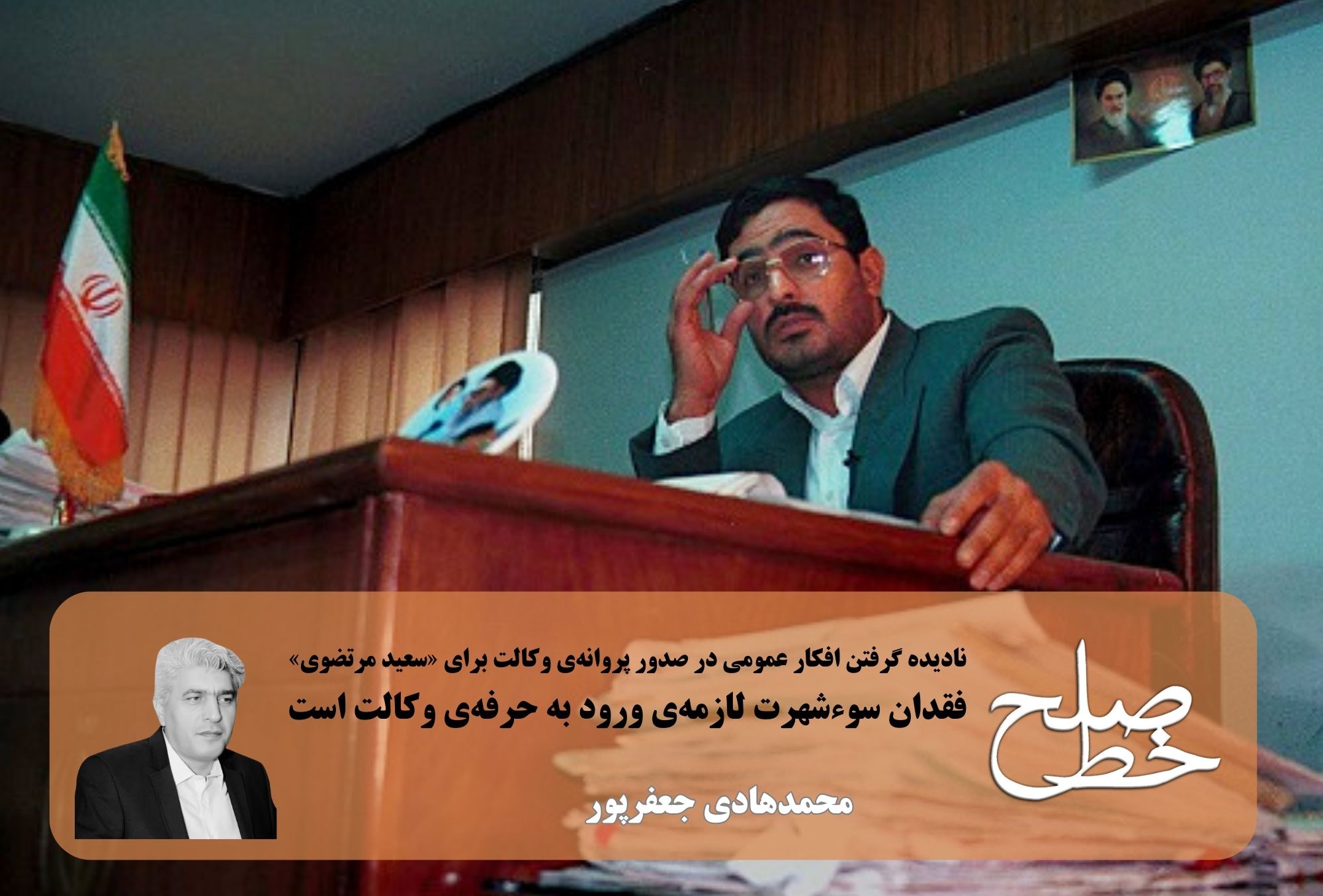
Ignoring public opinion in issuing a power of attorney for “Saeed Mortazavi” / Mohammad Hadi Jafarpour
Referring to the decision of the Bar Association of Yazd regarding the issuance of a lawyer’s license for Saeed Mortazavi (former judge and government employee), and considering the reaction of the legal community and lawyers’ protest against the performance of the board of directors of the Bar Association of Yazd, this decision is subject to […]...
Read More
Created By:
Mohammad Hadi Jafarpour February 19, 2025
Message from Women Prisoners: Issuing the death sentence, revenge of the government from women/ Nasim Mogharab
During the short period since the issuance of the death sentence for Sharifeh Mohammadi and Parichehr Azizi, multiple statements have been released in protest against the issuance of these sentences and the danger of similar sentences being issued for Vida Movahedi and Nasim Gholami Simiari. Paying attention to the letters and analyses published by imprisoned […]...
Read More
Created By:
Nasim Mogharab August 22, 2024
Is an unjust law still a law?/ Mohammad Hadi Jafarpour
One of the most important issues that is currently being discussed in society is determining the boundary of “civil disobedience” with law-breaking, legalism, and the religious term “oppression”. The attention to this issue has led to the question of the relationship between ethics and law, justice and ethics, or in a religious perspective, the interaction […]...
Read More
Created By:
Mohammad Hadi Jafarpour August 22, 2024
Forgiveness, symbol of injustice/ Hossein Raeesi
A look at the recent “pardon” of a large number of political-security convicts and suspects. The protests of “women, life, freedom” from their first day in late September 1982 were so widespread that they resembled a revolutionary movement and led to the arrest of thousands (and perhaps tens of thousands) by security forces. The mass […]...
Read More
Created By:
Hossein Raeesi February 20, 2023
The approach of the courts in Iran towards international human rights laws / Mahnaz Norouzian.
Nowadays, the issue of human rights is so global and important that the acceptance and legitimacy of governments and regimes depends on how they support these rights. According to the Iranian Civil Law, treaties that are ratified between the government of Iran and other governments, in accordance with the Constitution, have the force of law. […]...
Read More
Created By:
Mahnaz Norouzian November 22, 2022
