


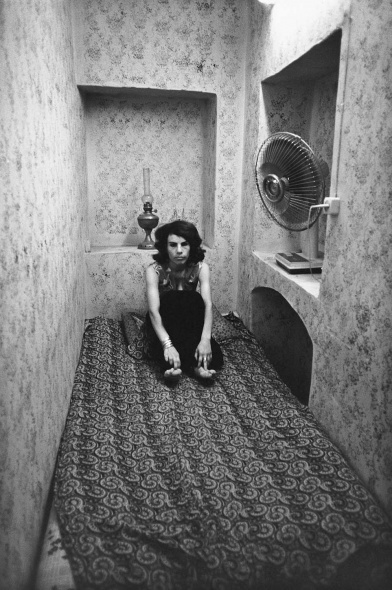
“Rospegari” is a description of the present situation!
“Rospi” women! This is a word that we have all heard of. It doesn’t matter where we are in this city, we have all seen them in every corner and neighborhood; when they are being chased like shadows, they listen to suggestions and even argue over high prices; that’s when you realize that near you, in this very city, there are people who willingly jeopardize social security!
And does the presence and activity of this group truly endanger our social security? Who is a spy and what is espionage? Is a spy an offender or a sick person, and is espionage a crime or an illness?
“Rospi” in Persian means a promiscuous, immoral, and wicked woman, and its Arabic equivalent is “rosbi” which was also used during the time of the companions and followers of the Prophet. “Rospi” is actually an abbreviation of “rospeyd” which comes from the concept of “naming something with its opposite” and was used as a mockery and insult towards dark-skinned women in Russia.
Researchers, however, prefer to use the term “sex worker” instead of “prostitute” or other definitions, because words like prostitute, whore, street women, etc. carry a negative and insulting connotation. Therefore, as an alternative, they mostly use the term sex worker, which simply describes the working conditions of this group of women.
The term “espionage” in the world of law and criminology also has a specific definition, which refers to three definitions.
A) “Rospi is a term used for women who earn a living through self-employment and have no other profession. They continue their work under specific regulations of this profession.”
B) “Prostitution means creating a temporary sexual relationship with someone who pays for this relationship with the intention of sexual gratification. In other words, the main criterion in this relationship is the sexual satisfaction of the buyer.”
Prostitution is when someone provides sexual services to another person and receives money in exchange.

According to the World Health Organization in 2001, sex work or prostitution is one of the most dangerous professions. Prostitution is defined as the exchange of sexual services for money or material goods, and it is also a general concept that involves selling one’s body and giving it to someone else for sexual pleasure, where sexual pleasure is of secondary importance.
The vast and boundless scope of concepts related to prostitution in the world has made addressing this phenomenon difficult. This is because prostitution is directly linked to issues such as poverty, education, domestic and non-domestic violence, sexually transmitted diseases, family problems, addiction, migration, human trafficking, AIDS, human rights, social policy-making, and many other concepts.
Furthermore, due to the underground nature of this phenomenon in most parts of the world and the secrecy resulting from the social stigma surrounding those involved, conducting accurate and comprehensive research on this issue is either impossible or accompanied by numerous challenges; especially in areas such as child trafficking, where people even refuse to acknowledge the existence of such a problem in society.
On the other hand, addressing this issue has its intricacies that should not be overlooked. For example, Saeed Modani (1389, taken from the Iranian Women’s Association website) refers to the negative connotations of the word “prostitution” and claims that in cases where interviewers have mistakenly used this word, the interviewees have been embarrassed and considered it disrespectful to their clients. The use of the term “sex worker” has also been deemed legitimate and associated with libertarian ideologies, and has been criticized. Working on a phenomenon that even mentioning it is controversial, yet has a history almost as long as human societies, certainly has its own complexities. On the other hand, the phenomenon itself does not manifest itself in the same way in different places.
According to most social experts, issues such as income acquisition, sexual needs, poverty, diversity and forced marriages are among the most important reasons for this social abnormality. Unfortunately, this problem has also affected married women, as stated by the Director General of Social Welfare Organization, where more than 50% of female sexual workers are married, most of whom are considered part of the middle class of society.
Based on this, it can be said that prostitution, which has been abandoned without any control and without social, cultural, health, moral, and even economic supervision, has infiltrated other official social organizations and institutions; in any place where sparks and signs of demand for this service arise, its supply also takes place.
Furthermore, as human life and societies have become more complex in modern times, this phenomenon has also undergone transformations and newer forms of it have emerged in society.
However, it can be firmly stated that the person with schizophrenia is neither a criminal nor a patient, but rather a victim of social disorder. This is because if we conduct a behavioral study among street vendors, we will observe that they fall into three categories:
A group of girls and women who, for various reasons, have fled their homes and families and fallen into the clutches of cultural mafia gangs, and have been forced into sexual labor through them.
The second group also includes women who do this work due to financial need, although stating financial need and poverty as the reason for prostitution is not socially acceptable from a sociological perspective.
And finally, the third group includes women who have an insatiable sexual desire and engage in prostitution due to sexual diseases, as this group is also victims of cultural norms.
This social phenomenon is considered a profession in some countries around the world, but in Iran it is recognized as a crime due to cultural and religious conditions. Some sociologists and social analysts, contrary to the legal system in Iran, classify this phenomenon as a social harm and advocate for a serious analysis of it.
However, so far no official statistics or accurate reports have been published about the problems of prostitution in Iran. A few days ago, the director of the Office for Socially Vulnerable Affairs of the country’s Welfare Organization admitted in a press conference: “We have no access to female prostitutes and there are no statistics available in this regard.”
In general, expressing opinions about the prevalence of superstition in Iran and the forms of this phenomenon, given the sensitivities surrounding this issue, makes it difficult to investigate this hidden social phenomenon. It could be said that the latest statistics and research on the prevalence of this issue were published in July 2012, in which period, Seyyed Kazem Rasoulzadeh Tabataba’i, the director of the psychology department at Tarbiat Modares University, said: “In the 1960s and 1970s, the age of superstition was over 30 years old, but now the age of superstition has reached 15 years and above.”
This statistic was published during a period of time when some researchers believed that the age of puberty had reached 12 or even 10 years. Among them, Saeed Madani, a social researcher, also considers other statistics; he believes that “the most common age of puberty in Iran is 18 to 25 years old,” which has significantly decreased in recent years.
It must be said that this is a phenomenon that still plagues all countries of the world, and various and different solutions are adopted for it based on the norms of their society, in the direction of management, reduction, or prevention, and since the norms of each society are defined according to customs, traditions, rituals, and customs prevailing in that society, therefore, a social phenomenon that is considered normal in one society may be considered abnormal in another society; if it is widely accepted in some societies and has been institutionalized and managed as an inevitable necessity, it is strongly condemned and fought against in others.
 Saeed Madani
 June 7, 2024