


A Look at the History of Jews in Iran
This is a picture of a beautiful sunset.[/caption]
این عکسی از غروب زیبا است.
This is a picture of a beautiful sunset.
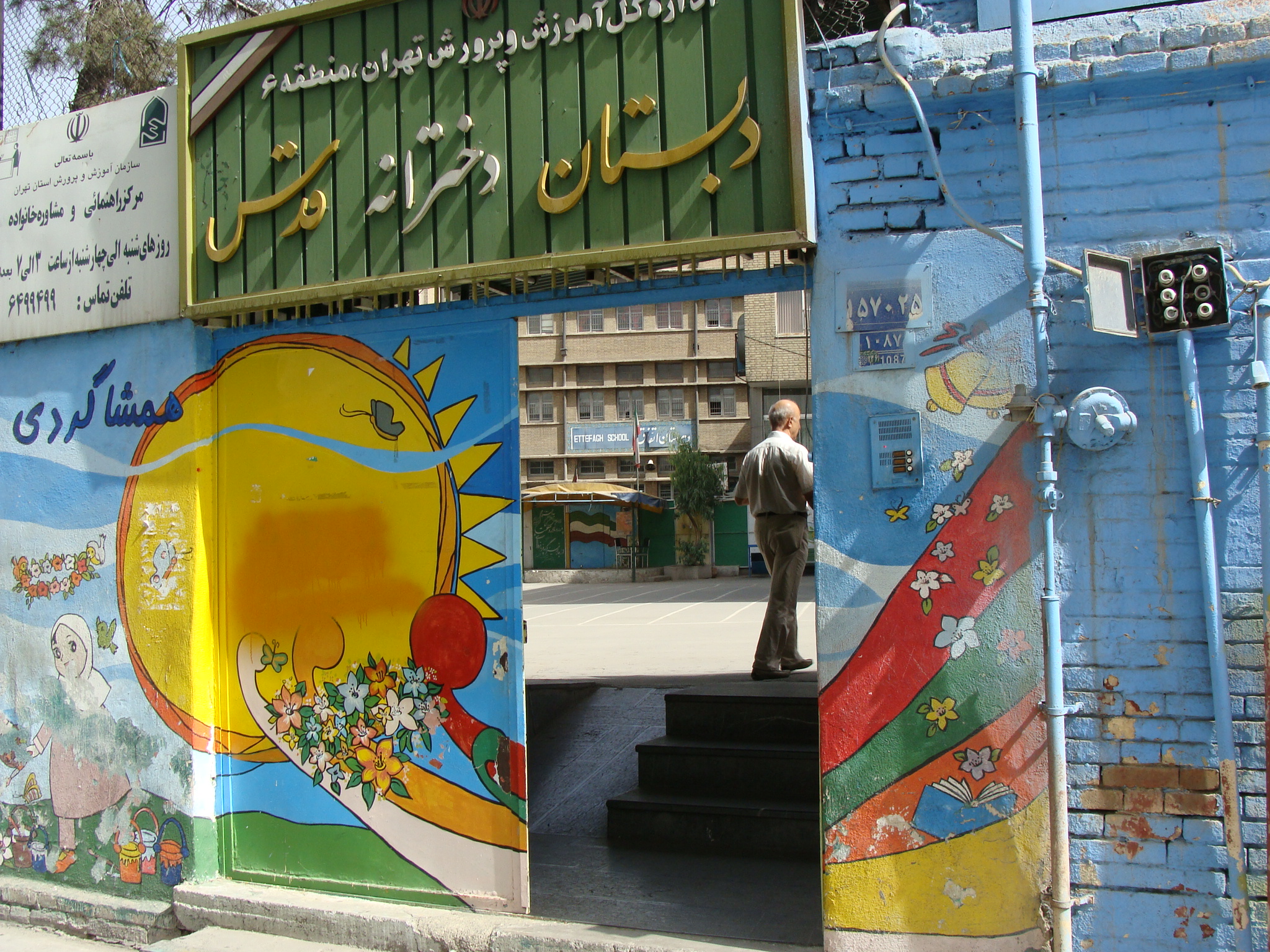
Changing the name of Atfagh High School to Ghods Elementary School.
Throughout the thousands of years of civilization, the land of Iran has been a station and origin for many tribes, followers of religions, and various customs. Their descendants include the current people of Iran and diverse populations in other parts of the world who have been scattered far and wide due to the separation of lands or the escape and migration of certain groups of Iranians.
Jews have also been one of the ancient peoples of the region, with many of them residing in the land of Iran. They have maintained their religion and ancient culture, and have influenced millions of Iranians in the present time, alongside other powerful religions and cultures, both in preserving their own identity and in assimilating with other ethnic groups.
The young generation of our country, due to living under the control of an ideological and strict government that has presented them with a one-sided and fabricated version of Iranian religion through propaganda and uniform historical narratives, has remained unaware of the social and cultural history of their land. Iranian youth, due to the majority of non-Muslims fleeing and immigrating from their ancient homeland in the decades after the Islamic Revolution, rarely interact and have familiarity with non-Muslim Iranians, and may not know that Iranian identity has no inherent connection to religious beliefs. Throughout history, whenever the rights and respect of other human beings and their beliefs have been upheld, our land has also blossomed like a garden in spring.
Studying the history of the people of Iran will undoubtedly be beneficial for our young generation. In this regard, the three-volume book “The History of Iranian Jews” written by the late Habib Levy in the 1930s, which has faced neglect and unofficial government censorship in both the Pahlavi and Islamic eras, is recommended.
The first major migration of the “Children of Israel” tribes to the vicinity of Iranian lands took place 2700 years ago during the time of the Assyrians. After invading their ancient land and destroying one of their two kingdoms known as “Israel”, the majority of these people, 10 out of 12 tribes, were forced to migrate to nomadic areas in present-day Kurdistan. They later became a part of Iranian lands for thousands of years. These tribes gradually settled in the regions of Kurdistan, northern and western Iran, between the rivers and the Caucasus, and became an integral part of the local population. Some groups among them, while preserving their religion and culture, have had a prominent presence in these lands up to the present day. The language of these tribes is still a mixture of Assyrian Aramaic and Hebrew words, at least among the Jews of Urmia and some areas of Kurdistan.
The second major migration of the Israelites to the region of Iran took place when Cyrus conquered Babylon and expanded the Achaemenid Empire. A large group of them, who had been taken captive by the Babylonians after the destruction of their kingdom known as “Judah” and were settled in Jerusalem and had their religious center destroyed by the Babylonians, were freed.
This population, which was mainly dependent on the tribe of “Judah” and were descendants of the Jewish monarchy, has been known in history as “Jewish”.
A part of the Jews, with the permission and guidance of the Achaemenids during the time of Darius, returned to their homeland and, with the revival of the rule of Judah and the construction of their religious center, remained as military allies and border guards of the Achaemenid and Parthian empires, in alliance with the ancient Iranians for centuries. Another part of them remained in Babylon until just 50 years ago, and a large part settled in the heart of Iranian lands in regions such as Susa, Hamedan, Kermanshah, Kurdistan, Fars, Shiraz, and Isfahan, and were recognized as one of the oldest Iranian tribes.
Iranian Jews have been a civilized and cultured people throughout the millennia, as well as brave warriors, whether as powerful satraps, defenders of the borders of Iran, or as scribes and statesmen. They have always been an integral part of the Iranian nation. Under the tolerant rule of Iranian governments, the religious Jews have produced their greatest religious and legal work, the “Babylonian Talmud,” in their universities in Tisphon. They have also provided mutual services to the Iranian governments, to the extent that one of the common lines of government in Iran during the Achaemenid era was a branch of Hebrew. The Achaemenids, Jewish commanders stationed in Babylon, and the independence-seeking Jews had common interests and sometimes fought together against the Greeks and Romans.
In general, the revered and ancient Jewish cemeteries throughout the Iranian lands, which have mostly been turned into buildings, streets, parks, and parking lots due to plunder and seizure, are evidence of the presence and economic and cultural activities of this group of Iranians in the main centers of Iranian civilization. Some of the Sasanian kings were born to Jewish mothers and some of the Sasanian queens were Jewish.
In general, except for the periods when religion was intertwined with the Sassanid government, Jews were not subjected to harassment and persecution, and alongside their compatriots, actively defended the authority of Iran. Even among those who rebelled against the invasion and occupation of the Arab invaders, there was a Jewish commander who, for clear reasons, has been erased from the history of the resilient and combative Iranians.
The first inhabitants and builders of the ancient city of Isfahan were Jews, and the majority of the population in that region, including villages and surrounding cities, were Jews until the rise of the Safavid dynasty, which converted most of the people of Iran to their own religion in a short period of time.
After the establishment of Islamic rule in the history of Iran, Jews emerged as a prominent and active ethnic-religious group and settled throughout the greater region of Iran, from Baghdad to Balkh and Herat, Kabul to Bukhara, Nishapur to Bushehr, Shiraz to Rey, Rasht to Tabriz, Urmia to Hamadan, Kurdistan to Kermanshah, and Badkoubeh to Transcaucasia and Georgia. However, due to specific religious laws that were put in place to prevent the progress and superiority of non-Muslims, known as “dhimmi laws,” and the continuous effort to gradually assimilate non-Muslims, Jews, like many other Iranians, were pushed to the margins of society.
After the arrival of Islam, the language of the Jews in Iran was mostly a mixture of Iranian languages from before the Arab invasion, known as “Pahlavi language”, with Hebrew words and metaphors. This was the mother tongue of most Iranian Jews until a few decades ago. While speaking their local languages such as Persian, Turkish, and Kurdish, Jews often used the Hebrew script, which was also used to write Persian texts and other languages. Some of the oldest Persian texts discovered were written in this Hebrew script. Another characteristic of Iranian Jews was their preservation and promotion of the music of this land, which was practiced as a semi-hidden art among Jews due to the prohibition of music in Islam. They also had skills in making and producing musical instruments.
One of the services of the Jews in recent centuries, which may be considered their greatest service in the history of Iran, has been the revival of civilization and economy in Iranian lands after the invasion of the genocidal and destructive Mongols. This was carried out by recognized ministers such as Saad al-Dawla and Rashid al-Din Fazlullah, and the third generation of Mongol kings organized the country and revived its economic and productive life, saving them from mass murder and destruction by their predecessors.
The number of Jews in ancient Iran, before the emergence of the Safavid dynasty, is estimated to be around 400,000, which on the other hand indicates the intensity of religious and ideological oppression in the last five hundred years; because the current number of Jews in this land barely reaches 20,000.
At the end of the Qajar period, the Jews of Iran were a largely impoverished community on the verge of decline. This was due to their exclusion from participating in major economic activities such as land ownership, agriculture, and government and military positions, as well as professions such as writing and judging. As a result, they were often engaged in smaller trades, traditional medicine, alcohol production, jewelry sales, and music.
The Constitutional Revolution and the subsequent rapid growth of civic thought in Iran marked a turning point in the revival of Iranian society, including the revival of non-Muslim communities. The Pahlavi monarchy, with its modernizing and Westernizing tendencies, established a level of secularism in Iran that disregarded discriminatory laws against “dhimmi” minorities and promoted equal rights for Iranians regardless of their religious beliefs. As a result, the suppressed talents of minorities were able to flourish. Young Iranians, in the midst of modernization and continuous development, blended with their fellow countrymen in their work and daily lives. With the significant reduction of discriminatory laws from the past, minorities, including Jews, were able to achieve a considerable level of education, culture, and prosperity, and after centuries, they were able to regain their sense of usefulness, Iranian identity, humanity, and dignity, and confidently engage in social activities.
During the 20th century, after the establishment of French and Jewish schools, known as the “Alliance”, which transformed a generation of Jews into educated and capable youth, Iranian Jewish schools were also allowed to be founded one after another and Jews were accepted into both public and private non-Jewish schools. Until the Islamic Revolution, most of the 100,000 Iranian Jews were literate in Persian and a significant portion of them had achieved relative prosperity. The Jewish youth during the late Pahlavi era were mostly engaged in higher education, both domestically and abroad, and their level of patriotism and sense of Iranian identity was likely higher than others. Thousands of Jewish doctors and engineers were working in Iran, and many were employed in government offices. Dozens of Jews had reached the elite class of society by establishing modern and large industries. They were pioneers in industries such as plastic, aluminum, agriculture, and modern poultry farming, and many others were involved in smaller production industries. Some Jews also achieved great
Gradually, young Jews began to participate in scientific, artistic, sports, and film fields, and some of them even had a prominent presence in political affairs, including among intellectuals, leftists, and freedom-seekers. Several educated Jews held positions as university professors, prominent scientists of modern Iran, and renowned journalists, while Jewish doctors were seen providing healthcare services in villages and holding high positions in hospitals both in Iran and abroad. Some Jews also participated in road construction, dam building, and city planning and have been successful in these endeavors.
Jews in Iran were also very active in charitable work and, in addition to participating with others in supporting earthquake victims and the oppressed, they have set examples such as the “Dr. Sapir Charity Hospital”, which is still active and deliberately serving the Muslim community in southern Tehran, and the “Ort Industrial High School”, which has delivered thousands of Iranian technologies to the community. There is no doubt that the continuous presence of the Jewish community in the Iranian society could have brought thousands of times more benefits than looting their properties and establishments, while also ensuring that their rights as citizens are not neglected or trampled upon.
The Islamic Revolution of Iran was another turning point in the history of the Jews, this ancient people of Iran. Following the declaration that Iran sees itself at war with Israel, by Ayatollah Khomeini in Paris, which was reflected on the front page of Kayhan newspaper on January 16, 1979 in Tehran, and with the emergence of a great social and religious transformation in Iran after the revolution, many Jews decided to leave their homeland.
A short time after the revolution and the establishment of the Islamic system, discriminatory actions began against Jewish leaders and prominent members of the community, including executions, confiscation of property, and both overt and covert threats. Jews were experiencing issues that their predecessors had only feared. The revival of discriminatory laws against “dhimmis” (non-Muslims) that were designed to humiliate and pressure them, along with the gradual dissolution of their rights, was accompanied by a constant atmosphere of fear and the constant danger of being accused of being a “Zionist.” This led to the majority of Jews, like other non-Muslims, leaving their homeland in the years following the revolution. Currently, the estimated population of Jews living in Iran is around 20,000, and emigration continues. Jews living in Iran still hope for their safety as long as they fulfill their duties as agents of foreign propaganda for the Iranian regime. They remain in their country, caught between hope and fear, longing for a better
Among the thousands of Iranian Jews who migrated to Israel in the mid-20th century, or the tens of thousands who were forced to flee to Israel, America, and other countries after the restrictions following the Islamic Revolution, and even among the tens of thousands of Jews expelled from Iraq, who considered Iran their homeland for decades, we find thousands of the most successful experts, doctors, scientists, industrialists, politicians, and intellectuals who still hold Iran, its memories, and its culture dear in their hearts and are saddened by their distance from their homeland. Without a doubt, the removal of these people from the Iranian society, along with the removal of many other elements of the Iranian nation, has caused severe damage to the country that may be difficult and perhaps impossible to repair from a historical perspective.
The historical experience of the small Jewish community in Iran is a great lesson for the larger Iranian society. This experience shows that eliminating discrimination, promoting tolerance and accepting the participation of all individuals in a larger society in social, economic, scientific, artistic, human and other aspects, is capable of elevating a developing and progressive country to a level of power and respect within less than a century. This is the aspiration of every Iranian and is in line with the wishes of our ancient and historic nation.
 Admin
Admin December 26, 2013