


The occupation of women and Iranian society.
According to the latest statistics on the country’s job market, out of 24 million employed individuals in the country, only 5 million are women. Additionally, out of 3.5 million unemployed individuals, 1.2 million are women. In other words, the unemployment rate for women in the country is 34%. One of the officials at the Ministry of Labor has warned that in the future, we will face a demand for 2.5 times more women in the job market. Looking at global statistics also reveals other facts. According to Fars News Agency, 98% of domestic workers in the world are women, and 97% of nurses, 85% of primary school teachers, and 57% of secretaries are women.
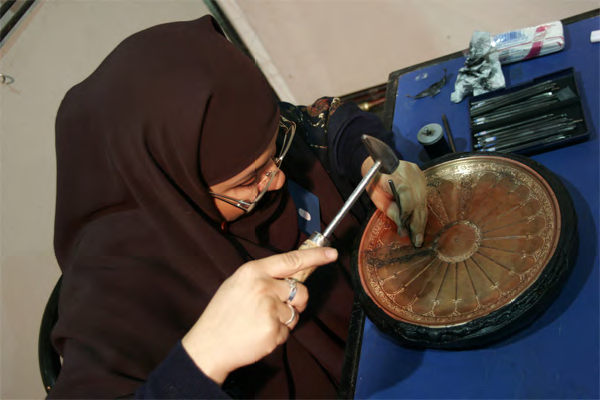
One of the most important criteria for measuring the level of development in a country is the importance and credibility that women have in that country. Now that the world’s attention is more focused on women, in order to achieve social development, accelerate the process of economic development and achieve social justice, if women are seen as active and constructive forces, they will certainly have a significant impact on the development process and the quantitative and qualitative increase of the human resources of that society.
The increasing participation of women outside the home leads to strengthening self-confidence, independence, and decision-making skills, as well as appropriate handling of events and life incidents. This will have a positive impact on family relationships. In fact, through work and social activities, women gain more creativity, efficiency, and independence. In general, it can be said that the more women enter the social sphere, the less personal and social identity crisis, depression, and isolation, aversion to social control systems, distrust, and pessimism towards the laws and regulations governing society will be reduced in this group.
Women’s share in the job market.
However, a look at the statistics and figures of women’s employment and unemployment in Iran indicates the elimination of women’s awareness from the social and economic sphere, and of course, the existence of an economic crisis is also a confirmation of the inactivity of half of the human resources whose presence can create a great transformation in the development of society. According to the statements of Fatemeh Moghimi, the head of the Iranian Women Entrepreneurs Association, and based on the report of the Labor Organization, only 13% of Iranian women are employed. Ms. Moghimi stated in a meeting of the Women Entrepreneurs Association that according to the statistics of the World Economic Forum, Iran ranks 116th in terms of women’s economic activities.
Furthermore, the analysis of overall statistics and the employment status of women in the country during the year 88 shows that out of a total of 21 million employed individuals, only 3.6 million are women. The employment statistics for men show a higher number of 17.3 million individuals.
Jobs, with a specific level of salary and gender, have been determined and women almost always receive less pay for the same work and in some cases, do not receive any pay at all. The labor law – which is now known everywhere as the equal pay law – exists to reduce the wage gap between men and women. However, the separation of genders in the workplace is maintained and intensified by private and government employers, in order to exploit women as a cheap source of labor and perpetuate the idea that women are dependent on men. The work that a woman does is still considered less valuable than the work that a man does. Behind this false belief is the idea that women do not really need money and it is always a man who is willing to take care of them. Therefore, once again, women are cleverly exploited because of their gender.
Being a woman is difficult in the workplace.
When the discussion turns to the presence of women in public spaces or jobs outside the home, issues such as lack of equal rights and benefits compared to men or suitable job promotions for the work they do come to mind and various discussions are formed around it. However, the reality shows that these issues are only a part of women’s issues in the job market. The hidden part of women’s issues, which directly and crucially affect their income, job promotions, and social security, is the issue of sexual harassment in the workplace. Sexual harassment in the workplace takes various forms, such as using job authority or management power to impose sexual demands. According to existing statistics, this is a common and widespread issue in all societies due to the presence of patriarchal power structures. Almost all women are somehow exposed to sexual assault and harassment and are forced to take special precautions to protect themselves and live in fear of sexual harassment. The result of this is the long-term lack of financial and job promotions for women and their
If we are searching for women to have a proper share and position in the production and development of the country, considering the issues and problems that women face, fundamental solutions are necessary; solutions such as empowering women, eliminating barriers that prevent women from working (both in the family and in society), removing discrimination between men and women in the job market, and promoting participation and division of labor in the household (making housework and childcare a social responsibility). If we want to meet the needs of both genders equally, we need women and men who work together at every level and hierarchy of employment and in every type of job, and gender bias should not deprive anyone of their rights.
Dr. Aqlima: What has multiplied the problems of working women is not only their presence in society, but also the heavy responsibilities that they solely bear in the family. The reality is that many men lack the culture to share these responsibilities.
They do not have a working partner and expect her to take on all the responsibilities of life, like a housewife, while it is only through the cooperation of her husband and family members that she can manage.
The workload of women has been reduced. Therefore, when discussing the topic of women’s employment and the problems faced by working women, we should talk about men, not women, and strive to promote a culture of cooperation among family members.
According to the latest statistics on the country’s job market, out of 24 million employed individuals, only 5 million are women, and out of 3.5 million unemployed individuals, 1.2 million are women. In other words, the unemployment rate for women in the country is 34%. In this regard, one of the officials of the Ministry of Labor has warned that in the future, we will face a demand for 2.5 times more women to enter the job market. A look at global statistics also reveals other facts. According to Fars News Agency, the latest statistics show that 98% of domestic workers in the world are women, and 97% of nurses, 85% of elementary school teachers, and 57% of secretarial workers are women.
 Admin
Admin September 24, 2013