


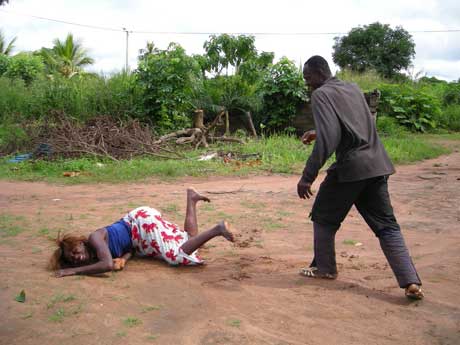
Do not remain silent about violence against women.
Violence against women is always talked about and how much they endure difficulties and abnormalities. Is this really the case? Are these really only women’s problems? What is the role of men? Are women’s problems not men’s problems? Why do we automatically think of “gender inequality” as “inequality against women” and not “inequality against men”? Why do news reports not say that a man committed assault, instead of saying a woman was assaulted? Why do they not say that a man caused harassment and distress to women, instead of saying a woman was harassed and distressed? There is no academic answer to these questions. Unfortunately, society has been structured in this way and in this patriarchal society, as soon as something happens to women, all attention is quickly focused on the victim and the perpetrator continues their violent actions under the guise of security. Therefore, one way to combat violence is to identify the perpetrator or perpetrators.
All forms of violence against women, whether perpetrated by an intermediary or directly, involve three parties: “the perpetrator or abuser”, “the victim or recipient of violence”, and “the observer or witness of the violent acts”.

Violence against women is a widespread problem. In Iran and its neighboring countries, there is generally no statistics on violence against women and it has become an institutionalized issue. In Iran, there is no accurate statistics on violence against women. In Tajikistan, violence against women is also a traditional practice. In all Kurdish regions (Iran, Iraq, Turkey, and Syria), thousands of women are under psychological and tribal pressure. In all Arab countries (especially the Persian Gulf region), women believe that they have no rights and should not have any. In East Asia, girls are commodities that are bought and sold by families to escape poverty.
Sexual violence, non-contact sexual violence, verbal violence, rape, violence against dowry, forced prostitution, forced pregnancy, female genital mutilation, buying and selling of women and girls, violence against female employees and workers, violence caused by war, violence in prisons, systematic rape, visual and behavioral violence, political violence, etc. are all types of violence that are imposed on women. In examining these forms of violence and comparing the quantitative statistics of violence against women, we are faced with points that indicate the areas in which violence is being carried out.
ی
The laws of misogyny.
B- Family and Social Culture
Different interpretations of law and culture by the executors.
By comparing the level of violence in developed, developing, and underdeveloped countries, we find that the more laws are formulated in favor of women and education is provided to identify and respect their legal rights and to refrain from violence, the more it can have an impact on family and social culture, and as a result, violence against women is reduced and is not considered a social problem. On the contrary, when we look at developing and underdeveloped countries, we find that anti-women laws, which are themselves a product of traditions and anti-women attitudes, do not make any effort to educate and promote equal rights and to refrain from violence. For this reason, in these countries, violence against women should be considered a social problem.
The level of violence against women, regardless of development and underdevelopment, has always been the same and violence shows its nature in the following ways:
A- Hierarchy of Violence
Being intelligent about violence
Being cyclical violence
In order to prevent the realization of the mentioned cases, in addition to legal and cultural aspects, empowering women and supervisors can be a major step towards breaking the silence against violence.
Let’s not hide the roughness.
Let’s not overlook even the smallest acts of violence.
Let’s not consider violence as an exception.
Let’s not focus on external factors of violence and always identify the perpetrator of violence as the aggressor.
From the fact that men are the main perpetrators of violence, we can express the process of stereotyping violence in society as follows:
There are many clichés about “being a man”. For example, the simplest and most common ones are: “a man should not cry”, “a man should be strong and tough”, “a man should not show off or complain”, “a man’s word is his bond”, “a man is not afraid of the dark”, “a man does not express his emotions”, and countless other clichés of this kind. They not only perpetuate stereotypes, but also teach women to conform to certain expectations. For example: “a woman cries”, “a woman is not as strong as a man”, “a woman complains”, “a woman does not keep her promises”, “a woman is afraid of the dark”, “a woman expresses her emotions”. These qualities are evaluated as weaknesses in women, and the conclusion is drawn that men are always stronger, more capable, and better than women. These are qualities that society (laws, culture, and interpretation of laws and culture) attributes to men

With these clichés, the world of most men takes shape; a world devoid of emotions. This lack of emotion leads to the creation of violence and aggression in them. This is how society is filled with rough and dry men who all want to be “bosses and masters” of women and command them to do good and forbid them from evil. In contrast, there are men full of emotions who both cry and fear the darkness. But their numbers are very few. In most cases, these men do not reveal their inner reality because they are afraid of the ridicule and judgment of other men; men who will compare them to “women”. They cannot accept this “disrespect” towards themselves. This is completely opposite for women, if a woman is compared to a man, oh how she will be seen as a “lioness” and “high-minded”. This fear of men being compared to women leads to the spread of more violence against women in society; because men are afraid of other men
The fight against violence against women must begin with men; in order to end violence against women, men must take action. Men must understand that their silence in the face of violence against women is an endorsement of this act. In order to put an end to violence against women, men must break the masculine framework and challenge the traditional image of a man. They must eliminate social norms and standards about themselves. They must say “no” to society’s stereotypical expectations of manhood. Men must accept that violence against women will not end until they reform themselves and see everyone, men and women, as equals.
It is in this context that Ban Ki-moon, the Secretary-General of the United Nations, also stated on the eve of the International Day for the Elimination of Violence against Women: “I am deeply affected by the gap between words and actions in regards to eliminating violence against women and girls. On this day, we must double our efforts to support this vulnerable and defenseless group. We must unite. We must unite in our goals and actions to create a safer and better world for women and girls.” He also asked men to be kind to women.
The United Nations General Assembly has called on all organizations and institutions to pay attention to women’s issues and combat violence against this group, and has requested all governments of the world to consider a solution for addressing violence against women. As mentioned in this plan, all sectors of a country must recognize and act upon the social, legal, human rights, citizenship, and equality and equity of women.
The United Nations General Assembly has also declared and expressed that violence against women in any form, physical, sexual, or psychological, is prohibited and must be addressed both in society and in the private and civic lives of women.
This draft was signed and approved without a vote from the attendees at the third committee of the United Nations General Assembly.
Furthermore, it is stated in this plan that in addition to combating violence against women, attention must be paid to issues such as the Universal Declaration of Human Rights, the International Covenant on Civil and Political Rights, the International Covenant on Economic, Social and Cultural Rights, the Convention on the Elimination of All Forms of Discrimination against Women, and the prohibition of any form of physical punishment against women in any society. On the other hand, countries around the world must pay attention to the fact that addressing the issue of eliminating and combating violence against women ultimately guides a society towards growth, prosperity, and lasting peace.
Furthermore, female presidents and prime ministers from around 20 African countries in Paris demanded an end to sexual violence in conflict zones on the continent and for the perpetrators of these crimes to be brought to justice. The first ladies of these African countries condemned the intolerable continuation of sexual violence in conflicts in Africa at the end of a conference held in Paris on the sidelines of the African Peace and Security Summit in support of African women. They emphasized that they are not willing to accept these types of violence as an inevitable or even acceptable result of wars.
The spouses of African leaders have also committed to raising awareness among the global public about such crimes and working towards preventing these acts of violence, and taking action in a way that the perpetrators are held accountable and punished, and the victims receive the best support and protection. African women emphasized that in case of the countries’ inefficiency, special international criminal courts and an international criminal tribunal should intervene.
These women have also asked governments to pass national plans to combat such violence. They have also asked the Secretary-General of the United Nations to adopt a zero-tolerance policy and systematically act against perpetrators of sexual violence.
According to the report of the United Nations Women’s Organization, forces from 16 countries including Cyprus, Ghana, India, and Tajikistan have undergone training on how to deal with sexual violence in conflicts.
In continuation of the educational programs of the United Nations Women’s Agency, in collaboration with the United Nations Peacekeeping Center, some active women are being trained as peacekeeping forces to combat situations of sexual violence. So far, some female police officers from India have been sent to other countries, including Liberia, for peacekeeping operations and their presence has been positively evaluated.
Some authorities in India have stated that the presence of women in the peacekeeping forces of the United Nations and their role in post-conflict situations can have a reassuring effect on local people. It also seems that reports on sexual violence will be presented with more accuracy and quality.
In addition, the United Nations Women’s Organization has held more than 20 domestic and international training courses on gender, sexual violence, and gender-based violence in collaboration with national authorities in India over the past 2 years.
In February 2013, a course titled “Women in Peacebuilding” was held, with the participation of over 100 women from peacekeeping forces, peacekeepers, police officials, high-ranking political officials, university officials, and civil society organizations, as well as UN military personnel. As a result of this course, senior military commanders in India expressed their serious commitment to training peacekeeping forces in their country through a statement. It is noteworthy that sexual violence is no longer seen as a women’s issue, as in most cases, the perpetrators are men. Therefore, training male peacekeeping forces in this area is also considered very important.
 Admin
Admin February 21, 2014