


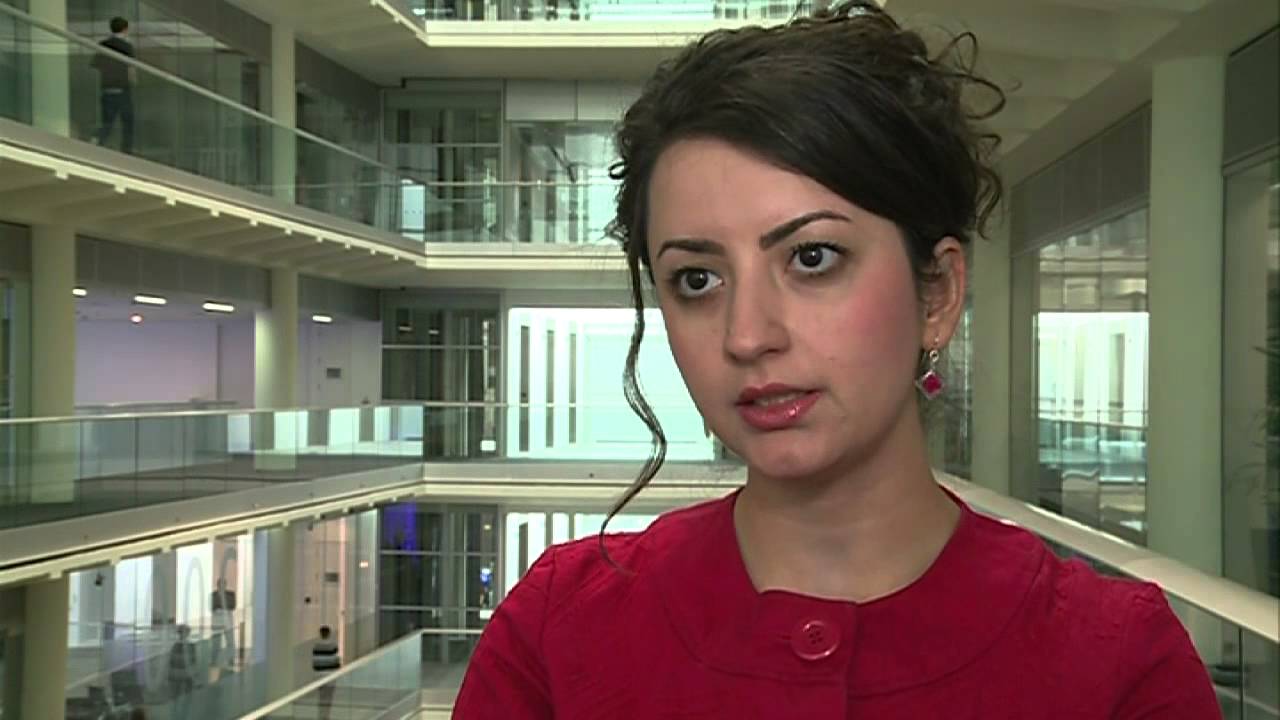
Raha Bahreini: Holding a gathering should not be conditional on obtaining a permit/ Simin Rouzgar

The right to freedom of assembly has been emphasized as a fundamental right in many human rights treaties, particularly in the International Covenant on Civil and Political Rights. This right is among the rights that people in a region or country use as a means to convey their demands to others and officials. In Iran, however, this right is not recognized by the government – at least in practice – to the extent that many individuals have been imprisoned simply for exercising this right, which has even been emphasized in various aspects in the laws of the Islamic Republic itself.
The peace line in this issue has an interview with Reza Behraini, a lawyer and researcher from “Amnesty International” organization, which you can read more about below.
Mrs. Behrani, for what purpose is the right to hold assemblies recognized in international human rights laws?
The right to hold gatherings and, in fact, the right to communication and holding gatherings is recognized in the International Covenant on Civil and Political Rights as one of the most important human rights. It is emphasized in all international documents that the realization of this right is necessary for the enjoyment of other civil, political, social, and economic rights. It is also emphasized in international documents that this right is one of the key elements of a democratic society. Since this right gives citizens of that society or residents of that region the power to express their opinions, engage in literary and artistic activities, and participate in other social, cultural, and economic affairs of the community, it has a direct connection to the right to freedom of thought and religion. It enables individuals to come together and practice their religious beliefs as a group. This also applies to the right to form and join labor unions and political parties. Therefore, as you can see, a wide range of other rights are related to the right to hold gatherings and have
In your opinion, how important are gatherings in a people-centered democracy?
In a democracy, the right to assembly is one of the fundamental rights; this is because individuals can engage in discussions and debates through assemblies – whether in public places or in meetings and forums they form – express their opinions on political and administrative issues in society, and participate in other activities they are interested in (such as cultural and artistic activities). The term “assembly” in international documents includes any type of gathering; from street demonstrations and marches to meetings and forums, and any type of gathering that takes place in a private space, a religious place, or an artistic space. In fact, the concept of assembly is very broad and can be applied to any type of gathering.
To what extent is the right to hold gatherings recognized according to the laws of Iran? Does the issue of obtaining a permit from a specific authority for holding a gathering not violate this right?
In fact, Iran’s laws regarding the right to freedom of assembly and communication are far from international standards in this area. The first issue, as you mentioned, is the issue of obtaining a permit. The Special Rapporteur on the right to freedom of communication and assembly has consistently emphasized in his documents and reports that holding a gathering should not be conditional on obtaining permission from authorities, and the maximum action that authorities are entitled to take under international law is to require prior notification of the gathering. This prior notification is recommended to be only 48 hours in advance, not before that. The purpose and philosophy of prior notification is for authorities to be able to provide the necessary conditions for the security of the participants and the residents of the neighborhood where the gathering is taking place, and not to control or disrupt the gathering, or to deny permission for it altogether. However, it has been emphasized that even if this prior notification is not given, the organizers should not be faced with fines and imprisonment. It has
This right is very different from Iran, where any gathering requires a permit and the process of obtaining a permit is a slow, opaque and arbitrary process. In fact, the rule is that such permits should not be issued, except in exceptional cases. This is exactly the opposite of what the United Nations Human Rights Committee stated in one of its documents, which is that the rule should be the holding of gatherings and only in exceptional cases should this right be limited due to concerns about the security of the people and a series of concerns, such as terrorist activities. Even the Human Rights Committee has stated that the restrictions imposed should not go so far as to render this right meaningless.
Unfortunately, we are facing a situation in Iran where restrictions have become so widespread that the philosophy of this right has been called into question.
How is the freedom of assembly measured in Iran? In fact, the question is why some protesters are treated harshly and even currently some are imprisoned with such accusations, but there is no action taken against others, such as Basij forces? Do you see this as a double standard?
This situation is in conflict with Iran’s international obligations under the International Covenant on Civil and Political Rights. Article 2 of this Covenant explicitly states that states are obligated to respect and ensure the rights of all individuals within their jurisdiction, regardless of language, religion, political belief, or other characteristics. Article 26 also emphasizes this issue, stating that individuals must be equally and fairly entitled to their rights and protected against discrimination. In Iran, these issues of non-discrimination are practically disregarded and we see that based on political and religious beliefs, certain groups are deprived of their right to hold gatherings and communicate. For example, religious minorities do not have the right to gather and visit their holy places; the rights of Baha’is, Sunnis, and Ahl-e Haq are violated to varying degrees. As another example, there are no independent labor unions and the government has taken control of labor unions, depriving individuals of their right to form independent trade associations. In all of these areas,
Another issue regarding Iran is that, according to international laws, gatherings should be considered illegal if they promote discrimination, violence, and hatred. This means that these are reasons for which a gathering can be deemed illegal. However, we are actually witnessing that groups who want to speak out against discrimination and violence are faced with serious restrictions and complete violation of their rights. On the other hand, in many cases, groups who openly promote violence, discrimination against women and minorities, are allowed to freely spread and promote their violent, hateful, and discriminatory views in public spaces.
Some may believe that, for example, due to the high costs imposed on participants at times, now is not the time for protest through gathering, and it is more logical to try to address demands through other means, such as speaking with officials or institutions. What is your opinion on this matter?
The fact that individuals practically adopt such a strategy shows to what extent the right to freedom of assembly has been ignored and constantly trampled upon in that society.
If there is an excessive gathering, and if these expenses are imposed by government forces, it can create a financial and health risk for the participants, which violates the international commitments of the government forces. They practically disregard this right by intervening and using force, and international organizations such as Amnesty International and human rights defenders in Iran have consistently raised this demand with Iranian authorities to put an end to these illegal interventions that prevent the enjoyment of the right to assembly.
If this danger is caused by non-governmental forces – or, for example, self-proclaimed groups – the government has a clear duty to support the rights of the protesters and prevent, according to international laws, any gatherings that are held in opposition to the main gathering, or any groups that intend to disrupt, infiltrate, or cause turmoil. The government is obligated and must ensure that individuals can gather in a safe space and express their opinions. Therefore, the costs that you mentioned are evidence of the chaotic situation and the fact that the government is not fulfilling its duties in securing and protecting the people’s right to freedom of communication and assembly.
Does Amnesty International have statistics on individuals who have been imprisoned or sentenced in revolutionary courts as a result of participating in gatherings (such as in the past year)?
The International Amnesty is generally unable to report statistics on political prisoners. This is due to the large number of individuals in Iran who are arbitrarily detained or given heavy sentences for exercising their right to freedom of expression, belief, assembly, and communication. Because the International Amnesty does not have an office in Iran, it is unable to visit prisons or attend court hearings, making it practically impossible to gather this information and provide minimum statistics for the organization.
However, our files over the past years have shown that the issue of violating the freedom of assembly and communication in Iran, just like these days, is interconnected. This is a serious and structural issue in Iran, and individuals are constantly faced with baseless security accusations for gathering and expressing opinions that do not align with those of government officials, such as “actions against national security,” “conspiracy and collusion against national security,” or “forming groups with the intention of disrupting the country’s security.” These are accusations that human rights defenders, lawyers, labor rights activists, women’s rights activists, students, religious and ethnic minorities, and national minorities constantly face. These accusations directly target the act of gathering and coming together, and unjustly criminalize any action taken by these individuals who simply want to defend their own rights or human rights. This is a situation that Amnesty International has consistently protested against, and has called for the immediate and unconditional release of all those who have been imprisoned solely for expressing their opinions and
Thank you for the opportunity you have given us.
 Created By: Simin Rouzgard
 October 29, 2017
Tags
Freedom of assembly International Amnesty Monthly Peace Line Magazine Raha Behrani Simin Daytrip ماهنامه خط صلح ماهنامه خط صلح