


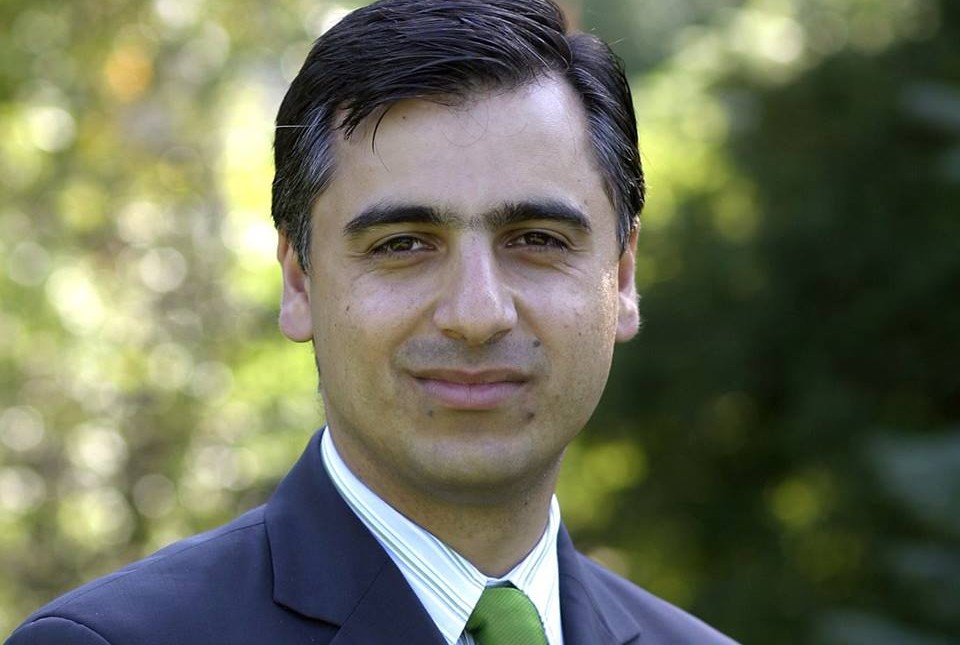
Professor Payam Akhavan: Have they even asked for forgiveness? / Morteza Hamounian
Professor Payam Akhavan, an Iranian-Canadian lawyer, human rights activist, and professor at McGill University in Montreal. Mr. Akhavan, who has been actively pursuing cases of human rights violations around the world for two decades, including as a former prosecutor for the International Criminal Tribunal for the former Yugoslavia and Rwanda, has made significant efforts to establish the “Iran Tribunal” and served as the chief prosecutor, challenging the Islamic Republic of Iran for the massacres of the 1990s.
Given the 28th anniversary of the summer 67 massacre and the release of the audio file of the critical meeting between Hossein-Ali Montazeri and Hossein-Ali Niri, Mostafa Pourmohammadi, Ebrahim Raisi, and Morteza Eshraghi (known as the Death Committee) by the office of Ayatollah Montazeri, we have approached this lawyer and asked for his opinion on the significance of this historical document. We have also asked about the accuracy of the opinions regarding the forgiveness of the leaders of these massacres.
Message from brothers, emphasizing that “who can speak of forgiveness when those who committed mass murder are still exempt from punishment?! Do they even seek forgiveness?”, speaks of peace: “I completely agree that even in the face of those who treated us with hatred and anger, we should not act with hatred and anger. However, we cannot continue to tolerate a culture of oppression and injustice. The path to moving on is recognizing and addressing these crimes; so that the wounds can heal and we can learn a lesson for the future.”
Dear Dr. Akhavan,
As you are aware, a recent audio file of a session by Ayatollah Montazeri has been released by his office. The information discussed in this session, although mostly mentioned in his previous positions, also contains new and shocking points. What new things have you found in this document and what do you consider its significance to be?
This audio file is an opportunity to bring up a historical injustice that has remained unanswered by the Islamic Republic until today. The facts and events of 1367 come to life with this audio file; the indifference of the leadership of Iran to the request of Ayatollah Montazeri to pardon political prisoners. What is truly significant for me is not just this audio file, but the fact that finally the media and officials of the Islamic Republic have acknowledged the mass executions of 1367. It should not be forgotten that until recently, there was a policy of denial in this regard. I remember that in 1391, after the ruling of the Iran Tribunal, one or two articles were published in the media of the Islamic Republic that indirectly acknowledged these crimes, and we were amazed that this silence was finally broken. But now, to see such a free discussion among the people of Iran is truly astonishing, and even some officials are suggesting that an apology is necessary.
You believe in informing and exposing the massacres of the 1990s, and also believe that the personal responsibility of the leaders of these massacres is of special importance. Assuming that proper and widespread exposure takes place and the survivors and people do not forgive or forget, what is your idea for the next step and in the face of criticism from some, what do you see as the difference between this perspective and revenge?
Finding the truth is the first step towards justice, and without justice, reconciliation is not possible. By forgetting past crimes, their repetition becomes inevitable. We must say never again! Never again should those in power be able to massacre the people of Iran, never again should anyone be imprisoned and tortured solely because of their religion and beliefs. Justice is not revenge; it does not mean repeating the same crime that the perpetrators committed through unjust torture and executions. Justice means that those responsible for these crimes must be held accountable to the people. Justice means that anyone who murders innocent people, regardless of their position of power, must be held accountable because no one is above the law. When we create such a culture, when we respect human rights, that is when Iran will become a completely different country.
It seems that in Iran, there is no clear outlook for creating conditions to hold the perpetrators of this massacre accountable at the international level, especially since most of these individuals are elderly or are no longer alive. Additionally, it does not appear that there is any international will to address this issue. With this in mind, how can this historical issue be resolved and bring peace to the public conscience and the survivors?
I have been involved in many cases at the International Criminal Court in The Hague and while achieving such justice on a global level is very important, the real fight for human rights is happening among the people who are directly affected. The Hague cannot solve Iran’s problems. The people of Iran must rebuild their country themselves and when they do, then the international courts can be invited to help. However, it is better for these crimes to be judged in Iranian courts that are truly impartial and fair. One of the fundamental aspects of a democratic Iran should be a judiciary that defends human rights instead of being a tool of oppression. The fact that several members of the “Death Committee” have control over the Iranian judiciary is a reflection of its moral bankruptcy. A system that promotes those who have committed crimes against humanity has no credibility.
Some believe that for the sake of national reconciliation and progress towards democracy, forgiveness should be given in this matter. For example, recently Mostafa Tajzadeh asked the families of the executed to “forgive, inspired by Mandela, but not forget so that Iran and Iranians can break free from the cycle of hatred, animosity, and revenge.” What is your opinion on this matter?
Forgiveness and justice are two separate issues. Justice is the responsibility of the government, while forgiveness is the choice of the victims and their families. Nelson Mandela could only speak of forgiveness after he was released from prison, following the transition of South Africa from apartheid to democracy. Who can speak of forgiveness when those who committed mass killings are still exempt from punishment?! Do they even seek forgiveness?
I completely agree that even in the face of those who have treated us with hatred and anger, we should not act with hatred and anger. However, we cannot continue to perpetuate a culture of oppression and injustice. The path to moving on is to acknowledge and address these crimes; so that wounds can heal and we can learn a lesson for the future. It is also too soon to talk about forgiveness, and in any case, no one can be forced to forgive and must choose to do so themselves. It is the responsibility of the government to enforce justice and to show that you cannot continue to enjoy power and legitimacy while killing innocent young people by the thousands. As long as we do not learn this lesson, Iran will continue to suffer from the same culture of hatred and violence that has put us in this unfortunate situation. But I am optimistic that with the use of this historical experience, the new generation can start building a different future for Iran; a future based on justice and respect for the human
Thank you for the opportunity you have given us to contribute to the monthly magazine of the Peace Line.
 Created By: Admin
 August 24, 2016
Tags
Ayatollah Montazeri Brotherly message Forgiveness 2 International courts Iran Tribunal Jasinali Montazeri Justice in humanity Mass execution Massacre 2 Massacre 67 Monthly magazine issue number 64 Monthly Peace Line Magazine Mustafa Tajzadeh Prosecutor Summer 67 The International Court of Justice in The Hague ماهنامه خط صلح ماهنامه خط صلح