


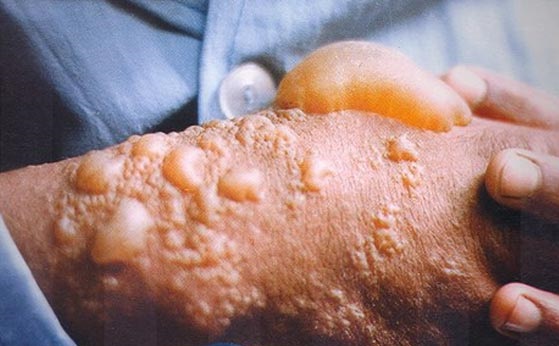
Afternoon in Bouinak; in conversation with one of the victims of the chemical bombing of Sardasht/ Siavash Khoramgah.

Siyavash Khoramgah
During the 8 years of the Iran-Iraq war, widespread atrocities and violence occurred, with the bombing of Sardasht being a prime example of these horrors; especially since most of the victims were civilians and their suffering is not limited to that period alone.
Khadar Sadegh is one of the residents of Sardasht who lived in this city with his family during the chemical bombing of Sardasht. He was born in 1327 and has three children named Rahim, Arton, and Ziba. The five-member Sadegh family were all injured in the chemical bombing of Sardasht, while Ziba, the youngest child of this family, was in her mother’s womb at the time of the incident.
Mr. Sadaqat, in a conversation with the peace line, speaks of his observations of the incident as well as the physical and mental problems that, even after about 29 years, he and his family have not been able to overcome. He says…
Mr. Sadaqat, as the first question, please tell us a little about the moment of the event and your observations during those minutes.
At that time, I had a small grocery store, but at the moment of the incident, which was 4 o’clock in the afternoon on July 7, 1987, I was not in my store. A little before that time, I was standing in line at the coupon store to buy sugar and candy, and I had told my wife and two children that I was going. At the same time, I saw two planes dropping bombs, first at a hotel called “Pouri” and then at a store called “Yousef Flour Shop” on the same path. After the bombing, I quickly went to look for my wife and children, and at the same time, two more bombs were dropped in a place known as “Sarcheshmeh Sardasht” and on the path of people’s homes. At that time, we did not know if these bombs were chemical or something else, and it was not until sunset (around 6 o’clock)
Until the evening that I told you, people gradually realized that the bombs were chemical and mustard gas had been spread in the air. They fled the city and almost all the people of Sardasht were away from the city for about a month, mostly fleeing to surrounding villages such as Baneh, Mahabad, etc.
What was your physical condition during the bombing and what did you do after you reunited with your family?
They had not stayed at home and had gone to an underground shelter to save their lives. When I found them with difficulty, I saw that they were vomiting and their eyes were stuck together. I couldn’t see my wife and children anywhere, and I was the only one who could see with my eyes and only had a little bit of tears. That’s why I picked up my son, who was in worse condition, and told my wife to take our daughter and hold onto my back so we could all get to the hospital. On the way, a Sepah Pasdaran car, whose driver was a local, recognized us and when he saw our condition, he picked us up and took us to the hospital. But after a while, because the hospital was crowded and had no medical facilities, they took us to the city of Baneh and then sent us to Saqqez on the same day, but since there was no treatment, they said we had to go to Sanand
What have been the psychological and physical consequences of chemical exposure for you during these years?
My son Rahim was the most injured among all of us, and his body was full of wounds and bruises; to the point that he couldn’t wear any clothes for four months and was completely naked. My daughter Arton’s condition was also very serious, but she was better off than Rahim.
On the other hand, my son had such a bad condition and besides having difficulty breathing, he couldn’t control his anger, which prevented him from continuing his studies after the third year of guidance school. Currently, he is not supported and no one helps him. He even went to Tehran several times during Ahmadinejad’s time and complained, but it was useless. The truth is that those who were Basijis and followed orders, they help them but not us, who didn’t help ordinary people. The main issue here is that the effects of this mustard gas still exist; for example, I have nervous problems and get angry very quickly and walking is difficult for me because we all have difficulty breathing, but no one has helped us during this time…
How was the provision of aid and treatment for the injured in the first days in Sardasht or other cities? What services did you receive during that time?
At that time, Sardasht had a hospital which was extremely busy that day and so crowded that no one knew anyone else. In fact, in Sardasht and other towns where there were no facilities. In Tehran, where the situation was better, the doctors at Dr. Chamran Hospital gradually made their own anti-chemical drugs after we left for that hospital. In fact, there was no medicine in Iran at that time to treat people like us. No one had predicted such an event. Many people even in Tehran and other cities like Tabriz and Sanandaj were martyred due to lack of medicine and treatment, and their bodies were transferred to Sardasht.
After we were discharged, they didn’t do anything special for us. Even after all these years, people in Sardasht still don’t have a doctor who specializes in this field.
Do you have statistics on the casualties and injuries of the chemical bombing in Sardasht?
In Sardasht, during the first 24 hours, 115 people were martyred, but due to the fact that the effects of these chemical substances are still present in the city (mustard gas remains effective for up to 150 years), the number of casualties has increased significantly over time. The number of injured was also very high and there was almost no family that was not affected.
You mentioned at the beginning of our conversation that at the time of this event, you had two children. Do you have any other children who were born later? If so, how is their situation?
This is a very good question. In fact, our other problem was that when we were in Tehran and at the Dr. Chamran Hospital, they told us that my wife was pregnant and had to stay in Tehran. But due to our problems, we couldn’t stay in Tehran any longer and returned to Sardasht. Of course, we told the hospital that we would come back after a few days, but unfortunately, we couldn’t go back to Tehran. A few months after returning to our city, our beautiful daughter was born. Unfortunately, due to the same chemical side effects, she is very thin and weak and this problem will never be solved. She also gets easily agitated, just like me and my son, and the doctors told us that these are the chemical effects.
Thank you for the opportunity you have given us.
 Created By: Siavash Khoramgah
 April 28, 2016
Tags
Chemical bombardment Chemical weapon Friendship. Magazine number 60 Mustard gas Sardasht Siavash Khoramgah ماهنامه خط صلح