


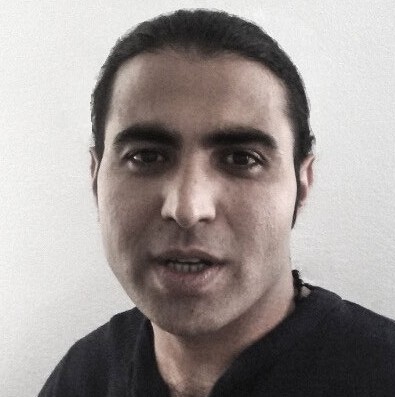
Getting to Know Herana News Agency in Conversation with Ali Ajami, Editor-in-Chief.
Ali Ajami, a former student activist and expelled student – ranked 18th in the entrance exam – is a student of law at the University of Tehran. He, who has the editorship of a better world journal on his resume, has experienced detention by security forces following his student activities. After the sentence of Mr. Ajami was reduced from 4 years to 2 years in exile, this human rights activist served his sentence in Evin and Rajai Shahr prisons.
Numerous articles and discussions have been published from Ajami until now, and currently he is in charge of managing this media as the editor-in-chief of Herana news agency. What follows is a conversation with Mr. Ajami with the aim of introducing Herana news agency better.
Mr. Ajami, please briefly explain as the first question about Herana news agency and its objectives.
The Human Rights Activists in Iran is a non-political, non-governmental organization that has been active for about a decade with the goal of protecting and promoting human rights in Iran. This organization has various specialized areas of work, one of which is monitoring and reporting on the human rights situation in Iran, which has been under its responsibility since the establishment of this news agency in 2009. HRANA news agency is subject to the policies and constitution of the “group” and is solely responsible for reporting on domestic events and issues within Iran, while events and issues related to the Iranian society outside the country or in other countries are outside the scope of HRANA’s work. This news agency operates in two forms; extracting reports from its own sources under the title of exclusive reports, and collecting, categorizing, and republishing reports from other credible media outlets and groups. HRANA operates 24 hours a day, 7 days a week in both Persian and English, and its executive team
While Hrana is not solely a reporter of government violations of human rights, it also covers cases where other identifiable actors, including cultural factors, are involved in the realm of Hrana’s work. Hrana’s goal is to report on human rights violations in order to increase the cost for violators by using the leverage of public opinion and relevant organizations, while also seeking to support the victims of human rights violations.
As the editor-in-chief of Harana, what plans do you have for the development or strengthening of this media outlet?
The goal of Hrana has been to start reporting on human rights violations in order to improve the human rights situation in Iran. In fact, we hope that through reporting, we can draw the attention of citizens to the issue of human rights violations in Iran, with the aim of making human rights a fundamental and widespread demand in society, to the point where the government and power institutions are obligated to respect these rights.
For this reason, the goal and effort of Harana is to report on human rights violations at the borders of Iran without regard to nationality, ethnicity, religion, gender, and other distinctions in a comprehensive, accurate, impartial, and timely manner. Completeness requires us to expand our scope of work and resources as much as energy and capabilities allow. Regarding accuracy in reporting, preserving and increasing the trust of citizens in Harana is one of our biggest goals and concerns, and we take this issue very seriously; to the extent that we are willing to sacrifice speed and volume of reporting in the presence of contradictions or ambiguities.
Being impartial also means that although we are generally upset and even angry as humans and specifically as human rights activists about human rights violations, we do not allow these emotions to influence our reporting. For this purpose, Harana has chosen a legal language and literature that is free from slogans, bias, hatred, praise, and condemnation. This literature is often not well-received by the audience and may even make us appear indifferent to human rights violations, but it is necessary to maintain impartiality. Speed, which is the first requirement of reporting and journalism, has always been and will continue to be alongside accuracy, the constant goal of Harana.
One of my personal concerns is to go beyond political and purely anti-government concerns and focus on the state of human rights. I do not deny the blatant and direct violation of human rights by the current government, but my understanding is that human rights should go beyond defending the rights of the weak against the powerful; the rights of citizens against the government, the rights of women against men, the rights of minorities against the majority, the rights of workers against employers, and the rights of marginalized groups against the center. For this reason, I intend to address new areas that have not been given much attention before and be the voice of the voiceless, the marginalized, and the underprivileged.
As a final question, how can citizens and interested individuals collaborate with this media?
Coincidentally, a large part of the work of Herana is on the shoulders of volunteer citizens who work with us with the concern of improving the human rights situation. Therefore, any interested citizen with any expertise, from reporting to photography, articles and research, can contact Herana’s website email.
And you can contact us on Facebook (/Hranews) and we will definitely welcome you. Also, here is our international phone number.
0015712235406
This is a phone number and cannot be translated. It is already in numerical form.
This matter has been considered. This is the most important collaboration that does not require expertise. In fact, it is an effort to quickly transfer news and reports of human rights violations that can be done through this communication channel.
 Created By: Ali Ajami
 June 27, 2015
Tags
Ali Ajami Hirana Hirana News Agency Monthly Peace Line Magazine ماهنامه خط صلح