


A discussion about February 11 with the republication of the live conversation with the late Jamal Hosseini.
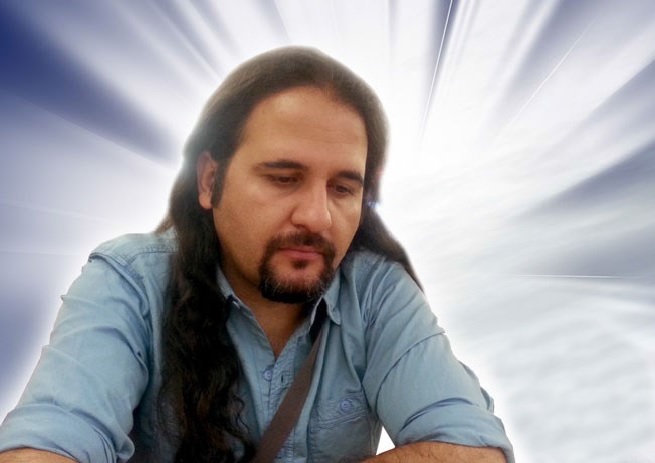
Jamal Hosseini: Our activities were thorns in the eyes of the security apparatus.
The year 88 is a specific time period that was influenced by the political changes in the country, and the security forces began to crack down on civil organizations and human rights defenders, with the aim of seriously stopping their activities. For human rights activists in Iran, the 11th of Esfand month of that year was a difficult time, as they faced widespread attacks from the security forces and a large propaganda campaign. Although almost 5 years have passed since that date, and many of the victims, who collectively spent about sixty years in prison, have been released after enduring their sentences, some of the members of this group and the victims of the 11th of Esfand 88 are still imprisoned for their humanitarian activities; including Seyed Mehdi Khodaei, Nasr Naghipour, Mohammad Hassan Yousefipour Sefi, Navid Khanjani, and Eghaan Shahidi.
The human rights activists in Iran commemorate the anniversary of this event every year and narrate it to remind the difficult situation of human rights defenders in Iran and to emphasize the freedom of these individuals as one of their constant demands. Last year, Seyyed Jamal Hosseini, one of the officials of the human rights activists in Iran, in an interview with Khat-e-Solh, recounted his memories of this event and clarified the positions of this organization.
Unfortunately, Jamaleh Hosseini passed away this year in a way that is still unclear to us. Therefore, since the shape and subject of the eleventh of Esfand (the day of her death) and the situation of its victims have not changed, we thought it would be better to republish Mr. Hosseini’s interview instead of new discussions, which cannot provide much new information. This not only keeps this event at the center of our attention, but also serves as a reminder of our tireless and unforgettable colleague, Seyyed Jamaleh Hosseini, in the community of human rights activists in Iran.
Kian Rafiei
Secretary of the Human Rights Activists Association in Iran
Mr. Hosseini, as our first question, we ask you: How do you remember February 29, 2010?
The memory of the morning of 11th of Esfand 88 (March 1st, 2010) is accompanied by a large number of phone calls for me from Iran and other places, all carrying disturbing news of the arrest or detention of a colleague, member, or even family members of a member. I honestly admit that I was taken aback and caught off guard; not just me, but also other members of the group who were spared from the arrests, were in the same situation. However, from the very first hours that we were able to understand the situation, we made great efforts to protect the other endangered forces from detention. In short, I can say that March 1st, 2010 was a difficult and sorrowful day…
Did you expect such treatment towards human rights activists in Iran?
Like most activists who work in the civil or political sphere, we also monitored and analyzed the movements of security institutions and their confrontation with civil society. Based on this, I must say that yes, we thought they would deal with us, but not in this way and magnitude. We knew that a wave was coming; because before us, almost all human rights, student, political and other groups had been targeted, and we were also active during the sensitive days of protests after the presidential election, relying on our extensive human resources. We even had some members arrested in this regard and knew that our turn would come soon. Also, during that time, news had reached us from our imprisoned members that reinforced this assumption. Based on these predictions, and with increased vigilance, a few weeks before February 11th, we unilaterally announced the cancellation of all public memberships, as we did not want to increase the risk of working in those conditions. We also decided to keep the new structure of the
In your opinion, why should such an approach be taken towards this organization, and to put it simply, why this organization?
One side of the issue, as I mentioned, was that the security apparatus saw civil institutions as the instigators and perpetuators of the widespread protests after the election, and for this reason, they launched a campaign against these organizations. If you look at the second half of 2009, almost no independent group was left without any detained members. However, the reason for this intensified crackdown on this group must be mentioned. In any case, we were the only group that, in addition to being independent, meaning without support and defense, had publicly introduced all of our officials, who deliberately stayed inside the country, with their photos and names and information, about a year and a half ago. We also had more talent and active human resources compared to many other organizations; meaning we were public, our hands were open, our goal was simple, and we had a large number of human resources throughout the country. Also, the composition of the group was not favorable for the security system; we were
After four years, is it now possible to talk about the extent of damages inflicted on the organization?
Although the goal of the Revolutionary Guards, which was to stop us, was not achieved despite the mobilization of all their forces and capabilities; nevertheless, due to the weak organization of a young and independent group, we paid a heavy price. In the days leading up to 11 Esfand (March 1st), we had a total of 6 imprisoned colleagues, on 11 Esfand 30 more, and at the end of Esfand another 12; meaning that by the end of 88, we had a total of 48 affiliated individuals in prisons, some of whom were members of our organizational and activist forces. Our limited resources, such as websites and cyber facilities, were also damaged. But the most difficult part was that a group that was completely public, now had its public space taken away from them, which meant that they could no longer attract human resources, gather financial assistance, and operate in the ways that they had adapted to over the years. And

What path did the human rights activists in Iran take after this volume?
The first thing we did was to move from quantity to quality, or as they say, tighten our belts. Reconstruction, attracting new forces and finding new financial resources were among our priorities. As I mentioned, all the forms and structures that we had been aligned with over the years, such as financial supply, human resources, and fields of activity, had been taken away from us. We had to replace all of these with innovation and alternatives. The cost of security had also increased significantly and even our colleagues outside the country felt insecure, so we had to make efforts to increase security. Rebuilding our cyber capacities was another part of this path, and in this regard, we tried to make our capacities outside the country more active in secure and risky conditions. In any case, 11 Esfand was a wave that brought about significant qualitative and fundamental changes in this organization.
What happened to the status of the detainees on 11 Esfand? Are they still in detention?
In late 88, we had a total of 48 related individuals in prisons; when I say related, it is because some of them were separated from the group before their arrest. Like Mr. Khanjani or Shahidi, who were arrested due to the same misinformation by the security forces, some were mistakenly arrested, and in some cases, we had the arrest of a family member instead of the targeted individual. In any case, out of this number, 42 were arrested in December 88 and 6 were arrested before that, gradually, most of them were released on bail or other conditions until Khordad 89. Some were sentenced and served their 4-year imprisonment and were released. However, Mr. Mehdi Khodai, Abolfazl Abedini, Nasour Naghipour, Mohammad Yousef Pour Saifi, Navid Khanjani, and Eghaan Shahidi are still in prison since their arrest on 11 Esfand.
How much truth is there to the accusations made by the Revolutionary Guards? Especially regarding you; it mostly refers to your political activities…
Unfounded accusations by the security apparatus, which were repeatedly broadcasted and are still being broadcasted from the so-called national tribune, make anyone familiar with politics laugh. How is it possible for a public human rights organization to be simultaneously affiliated with several countries and dozens of opposing political organizations?! Surely our people are familiar with the illusion of conspiracy and the spread of accusations by the security apparatus in these three decades of activity, and as our experience has shown, they do not pay attention or believe it. Let me ask simply, what was the document for these claims? For example, how do we become affiliated with organizations affiliated with foreign countries? Simply making claims and showing a few edited or even real personal photos that do not prove anything; in any case, the illogical and baseless nature of these claims is not hidden from anyone.
Regarding myself, I can say that the security apparatus has made the most political advertisements about my activities. I respond in the same way. Of course, some of our friends at that time, due to the circumstances and chaos within the group, and because of lack of coordination and information about me, gave explanations that were not true. After that, because our friends were under pressure in prison, we postponed clarification of the matter to an appropriate time, which may be now. In any case, I believe that a person who denies their beliefs is actually denying themselves. If the measure of my beliefs is my own claims, then I must say that I have never been seriously or specifically involved in politics, and I have left it aside since ten years ago and have fully dedicated myself to human rights work. This change in perspective was formed in me even before I started working in the organization, and I have never blurred the line between politics and human rights in my work. In fact, it was our belief
Where is the group of human rights activists in Iran standing today?
The group of human rights activists in Iran today stands in a place where every organization must stand under the shadow of relentless efforts and belief in their goals and seriousness. Despite bearing the heaviest possible cost in the contemporary history of Iran among human rights organizations, we did not succumb to pressure and difficulties. We are proud to have the largest share in reporting human rights violations in both Persian and English through our news agency, HRANA. Our statistics center, which is a unique source of information on the human rights situation in Iran, is now available to researchers and other reporters. We continue to actively combat censorship and filtering through our presence in the Fourth Committee and its services. We provide free internet and technical services to numerous organizations and groups, whose names I cannot mention for security reasons. We publish and distribute the monthly magazine “Peace Line,” which is currently the only public and specialized human rights publication in Iran, and its performance has been very positive according to statistics and reception. We do our best to support
Created By: Jamal Hosseini February 24, 2015
Tags
11 Esfand March 1st Jamal Hosseini Magazine number 46 Monthly Peace Line Magazine Seyed Jamal Hosseini The human rights activists group in Iran. ماهنامه خط صلح