


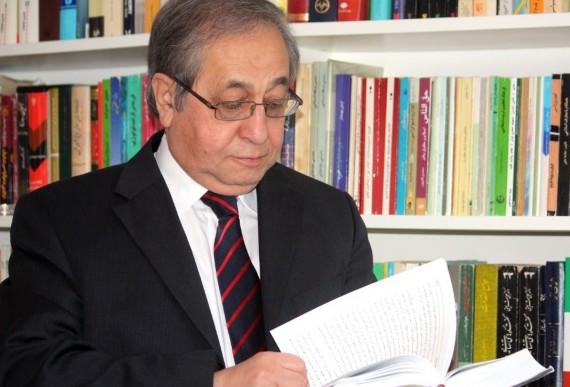
Hassan Sharifmadari: Violence has intensified in the revolution.
A proposal regarding human rights and the Bahman 57 Revolution.
Given the conviction of the Shah and the report of the International Red Cross Organization regarding the torture of political prisoners by SAVAK in prisons as an example of human rights violations, to what extent were the concerns of the revolution and revolutionaries about human rights standards and components? To what extent did the slogans of the revolution refer to human rights concepts? In terms of human rights and freedom of expression, what was the situation in Iran before the February 1979 revolution and what was it like after? What were the main reasons for the people’s protests? Some believe that the revolution itself cannot be free from violence; but what is actually considered violence? Do you consider yourself a revolutionary today or someone who is more committed to human rights standards?
These are the questions that we have wanted to find answers to different perspectives on, so that we may ultimately come to a unified conclusion. Therefore, we have turned to a group of political and social activists who were involved in some way in the political and social events of Iran in the late 1950s; most of these individuals are also considered victims of human rights violations before and after the February 57 revolution.
Hassan Sharifmadari, a political activist and the son of Ayatollah Kazem Sharifmadari, is one of the individuals who has answered our questions in this proposal and is appreciated for his cooperation…
I believe that the revolutionary generation used human rights as a tool to expose and fight against the Shah, rather than as values in themselves that should be fought for. The vision of preserving such values after seizing power did not exist, neither among those who came to power nor among the majority of political activists. On the other hand, there was no awareness of international agreements such as the Universal Declaration of Human Rights in society, and it was not promoted. As a result, the Iranian Human Rights Association, which was mostly made up of political figures, did not defend the many lost rights of military commanders who were executed without trial, or the many political figures who were killed without trial. Instead, some members of this association even praised these revolutionary executions or gave speeches and wrote articles in support of them, showing no tolerance or mercy.
The major difference between before and after the February 1979 revolution is in terms of human rights violations. The Shah’s government had less interference in people’s lives and citizenship rights, but the problem started when someone wanted to participate in politics or criticize the regime. In that case, there was no forgiveness, and anyone who criticized or spoke against the government was not tolerated. Censorship was in place, journalists were arrested, and there was torture in prisons, although perhaps not as severe as it is today. In prisons, there was no respect for any laws, and lawlessness prevailed.
Because the Shah’s government was not an ideological one, it did not interfere in the private lives of people. The reasons for people’s dissatisfaction and their protests in the streets are numerous, including the fact that the Shah himself mentioned it in one of his writings; the rapid pace of modernization was unable to bring many people along with it, and many people suffered from a cultural disconnect. Despite the fact that there was no absolute poverty or very little of it, there was a significant class divide and relative poverty during that time. Additionally, a middle class had emerged that desired political participation, but the Shah did not allow for this political participation to take place.
“I was not a revolutionary from the beginning and just like my father, I prefer reform. Even today, I believe that revolution may be inevitable in some cases, but it was not inevitable in Iran. There were more rational ways, but unfortunately, with the leadership of Mr. Khomeini and the recklessness of other political figures and their submission to him, this opportunity was lost.”
In my opinion, revolution means getting rid of old norms and creating new ones. It also involves overthrowing the political machine by the opposition and causing its downfall. Even in the best revolutions, there is a legal vacuum where anything can happen, especially in modern revolutions where the opposition sees itself as angels fighting against a demonic government. They do not see the leaders of the government as having any rights and their goal is to eliminate them and take their place. Therefore, violence is inherent in modern revolutions. In fact, it can be said that violence is necessary for a revolution because it has been theorized. In the case of Iran, this violence has spread throughout society and has become deeply rooted.
 Created By: Admin
 February 24, 2015
Tags
Hassan Sharifmardari Magazine number 46 Monthly Peace Line Magazine Simin Daytrip The Revolution of Bahman 57 ماهنامه خط صلح