


Right to Life
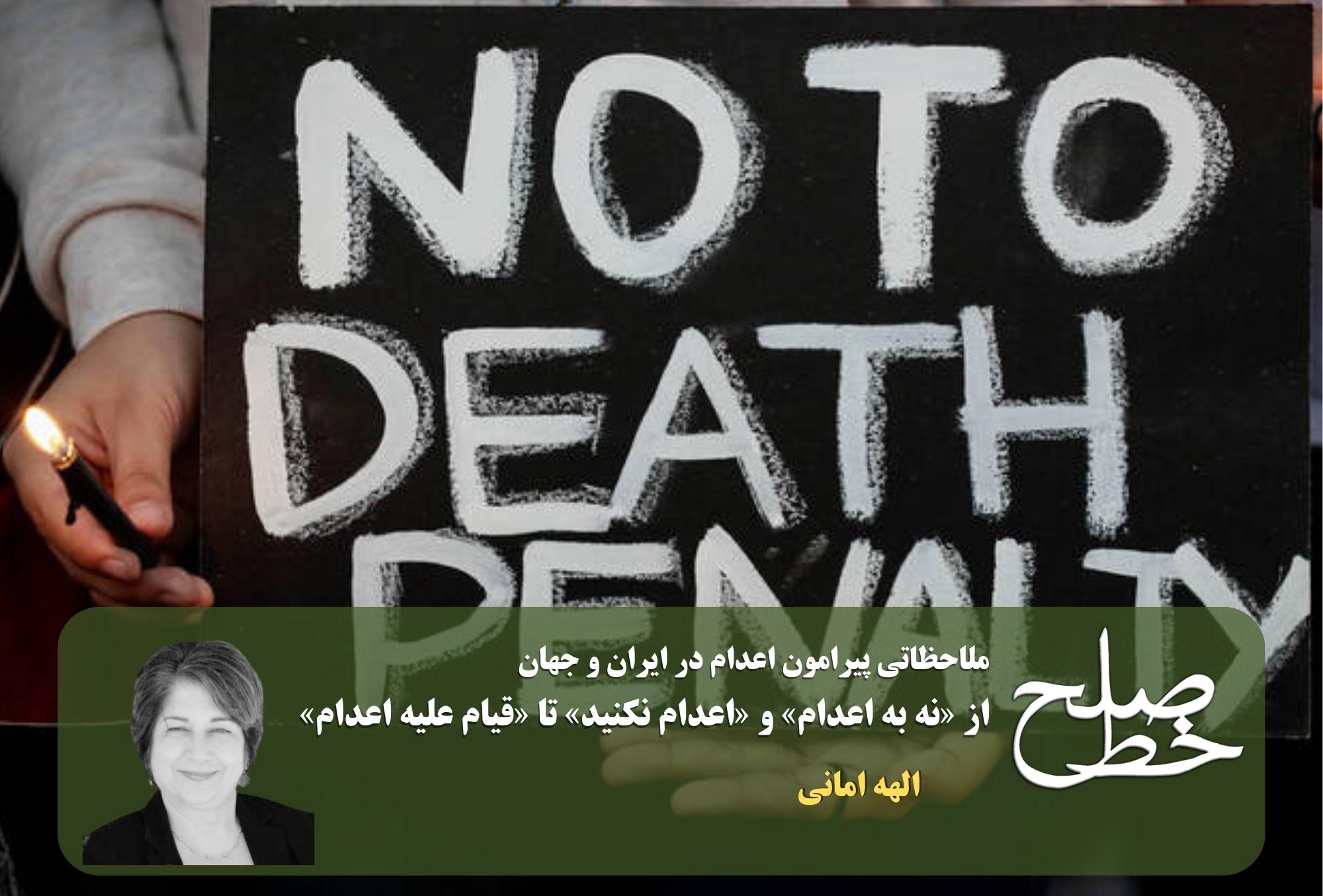
From “No to Execution” and “Do Not Execute” to “Uprising Against Execution” / Elaheh Amani
Notes on Executions in Iran and the World. “Although I have lost two members of my family to assassination, I am firmly and explicitly against the death penalty for those who have been sentenced to death.” These are the words of Coretta Scott King, a writer, activist, and one of the leaders of the American […]...
Read More Created By: Elahe Amani
 June 22, 2023
یIs preserving the historical memory of committed crimes a part of human rights? / Mahnaz Sharayati
Definition of historical memory and its difference from history. If we study “history” officially and systematically through sources and remnants left by people in the past, the “historical memory” is that part of history which is transmitted socially, culturally, and politically through a group or community of people. Two features are mentioned to know the […]...
Read More
Created By: Mahnaz Shariati May 22, 2023
From Istikhara to Execution/ Simin Rouzgard
Despite its historical significance due to its location on the ancient Silk Road, the city of Qom has gained even greater prominence since becoming the “religious capital” of Iran. In the years following the February 1979 Revolution—especially after its separation from Markazi Province in 1986 and later from Tehran Province in 1996, when it became […]...
Read More Created By: Simin Rouzgard February 22, 2023
Retribution and deterrence: The ineffective combination of the death penalty and intentional murder / Mahnaz Norouzian
These days, news about executions and inhumane punishments, which are still being carried out despite the existence of many opponents, have occupied the minds of human rights activists and supporters of abolishing punishments that violate human dignity. Despite research showing the ineffectiveness of capital punishment, it is still being implemented. In most countries around the […]...
Read More
Created By: Mahnaz Norouzian January 21, 2023
The approach of the courts in Iran towards international human rights laws / Mahnaz Norouzian.
Nowadays, the issue of human rights is so global and important that the acceptance and legitimacy of governments and regimes depends on how they support these rights. According to the Iranian Civil Law, treaties that are ratified between the government of Iran and other governments, in accordance with the Constitution, have the force of law. […]...
Read More
Created By: Mahnaz Norouzian November 22, 2022
قتHuman rights or domestic laws; which one has priority?/ Ehsan Haqiqat
Although the principles and rules of human rights were established in the mid-twentieth century and were codified after the adoption of the Universal Declaration of Human Rights on December 10, 1948, at the United Nations General Assembly, and further developed with the creation of the International Covenant on Civil and Political Rights, the International Covenant […]...
Read More
Created By: Ehsan Haghi November 22, 2022
The Necessity of Abolishing the Death Penalty and Defending Human Rights / Mehrdad Naghibi
In current societies, all the old tools of oppression have been rejected and condemned, but the death penalty, as one of the most barbaric methods of ancient heritage, has not only not been rejected and condemned, but has also been legitimized and given a legal aspect by self-proclaimed governments in many parts of the world. […]...
Read More
Created By: Mehrdad Naghibi November 22, 2022
Conversation with Naemat Ahmadi, lawyer and prosecutor about the increase in execution sentences in Iran/ Ali Kalaii
Overcoming unemployment is overcoming crime. Statistics in the past year show a significant increase in the implementation of the death penalty in Iran. It seems that since Gholam-Hossein Mohseni-Ejei took office, there has been a strong will within the judicial system to expedite all death sentences. This has prompted the monthly magazine Khat-e-Solh to interview […]...
Read More Created By: Ali Kalaei October 23, 2022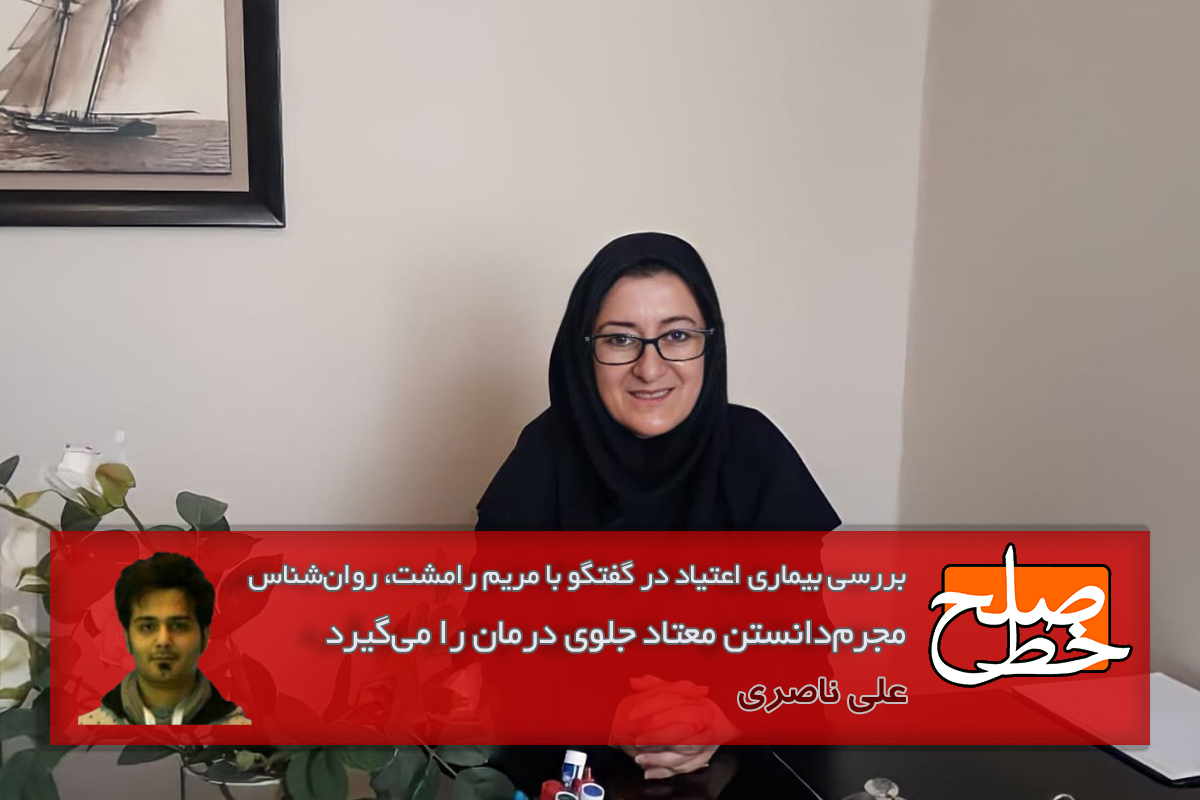
Investigating Addiction in Conversation with Mary Ramshat, Psychologist / Ali Naseri
Criminalizing addiction prevents treatment. Is the person an addict or a criminal? This is a controversial debate that has yet to receive a clear answer and there are various opinions about it. However, each approach and perspective towards an addicted individual, whether as a patient or a criminal, can have a different impact on their […]...
Read More
Created By: Ali Nasri October 23, 2022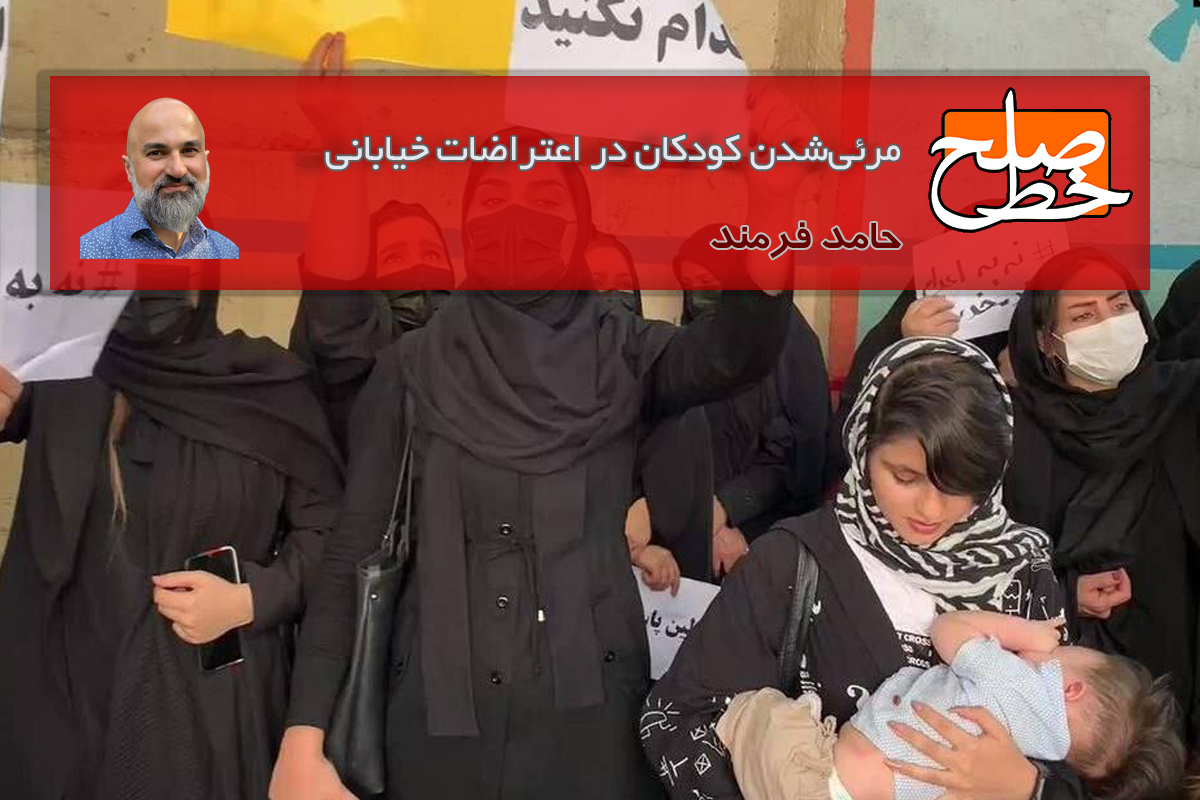
The visibility of children in street protests/ Hamed Firmand
Mehsa Amini, a young woman, was killed by the agents of the “moral security police” in late Shahrivar 1401 (September 2022) during widespread protests against the Islamic Republic. In these protests, children, especially teenagers, play a central role, but perhaps more important than their role in these protests is the visibility of children during protest […]...
Read More Created By: Hamed Farmand October 23, 2022
There is no will or ability to abolish the death penalty in Iran / Niloufar Gachilo
A look at the expansion of the death penalty in Iran. Until the 18th century, we find executions and deprivation of life using various tools and methods in desirable and accepted societies. Through historical examination, it is observable that there was no serious dispute or discussion among intellectuals and jurists about its rejection and abolition. […]...
Read More
Created By: Niloofar Gachilou October 23, 2022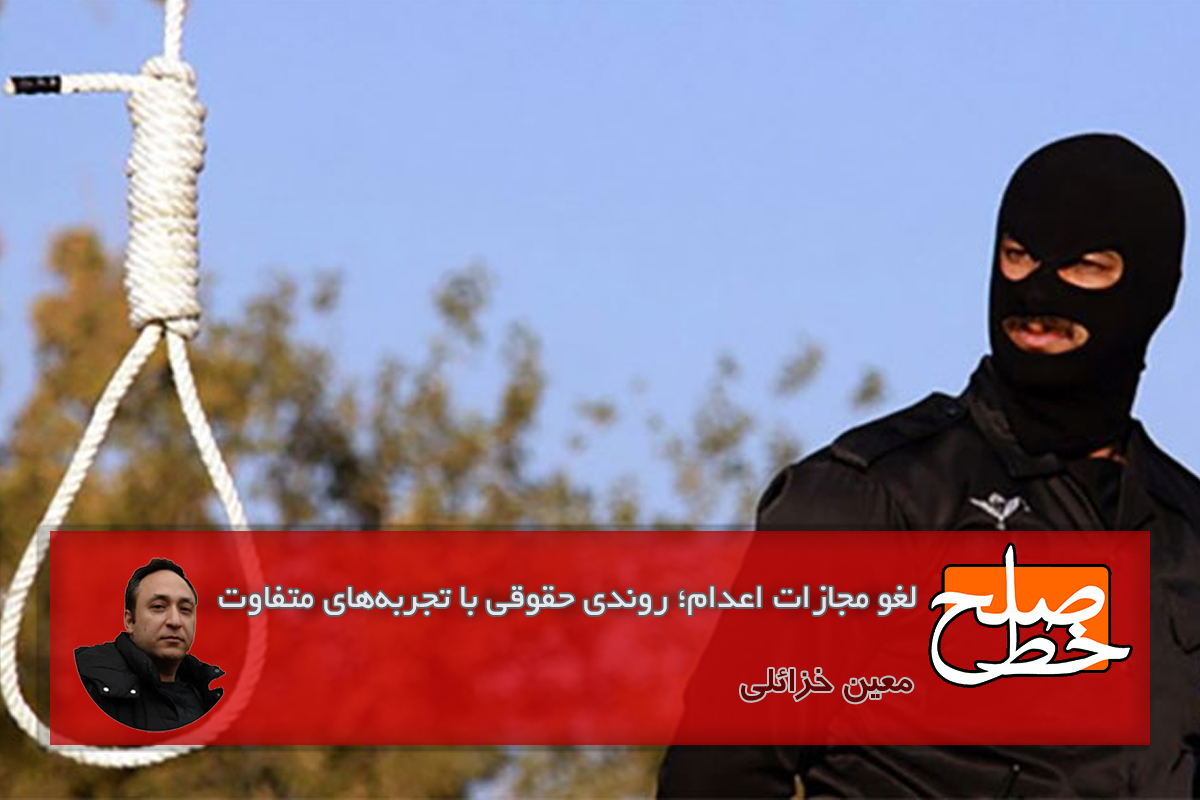
Abolishing the Death Penalty; A Legal Process with Different Experiences / Moein Khazaei
The Islamic Republic of Iran continues to be one of the governments that rigorously carries out the death penalty in its judicial system. The latest statistics show that at least 528 people were executed in Iran during the past year (October 2021 to October 2022) (1). However, this number only includes executions officially announced by […]...
Read More
Created By: Moein Khazaeli October 23, 2022
