


Freedom of thought and expression

A discussion about February 11 with the republication of the live conversation with the late Jamal Hosseini.
Jamal Hosseini: Our activities were thorns in the eyes of the security apparatus. The year 88 is a specific time period that was influenced by the political changes in the country, and the security forces began to crack down on civil organizations and human rights defenders, with the aim of seriously stopping their activities. For […]...
Read More Created By: Jamal Hosseini
 February 24, 2015
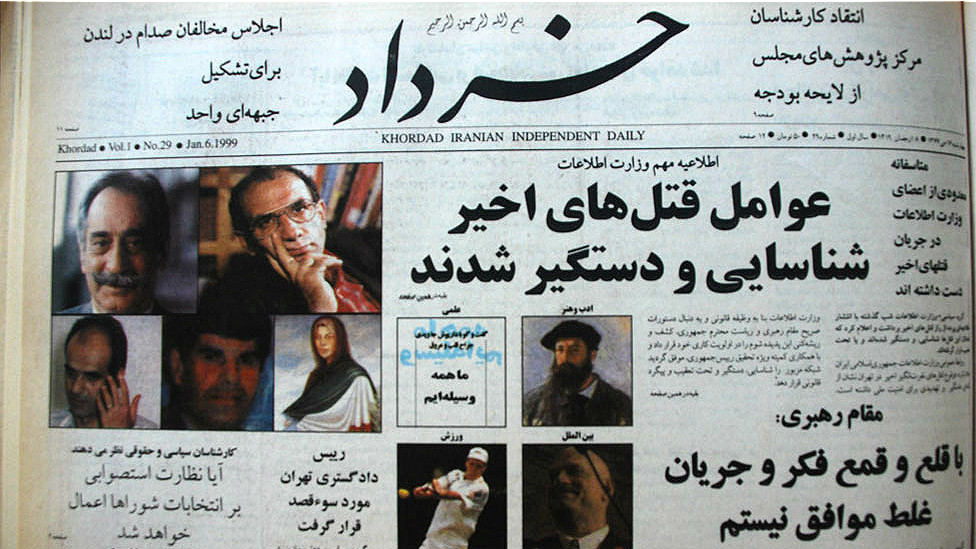
The Pain of Democracy in Iran / Reza Alijani
Comparison of Civil Society in Iran before and after the Revolution The study of revolution and events of the new government is mostly pursued in a sociological and scientific manner, given the intensity of political pressures after the revolution and the treatment of opponents and critics, as well as the volume of executions. A general […]...
Read More Created By: Reza Alijani February 24, 2015

Human rights, foreigners among Iranian rulers / Samuel Bakhtiyari
Paying attention to human rights in Iran by international institutions has always been a challenge due to the policies and regimes governing the country. The political leaders of Iran, with a feudalistic view towards the Iranian people, consider any critical perspective on human rights as interference in their internal affairs. The Universal Declaration of Human […]...
Read More Created By: Samuel Bakhtiyari February 24, 2015
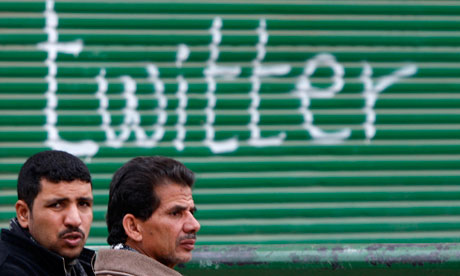
Cyber Terrorism; Virtual Threat, Real Consequences / Samuel Bakhtiyari
The term “cyber terrorism” was coined by Barry Collin in the 1980s. Today, “cyber terrorism” is more dangerous than traditional terrorism. Cyber terrorism can be defined as planned and targeted actions with political and non-personal motives against computers, facilities, and stored programs through the global internet network, with the goal of destroying or causing serious […]...
Read More
Created By: Samuel Bakhtiyari January 23, 2015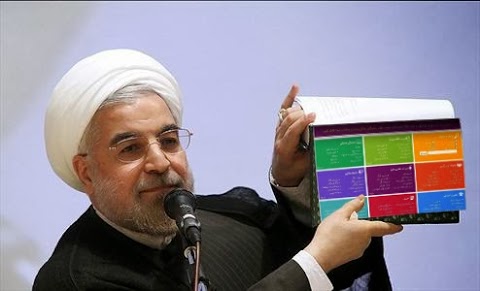
Debate between filter makers and filter breakers/ Ali Ajami
The spread of internet and virtual space has led to the growth of the phenomenon of filtering and censorship, and the fight against filtering and attempts to bypass it have been equally prevalent. However, filtering and censorship in virtual space is not an occurrence exclusive to Iran and the Islamic Republic; almost all governments, for […]...
Read More Created By: Ali Ajami January 23, 2015

A discourse on virtual security and human rights / Ali Kalai
Perhaps in many moments that have passed in human history, after wars, there have been times when humans have presented new definitions for new situations; in fact, after each encounter, it seems that an effort has been made to learn and with the presence of objectivity in the historical process, human mentality has also taken […]...
Read More Created By: Ali Kalaei January 23, 2015

“Confronting Cyber Crimes at the International Level / Masoumeh Sharifi”
Regarding cyberspace, a complete and definitive definition has not yet been presented, but based on multiple definitions, it can be said that “cyber” is a prefix that refers to activities related to computers and electronics. According to one of these definitions, “cyberspace is an operational domain that utilizes information through interconnected systems and their integrated […]...
Read More Created By: Masoumeh Sharifi January 23, 2015

Iran is the largest prison in the world for internet activists/ Behnaz Mortezaei.
The Cyber Police of Iran, also known as FATA, is a specialized unit of the law enforcement force of the Islamic Republic of Iran. Its duty is to control the cyber space, including combating moral offenses and confronting opponents of the Iranian government, particularly after the unrest following the 2009 presidential election. This unit was […]...
Read More Created By: Behnaz Mortazavi January 23, 2015

Alternate punishment for acid attackers/ Mohammad Olyaie-Fard
The first legal draft related to acid attacks was passed in February 1959. This law stipulates that “anyone who intentionally causes the death of someone by spraying acid or any other chemical compounds will be sentenced to death. If the victim suffers permanent disability or loss of one of their senses, the perpetrator will be […]...
Read More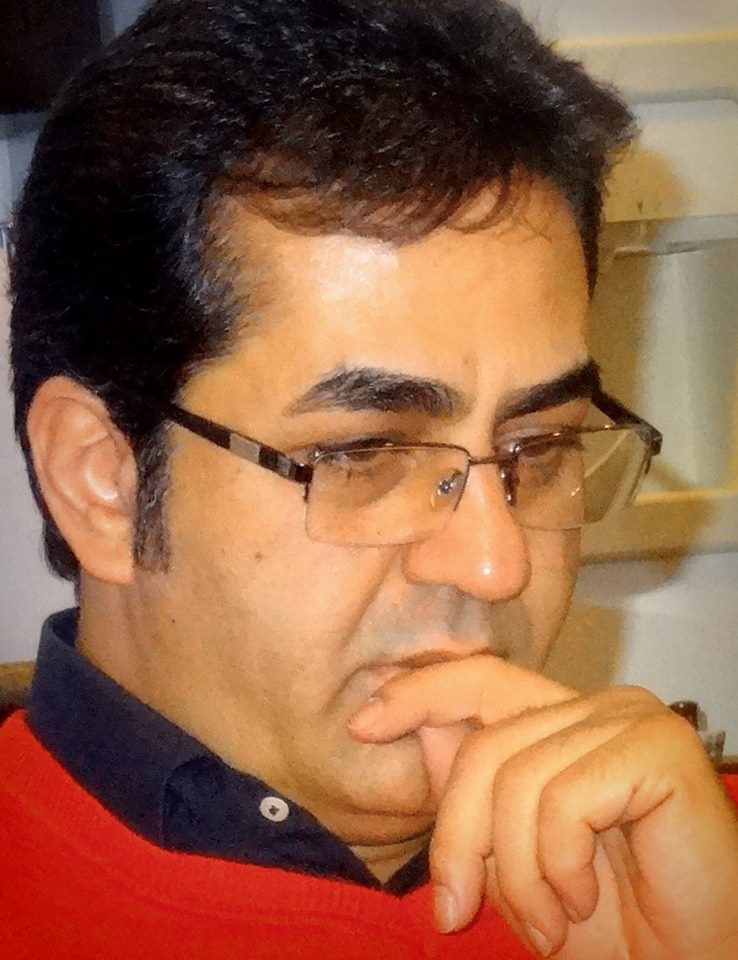 Created By: Mohammad OlyaeeFard December 25, 2014
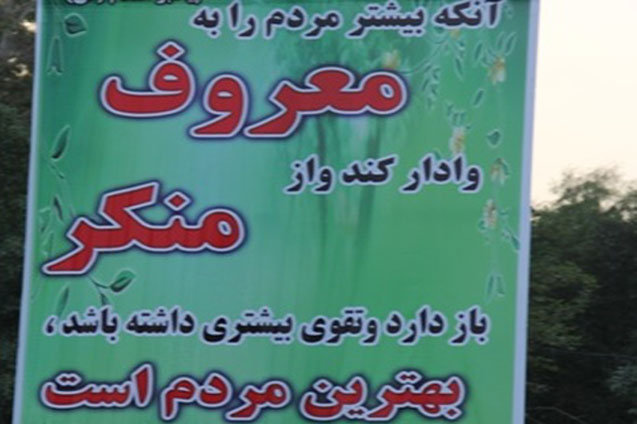
Enjoining good and forbidding evil and the authority of religious identity/ Behzad Mehrani
“Enjoining good and forbidding evil holds a special place in the intellectual and practical framework of Muslims. Although this action is not a religious decree, it is considered a fundamental principle in Islamic jurisprudence. Many Muslims believe that performing these two actions is necessary for the preservation and survival of the religion’s essence and foundation. […]...
Read More Created By: Behzad Mehrani December 25, 2014

Reflection on the Evidence and Lack of Evidence of the Crime of Insulting the Prophet/ Commander Davoudi
“Sab” in the dictionary means cursing. (Dehkhoda Dictionary) However, in other dictionaries, “sab” is also mentioned as meaning condemnation and damnation. (Moein Dictionary) Cursing the Prophet (Islam’s messenger), cursing the infallible Imams (twelve pure Imams), and cursing the infallibles (the Prophet, the twelve Imams, and Fatima Zahra, the daughter of the Prophet) as well as […]...
Read More Created By: Amir Salar Davoodi December 25, 2014

World Human Rights Day and Human Rights Defenders in Prison/ Pegaah Khoramgah
Peace Treaty – During World War II, when the United Nations Charter was being drafted, respect for human rights and certain political freedoms became a focus for representatives of various countries around the world. After some time, United Nations It was designed for these rights to be applicable everywhere and for all nations. In continuation, […]...
Read More
Created By: Admin November 24, 2014
