


Freedom of thought and expression
The censorship of sexuality in the world and Iran / Elaheh Amani.
The organization Reporters Without Borders published its annual report on World Press Freedom Day (in May 2023). In this report, Iran ranked 177th out of 180 countries and Reporters Without Borders evaluated press freedom in Iran as “worrying”. The organization also placed Iran in a low position on the Press Freedom Index and highlighted the […]...
Read More Created By: Elahe Amani
 October 23, 2023
Why can’t they hear our voice? / Majid Shia Ali
In recent years, what has separated our society from serious governance and has led to widespread despair from any political action, is the lack of response from the government to the demands of the majority of our society. During these years, these demands have been expressed in various ways, such as through participation in election […]...
Read More
Created By: Majid Shia’ali September 23, 2023
A Look at the Results of the Independence of the Bar Association and Judiciary Lawyers / Mohammad Hadi Jafarpour
Simultaneously with any challenge against the institution of advocacy, the issue of the presence of an independent lawyer in litigation is raised. But what is meant by this claim? Some say that since lawyers receive a fee for their work, they should not claim to be defenders of people’s rights. Do lawyers have a response […]...
Read More
Created By: Mohammad Hadi Jafarpour September 23, 2023
“Teacher’s Day and Constant Suppression/ Arash Mohammadi”
It has been almost twenty-three years since the formation of teachers’ unions; twenty-three years accompanied by suppression, arrests, and expulsions. Union activities, which were hindered from the very beginning by a security-oriented government, are still under pressure and subject to suppression. Despite all of this, not only were these unions able to continue their activities […]...
Read More
Created By: Arash Mohammadi September 23, 2023
“The bill of hijab and chastity in the view of the constitution and human rights / Alireza Goodarzi”
The legal and executive situation regarding the issue of hijab is very complicated. This complexity has become even more strange since the start of the “Women, Life, Freedom” movement last year. Text messages about uncovering hijab, confiscation of cars, the hijab and chastity bill, nighttime arrests, internet taxis, online businesses, yogurt containers, the sealing of […]...
Read More
Created By: Alireza Goodarzi August 23, 2023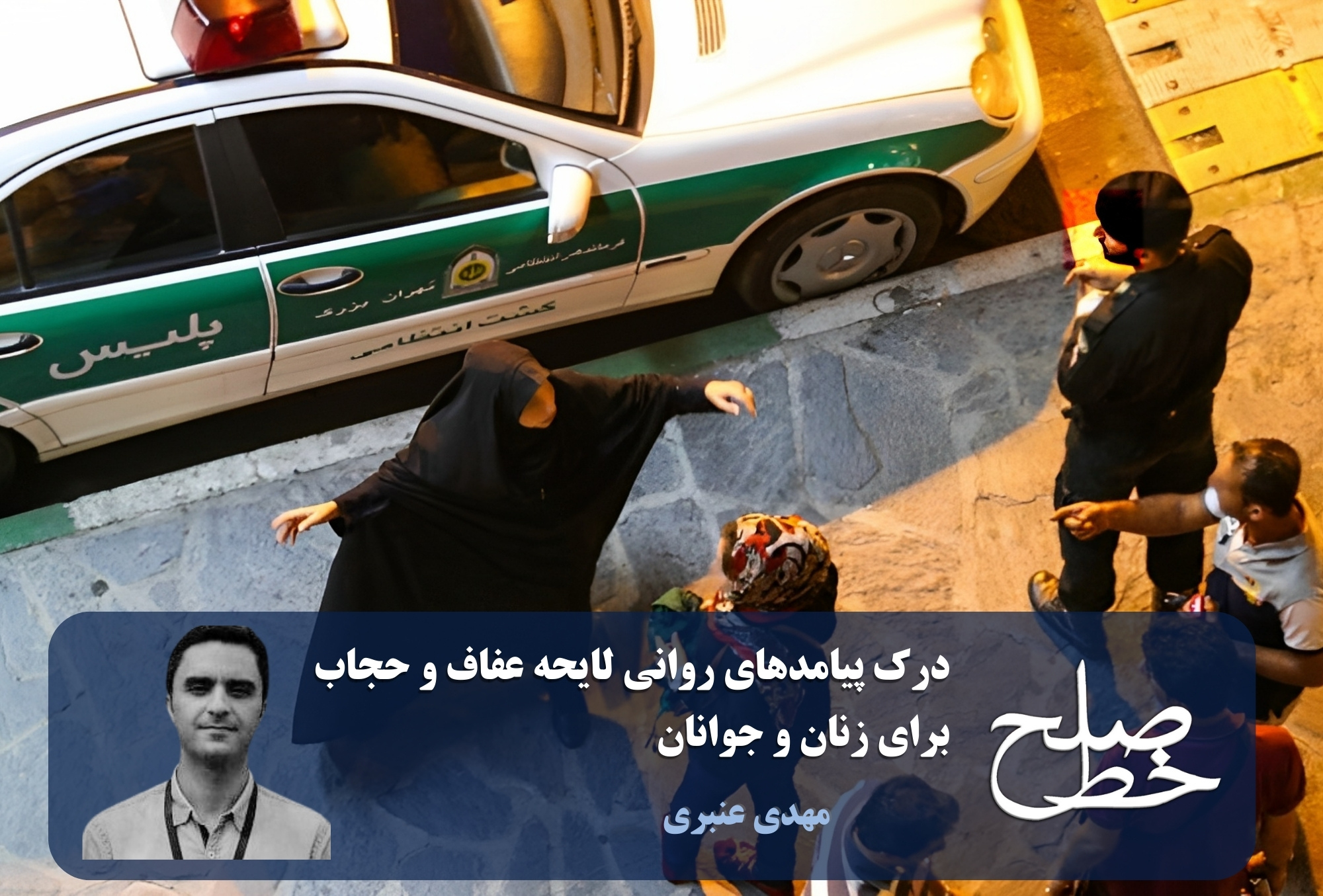
Understanding the Psychological Consequences of the Chastity and Veil Bill for Women and Youth / Mehdi Amberi
The purpose of writing this article is not to criticize the laws set in the country. Although numerous laws have been drafted and implemented in the years 1361, 1365, 1374, 1384, 1392, and most recently in the month of Ordibehesht of 1402 by various institutions such as the Ministry of Culture and Islamic Guidance, Supreme […]...
Read More
Created By: Mehdi Anbari August 23, 2023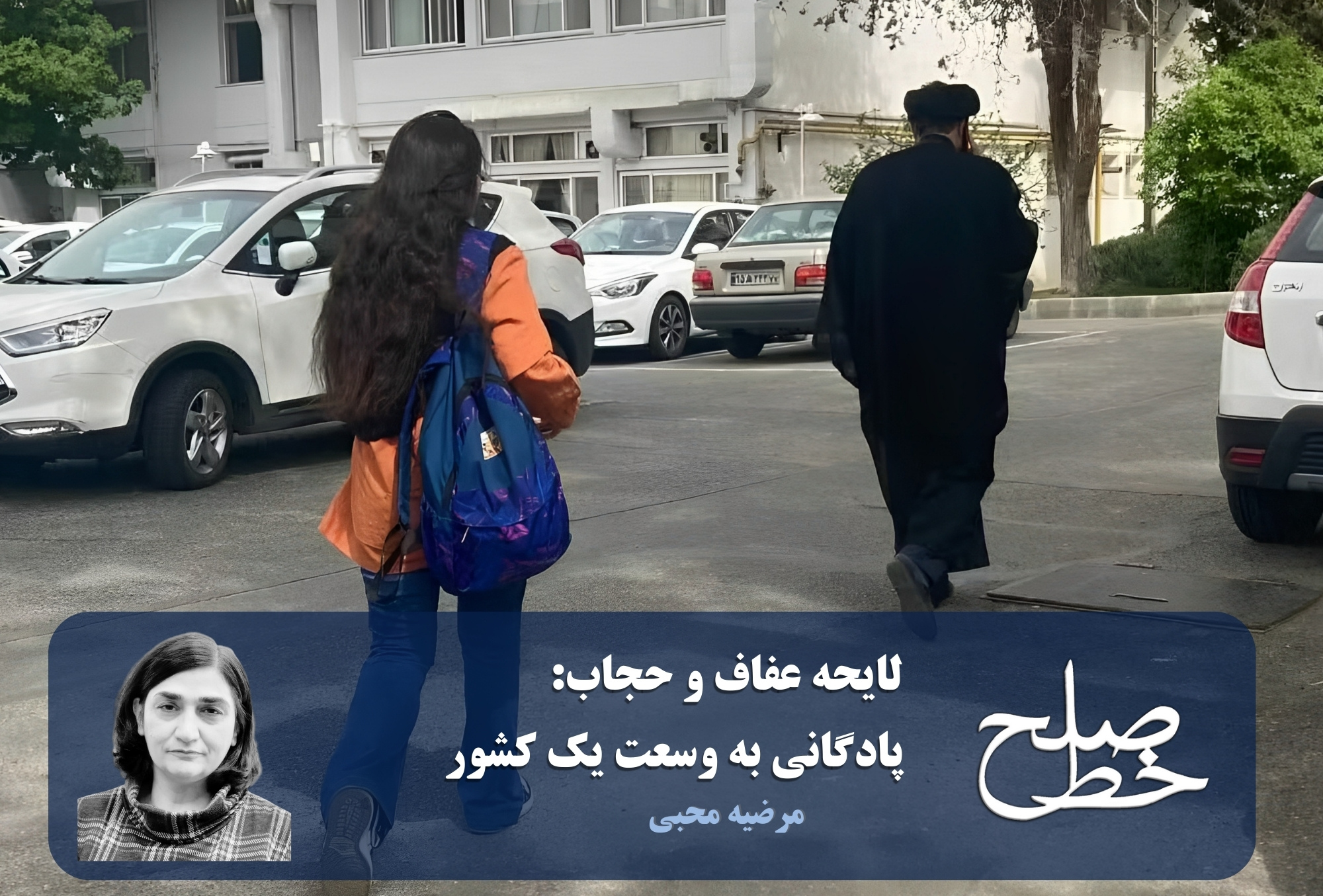
The Bill of Chastity and Veil: A Fortress as Large as a Country / Marzieh Mohabbie
Iranian women have been standing hand in hand for nearly a year now, against one of the most brutal and oppressive regimes ruling the world. After the tragic death of Mahsa Amini, they have filled their lives with the sweetness of a serious, courageous, and persistent struggle for freedom. They have taken off the forced […]...
Read More
Created By: Marziye Mohebbi August 23, 2023
Support for Home Viewing Network: People’s Need and Time; Two Wings of One Flight / Saeed Maleki
Alvin Toffler, the theorist of the “Third Wave”, believes that after the two agricultural and industrial revolutions, humans have now entered the third revolution; the electronic revolution. He says that the emergence of phenomena has caused chaos and the only way to escape it is to choose a strategy of knowledge against these phenomena. Based […]...
Read More
Created By: Saeed Maleki July 23, 2023
A look at the disappearance of independence in the home entertainment network / Arash Chakari
If we want to summarize the history of Iranian television after 1357 in one sentence, we can write: A huge cultural and artistic gap between the reality of society and the programs produced. A gap that was mostly evident between the years 68 to 78. The atmosphere of revolutionary society and the subsequent eight-year war […]...
Read More
Created By: Arash Chakeri July 23, 2023
The home viewing network, the latest victim of suppression / Marzieh Mohabbey.
In Iran, when television was under the monopoly of the government, all windows of critical thinking were closed and all avenues of influence for thoughts, beliefs, and existing discourses were obsessively blocked. As an arm of the security apparatus, it also took on the mission of suppressing the government’s opposition. Some speakers and journalists were […]...
Read More
Created By: Marziye Mohebbi July 23, 2023
Repeated censorship of visual media and its impact on human rights / Abdullah Bai Lashki
Human rights and visual media play a vital role in a free world and act as powerful tools for promoting transparency, accountability, and social justice. In countries that uphold the principles of freedom of expression and information, individuals have the right to produce, access, and share visual media, which can expose human rights violations, document […]...
Read More
Created By: Abdullah Bai Lashaki July 23, 2023
The wall surrounding the Islamic Republic in the garden of the Qasr Museum/ Barbad Golshiri.
It is rare for powers to build a memorial in condemnation or even criticism of their own actions. It is a dream if they even whisper a hidden line on a stone in the Vatican. My fault “But is there a small sign of the centuries of crimes of the Catholic Church? Is there a […]...
Read More
Created By: Barbod Golshiri May 22, 2023
