


Articles

Critical Thinking/ Sayed Mohammad Safi
My colleagues from “Peace Line” have asked me to share some points with our esteemed readers about the role of literature in fostering critical thinking and to encourage those interested to explore this necessary matter. How can accessing and researching the ancient literary roots of our culture contribute to the expansion and development of “critical […]...
Read More Created By: Seyed Mohammad Sohofi
 October 23, 2023
Censorship of books with semi-legal tools / Ehsan Haghi
A book is considered one of the most important tools for the transmission and dissemination of ideas. Therefore, one of the important measures of freedom of expression in a society is the freedom of individuals to express their thoughts and beliefs in the form of a book. Like all human rights and freedoms, freedom of […]...
Read More
Created By: Ehsan Haghi October 23, 2023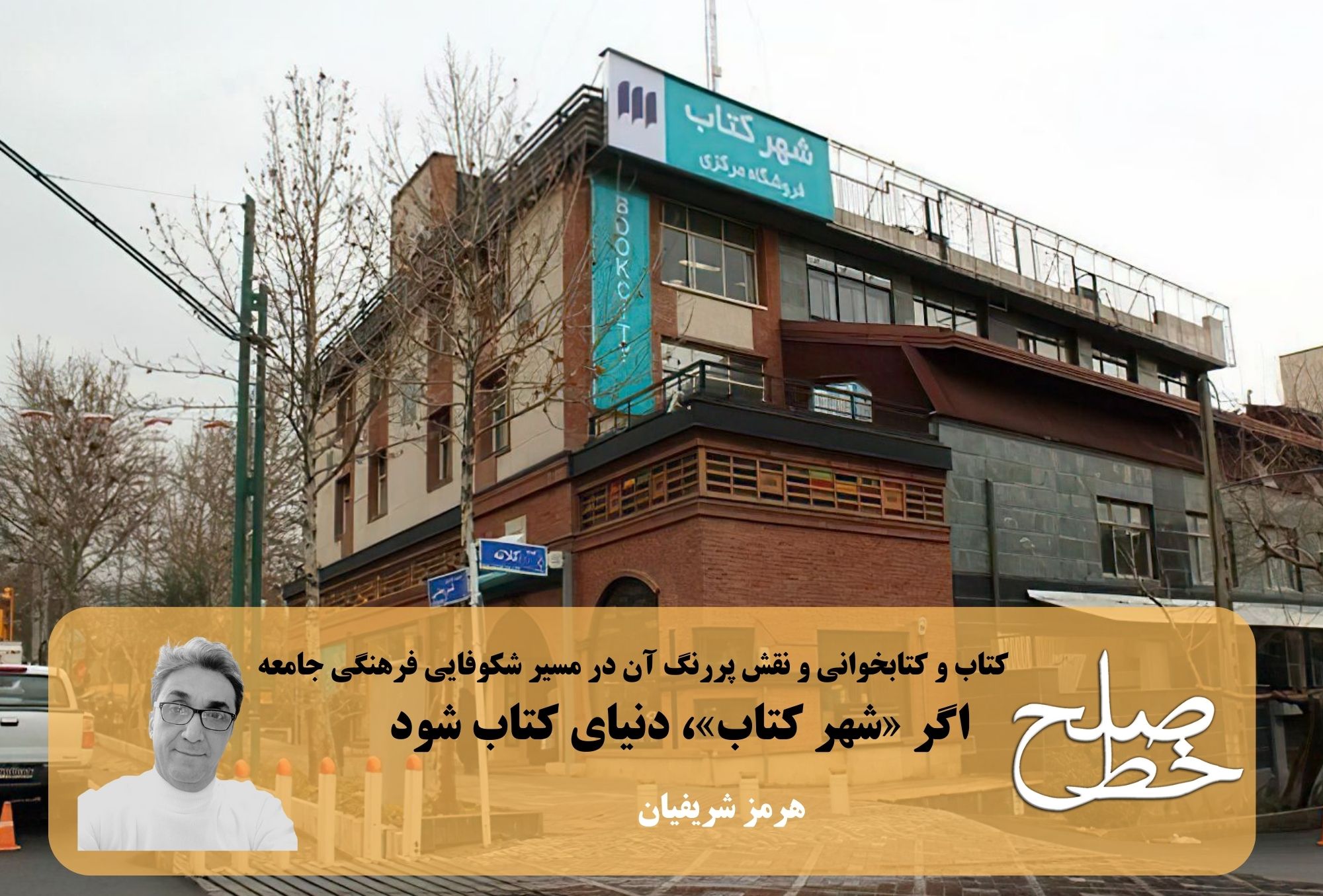
If “City of Books” becomes the world of books/ Hermoz Sharifian
The position and culture of reading books in Iran is so esteemed and respected that parents and teachers in schools, from the very first years of education, introduce books as humans’ best friend and encourage children to read, and of course, they still do so. Of course, verbal encouragement alone is not enough to establish […]...
Read More
Created By: Hormoz Sharifian October 23, 2023
Our culture and its relationship with democracy / Majid Shia Ali
You have probably encountered views that suggest democracy requires cultural prerequisites and that society lacks these prerequisites culturally. To justify this view, various comparisons are made to belittle Iranian society compared to developed countries. From driving in heavy city traffic compared to driving conditions in Northern European countries, to the proposal of a per capita […]...
Read More
Created By: Majid Shia’ali October 23, 2023
The Last Breaths of Literature in Iran / Keyumars Amiri
Undoubtedly, since the time that humans learned to read and write and were able to share their experiences with others, especially future generations, and preserve their achievements through this magnificent phenomenon of empirical science, they laid the foundation for human civilization and continued to progress. From that time until now, humanity has achieved many great […]...
Read More
Created By: Kiomars Amiri October 23, 2023
“Elimination of Minorities from the Literary Scene of Iran/ Rezvaneh Mohammadi”
Narrative literature in Iran has been tangled with the perspective of the majority and their definition of voices and narratives that are of interest to the general society. As a result, communities or individuals who are not considered part of this majority have no place in the literary scene. Marginalized communities in any country not […]...
Read More
Created By: Razvaneh Mohammadi October 23, 2023
Non-compliance with international copyright laws and its impact on book publishing in Iran / Abdullah Bai Lashki
Iran, known for its rich literary heritage and ancient tradition of intellectualism, has served as a vibrant hub for writers, publishers, and literature enthusiasts for centuries. In a space where poetry, prose, and scientific works thrive, Iranian literary contributions both within and outside of the country have had a lasting impact. However, the emergence of […]...
Read More
Created By: Abdullah Bai Lashaki October 23, 2023
Censorship, Reality, and Myths / Ahmad Faal
If we interpret myths as a desire for control and domination over reality, it may not be an exaggeration to say that most of us humans have a tendency towards myth-making. Our beliefs and convictions are a form of myth-making about real matters. The theories that arise in the humanities or even in technical and […]...
Read More
Created By: Ahmad Fa’al October 23, 2023
The emergence of storytelling and the art of soil/ Morteza Hamounian
They tell us a story and want us to believe it as they have said it. Speech is the one that prevails, and its assumption is that no one questions the victor. They make their own narrative, define their own history, and with the reinterpretation of everything, they also appropriate concepts for their own benefit. […]...
Read More
Created By: Admin October 23, 2023
A look at the pen against the sword of censorship / Arash Chakari
Censorship, subjective monitoring in cultural affairs, removal of artistic content through legal and illegal means, forced revision and rewriting, imposition of cultural preferences on the content of works, threats and intimidation, and countless other words and lines can be considered as subsets of this word: “censorship”; which is another name for all the lines above. […]...
Read More
Created By: Admin October 23, 2023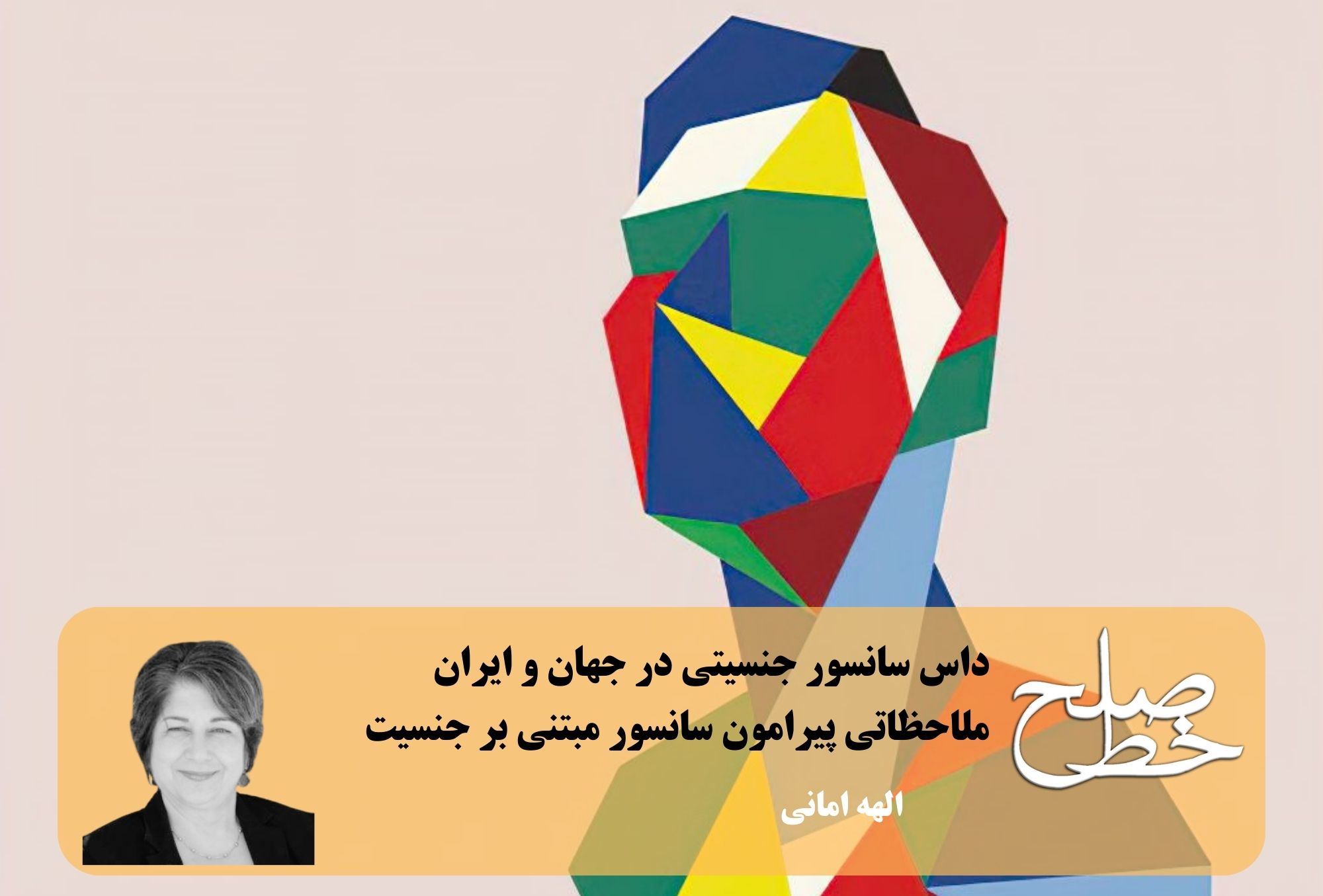
The censorship of sexuality in the world and Iran / Elaheh Amani.
The organization Reporters Without Borders published its annual report on World Press Freedom Day (in May 2023). In this report, Iran ranked 177th out of 180 countries and Reporters Without Borders evaluated press freedom in Iran as “worrying”. The organization also placed Iran in a low position on the Press Freedom Index and highlighted the […]...
Read More
Created By: Elahe Amani October 23, 2023
“Establishing green walls, a nature-based solution and a current necessity for the country/ Maryam Khajouandi and Mehrush Khajouandi”
Planting Hara trees, as bioshields on the coasts, also known as green walls and plant barriers, is currently being developed by the local community in Gujarat, India. These farms consist of both Hara and non-Hara species. Local communities plant Hara trees along the sea, salt-resistant trees in the middle layer, and forage plants in the […]...
Read More
Created By: Mehrvash Khajvandi October 23, 2023
