


“Examining the Performance of Officials and Management of Natural Disasters in Iran / Farzad Saifi Karan”
This caption is not provided, so it cannot be translated. Please provide the Farsi text. Farzad Saifi Karan
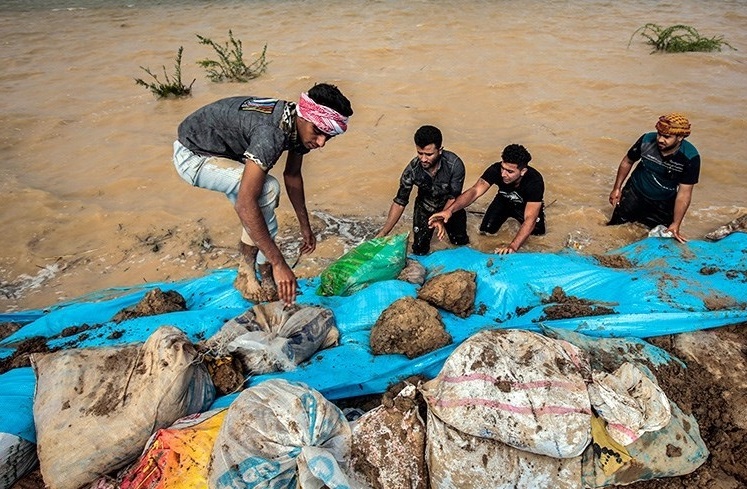
Spring, the season that is the source and symbol of rebirth, new beginnings, and the new year for Iranians, has lost its usual colors and scents with the start of Nowruz 98. From the very first days of the new year, continuous rains have swept through Iran from north to south, and from west to east, causing countless damages. Many cities and villages have suffered serious damages. According to the headlines of domestic news agencies, some villages have been completely “wiped out” and so far, more than 76 people have lost their lives. The floods have taken away many homes in front of their owners’ eyes, and in addition to the numerous problems that people are facing these days, thousands have been left homeless and displaced.
Ways of dealing with natural disasters in Iran have always been accompanied by various difficulties, obstacles, and severe criticisms towards the poor performance of the government and other governmental and non-governmental organizations. This poor performance raises questions such as whether it is possible to prevent natural disasters, what the responsibility and commitment of responsible authorities and the government should be, and what the role of crisis management in natural disasters is and what function it can have.
Undoubtedly, natural disasters such as earthquakes, floods, landslides, etc. are inevitable. However, with the advancement and development of human knowledge in the 21st century, there are various ways to prevent or reduce potential damages, manage crises, provide assistance to affected areas and people, and adhering to necessary standards in each of these areas can greatly help improve and control the situation.
In the following, we will try to examine the recent nationwide flood in Iran from two perspectives: one, the performance and role of officials, and two, the management of natural disaster crises in Iran.
National Flood and Evaluation of Officials’ Performance
Before anything else, the duties and responsibilities of every manager and authority figure must be defined and their performance should be evaluated accordingly. Surely, their duties and responsibilities must align with their performance in serving the people and developing social indicators. However, during the recent flood in Iran, we witnessed irresponsible actions and behaviors, accompanied by indifference and unawareness from government officials in dealing with the flood and its victims.
While writing this article, I was also following the news about the fire at the famous and historic “Notre Dame” cathedral in the heart of Paris. Emmanuel Macron, the President of France, left a live television interview halfway and quickly went to the scene of the fire to assess the situation. He immediately sent a message to the French people and said, “Like all my fellow citizens, I am saddened to see a part of us burning.” He also promised to use international aid to rebuild the Notre Dame cathedral. Now the question before us is, what is the necessity and importance of the presence of officials and authorities at the scene of the incident and among the people? Why do they have such expectations? How can we compare the performance of the French President in the face of a fire at a historic building with the performance of the Iranian President, who after 6 days is still among the flood victims in Golestan province – where in addition to extensive damage to buildings and historic sites, they
The first expectation from responsible authorities and officials such as the President, Governor, Mayor, Governor, etc. is that they quickly appear at the scene of the incident and among the affected people, rush to their aid, and take necessary actions to investigate the situation and find an immediate solution to stabilize the conditions. This not only fulfills the mandatory duty and responsibility of these officials, but also provides comfort and hope to the affected people on a spiritual and mental level. It shows them that they are not alone and that the government is fulfilling its duties towards them.

Unfortunately, the first duty and action of government officials in Iran during the recent flood was their delayed presence in the affected areas. The most notable example was the trip of Manaf Hashemi, the governor of Golestan province, out of the country and his unavailability during the flood, as well as the six-day delay of Hassan Rouhani, the president of Iran, in visiting the flood victims in Golestan province. The response of government officials towards the flood-affected areas, which could be interpreted as indifference, faced severe criticism from the people. However, the issue that brought the criticism of officials to its peak was when the governor of Golestan was out of the country. He had turned off his mobile phone and no one could reach him. Abdolreza Rahmani Fazli, the Minister of Interior, justified the absence of Manaf Hashemi by stating that he had requested leave one month before the flood, while the last news about Mr. Hashemi was
It should be noted that managers and government officials, like others, are entitled to a normal life and family, and the right to travel and leisure. However, due to their position and responsibilities, they must be readily available and able to manage the current situation in sensitive times. In this regard, there are numerous examples of the reactions of government officials in various countries, including Iran’s neighbors, when problems and incidents arise, which can give us a better and more accurate view of the performance of Iranian officials through comparison. The example of Emmanuel Macron, mentioned above, is a good example.
However, the multiple neglects and lack of proper management did not end here. In fact, officials in various cases, instead of fulfilling their responsibility as accountable authorities in charge of handling the situation, passed the responsibility onto the people. As a result, people became disappointed and frustrated with the actions and efforts of the officials and took it upon themselves to handle the areas affected by the flood and provide aid. The initial response to help the flood-affected areas came from people in other provinces who quickly rushed to support and assist the people in those areas. Building flood barriers, providing aid, gathering necessary supplies, sending various forms of help, all initially came from the people’s contributions. The incompetence and inefficiency of the government and related institutions in organizing and managing the situation was so great that they tried to shift the blame and criticism onto each other. The Revolutionary Guards tried to use this opportunity to condemn the government and criticize it in various ways, while the government, on the other hand, directed its criticisms
Despite all of these issues, the officials’ treatment of the flood-affected people, which angered them due to their performance, revealed another aspect of irresponsible behavior. Surely, in any situation, the threshold of tolerance for officials and authorities, due to the duties and commitments defined by their social and professional position, should be very high in front of the people, and signs of professional behavior, responsibility, accountability, empathy, etc. should be evident. However, these interactions with people who have been affected by the disaster should be even more responsible and with greater generosity. Nevertheless, it seems that officials in Iran consider themselves above the people and see the people as servants of the government, not the government as servants of the people.

Ali Larijani, the speaker of the Iranian parliament, in response to a woman from the flood-stricken province of Golestan, when she tells him, “We have nothing, what should we do?” As he indifferently lowers his head and walks away, he says, “Thank God we are safe.” Regarding another person, Gholamreza Shariat, the governor of Khuzestan, in response to one of the protesting flood victims who complains about the current situation, he says, “Don’t talk nonsense, go be an uneducated anti-system person.” The question here is, where do these behaviors originate from? Do they have the qualifications to hold these positions? Or have they been placed there solely by special privileges? How much education, knowledge, experience, and management skills do responsible authorities in Iran, such as governors, mayors, governors, speakers of parliament, etc., have for the position they hold? Why do officials in Iran not show
In the midst of recent events, one of the issues that stands out more than before is the people’s distrust towards the government, officials, and their promises. To the extent that people were indifferent to the warnings of local authorities to evacuate their cities and villages, because they did not know with what hope they should leave their homes, villages, and cities, where to go, and what their fate would be. This distrust, in addition to the previous cases, has another aspect. The government has repeatedly broken its promises and the people still remember the unfulfilled promises of the government regarding the Kermanshah earthquake. In the recent flood, the government promised to compensate the damages of the 95 flood to the farmers. How can the people be optimistic about the government’s promises when they have not received compensation for the flood damage from 2 years ago and now another flood has hit them? When they see the urgency and quality of aid and reconstruction in war-torn areas in other countries
All of these things should also include the displays and appearances of officials. The sight of managers, governors, commanders of the Revolutionary Guards, and many other officials who, with their previous planning, bring several photographers and videographers to the affected areas and try to show a friendly and supportive face, only adds to the anger and frustration of the people. The officials dealt with the disaster and the flood-stricken people in a way that seemed like they were just doing it for entertainment. From the smiling faces in the photos and videos to non-expert opinions about dealing with the flood and staging scenes to show support for the people, it was all evident.
Jihadi and ideological management is also one of the criticisms towards the performance of officials. From reciting religious poems during floods to calling them a divine blessing, all show a lack of proper management and awareness towards natural disasters. When all issues are viewed from an ideological perspective, the result will certainly not be better than what we are currently witnessing. Management and performance that tries to find solutions to every problem and dilemma solely based on this ideology, while every field requires its own knowledge, expertise, and specialization, will have the opposite result.
Point by point, the issues mentioned about the performance of officials require a thorough and detailed investigation, which cannot be covered in this writing. However, Titovar’s mention of them shows that the performance of officials has not only failed to satisfy the people, but has also not led to improvement in the situation and proper crisis management – which we will address later.
Crisis management
Iran, with an average of 3-4 natural disasters per year, is among the top 10 disaster-prone countries in the world and ranks third. The most important natural disasters in Iran are floods, earthquakes, and droughts. Ali Ardalan, the Director General of Disaster Management and Control of the Ministry of Health, announced in a press conference in 2017 that 2,900 people in Iran die annually due to natural disasters, and unexpected events affect the lives of more than 1.5 million people in the country. On average, Iran spends 1.1 trillion rials annually on reconstruction and compensation for damages caused by natural disasters.
Given the high statistics of natural disasters in Iran, the importance of crisis management – which is protecting the community against crises – becomes more evident than ever. Natural disaster management is generally divided into three main categories: before, during, and after the occurrence of the incident, along with a set of solutions, activities, and guidelines.
Human progress and achievements in dealing with natural disasters and establishing effective management can greatly reduce or control the extent of damage by implementing proper and appropriate methods to control critical situations.
However, the performance of the Crisis Management Headquarters of Iran, these days, is heavily criticized, just like the performance of officials. Nevertheless, all government agencies and responsible authorities believe that they have fulfilled their duties properly. Natural disaster management in Iran has not been very successful, considering the process we have witnessed in the past years. From timely information dissemination and necessary education for citizens to creating suitable urban infrastructure, emergency equipment, and preparedness for managing natural disasters, everyone supports this issue.
The most important part of natural disaster management is preparation before the occurrence of disasters. If we only focus on the recent flood, we can mention the following solutions for predicting and managing flood crises, which unfortunately have not been followed in Iran:
Timely information and necessary education for citizens to deal with floods. Informing and educating citizens can play a crucial role in calming situations during natural disasters.
In the field of suburban areas, by installing precise sensors that transmit information wirelessly and continuously to the communication center, it is possible to be informed of the rise in water levels of rivers, dams, and flood-prone areas due to rain or snow, and without delay, implement proactive and defensive measures to deal with this natural crisis.
Preventing the construction of uncontrolled and unprincipled dams.
Closing the floodgates (example: Shiraz gate).
Not destroying and eradicating vegetation cover.
Not building next to the river and flood path.
Structural Strengthening.
Riverbed layer and cleaning of bridge entrances.
Allocating sufficient budget for the crisis headquarters (one of the problems of the crisis headquarters is the lack of necessary funds and budget).
Equipping emergency response forces such as the Red Crescent. (One of the most important factors observed in the recent flood was the lack of sufficient equipment for rescuers, including boats and helicopters, among other equipment).
All of these are points that paying attention to them is necessary for managing natural crises such as floods and can help reduce human and financial damages. Surely, one of the reasons for the lack of natural crisis management in Iran can be attributed to the interference of security and military forces, such as the Revolutionary Guards, in these areas. Institutions that, in addition to their security concerns, are engaged in land grabbing, mountain destruction, deforestation, and uncontrolled and unethical construction for their own economic purposes. The interference of security forces and the Revolutionary Guards in crisis management and relief efforts disrupts the activities of these organizations. As we have seen in recent events, the interference of the Revolutionary Guards in disaster-stricken areas has intensified tensions among the people. Instead of using proper methods and specialized experts to address the crisis and build flood barriers, they resorted to their own unethical methods, which primarily served their own interests. The interference of security forces in crisis management even prevented people from providing help, and in many
In addition, it should be mentioned that ignoring the warnings of environmental experts and specialists is also important. Environmental experts and activists in Iran are facing many problems and their warnings are never taken seriously. In some cases, their warnings and concerns are perceived as propaganda against the system and have led to their arrest and detention.
Since there has not been a specific plan or preparations for managing natural disasters in Iran, or if there were, they were insufficient, as a result, in the next two stages, during and after the occurrence of floods, we see a lack of crisis management and situations getting out of control. All these problems and neglect during and after natural disasters are repeated as irreparable damages, and the situation not only does not improve and compensate for the damages, but it worsens and increases people’s dissatisfaction.
After the flood in Golestan, officials tried to warn people in areas at risk of flooding to evacuate their cities and villages. Police cars were moving inside the cities and using loudspeakers to ask people to leave their homes, and in some cases, forcibly removing them from their homes. However, no measures were taken to provide shelter for the people.
There are many things that can be examined, but in the end, with reference to events such as the Kermanshah earthquake and the floods of 1995 in provinces like Khuzestan and Sistan and Baluchestan, which are not too far apart in time, the inefficiency and weakness of natural disaster management in Iran becomes clear and we see people still waiting for the promises of officials and dealing with their situation amidst the ruins.
 Created By: Farzad Seifikaran
 April 21, 2019
Tags
Crisis management Farzad Saifi Karan Flood Monthly Peace Line Magazine peace line