


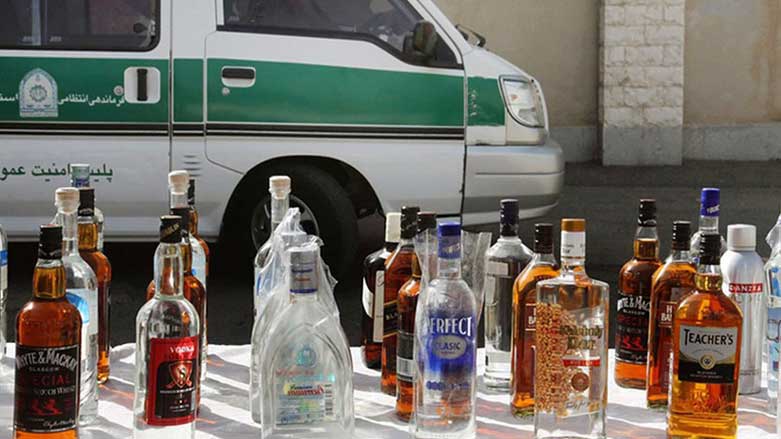
A Look at Magisari in Islamic Countries/ Ali Kalai
This is a caption
این یک عنوان است
This is a caption.
Ali Kalai
The debate about alcohol continues after more than a millennium. Does the word “khamr” and the discussion surrounding its intoxicating effects refer to any drink that can cause drunkenness, or does it only apply when a person becomes intoxicated? The discussion about drinking alcohol and its intoxicating effects still continues. Of course, there are general opinions and sometimes specific ones. The general opinion among all Muslims, from Shia to Sunni, is that drinking alcohol is absolutely forbidden. However, sometimes other opinions are also heard. Of course, the writer is not an expert in Islamic affairs. So what he writes is his understanding of what he has learned through reading, hearing, and seeing.
As mentioned, the opinion regarding the sanctity of consuming what we now call alcoholic beverages is that there are four clear verses in the Quran about it, and even if there is any benefit or profit in it, according to the Quranic view in verse 219 of Surah Al-Baqarah, its harm is greater. The punishment for drinking wine is 80 lashes, which is also stated in Article 174 of the Islamic Penal Code. This article states: “The punishment for drinking intoxicants for a man or woman is 80 lashes. Note – Non-Muslims are only sentenced to 80 lashes if they pretend to drink intoxicants.” Its proof is possible in two ways. First, the confession of the drinker and second, witnesses. Two male witnesses in the same way as the testimony in Islamic tradition.
In the jurisprudence of the Sunni school, the story is the same. In Sahih Bukhari, it is narrated that “Abu Burdah narrates from his father, who narrates from Abu Musa al-Ash’ari, that the Messenger of Allah sent him to Yemen and asked him about the drinks of the people of Yemen. He replied, “Bat’ and Mizr.” Abu Burdah was asked, “What is Bat’?” He replied, “Bat’ is a drink made from honey and Mizr is a drink made from barley.” Then he said, “Any intoxicating drink is forbidden.” (1)
But among these discussions, other words have also been said. Words that sometimes have brought the voice of the traditionalists and provoked their protest. For example, Mustafa Rashid, one of the Egyptian scholars who was a preacher at Sydney Mosque in Australia in 2014, said in a television interview at the time: “The Quran only considers intoxication as forbidden and there is no verse in the word of God about the prohibition of alcohol.” Referring to verse 43 of Surah An-Nisa, he continued: “Everything in the Noble Quran about this matter is related to the prohibition of intoxication and does not confirm the prohibition of alcohol itself.” He also said: “According to these verses, we cannot attribute lies to God.” (2)
And of course, his words have many opponents among the scholars of both main Muslim currents. The point here is that in some sources it is said that the word “khamr” includes any intoxicating liquid, considering the absence of grape wine in Medina during the time of the Prophet and the presence of date wine. In fact, the meaning of the word is disputed among the scholars. There have also been discussions, as mentioned earlier, that drinking alcoholic beverages is permissible as long as it does not lead to intoxication. These discussions are still ongoing. There are general fatwas and some rare and specific fatwas that, after being brought up, have always sparked serious opposition and caused a group of fanatics, who are not people of discussion and rationality, to react and instead of thinking, they shout and scream, claiming to defend Islam.
“Perhaps the question arises, why? What is the reason for this prohibition? Is this reason based on tradition or reason? Based on the apparent arguments, and considering the above understanding that refers to the verses and traditions that deem drinking any intoxicating substance as forbidden, it must be said that in this matter, the prohibition is based on tradition. And of course, after that, rational arguments are presented based on the Quranic text (verse 219 of Surah Baqarah) which speaks of the harms outweighing the benefits of such drinks, and also references to the opinions of physicians. On the other hand, the prohibition of alcoholic and intoxicating drinks is a consensus among all traditional Islamic scholars, and because consensus is firstly the fourth proof of the four legal proofs (in Shia), and secondly, in this view, a consensus transmitted from the companions of consensus is considered true and not just confirmed. Therefore, based on this consensus, the prohibition of such drinks is proven absolutely. However
However, despite this almost unanimous prohibition of alcohol consumption, even to the extent of moderation, many Muslim countries – or what are known as Islamic countries in the world – allow drinking and consumption of alcohol without any governmental punishment for both Muslims and non-Muslims, and in fact, drinking or not drinking is left to the free will of the individual Muslim.
Before mentioning some countries, one point must be considered, which is their system of government. Some of these Islamic countries have a secular constitution and laws, and have a democratic government. By secular, it means the separation of religion from power, so that religion is not the justifier of power. This means that religion plays its social role in society, but does not have a political presence as the main factor in governance and legislation. However, other parts of these countries have either recently established a democratic system – such as Afghanistan and Iraq after the war, which are still recovering from the aftermath of war – or have various authoritarian governments, from the monarchy of Saudi Arabia to the sheikhdoms of the United Arab Emirates and Islamic Republics with or without the rule of the Supreme Leader, such as Pakistan and Iran.
Taking this into account, however, we can look at the possibility or impossibility of consuming alcoholic beverages in Islamic countries or, in fact, countries with a majority Muslim population. The list of countries where the consumption of alcoholic beverages is prohibited is clear: Afghanistan, where the sale of alcoholic beverages is prohibited. However, the Afghan News Agency reported on November 29, 2017, news of the sale of alcoholic beverages by foreign diplomats in the black market of Afghanistan. This means that the sale is prohibited, but the Taliban find a way to obtain alcoholic beverages, just like any other prohibited item. There is a famous saying that goes: People are greedy for what is forbidden to them! (5)
Bangladesh is another Muslim country with a majority of about 90% of Muslims, where the consumption of alcoholic beverages is prohibited. Brunei is another country, after Iran, with a population of over 80 million people, where the recent consumption of homemade alcoholic beverages has once again led to the massacre of its people, and the government shows no signs of softening. It is a country with a high per capita consumption of alcoholic beverages, and even the percentage of alcohol consumption by its drinkers is higher than that of the United States. (6)
In Iraq, except for the Kurdistan region which is autonomous, this prohibition is in place in the rest of the country. In Indonesia, there are no signs in small shops, but in large markets and tourist areas, it is possible to consume it. In India, in some states with a Muslim majority, such as Gujarat, this prohibition exists. Countries such as Libya, Kuwait, Mauritania, Saudi Arabia, Sudan, Somalia, and Yemen are also among the prohibited countries, and in the Maldives and Pakistan, only Muslims are subject to this prohibition. In the United Arab Emirates, the emirate of Sharjah is also included in this matter.
However, other Muslim democratic countries that also have secular constitutions have implemented restrictions on the sale and consumption of alcoholic beverages. In Malaysia, Muslims are prohibited from drinking, buying, and selling alcohol. If a Muslim is caught drinking in a bar and the religious police intervene, the individual will be arrested and face consequences. This issue has been a hot topic in Malaysia in recent years, with debates over whether the country’s laws should be secular or in line with Sharia laws. Islamic parties in the country strongly advocate for the Islamization of laws, while non-Muslims, along with various Muslim reformist groups – who are mostly educated and intellectual members of Malaysian society – insist on the secular nature of laws. Pressure, especially during the end of Najib Razak’s tenure as the former Prime Minister of Malaysia, increased from Islamic groups. However, with the election of Mahathir Mohamad and his return to power, there is hope that Malaysia will return to its previous stability.
A country with a Muslim majority; this time it’s Turkey. Drinking, consuming, and buying and selling alcoholic beverages is allowed there, but in smaller and generally more religious cities in Turkey, some restrictions and limitations are imposed. Some Iranian refugees in smaller cities in Turkey complain that they are forced to carry their consumed drinks in black bags and smuggle them. The general atmosphere in some cities makes it difficult for drinkers. On the other hand, in Turkey, Istanbul is always lively and famous for its vibrant nightlife, and Ankara, Izmir, and other cities also have bars and pubs that are open 24 hours.
Another country is Egypt. A country that has a history of three thousand years of alcohol production, but the exchange of alcohol in this country is still underground. It is said that in Egypt, underground alcohol exchange exists among Muslims, but for Christians and others who follow different religions, buying and selling alcohol is allowed. (7)
There are two important points in comparing countries. The first is the issue of their type of government and constitution. Democratic systems with secular constitutions or ones similar to them have a reasonable approach towards alcohol consumption, leaving it up to the individual to decide whether to drink or not. However, this is not the case for all Islamic countries that have issued licenses for the sale and purchase of alcoholic beverages. As mentioned, in countries like Malaysia, this issue is restricted for Muslims, but only if the police intervene. Otherwise, the saying goes, “the thief is not caught, the king is to blame!” In some countries like Iran and Saudi Arabia, the consumption and sale of alcohol is completely prohibited. However, in Saudi Arabia, it has recently been allowed for import and consumption only in hotels and for non-Muslim foreign guests. In the United Arab Emirates, alcohol consumption is a common part of life in one sheikh’s residence, but prohibited in another. In India, the same rule is followed based
The second point is about society and its traditions. Wherever the society is more traditional and religious, the consumption of alcoholic beverages is lower and this is considered more shameful. Different cities in Turkey are an example and a sign of this. There is a clear difference in the possibility and amount of alcohol consumption per person, for example, between cities like Kayseri or Nusaybin and the famous cities of Istanbul and Ankara. The situation is the same in Malaysia. Consumption of alcoholic beverages is normal in Kuala Lumpur. But as soon as we move away from the center of the country and reach smaller cities, the situation changes. In some states, such as Kelantan, alcohol consumption is completely prohibited. In fact, the amount or possibility of alcohol consumption, regardless of its legal aspect, depends on the existing social atmosphere. It may not be prohibited to consume alcohol, but the conditions of society may force the individual to hide the drink in their pocket, bag, or somewhere else. In fact
The consumption of alcoholic beverages, as mentioned and agreed upon by the majority of Shia and Sunni scholars, is considered forbidden by Islamic law and, as a general rule, Muslims should not use such drinks. However, the point here is that the possibility of this varies in Islamic countries based on the two aforementioned principles.
Witnesses from decades ago, before the February 57 revolution, have seen the door of guidance in the mosque of Hedayat Beit, which was installed there at the request of Ayatollah Sayyid Mahmoud Taleghani. The verse on the door was from a couplet by Babataher Aryan, which said: “The goods of disbelief and religion are not without buyers/ Some like this, some like that.”
Talaghani did not know that religion’s approach to believers was not through force, and he left the choice to the people. Another story about Sayyid Musa Sadr in Lebanon is mentioned, where he ordered wine at a place and then threw a piece of lamb liver into the wine, and after the changes in the lamb liver, he sat down to preach about abstaining from wine. In fact, he did not take a governmental position and tried to deal with the issue through reasoning. This approach is strange among Islamic countries today. Religious individuals and official preachers in Islamic countries use more force than reasoning to prohibit the use of alcoholic beverages. It is as if they themselves are responsible for sending people to heaven. Generally, those who wanted and want to send people to heaven have created a hell for creatures; a hell of force, coercion, and deprivation of free will for creatures.
Notes:
Drinking alcohol is forbidden in the Quran and Sunnah. Comprehensive website of sects, religions and denominations, November 4, 2015.
In the fatwas of Sheikh Misri, he considers intoxication to be forbidden, not wine! + Shia response, IKNA news agency, 15 December 2014
Five reasons for the prohibition of alcohol, Shafaqna-Afghanistan website, 4th of Ardibehesht month 1393.
Consensus from the perspective of Imam Khomeini, Wiki Jurisprudence.
The sale of alcoholic beverages by foreign diplomats in the black market of Afghanistan, Afghan Republic News Agency, November 29, 1396.
The consumption of alcoholic beverages in Iran is higher than America, Rokna News and Information Center, August 25, 2017.
Drinking alcohol in Egypt is a well-known secret, Muniches Information Base, August 19, 2016.
 Created By: Ali Kalaei
 October 23, 2018
Tags
Alcoholic beverages Ali Kala'i Drinking wine Handmade drinks Monthly Peace Line Magazine peace line Sweat of a dog ماهنامه خط صلح