


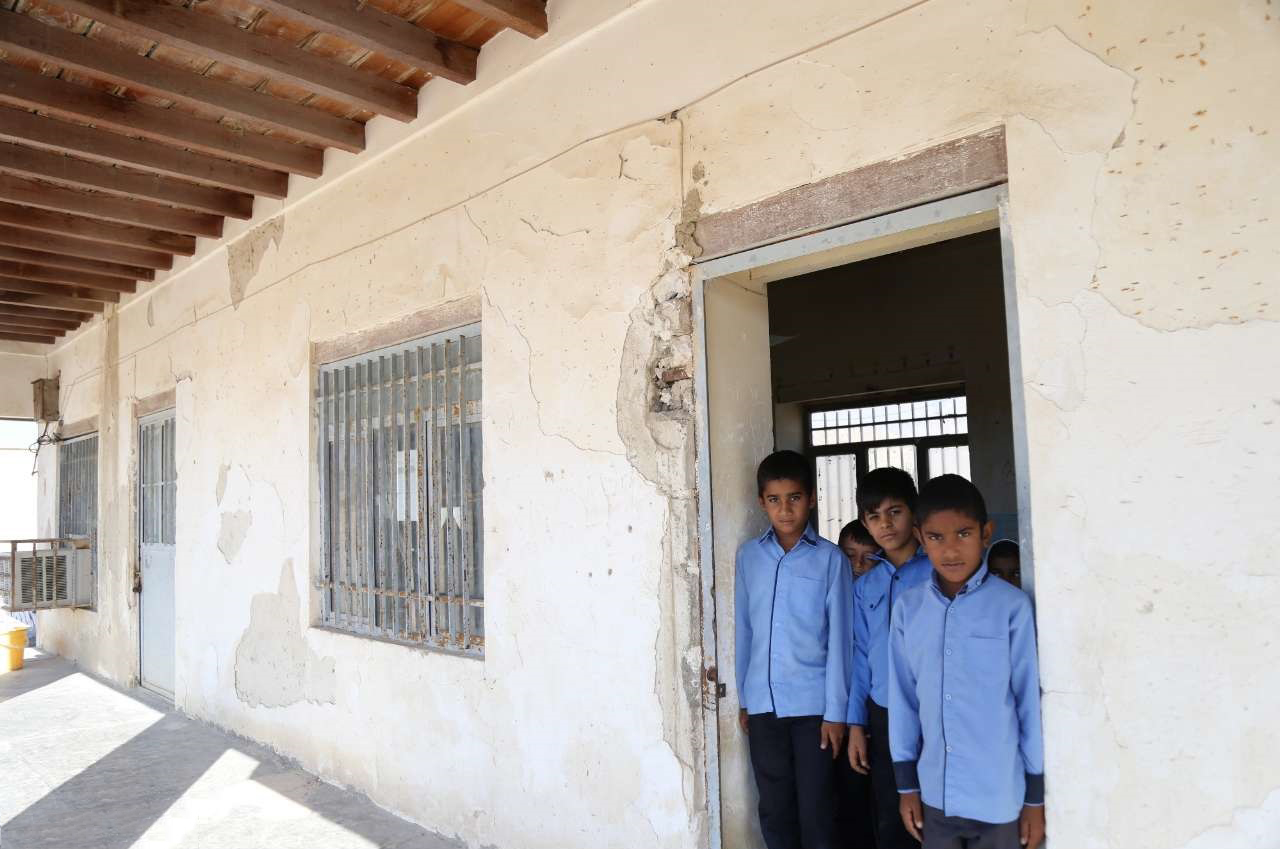
The country’s budget was short for the Ministry of Education and Training / Navid Mohabi.
This is a caption
This is a caption.
Navid Mahbobi
Investment in the education sector has played a key role in the growth and human development of developed countries. Countries around the world are investing a significant portion of their gross domestic product in education, in pursuit of investing in their human resources who will play the role of development pioneers in the future. Education also plays an important role in improving the economic situation and increasing production. When the number of educated and active members of society increases, the gross domestic product of countries also increases, and it has a significant impact on all economic indicators. Furthermore, investment in the education sector of a country, along with political stability, not only reduces poverty but also leads to an increase in income.
The average share of education and training in the world’s budget is five percent, with some countries like Denmark, Norway, Finland, and Sweden allocating seven to eight percent, ranking them among the top countries in the world. However, in Iran, the share of education and training in the country’s gross domestic product has decreased from 4.7 percent in 2012 to less than three and a half percent, which is lower than the global average.
With a review of the news of the past 12 months related to the Ministry of Education and the ongoing protests of educators and teachers, it can be understood from the beginning that the budget of the Ministry of Education does not match. In other words, the Ministry of Education is not even able to pay its employees and teachers in order to address educational infrastructure and cultural-sports programs and implement them. This financial hardship was to the extent that the Ministry of Education decided to remove milk from schools.
In the 97 budget proposal, initially a budget of 36 trillion dollars was presented, which was not approved, and after that a budget of 49 trillion tomans was approved. However, the issue that has caused concern for authorities is that this budget is not funded through direct payments from government revenues, which provides no guarantee for covering the difference. Considering the current economic turmoil in Iran and the upcoming oil sanctions in November of this year, it seems unlikely that the government will be able to cover the difference. The reality is that payments from the 96 budget, especially for teachers’ salaries, are still pending, which has created a state of uncertainty for the payment of teachers’ salaries in the 97 budget. Since last year, teachers and retired educators in Tehran and some other cities have gathered in front of the Budget and Planning Organization at least three times, leading to the arrest of some participants. The subsequent gatherings in Ordibehesht and Mordad of this year, in addition
Although in the first half of spring, the average salary of teachers faced a double increase from 1,470,000 tomans to 2,970,000 tomans, but with the rise in inflation and living expenses in the past one or two years, it has had no effect on improving the welfare of teachers. With the calculation of the dollar rate, the average salary of teachers in Iran is $205, while in neighboring country Turkey, the average salary is close to $500. In this regard, Amir Khajesteh, representative of Hamedan in the Islamic Consultative Assembly, recently announced that most teachers have a second job and due to financial and livelihood issues, this has affected the education and training of students.
Schools do not have safety, but the safety budget has decreased.
Among the organizations and institutions related to the Ministry of Education, the budget of the Organization for Renovation, Development, and Equipping of Schools has had the most significant decrease. This action has been criticized by experts due to the dire safety situation of schools in Tehran and less developed provinces. The budget of this organization has decreased by 750 billion in 1397 (2018-2019) and reached 66 billion tomans. This budget cut has taken place while, according to the head of this center, about 27% of schools in the country are in a highly dangerous state, 27% need reconstruction, and only 39% have an acceptable level of stability. Contrary to popular belief, about 25% of schools in Tehran, especially in the southern outskirts of the city, have severely deteriorated structures. The presence of multiple faults in Tehran increases the risk of collapse. The Director-General of Education in Tehran also stated that the capacity of students exceeds the capacity of schools
Nutrition in schools
This is a photo of a beautiful sunset at the beach.
Photo of a stamp.
In October of this year, more than 14 million students between the ages of 7 and 18 in Iran will begin the new academic year. Considering the long-term presence of students in school, nutrition plays an important role in the learning process and performance of students. Therefore, in many countries around the world, a portion of the education budget is allocated to providing free or affordable nutrition. In the 96 and 97 education budget, an amount of 200 billion tomans was allocated to distribute 90 free milk servings in schools across the country. According to the report of the Islamic Republic of Iran Broadcasting in 96, due to budget shortages, only 25 servings of milk were distributed and in some schools and provinces, even less milk was distributed due to lack of budget. In 95, some students in the provinces of Isfahan, Kermanshah, and Alborz were poisoned due to the poor quality of the milk. Only 0.04% of
Students and social problems
Students in their teenage years face a wide range of issues and problems – both in their personal lives and in their interactions with family and peers, as well as during their time at school. Sometimes, these problems can be so overwhelming for a young person that they are unable to find a solution, given their lack of experience. This is when the role of counselors and social facilitators in schools becomes prominent; individuals who are able to identify and manage problems, and teach life skills to help the student during their troubled times. A student’s problem can range from experiencing depression, aggression, substance abuse, risky sexual behavior, bullying and humiliation, to being exposed to physical and verbal violence, or facing family and financial problems. In Iran, despite the requirement for counselors in schools mentioned in the Fundamental Transformation of Education document, only 15% of high schools, for example, have access to a counselor, and the rest are unable to hire one due to financial constraints. The head of the Department of Education and
In the paradise of our city, two female high school students in the town of Naqadeh committed suicide in a coordinated manner this month. In another tragic news, a local website published the story of a 16-year-old teenage boy’s suicide in the city of Neyriz, Fars province, which is believed to be a result of sexual assault that led to depression and ultimately suicide. (1) In the spring of this year, the scandal of a school supervisor’s assault on several students also caused media uproar. Another social problem in schools is the presence of ten thousand students addicted to drugs. (2) Without the help and guidance of specialized individuals in schools, a troubled teenager cannot escape from their addiction.

Unfortunately, a review of Iran’s budget shows that military-security institutions and organizations affiliated with special agencies are given priority, and what remains is allocated to ministries such as education. According to government sources, between 90-97% of the education budget is spent on paying employee salaries. Therefore, it is not surprising that schools have lost their appeal for students, to the point where, as the Minister of Education says, “Iranian schools have turned into prisons.”
Notes:
Details of the bitter suicide of Niloofar, Horgan, 1st of Esfand month, 1396.
Shocking statistics from the Ministry of Education about addicted and talented students, 25 Ordibehesht 1397.
Minister of Education: Iranian schools have turned into prisons, Mehr, 6 Shahrivar 1397.
 Created By: Navid Mohebbi
 September 23, 2018
Tags
Education and training Education budget Monthly Peace Line Magazine Navid Mahbobi peace line Reopening of schools School safety