


The process of accepting a lawyer in political-security crimes/ Abuzar Nasrollahi
There is no Farsi text provided to translate. Please provide the text to be translated.
Abuzar Nasrollahi
The right to a fair trial is one of the most fundamental human rights in the world. This right is recognized in international documents such as Articles 10 and 11 of the Universal Declaration of Human Rights, Articles 7-2 of the International Covenant on Civil and Political Rights, Article 1 of the International Convention on the Protection of the Rights of All Migrant Workers and Members of Their Families, and various regional documents.
The right to defense is one of the components of a fair trial, the most important aspect of which is the right to free access to an independent lawyer. It is the right of every citizen to be aware of the benefits of innocence and ways to achieve it, and this cannot be achieved unless the accused can entrust the defense to someone who has sufficient knowledge in the field of law and is immune from any form of government harassment and threats.
After the Constitutional Revolution and the establishment of the judiciary, the system of legal representation in Iran was lacking a legal framework and was handled by some clerics, educated individuals, and those who had brief knowledge of trials. For the first time, with the approval of the Law on the Principles of the Judiciary and the Establishment of Shari’a Courts and Peace Courts on September 18, 1911, through Articles 226 to 263, legal representation in courts was defined as a profession and a system. Later, a charter was approved during the reign of Firooz Mirza Farrokh Khan, with the guidance of Ahmad Shah Qajar. However, this profession was not independent from the government and the Ministry of Justice had the authority to issue licenses for legal representation and to pursue and punish delinquent lawyers. Until the realization of the necessity of independence of lawyers from the government and the efforts of university professors, lawyers, and some judges, a 23-article bill was submitted on July
After the establishment of the Bar Association, although sovereignty did not interfere in private relationships between individuals and in public crimes, they did not prevent the free choice of lawyers in the judiciary. However, wherever the subject of the trial is political or security crimes, the right to a fair defense through free access to lawyers has not been granted and restrictions have always been imposed on the accused. Perhaps it should be accepted that there is an asymmetrical relationship or an inverse proportion between justice and power. (3).
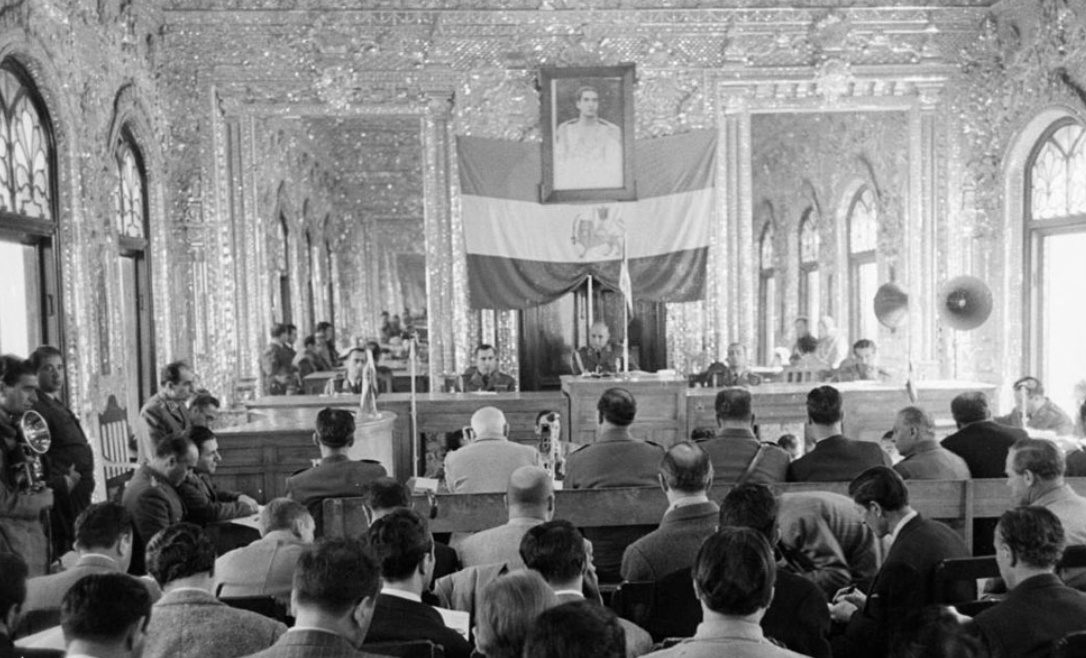
In the previous regime of the monarchy in Iran and according to article 94 of the Military Judiciary and Criminal Law approved on 4/10/1318, in addition to military personnel, non-military individuals who were accused, participated, or assisted in committing political and security crimes – which were known as sabotage at that time – were tried in military courts.
In this way, non-military individuals were subject to the military court procedure and, based on Article 182 of the Army Judicial and Penal Code, Amendment 18/04/54, the accused could only choose one or two military personnel who were qualified and active or retired to be their defense attorney. These defense attorneys, due to their affiliation with the military, were unable to independently defend the political and security rights of the accused.
The situation of dealing with political, security, and revolutionary criminals has led to the Constitution of the Islamic Republic of Iran not allowing military rule according to Article 79, and also recognizing the right of both parties in all courts to choose their own lawyer according to Article 35. It can be confidently stated that any infringement on the freedom to choose a lawyer is against this principle of the Constitution.
However, from the beginning of the revolution and especially with the establishment of revolutionary courts, which were updated versions of military courts in regards to handling political-security crimes, due to the dominance of certain clerics and their radical interpretation of Sharia, they have always imposed limitations on the legal system.
The speech of Hassan Nazieh, the president of the Bar Association at the time, in Khordad 1358 (May/June 1979), which at the same time faced criticism from many lawyers and even raised serious doubts about the legality of his presidency over the Bar Association due to his simultaneous management of the oil company, was an excuse for what was called the “purification” of the institution of law.
On the first of Tir, morning of 13 Khordad 1358, the first spark was ignited. A group of employees from the Ministry of Justice, through a resolution, declared their support for the revolution and accused the Bar Association of being a tool for creating a Masonic base, anti-revolution and imperialism within the Ministry of Justice. They demanded the removal of the Minister of Justice and the cleansing of the Ministry of Justice from the presence of the Bar Association. (4).
Although the disciplinary court of the Bar Association identified and suspended lawyers who were accused of collaborating with SAVAK, the Revolutionary Council had approved and mandated the purification and cleansing of the Bar Association in 1980, and had chosen 5 lawyers to follow up on this matter until the purification of these individuals. However, the Revolutionary Courts were formed and contrary to the principle of independence of the Bar Association of Judiciary, which is essentially responsible for dealing with lawyers’ misconduct and revoking their licenses, the licenses of many social activists were revoked by the order of Ayatollah Gilani (including the license of Mehrangiz Manouchehrian, a member of the Women Lawyers’ Association, whose activities in defending women’s rights are unparalleled). (5).
Despite the clarity of the constitution, many courts, especially those run by clerics, have gone beyond their limits and refrained from accepting a court-appointed lawyer. Some have even written and posted statements on the court doors to declare this.
On October 3, 1991, the Assembly for Determining the Expediency of the System approved a single article that stated “plaintiffs have the right to choose a lawyer and all courts established by law are obligated to accept a lawyer.” This single article brought a ray of hope to the hearts of the people and lawyers to ensure the right to free access to a lawyer; however, six days later, the reconstruction plan for the Bar Association was approved in the Islamic Consultative Assembly on October 16, 1991. According to Article 1 of this law, a committee consisting of six lawyers and three active judges was appointed by the head of the judiciary to implement this law. This committee, based on Article 5, began to purge and, as they called it, “cleanse” the lawyers and as a result, some legal figures in Iran were deprived of their profession solely because they had jobs before the revolution, and as a result, their clients were also deprived of
After nearly twenty years of no elections being held for the Bar Association, finally on April 6, 1997, the Law on the Quality of Obtaining Judicial License was approved and the Bar Association elections were held. These elections received a lot of attention from newspapers, especially the reformist movement, in order to open the way to justice by defining the minimum level of independence for lawyers and, in essence, protecting the rights of the people. With the approval of Article 187 of the Fifth Development Plan and the establishment of a parallel institution, the Center for Consultants and Lawyers of the Judiciary, the legislator returned to the years before 1952 to recognize independent lawyers once again in the Iranian judicial system.
The events of 1388 and the defense of professional lawyers against political, security, and religious criminals resulted in the arrest and conviction of some lawyers. Finally, in 1392, the tenth parliament passed a clause in article 48 of the Criminal Procedure Law, which imposed serious restrictions on the right to choose a defense lawyer for security crimes. According to this clause, in crimes against domestic and foreign security, as well as organized crimes under the jurisdiction of a criminal court, during the preliminary stages of the investigation, the parties can only choose lawyers who are approved by the head of the judiciary. This clause not only limited the right of the accused to access a defense lawyer, but also violated the principles of human rights and criminal law by depriving them of this fundamental right.
Immediately after the approval of this clause, a group of lawyers formed a campaign called “Defend the Pen” and started a rapid movement to confront it in the country. By shedding light on the dangers of this clause and creating unity among lawyers, they published a signed letter with over two thousand signatures from lawyers, in an effort to prove the firm reaction of lawyers to the declaration of names by the head of the judiciary. This struggle and widespread protest delayed the announcement of the names of authorized lawyers for accepting security cases for up to three years. However, despite the continuous resistance of lawyers, the judiciary took the initiative to publish a list of twenty lawyers in the month of Khordad of this year, who were the only ones authorized to intervene in security cases in Tehran province among twenty thousand lawyers. This publication was met with opposition and protest from a large group of lawyers, jurists, academics, and intellectuals. These protests show that such actions have never been able to prevent lawyers from protecting the rights
Notes:
Amin, Seyyed Hassan, History of Iranian Law, Tehran: Encyclopedia of Iranian Studies, 1386, p. 643.
Judicial Research Institute (by Mohammad Bigi Habibabad and others), Judicial Research, Tehran: Center for Press and Publications of the Judiciary, 1385, p. 54.
Soroush, Abdul Karim, The Power of Literature and the Justice of Literature, Tehran: Serat Publications, Fifth Edition, 1392, p. 316.
Information Newspaper, 13/03/58.
Ahmadi Khorasani, Noshin, and Ardalan, Parvin, Senator (The Activities of Mehrangiz Manouchehrian in the Field of Women’s Legal Struggles in Iran), Tehran: Tous Development Publishing, 1392, p. 25.
 Created By: Admin
 June 22, 2018
Tags
Abuzar Nasrullahi Monthly Peace Line Magazine peace line