


Which one accumulates more experience: the protesting force or the suppressing force? / Reza Alijani
This is a caption
[/caption]
This is a caption.
Reza Alijani
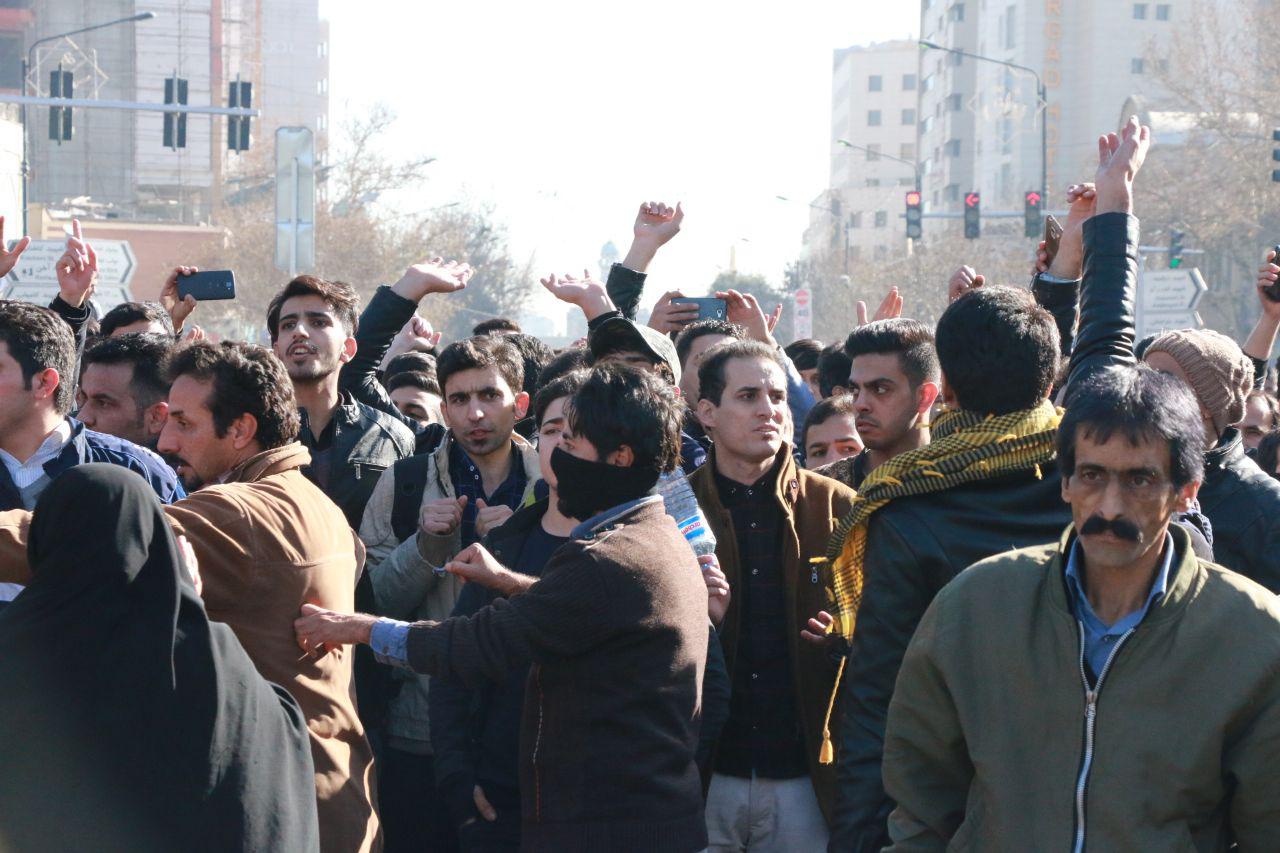
In December 2017, young and middle-aged people from around one hundred cities in different parts of the country took to the streets and expressed their economic and social grievances, linking them to the overall power structure.
These protests started in Mashhad with crude thinking and incitement of the government’s stubborn opponents, perhaps to force the government to pay off the debts of financial institutions whose debtors had been protesting in the streets of the country for a long time. In this way, they wanted to stab the government and pay off the debts of suspicious and unknown individuals who were behind these institutions, from the government’s (and ultimately the people’s) pocket. They may have had higher goals against the government as well. But this foolish adventure quickly set fire to the haystack of dissatisfaction among the low-income classes in different parts of the homeland and left them with a lasting pain and turned them into a loud and fierce cry.
The government’s reaction was initially intimidating. Apart from knowing that they had initiated the initial start themselves, the more important issue was that people had taken to the streets who until then had considered themselves the base of support and the legitimate queue, and in the face of the reformist movement within themselves, they revealed that they were the deprived and had stood up to defend the revolution (the pseudonym of the Velayat movement) and defend the country with their lives, and like their rival base, the affluent northern cities are not immune to pain. The reality was very difficult at the beginning of the peak of the protests.
“From decades ago, it was always said that this revolution is the revolution of the deprived, the oppressed, and the downtrodden, and it is worth more than a thousand of the ruling elite. The oppressed sought refuge and chanted slogans of justice and poverty eradication, separate from the goals of the revolution, while the slogans and tools of the right-wing current were against the slogans of freedom and democracy, which had become the rival’s flag. It was as if a fire had started inside its own tent.”
And also, during recent years and in the process of legitimizing the government and training forces to maintain power in various Basij bases and other types of personal clothing forces that could be mobilized at any time to take to the streets with clubs in hand and use them against opponents, the main focus of propaganda has been anti-Americanism on one side and portraying themselves as deprived and oppressed on the other. Now, those same deprived and oppressed individuals had risen up in rebellion and protest.
For this reason, the protests of the voting base and low-income groups, which according to the government, legitimize the power of the population, initially also sparked solidarity in another section of the social base of the Velayat-e Faqih movement, namely the same quasi-military forces. Government clerics and Friday prayer leaders, who had been playing the same tune for years, were also confused. They either showed sincerity or, for the sake of criticizing the government, joined the protesters in their struggles and solidarity against economic problems and pressures. But gradually, the shape and course of the issues took on a different color.
It was heard from media gatherings in Tehran that the responsibility of dealing with and managing protests has been placed on the government, and the government has also given orders to the police force to manage and control the situation as much as possible.
It was heard that in the Supreme National Security Council, the request for the involvement of the Revolutionary Guards was not accepted and it was expressed that the government and the law enforcement forces will manage the issue themselves. However, there were also rumors in the media that the Revolutionary Guards did not have the enthusiasm to intervene, as they did not want their reputation to be tarnished in the public eye. These rumors are not verifiable.
After a short period of time, slogans became more intense and behaviors became more radical. This caused expressions of empathy to decrease and become more cautious, and approaches to become more obvious and harsh.
Another important point that was effective both in the way protests were held and in the way they were dealt with, was that many of these protest gatherings took place in smaller cities and towns where people from both sides of the issue knew each other. This made it more risky and dangerous to attend larger gatherings, resulting in fewer people being willing to risk their lives to participate. It also made it easier for suppressors to be identified and monitored by authorities on the scene.
In this place, another element had to be added to this collection, which was that the power structure and especially its security section had also “experienced” the suppression of the Green Movement. Now, based on these experiences, he tried to make his approach and suppression “more complicated” than before; in a way that when he was suddenly caught off guard, it would be less noticeable and caught by the cameras, which could find a wide international and human rights reflection and reflection.
This was while the Revolutionary Guards and Basij had been anticipating economic protests and riots beforehand. Although not at this speed and extent. Ten days before the start of the protests, the Revolutionary Guards announced that they wanted to enter the cities to create security based on a new plan. The Ministry of Interior, however, stated that they did not request the involvement of the Revolutionary Guards. The Basij also announced that they wanted to organize neighborhood patrols according to a plan. In an interview with Radio Farda at the same time, I mentioned that these two plans complement each other and are for dealing with potential economic protests.
End
By putting these few points together, we can examine how to deal with the protests of December.
Justice-seeking and providing refuge for the oppressed have been among the slogans of the revolution against the previous government.
Low-income classes make up the main social base and voting base of the provincial government.
The slogan of justice, with a mainly deceitful and populist approach, has been raised by this faction against the slogan of freedom and democracy of the opposing movement (reformist-moderate).
One of the slogans of the identity-building movement is the Velayati current, which trains and prepares its forces under command and on the streets to confront the middle-class cultural advocates of freedom and democracy. This is nothing but compassion for the poor and deprived (alongside enmity towards enemies).
Despite being able to suppress the Green Movement after eight months of continuous street presence, it came at the cost of excessive domestic and international reputation for the established power, which must be taken into consideration in any future event.
Based on this collection of points, the government tried to deal with these protests with tolerance, management, and of course, more complexity. However, the rapid pace of the protests and the intensification of slogans and sometimes behaviors, also provoked the security forces to have a very low threshold of tolerance. This frustrated force resorted to suppression and thuggish behavior, despite all the warnings and precautions, and within less than two weeks, took the lives of more than 25 people on the streets. At that time, we were and still are witnesses to severe suppression of individuals behind the scenes, away from public view, in prisons and detention centers, which resulted in both declared and undeclared deaths, and in some cases, it was attempted to be portrayed as suicide. But with the repetition of this word, public opinion also took a sharp and satirical reaction, forcing the government and security forces to become even more secretive, with their fragmented and layered structure.
It is hoped that the experiences of the wave of protests in December will serve as lessons not only for the oppressive security forces, but also for the people, especially civil and political activists, and will contribute to a collection of experiences that will pave the way towards a free, prosperous, and independent future for Iran.
 Created By: Reza Alijani
 March 20, 2018
Tags
Nationwide protests in December peace line Reza Alijani