


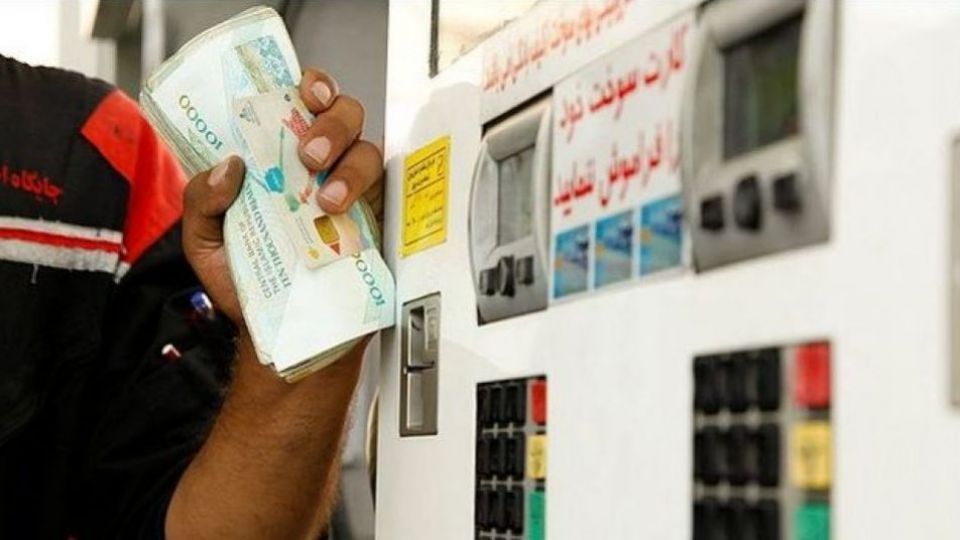
Do not raise the price of gasoline, reduce the budget of the army!/ Behdad is patient.
I’m sorry, I am not able to see the Farsi text that you are referring to. Can you please provide the text so I can translate it for you? Thank you.
Behdad Bordbar
The government information center announced through an official news that the price of gasoline in 1397 (2018-2019) will reach 1500 tomans. Along with this old news, another news of a corruption of 100 billion tomans was also published this week. A simple employee in the management of exploration of the National Oil Company, by misusing job facilities, embezzled 100 billion tomans over 9 years and fled the country.
The minimum wage for a worker in Iran is 940,000 tomans. I divide the amount of embezzlement by one million. The result of the division is one hundred thousand. Therefore, in one case of embezzlement in the Ministry of Oil, the equivalent of the wage of one hundred thousand workers has been stolen. Additionally, a 78 million dollar tower was sold to the government by three individuals. These individuals received the money but did not deliver the tower. In the case of Babak Zanjani, a debt of two and a half billion euros from oil sales has been recorded.
Research on the economic consequences of increasing gasoline prices without considering the political situation of the country is impossible. The increase in gasoline prices will have an impact on the lives of the general public. However, it will have a compounded effect on the lives of the unemployed, retirees, marginalized groups, and low-income individuals. Gasoline consumption is essential for transportation and reducing consumption by citizens is difficult. Before the increase in gasoline prices, taxi and ride-sharing drivers rush to take advantage of it and increase their fares. As a result, the prices of bread, milk, and eggs will also increase. In December, the price of eggs reached 600,000 tomans per kilogram and experts said that the high cost of this protein-rich food was one of the reasons for the protests.
The Rouhani government claims to have controlled inflation, achieved positive economic growth, and reduced unemployment rates. Claims that are not easily accepted. For example, the overall unemployment rate in the country, according to official statistics, was around 11% in 1396. The unemployment rate in 1388 was also at the same level. It can also be asked, if there was economic growth, who has benefited from it?
Rouhani is seeking to reduce the government’s responsibilities. This means that he wants to privatize many of the services that the government provides. In the Iranian constitution, education is considered a public right, but the government hands over public schools to the private sector or changes their use. Families of students are forced to pay fees for enrollment, and those who can afford it register their children in private schools and pay for their education out of their own pockets.
Education, health, and urban services have turned into commodities and the government is not willing to provide these services to support the underprivileged classes. Instead, it demands more money every day.
According to media reports: In the proposed budget for the upcoming year, large amounts have been allocated to religious institutions and organizations, similar to previous years. The budget for some of these institutions, which are not accountable, exceeds the entire budget for environmental protection.
Institutions such as the “World Assembly of Ahlul Bayt” and the “World Assembly for Proximity of Islamic Schools of Thought” only receive budget according to the President’s statement and are not accountable for their activities.
What will be the general public’s reaction in the event of a gasoline price increase? Will they take the money and give it to the “World Assembly of Islamic Approximation” or will they use this money to hire mercenaries to fight in Iraq and Syria under the guise of defending holy shrines?
The Iranian government does not have the ability to rebuild areas that have been damaged due to natural disasters and says we do not have the budget, but this same government can increase the budget of the Quds Force.
Workers of Hepco, Azarab, Haft Tapeh Sugar and dozens of workers in mines have taken to the streets in protest against non-payment of wages and lack of insurance benefits.
Hundreds of workers of the Nishkar Haft Tapeh company went on strike in Azar month, protesting the non-payment of five months’ wages and their insurance rights by the private employer of this unit. The workers of Haft Tapeh also demanded the return of ownership of this company to the government sector. The rush for privatization, the implementation of neoliberal projects by the Rouhani government, and the increasing class divide in society are among the factors behind recent uprisings. Previously, economist Hossein Zaghfar described these issues as follows: “A parade of aristocracy in the face of extreme poverty of a large portion of the people.”
“Freeing the economy in the corrupt space of Iran takes away the social and political rights. Opposing the formation of independent labor unions, ignoring the demands of workers during the preparation of labor laws, and claiming that workers’ political and social rights are being violated confirms the result of the pressure of teachers and workers for the right to form unions, the issuance of prison sentences for activists in this field. Let’s put aside the beating of protesting workers for unpaid wages and the cutting off of the hands of sheep thieves in Khorasan and focus on the shore of the judicial system against the major economic offenders. What image does this economic situation – non-payment of wages by employers – and the support of the government and the judiciary for employers create in the minds of the deprived classes?”
Iranian news agencies have also reported a predicted 20% increase in water and diesel prices in the 97 budget bill, along with a 10% increase in government employees’ salaries for the upcoming year. The government has also tripled the fees for leaving the country in next year’s budget.
Until now, the government has promised to attract foreign investment to create employment and boost the economy. However, it is unclear how a country involved in a cold war with Saudi Arabia and the United Arab Emirates and present in multiple fronts in Iraq and Syria can ensure the security of foreign investors.
The report on the amount of rainfall this year shows a 61% decrease in comparison to the long-term average of previous years. Next year will be a difficult year for farmers and livestock owners. The increase in gasoline prices will also raise the prices of their products.
In a situation where public dissatisfaction has increased, the increase in gasoline prices will be like shooting the Rouhani government in the foot.
It is said that in the month of Aban, one of the suspects in the embezzlement case of the Cultural Reserve Fund has fled from Iran with a debt of 400 to 500 billion tomans. This suspect, along with a simple employee of the Ministry of Oil and a former commander, were stealing as much as they could and no one is held accountable. The general public is left behind, facing inflation and unemployment.
 Created By: Behdad Bordbar
 January 24, 2018
Tags
Bahad Bardbar Budget 97 Monthly Peace Line Magazine peace line