


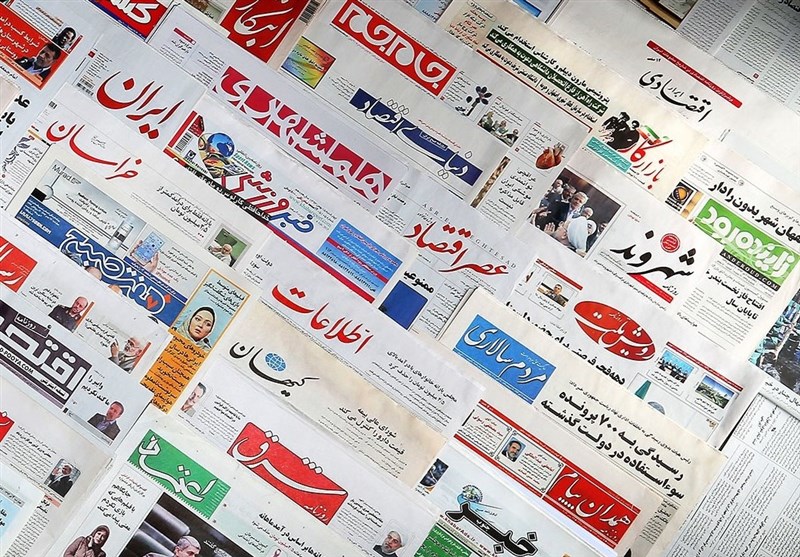
“Media System Organization; An Effort towards Establishing a Media Watchdog in Iran / Mohammad Mohabi”

The law to establish the “Media System Organization” has been drafted in the government. The general outline of this draft was approved by the Cabinet on Thursday, November 3rd, and the details are currently being reviewed. If it is approved by the government, it will be sent to the Parliament. If it is approved by the Parliament and confirmed by the Guardian Council, and then announced by the President and finally published in the official newspaper, it will become enforceable. This draft is one of the most disastrous bills in recent years and if approved, we will witness the establishment of an organization similar to a Gestapo for Iranian media.
The idea of creating a government institution for media and press was raised in the early 1970s. In the minds of the leaders of the Islamic Republic, journalists and writers should be organized in a similar manner to engineers in the “Engineering Organization” and doctors in the “Medical Organization”, under strict supervision and control of the government. However, the nature of professions such as engineering and medicine is vastly different from journalism. In summary, the idea of creating this organization was in the minds of the authorities, but after the events of 2009, it became a priority and necessity for the officials. Several drafts were written, but were rejected due to various criticisms, until the first draft of the “Media Organization Law” in 2014, with 9 chapters and 78 articles, was on the verge of being presented to the Cabinet, but again faced many criticisms. Until the draft was revised again. And recently, with 7 chapters and 65 articles, it was approved by the
The writer has carefully examined the aforementioned drafts – both the draft of 1393 (1) and the draft of 1396 (2). In the final draft, they have attempted to cover all legal, media, and ethical criticisms through legal and literary tricks and playing with words. However, it is still easy to find flaws in it. Furthermore, the idea of creating such an organization is fundamentally flawed. We must oppose it from the root, even if its content is more advanced than progressive human rights documents. If there is to be an institution for organizing journalists and addressing their professional and specialized issues, it must be done by the media owners themselves without any interference from government institutions. Because the media and press are formed for monitoring and overseeing the power, government, and society. Any government intervention in this matter damages the philosophy and existence of the media and press, regardless of the type of government. Even the most democratic government in human history should not have the smallest role in creating such a hypothetical
The biggest danger to media independence in Iran.
With regards to the draft of the Media Organization Act, the alarm bells must be sounded for the semi-dead body of media independence in Iran. This draft has violated the fundamental principles of journalism, namely media freedom, media security, and professional independence, in a widespread manner and has undermined them, albeit with fancy legal language. It also pays no attention to the constitutional and ordinary laws of the country regarding press freedom, freedom of expression, the limits of the judiciary’s duties, and the existing legal system.
According to this bill, the media organization is under complete control of the government and the journalism profession has no independence in it; rather, the government and its institutions and organizations have full authority over all major and determining matters of the organization.
According to Article 29 of the draft bill, which states: “After the selection and acceptance of responsibility by the members of the board of directors, the organization obtains legal personality”, and according to Article 18 which mentions the qualifications of individuals for membership in the board of directors, it can be determined that the organization is inefficient and harmful. According to this draft, the qualifications of candidates for membership in the board of directors of the media system must be approved by a committee that is completely governmental and non-guild. The members of this committee are defined in Article 20 as follows: the director of the provincial Culture and Islamic Guidance, the chief prosecutor of the province, the director of the provincial radio and television organization, the inspector of the organization, and the representative of the provincial managers. This committee must determine who is qualified to be a candidate and a member of the board of directors of a so-called professional media organization.
According to Article 22, which states: “Decisions made by the temporary committee for issuing membership licenses and press permits, which are adopted by an absolute majority of members, are final, unless there are objections or reports that must be reviewed and, if necessary, rejected or amended by the relevant member after the establishment of the organization’s definitive structure,” and considering that the composition of the central election committee, which is also majority government and non-trade union, can invalidate the results of the board of directors’ elections. The members of this committee are defined in Article 21 as follows: representatives of the Attorney General and the Minister of Culture and Islamic Guidance, a retired judge, a representative from the Press Supervisory Board, and a representative from the Supreme Council of the Organization.
The Professional Misconduct Committee is a group of individuals, the majority of whom are government officials and non-professional and non-unionized individuals. According to Article 27, these individuals include: the Director General of Culture and Islamic Guidance of the province, a retired judge, a lawyer, a member of the Fairness Committee, an editor-in-chief, and a journalist.
Another issue is referred back to Article 19 of this bill. In this article, it is stipulated that: “In order to review the qualifications of candidates for membership in the provincial organization’s board of directors and supervision over elections, a committee consisting of the Director General of Culture and Islamic Guidance, the Chief Justice of the province, the Director General of the provincial radio and television organization, the inspector of the provincial organization, and a representative of the managing directors of provincial newspapers shall be formed in each province.” The interesting and regrettable point of this article is the absence of even one member among journalists in the committee responsible for reviewing the qualifications of candidates for membership in the provincial organization’s board of directors. It seems that more than media professionals, political and judicial officials can determine the qualifications of writers.
Another astonishing article is Article 32. This article states that: “In order to arbitrate and address professional violations of journalists, a committee for arbitration and addressing professional violations shall be formed with the following responsibilities: 1- Arbitration and resolution of disputes between journalists with each other or with the owners and managers of their media outlets based on the agreement of both parties. 2- Monitoring the observance of the professional code of ethics and making decisions in cases of violation. 3- Addressing and making decisions regarding professional violations of journalists as specified in this law. 4- Addressing objections arising from the decisions of the licensing committees for journalism.” This raises the question of what ethics are and who distinguishes between ethical and unethical behaviors? Perhaps no one has been able to answer such questions throughout history and one of the philosophies behind enacting laws is to prevent subjective interpretations of ethics. As the late Dr. Katouzian, the father of Iranian legal science, said, “
In article 38, it is stated: “The Professional Misconduct Committee and the Review Committee for Professional Misconduct can make the following decisions based on the severity and frequency of the misconduct and the complainant’s request: 1- Requiring an apology. 2- Written reprimand with inclusion in the file. 3- Written reprimand with inclusion in the file and publication on the organization’s website. 4- Request for compensation for any material or moral damages suffered and restitution of any rights lost by the complainant and the affected party. 5- Suspension of membership in the organization or journalism license for three months to one year. 6- Suspension of membership in the organization or journalism license for one year to five years. 7- Suspension of membership in the organization or journalism license for five years to ten years. 8- Revocation of membership in the organization and journalism license.” The non-legal and unjust issue with this article is that it addresses a
In this law, only those who hold a “journalism license” are entitled to natural and inherent rights of journalism. This means that while many believe that the licensing system, which is included in the press law, is outdated and ineffective and goes against the principles of press freedom and rights, this draft has also delegated the issue of journalism to obtaining a journalism license. In fact, those who do not have such a license are deprived of their rights as journalists. For example, a journalist who does not have this license cannot work in official organizations and public arenas. In the event of a press crime, if the article belongs to someone who does not have a journalism license, they will be tried in a public court without a jury present.
The disciplinary committee of this organization has the power to revoke a journalist’s license and effectively ban them from practicing journalism for a few years or permanently. This is a full-fledged interference in the legal process.
Many of the cases that are considered as “violations” in this bill are actually criminal offenses that can only be dealt with by the courts, following the legal procedures of criminal proceedings and with the presence of a fair jury. However, this bill has created conditions where individuals without judicial authority and without legal procedures can deprive journalists of their fundamental rights. This is a clear violation of Article 36 of the Constitution and also the principle of unified jurisdiction of criminal courts.
Violation of the most fundamental principles of Iran’s basic rights.
This draft shows that the authors and editors were not very familiar with the knowledge of laws and current regulations of the country, and did not observe basic and simple points of Iran’s fundamental rights.
For example, in paragraph 4 of article 38, it is stated that “the disciplinary board can rule for compensation against a journalist”. A second or third semester student of law and someone who has passed the course “Civil Procedure 1” with a poor grade understands this simple point and knows that determining damages and obligating someone to pay damages is a judicial act and is only within the jurisdiction of courts; specifically, public courts. The disciplinary board in a place like a professional organization cannot have the authority to do such a thing and this would be an interference in judicial affairs.
Furthermore, Article 33 has identified 11 cases of professional misconduct, which if occur, the disciplinary board can punish and even dismiss the media or journalist. Regardless of the fact that this list is unreasonable and illegal, the important point is that 10 of these 11 cases are considered crimes according to the “Criminal” laws. These cases must be dealt with in courts with precise procedures. The disciplinary board is not authorized to handle such cases and this is a clear violation of the right to defense and principles 36 and 37 of the Constitution and important principles of criminal law such as “principle of legality of crime and punishment”, “principle of uniformity of criminal laws”, etc.
The surprising and also amusing point in this draft is that Article 3 claims that the Media Organization is an independent and non-governmental entity. However, in Article 41, it considers the decisions of the Disciplinary Board to be subject to complaint in the Administrative Court. If this organization is essentially non-governmental, the Administrative Court does not have the jurisdiction to handle complaints against it; because the court is only authorized to handle complaints against government decisions, public organizations, councils, and government bodies.
On the other hand, it is evident from the text of this draft that its authors generally do not understand or recognize the media and their working conditions and profession; because according to the concept and the provisions of Article 51 of this draft, anyone with a bachelor’s degree can become a member of this organization by passing an exam and completing an apprenticeship. It must be asked, what kind of professional organization is this that allows people with no prior knowledge or experience in journalism, such as graduates of veterinary, mathematics, physiotherapy, etc., to become members?
Even in the draft, it is mentioned that employees of the Radio and Television Organization can also become members of this organization. From the perspective of media principles and the regime of exclusive ownership of radio and television, it is not possible to compare the reporters of this organization with paper journalists or other websites and media outlets, and see them as part of a professional organization. From a professional point of view, the conditions of these two groups are completely distinct and heterogeneous. In addition, the specific regulations governing each group have prominent differences. However, in Iran, radio and television are completely state-owned and its duty is to protect and support the ruling ideology. If employees of private television channels were mentioned in this draft, it would be acceptable; but how can we recognize employees of radio and television, who are rejected by ideological filters, as “independent”?
But the main problem with this bill is related to Article 52. This article states: “Engaging in the profession of journalism is subject to obtaining a journalism license from the Islamic Republic of Iran Media Organization.” It seems that the foundation of this bill is based on this article. The concept and implication of the article imply that journalism activities are subject to obtaining a license. This means that only those who have obtained the necessary license from the relevant organization can make writing in the media their main profession. On the surface, this may be compared to organizations such as the Engineering Organization or the Bar Association, but the issue is different for professions like this; because if writing is limited to a license, personal opinions will govern thoughts. This is a fundamental analysis that is accompanied by Article 24 of the Constitution. This article clearly and without any hesitation states: “Publications and the press are free to express unless they violate the principles of Islam or public rights. The details are determined by specific laws.” Und
Another strange issue is the neglect of the rights of journalists in low-population areas of the country. In Article 5, it is stated: “An organization will be formed in each province where the number of professional journalists exceeds one hundred. Journalists in provinces without the minimum threshold will be subject to the organization closest to their province that meets the requirements. The Ministry of Culture and Islamic Guidance continuously takes action to determine and announce the number of journalists or media outlets in each province.” Perhaps the authors of this bill have written such articles by imitating and unrelatedly copying from bar associations. But they have probably forgotten that provincializing organizations is for the purpose of resolving administrative matters. If the function of the media system organization is unclear for media professionals, discrimination should not be justified under the pretext of the population among journalists.
Other major flaws and errors in this bill, return to article 61. The authors of this draft have considered rights for journalists with licenses in this article. One of these rights is the existence of a jury in the press court. Article 168 of the Constitution states: “The trial of political and press crimes is public and is conducted with the presence of a jury in the judicial courts. The law determines the method of selection, conditions, powers of the jury and defines political crimes according to Islamic standards.” This bill has turned the non-legal jury into a privilege for some. But how is it possible for a bill to be written by the government, which is supposed to be the executor of the Constitution, to have such an explicit violation of the Constitution!? The jury is one of the highest institutions of a democratic society. If this important aspect is removed from the judicial system of the country, we should expect more widespread lawlessness. In principle, the jury represents the bottom layer of society and
Final words
Draft of “Media Organization”, even in the government of Prudence and Hope, has crossed the borders of disaster. We must seriously and with all our might stand against it. In present-day Iran, visual and auditory media, all of which are government-owned, and numerous newspapers are affiliated with government institutions. Among them, only a few low-circulation newspapers and magazines have a relative independence, and this draft takes away even that relative independence.
Most likely, the reason for the effort to pass this law and form such a terrifying and surveillance organization – with flashy and attractive legal terms – is because social media is growing. The concept and wording of this draft suggests that this organization is designed to control writers and journalists in the virtual space, so that managers or administrators of various pages on social networks are also placed under the umbrella of this organization, and anyone who works in media outside of this organization is prevented from doing so.
Sources:
Complete Draft of the Law of Media Organization (Old Version), ILNA, August 19, 2014.
Full Draft of the Law on Media Organization (New), Fars News Agency, November 9, 2017.
Why can’t we see the system of journalism like the system of medicine? ISNA, November 24, 2016.
God forbid, Sajad, the dangers of the “Media Organization Bill”, Bahar News, November 13, 2017.
Norouzi, Kambeez, Drafting the Media Organization Bill; What Should Be Done?, Iran Newspaper, November 14, 2017
Molavi, Ali, Media System Bill; “Punishing the People of the Pen”!, IRNA, November 17, 2017.
“Reopening, Hamidreza, the Media Organization Bill from the Government’s Concerns to the Critics’ Ambiguities, IRNA, November 5, 2017.”
A critique of the Comprehensive Media System Bill, International Federation of Journalists, November 12, 2017.
 Created By: Mohammad Mohebi
 November 24, 2017
Tags
Media System Organization Mohammad Mohabbey Monthly Peace Line Magazine peace line