


“Freedom of assembly” according to the Constitution of the Islamic Republic / Shahin Sadegh Zadeh Milani
No text was provided. Please provide the Farsi text to be translated.
Shahin Sadeghzadeh Milan
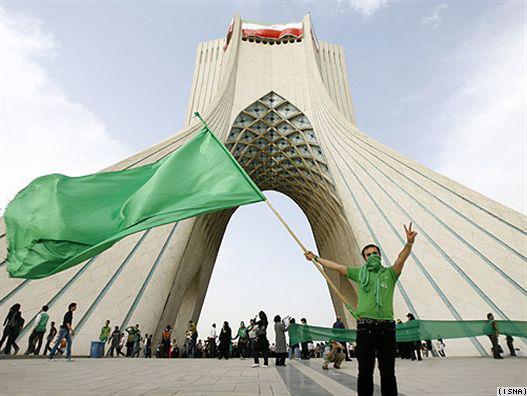
During the street protests following the controversial 2009 election, supporters of the Green Movement repeatedly expressed that according to Article 27 of the Constitution of the Islamic Republic of Iran, peaceful demonstrations were allowed and government forces had no right to confront participants in these marches. Article 27 of the Constitution conditions the freedom of assembly on two factors: 1) no carrying of weapons and 2) not being against the principles of Islam (forming gatherings and marches, without weapons, as long as they do not go against the principles of Islam, is allowed).
There is not much ambiguity about the first condition, although what is considered a “weapon” can be disputed. For example, does a stone count as a weapon? And if it does, what dimensions should it have to fall under this definition? However, these questions are secondary compared to the questions that can be raised about the second condition.
The condition of not violating the principles of Islam, but it is a much more complicated issue. There are two questions regarding this condition. The first question is what action or thing is considered a violation? Is questioning Islamic beliefs considered a violation? For example, if someone writes on a billboard that they do not believe in Islam, is this considered a violation of the principles of Islam?
The second question is, what does “foundations of Islam” essentially mean? What is implied by this phrase is likely something beyond the “principles of religion” from the perspective of Shia, meaning monotheism, prophethood, resurrection, imamate, and justice. If the intention of the legislator was only the principles of religion, logically they could have used phrases that would clarify this issue. The reality is that there is no agreement among scholars on what the foundations of Islam are. According to Allama Majlisi, the essentials of religion are those issues on which there is no disagreement among the Islamic community. (1) However, from the perspective of the holy Ardabil, any ruling that is certainly recognized as part of the religion is essential, even if other Muslims do not accept it. (2) Considering the lack of agreement among scholars on the foundations or essentials of religion, the concept of “foundations of Islam” is not clear in Article 27 of
According to Article 98 of the Constitution, the interpretation of this law falls under the jurisdiction of the Guardian Council. So far, the Guardian Council has not provided an interpretation for Article 27. (3) Without an interpretation of this article, the government has a lot of leeway in restricting the right to assembly. Since the Islamic Republic’s Constitution recognizes the principle of Wilayat al-Faqih as the basis of Islamic government, any slogans or protests against the concept of Wilayat al-Faqih or the person of the Supreme Leader can be seen as an attack on the foundations of Islam. The extent of what can be considered anti-Islamic can, of course, be expanded. In 2013, a fatwa was issued by Ayatollah Khamenei, the Supreme Leader of the Islamic Republic, stating that reporting the oppression of the government officials against the people is considered forbidden if it weakens the Islamic government.
Reporting the injustice of officials to responsible centers and authorities for follow-up and pursuit, after investigation and assurance about it, is not a problem, even if it is considered one of the prerequisites of forbidding evil, it is necessary, but expressing it in front of people has no benefit, rather if it causes sedition, corruption, and weakening of the Islamic government, it is forbidden.
If this fatwa of Ayatollah Khamenei is referenced in the interpretation of Article 27 of the Constitution, not only can it be considered as a protest against the Supreme Leader, but also as a protest against other officials of the Islamic Republic, and can be considered a forbidden act and a violation of Islamic principles. Ayatollah Mesbah Yazdi, one of the most conservative clerics in Iran, stated in 2009 that obedience to the President is obedience to God. According to him, “when the President is appointed and approved by the Supreme Leader, he becomes an agent of the Supreme Leader and is also enlightened by his light… When the President receives the mandate of the Supreme Leader, obedience to him is like obedience to God.” (5).
With such interpretations of Islam, what is originally stated in the 27th article of the Constitution of the Islamic Republic cannot effectively protect the right to peaceful assembly. Any action or demand that is deemed against the interests or beliefs of the Islamic system can be labeled as un-Islamic and be excluded from the protection of the 27th article of the Constitution. It is unpredictable what exactly will be subject to such interpretation and citizens do not know in advance whether their protest will be considered against the foundations of Islam or not. Since the judiciary in the Islamic Republic is not independent, ambiguity in the law will always be to the detriment of citizens and will prevent them from participating in political affairs.
Given the composition of the Guardian Council and the centralized political structure of the country, even if the interpretation of the twenty-seventh principle is presented by this council, it is highly likely that it will be interpreted in a way that severely limits the rights of citizens.
Parties and Commissions Law, Article 10.
According to the Parties Law, which was approved in 1394 by the Islamic Consultative Assembly and in 1395 by the Expediency Discernment Council, a commission called the Article 10 Commission, consisting of these individuals, decides on the permission for holding demonstrations.
1- Representative of the Attorney General of the country.
2- Representative of the Head of the Judiciary.
3- One representative from among the secretaries of all national parties and one representative from among the secretaries of all provincial parties with a license for non-voting activity.
4- Deputy Minister of Political Affairs, Ministry of Interior.
5 – Two representatives were elected to the Islamic Consultative Assembly from among the volunteer representatives.
According to this law, participation in peaceful demonstrations is conditional upon the approval of a commission that is provided for in the Parties Law. The existence of such a law in practice means that Article 27 of the Constitution is ineffective. Furthermore, the political nature of the members of the commission, as stated in Article 10, clearly shows that the decision on the legality of a demonstration is influenced by political considerations rather than legal ones. If, from the perspective of the Islamic Republic system, determining the “violation of Islamic principles” is the determining factor for a demonstration, shouldn’t the members of the committee responsible for issuing permits for a demonstration have expertise in religious studies?
Notes:
The Essential Concept of Religion (Part 1), Culture Jihad Magazine, Summer 1382, Issue 32.
Same.
Interpretations of the principles of constitutional law, and the website of the Constitution.
“The latest fatwas of the leader regarding the use of the internet, satellite, dealing with Zionist companies, overtime work, etc.”, Tasnim News Agency, August 30, 2013.
Ayatollah Mesbah: Obedience to the President is obedience to God, Ferdanews, August 12, 2009.
سلام، من امیر هستم
Hello, I am Amir.
Manager of the Legal Center for Human Rights Documents in Iran.
 Created By: Admin
 October 29, 2017
Tags
Article 27 of the Constitution Monthly Peace Line Magazine peace line Right of assembly Shahin Sadegh Zadeh Milani