


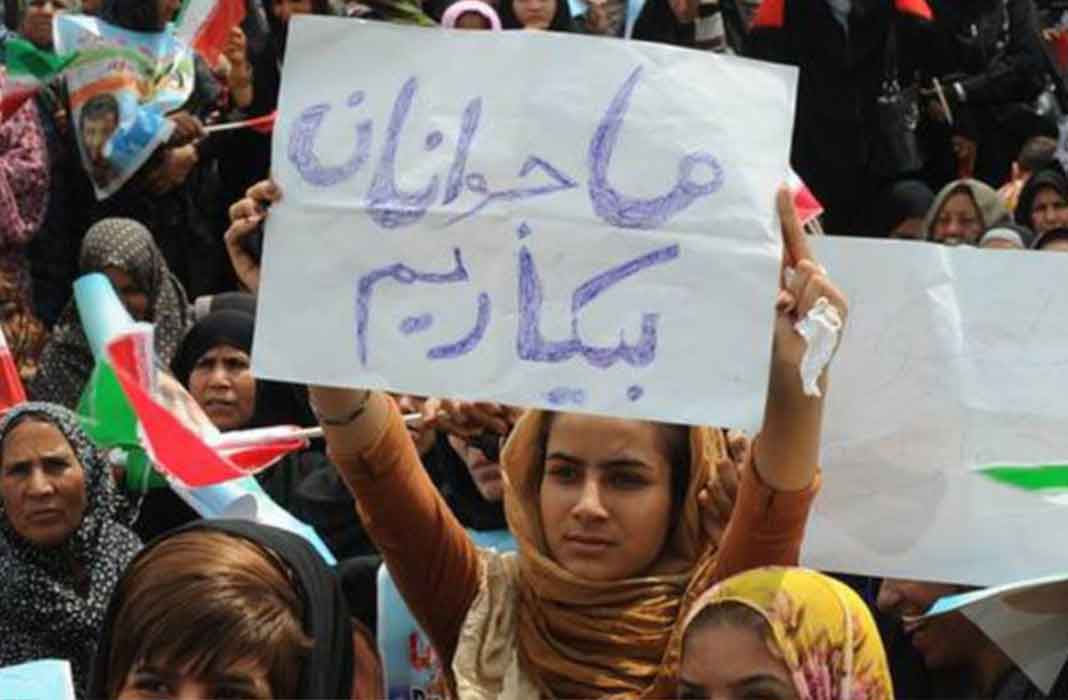
Internship Program: Crisis Management for Unemployed Graduates or Cheap Labor? / Elaheh Amani
This is a caption
“This is a caption”
Goddess Amani
One of the characteristics of the contemporary world is that it has the highest proportion of young people compared to the total population. For every four people in the world today, one person is between the ages of 15-21. This statistic includes nearly 1.8 billion people, with 90% of these young people living in developing countries in Africa, Asia, and Latin America. Except for Africa, the world’s population is aging; meaning that in no future time period, the number of young people in the world will be the same as it is now.
The emergence of such a phenomenon is considered a valuable opportunity for development. Human resources that can use their potential to drive development and progress in developing countries at a faster pace. Therefore, young people and women are considered the two fundamental pillars of the human workforce for the future of the world. The presence of women is like a lever for development changes, as the potential of half of the human society is not fully utilized in various countries – including our country, Iran. In 2015, the United Nations formulated the Sustainable Development Goals and received approval from 192 member countries. The active presence of women and young people has been emphasized in achieving all of these goals by 2030 (15-year plan), and the role of young people and women in achieving the 17 goals, from ending hunger to public health, from addressing environmental challenges to establishing peace and security, and promoting democracy and freedom has been highlighted.
One of the challenges that women and young people face in growing societies, including Iran, is youth unemployment, lack of a healthy space for their growth and development, poor quality higher education and the needs of the job market, sexual and gender discrimination, and the lack of political will and desire to prioritize the fertility of women and young people. The rate of youth unemployment is on the rise, especially among educated youth or those who are employed but still live below the poverty line. Women and young people who are marginalized due to multiple forms of discrimination, including economic, gender, ethnic, and religious, and are deprived of access to limited resources, are particularly affected.
According to the statistics of the United Nations, in 2016, in the field of youth unemployment, South Africa with 50.9%, Greece with 46.6%, Palestine with 41.6%, Spain with 39.3%, Italy with 34%, Serbia with 31.2%, and then Iran with 30.2% have the worst situation in the world. Among the countries in the Middle East and North Africa, Iran has the highest number of unemployed youth after Palestine. The International Labor Organization estimated the global youth unemployment rate to be 13.1% in 2016, which is higher than 12.9% in 2015.
Valuable research has been conducted to find the reasons and effective solutions for tackling the challenge of educated youth unemployment in various countries. Many of these studies have focused on the social, economic, and cultural trends in Iran.
According to the World Bank report in 2012, in Tunisia, 60% of higher education is made up of women. Higher education facilities have spread in a relatively short period of time, making unemployment among graduates one of the economic and social challenges of this society. The private sector in Tunisia, due to lack of quality and necessary technical skills, has no interest in hiring graduates. Culturally, young people also have no interest in working in the private sector, as the ideal employment in society is seen as government employment.
Egypt, another country that has faced and continues to face the challenge of unemployed graduates, has been the subject of various studies. Dr. Gita Subrahmanyam, a researcher at the London School of Economics and Political Science, states that 70% of unemployed individuals in Egypt are young people between the ages of 17-29, and 60% of them have a degree from higher education institutions.
This issue, that Egypt has been unable to provide highly qualified graduates to meet the demands of the market, has resulted in there being over 600,000 job vacancies in the private sector, while 60% of the unemployed are university graduates.
In the essay “Addressing Informality in Egypt”, it has been evaluated that in Egyptian universities, students are not guided towards employment and are not trained in the skills that the private sector requires. Additionally, in Egypt, similar to Tunisia, many young people are culturally inclined towards seeking job opportunities in the public sector and educational institutions have not been very active in encouraging and providing effective solutions to students in the areas of employment in the private sector or entrepreneurship, innovation, and creativity for freelance careers.
Devara Jan, who is one of the senior experts on employment crisis in the Middle East and North Africa, talks about the paradox of higher education in the Middle East and refers to the low quality of education that lacks the ability to compete globally. This is especially true for students who have studied in fields such as science, mathematics, and engineering. Along with the low quality of education, the lack of opportunities for students to acquire soft skills such as teamwork, interpersonal relationships in the workplace, professional communication, etc. has resulted in a mismatch between unemployed graduates and the demands of the job market.
He not only focuses on fundamental changes in the higher education system, but also mentions providing tax exemptions, currency policies, and other incentives to encourage employers to participate in job creation solutions.

The issue of unemployment among graduates in Europe is also a serious problem and various research and projects have been proposed to address this issue. The participation of students in the field of graduate employability through the “Student Advisement of Graduate Employability” (SAGE) project is a project that has put the issue of reform in higher education in four European countries on the agenda. Denmark, Finland, Hungary, and Spain are the four countries collaborating in this project to manage and reduce unemployment among graduates.
In America, the employment of young people is directly related to their level of education. 88% of those with a university degree are employed, compared to 48% of those without a high school diploma. Overall, the employment rate for 20-24 year olds in America is 72%, but this average hides the stark and immense differences among employed young people of Black, African American, and Latino descent. Racial discrimination, poverty, limited access to high-quality educational institutions, and other challenges contribute to significantly lower employment rates for racial minorities and economically marginalized individuals.
In Europe and North America, one of the solutions that has been considered to combat the crisis of unemployed graduates is to revise higher education and implement national reforms in a targeted and comprehensive manner by allocating government budgets to educational institutions based on a new indicator, which is the employment rate of graduates. This encourages managers and officials of educational institutions to prepare students for employment in the market through internships, soft skills training such as communication, human relations, teamwork, initiative, creativity, and innovation. Along with this, studies and training in the field of necessary freelance jobs, initiative, creativity, and skills and expertise needed by the private sector can effectively create employment opportunities for graduates.

In general, in examining global trends and the reasons for graduate unemployment crisis, three reasons are mentioned:
There is no match between skills and job market demands.
The number of graduates exceeds the capacity of the job market to attract them.
The growth of unemployment rate among educated youth requires reform and changes in the education system.
In addition to the above reasons, there are also challenges such as a weak economy, tax and currency policies, and a lack of necessary incentives for employers.
Pathology and research in the field of economic, political, social, cultural factors, fundamental perspectives on educational quality and content of textbooks, political demand for establishing high-quality education and training for all without discrimination, which is also among the goals of the UN’s 2030 education program, can provide a platform for effective planning solutions.
Internship program in Iran
In Iran, there are more than 2.5 million unemployed young people. 1.1 million of them have university degrees, 50,000 graduates with PhDs are unemployed, and 30,000 are added to this number annually. In fact, unemployed graduates who are not employed have exacerbated the existing unemployment crisis.
Official unemployment in the country is 12.3%, but many experts believe that the actual unemployment rate is twice as high. In the past three years, the unemployment rate has increased from 26% in 2014 to 30.4% at the beginning of 2017.
Yahya Al-Isaac had said in an interview with Tasnim last year that the unemployment rate of 2 million young people is not accurate and currently there are 7-8 million unemployed in the country. Among young people aged 20 to 24, the unemployment rate is 26.6% among men and 50.6% among women. This crisis is happening while Iran has the largest economy after Saudi Arabia among Middle Eastern and North African countries, and its gross domestic product was estimated at $412.2 billion in 2016. In order to manage the youth unemployment in Iran, considering the number of people entering the job market each year, 1 million jobs need to be created annually, but the government only creates 300,000 of them. It is estimated that Iran needs to have a 10% economic growth in order to control the youth unemployment crisis.
In the meantime, the government’s internship program, which was proposed in response to the crisis of unemployment among educated youth, has faced numerous criticisms.
In the first place, this plan is aimed at finding solutions for managing the crisis of unemployed educated youth, but it does not consider the roots of this crisis, which lie within the higher education system, and attempts to only deal with its processes. An effective program in this regard should not only include employment for current unemployed graduates, but also control the influx of new graduates into this huge market by making fundamental changes in the education system.
According to the Minister of Labour, Ali Rabiei, the internship program is a plan in which “unemployed individuals receive necessary training for 6 to 9 months and obtain technical and vocational qualifications.”
Interns who must be between the ages of 23 and 34, receive one-third of the minimum wage set by the Ministry of Labor – one-third of 930,000 tomans – and are covered by accident insurance in this program. The unemployment rate in the Fifth Development Plan, which should have decreased to 7% by the end of 2016, was 12.4% in 2016, which is 5.4% higher than the target set in the Fifth Plan.
Critics of this plan see the government’s goal as providing cheap labor and job creation. Some also believe that the internship plan conflicts with the legal obligation included in the Sixth Development Plan passed by the parliament for job creation.
Isa Mansouri, Deputy Minister of Employment and Entrepreneurship Development of the Ministry of Labor, in response to the problem of unemployed graduates, stated in an interview with Mehr News Agency that “Yes, a significant portion of the country’s unemployed are university graduates. In recent years, the country’s executive system has pushed young people towards universities due to degree-oriented thinking. However, these graduates are not necessarily skilled and qualified for employment. Currently, there is a shortage of skilled labor. Even many of these individuals who do not have the appropriate skills for their field of study have graduated from reputable universities.”
Labor activists are also worried that this opportunity will cause employers to lay off their workers and employees and attract cheap labor in order to take advantage of insurance incentives and pay lower wages (one-third of the salary) for their workforce.
Of course, government institutions have promised to monitor this concern, as there is no trust and confidence in its implementation. The goal of targeting employment for 150,000 unemployed graduates annually through the internship program and the success of this program, which some believe was experienced and unsuccessful in 2007, is something that many labor market experts in Iran consider unlikely.
In addition, lack of interaction and coordination with labor unions is another concern for the failure of this plan.
In a society where “government-centered” policies in the areas of education and employment are not met with collaboration, cooperation, and exchange of ideas with experts and researchers, and even the best successful plans in this regard in other developing countries are not given attention; in a society where political will and government attention towards youth employment does not reflect in the budget and government investments; in a society where the private sector does not creatively collaborate and interact with the government to utilize the potential of women and youth and turn this great potential into actual benefit for sustainable development; in a society where global community initiatives, such as the United Nations’ 2030 Agenda for Sustainable Development, are pushed aside due to political motives; programs like apprenticeship will not be effective. Because they are not fundamental, practical, and sustainable measures, but merely symbolic and reactive actions towards the demands of millions of Iranians who seek their human rights in the areas of employment, economic welfare, health, and education.
Resources (English):
Maggried, Bridge, which countries have the lowest graduate unemployment rates? Website.
World Economic Forum
August 20, 2015
“Transforming Our World: The 2030 Agenda for Sustainable Development”, website
Sustainable Development Recognition Platform
Encountering Major Challenges in the Developing World: A Collection of Work Articles (1996), Chapter Options for Improving the Job Market in Major Cities in the Developing World, Website.
National Academy of Press
 Created By: Elahe Amani
 June 25, 2017
Tags
Goddess Amani Internship program Monthly Peace Line Magazine peace line Unemployment