


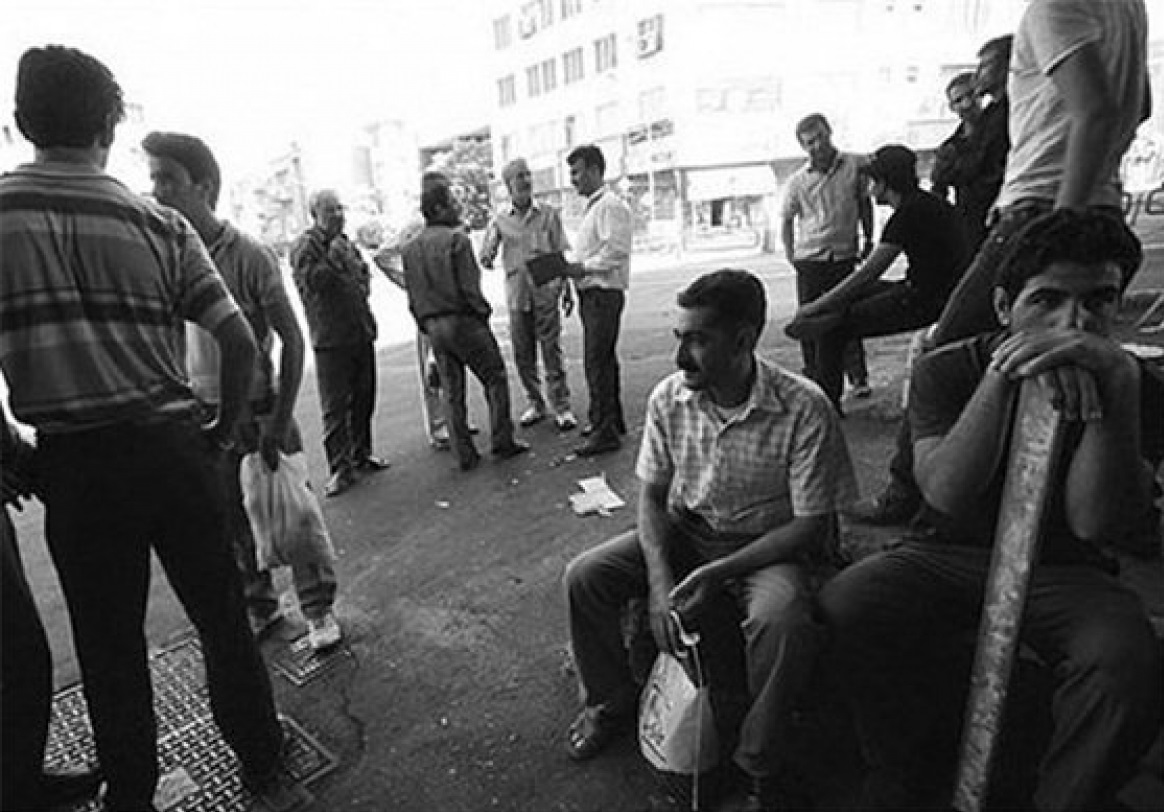
Unemployment, the biggest crisis of Iran’s future years / Mohammad Mohabi
This is not a complete sentence and cannot be translated accurately. Please provide a complete sentence for translation.
Mohammad Mohabbai
The second term of Hassan Rouhani’s government is on the verge of starting. Among the various problems that the twelfth government is facing, undoubtedly unemployment is the most important challenge. The statistics announced by official and unofficial sources are conflicting and different, and it seems that there is no unified standard for determining the unemployment rate in Iran. A precise definition of the terms “work,” “employed,” and “unemployed” is necessary when discussing the unemployment rate. But who do these definitions apply to? Are children who have the necessary skills and are eager to work but do not have any job opportunities considered unemployed? Or is an elderly person who is seeking work and is still capable of working but needs the income considered unemployed? According to the International Labour Organization (ILO), the discussion about unemployment is limited to the active population of society, meaning individuals between the ages of 15 and 65. Therefore, those outside of this age range will not play a role in measuring the employment rate and level of
But who is unemployed? What is unemployment? What are the types of unemployment?
Unemployed refers to an individual or individuals who do not have any source of income and their source of income is not able to meet their social needs. Unemployment can also be a subject that takes on a concept and meaning as a result of the accumulation of unemployed individuals, while these same unemployed individuals, from simple laborers to merchants, teachers, writers, artists, engineers, doctors, and other fields, can each contribute and be effective in the country’s economic production.
Unemployment is apparently a phenomenon that arises from the imbalance between the supply and demand for labor, and the surplus of supply over demand. This means that on one hand, the volume and composition of the population, which is itself influenced by past economic conditions, serves as the main source and generator of labor supply, and the education system serves as the determinant of the level of professional knowledge and technical and scientific abilities of the workforce. On the other hand, the production conditions and economic foundations of society serve as providers of job opportunities and attractors of the workforce.
Types of unemployment
Frictional Unemployment: Frictional unemployment refers to individuals who have a job available to them, but have not yet found employment. When individuals are searching for a job, they are temporarily unemployed, which is referred to as frictional unemployment. Employed individuals may also leave their job in search of a better one, resulting in a period of frictional unemployment.
Cyclical Unemployment: This type of unemployment occurs during a recession. During a recession, production decreases, leading to a decrease in employment and the emergence of unemployment. In other words, the unemployment that occurs during a recession is called cyclical or seasonal unemployment. The way to combat this type of unemployment is to adopt expansionary fiscal and monetary policies to increase overall demand, and as a result, national production and employment.
Structural unemployment: This type of unemployment occurs due to the economic structure. One form of this unemployment is technological unemployment. With the change in technology, some jobs disappear and new jobs are created. If individuals who have lost their jobs are unable to receive necessary training and find new jobs, they become unemployed, which is called structural unemployment.
Seasonal Unemployment: Seasonal unemployment refers to the unemployment of individuals who, due to the seasonal nature of their job, are unemployed during certain seasons of the year. For example, ski resort workers are unemployed during the summer, or construction workers are unemployed during the cold seasons, which is known as seasonal unemployment.
Visible and Hidden Unemployment: Visible unemployment refers to individuals who do not have a job. Cyclical, structural, seasonal, and frictional unemployment are types of visible unemployment. Hidden unemployment refers to individuals who have a job but do not have a productive role. For example, if a company has 100 employees but only 80 are needed for production, it is said that 20 of them are hidden unemployed. However, hidden unemployment is not included in official statistics, but some research may provide estimates of this type of unemployment.
An appropriate index for determining accurate unemployment statistics.
But to show the level of unemployment in society, what indicator should be used? The number of unemployed individuals in society cannot accurately reflect the economic and living conditions of the people in that society. If we divide the number of unemployed individuals by the total number of people in the working age and employment, the resulting ratio is the unemployment rate of the society. This rate provides an accurate representation of the economic and living conditions of the people. For example, when it is stated that the unemployment rate has increased compared to last year, it means that this year’s active individuals will have a more intense competition for finding a job and earning income, or in other words, their chances of finding a job have decreased. Additionally, the economic policies adopted by the country have led to a decrease in the possibility of job creation compared to the past.
But how is the analysis of the economic situation done using this rate? At first glance, it may seem that in a good economy with proper use of resources, the best unemployment rate is zero percent. However, it must be noted that even the best economies cannot reach this level by creating abundant job opportunities. The reason for this is that there are always some people losing their jobs in every period of time, while others are gaining new jobs, and it is impossible to find a point in time where all job seekers are employed. This portion of society creates a percentage of the unemployment rate, which is called the natural unemployment rate. Economists estimate this variable to be between 4 to 6 percent. Now, if the unemployment rate in a country reaches 3 to 5 percent, it cannot be said that the employment situation in that country is bad, because this amount is still lower than the natural unemployment rate. Similarly, if the unemployment rate in a country decreases from 14 percent to
Unemployment statistics in Iran
The latest statistics announced by official centers are related to the unemployment rate in winter of 1395. This statistical report was presented by the Central Bank of Iran. This report examines the most important indicators related to the job market in winter of 1395 and compares it with autumn of 1395 and winter of 1394. According to the results of the latest labor force survey conducted by the Statistical Center of Iran in winter of 1395, the active population (labor supply) has reached approximately 25.5 million people and the employed population (labor demand) has reached approximately 22.3 million people.
The statistics and information mentioned in comparison to winter 1394 show an increase in the active population of 1,078,000 and the employed population of 766,000. This means that despite the significant increase of 766,000 job opportunities in the past year, due to the impact of the increase in the participation rate, the increase in the supply of labor has been higher than the increase in demand, resulting in an increase in the unemployed population and unemployment rate. In fact, the unemployment rate has reached 12.5%, which is 0.7% higher compared to the same season in the previous year and 0.2% higher compared to the previous season.
In the winter of 1395, the economic participation rate in the age group of 10 years and older was 38.9%, which had an increase of approximately 1.2 percentage points compared to the winter of 1394. This increase in economic participation rate was observed in all groups (women, men, urban, and rural).
The unemployment rate for young people (aged 24-15) in winter of 1395 has reached 28.1%, which has decreased compared to the same season in the previous year and the season before.
Suggestions for the issue of unemployment in Iran.
Undoubtedly, unemployment is not an unsolvable problem in Iran. The prerequisite for reducing unemployment is economic prosperity and growth. It should be noted that every one percent of economic growth creates at least 100,000 new and sustainable jobs. Therefore, until economic growth reaches 6 to 8 percent in Iran and this growth is not sustained, we cannot hope to solve or reduce the problem of unemployment.
There are two perspectives to consider when it comes to the issue of employment. First, existing employment must be preserved, and second, new employment must be created. When existing employment is at risk, workers are also attracted to new and multiple jobs in the market, while the ceiling for overtime increases. Therefore, the first step is to create conditions to preserve existing employment and increase income levels so that unemployed or low-income individuals do not re-enter the job market. To increase employment, the following suggestions can be considered.
1- Increasing housing construction; because building housing creates various jobs. If this issue is given attention, not only will it meet the primary need of most young people, which is the need for housing, but it will also lead to the creation of multiple jobs and can also benefit small and large workshops and factories.
2- Development of tourism and travel; Considering that our country is rich in tourist attractions, paying more attention to this sector can create new jobs in society.
3- The development of information technology activities and the development of IT activities; which leads to the employment of young and talented forces of the country and consequently results in job creation and significant foreign currency earnings.
4- Prevention of goods smuggling; because smuggling goods leads to the bankruptcy of many production companies and leaves many of their employees unemployed. Preventing smuggling and supporting Iranian goods leads to job creation and prevents unemployment.
5- Supporting entrepreneurship and entrepreneurs; this solution – which the writer also suggests based on their own information – can be very effective in creating employment. Supporting Iranian youth and their talents in various fields, including scientific and artistic, will lead them to self-confidence and a significant portion of the young and active workforce will be freed from unemployment.
The next topic is Iran’s foreign relations with other countries. If we can make Iran’s relations with other countries more logical and reduce tensions, we will experience a kind of economic circulation that will lead to a boost in employment opportunities.
Sources:
Summary of the Results of the Winter 1395 Labor Force Survey, Iran Statistical Center Website
Unemployment in Iran, causes and solutions to reduce unemployment, Goftgoo News, September 21, 2014.
What is frictional unemployment?, Fanous Magazine, November 19, 2014
Majidi, Mohammad, Types of Unemployment, Donya-ye-Eghtesad Newspaper, Issue 3869, 1st of Mehr month 1395.
Ministry of Economic Affairs and Finance: Youth unemployment rate decreased in winter 1395, IRNA, 18 Ordibehesht 1396.
 Created By: Mohammad Mohebi
 June 25, 2017
Tags
Internship program Mohammad Mohabbey Monthly Peace Line Magazine peace line Unemployment