


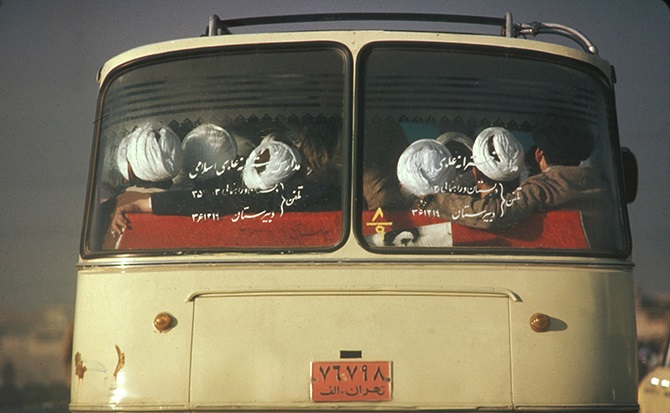
Is the Hajatiyeh Association a justification or a violation of human rights?! / Morteza Hamounian
How far is Iranian society able to accept opposing beliefs? What type of opposing belief does this society face and what approach does it show resistance against? When it comes to religion and belief in this society, to what extent does this resistance spread? In his book “The Problem of Iranian Identity Today,” Dr. Farhang Rajaei, a professor of political science at Carleton University in Canada, mentions four elements for the identity of Iranians today; one of these four elements is tradition. Dr. Rajaei also considers religion and Islam as another element of this identity-building process. What is Dr. Rajaei’s opinion on the independence of religion and Islam as an identity-building element for Iranians today – post-constitutional Iranians who are also familiar with the new culture and have blended into it? Should we accept both religion and tradition as identity-building elements, or should we only consider tradition? In any case, there is no solution other than accepting religion, specifically Islam, as an influential element in
Bahaism is a religion that emerged in the 19th century. Its origins can be traced back to Shaykhism and Babism, and it took shape with a specific interpretation of Shia Islam. This religion has gone through various periods in Iran since its inception, which requires further discussion and examination. But let’s go back a little further; to 1953 and the coup d’état against the national government of Dr. Mossadegh. A government that was approved by millions and supported by the majority of the religious community, from the society to the religious authorities. From Sayyid Abu al-Qasim Kashani, who initially defended Mossadegh’s government and the national movement, but later joined the coup faction, to Sayyid Reza and Sayyid Abu al-Fadl Zanjani, who remained Mossadegh supporters until the end and even after the anti-monarchy revolution in February 1979, they remained isolated and died in
In such a situation, a new institution is formed with a declared, non-political and non-religious purpose; an institution called the “Hojatiyeh Mahdaviyeh Society” in 1332 (1953) after the coup. This institution sees its duty as defending Islam against the Baha’i faith and working towards the emergence of the Twelfth Imam for Shia Muslims. The institution claims to have been formed with the purpose of defending Islam and Shia against the theological challenge of the Baha’i faith. The founder of this institution is Sheikh Mahmoud Zakirzadeh Toloui, also known as Sheikh Mahmoud Halabi; born in Shahrivar 1279 (1900) in Mashhad and a cleric in Mashhad. He studied under the famous cleric, Ayatollah Hajj Agha Hossein Qomi, known as Hajj Agha Hossein Qomi. He was initially a philosopher and studied under the great martyr, Ayatollah
Sheikh Mahmoud Halabi, who founded the Hujjatiyyah Society in 1332, is associated with this movement. In addition, based on historical accounts, Sheikh Halabi also has a personal experience with the Baha’i Faith. During his studies, he and his classmate, Seyyed Abbas Alavi, were invited to the Baha’i Faith by a Baha’i preacher, and his friend became a Baha’i. This was a warning sign for Halabi. He put aside his religious studies and dedicated his time to understanding and studying Baha’i texts in order to find a comprehensive and Islamic response to the Baha’i Faith. His studies began with a group of students and later expanded to include non-students, and this group, with their activities, became known as the Anti-Baha’i Society, or the Hujjatiyyah Society. The Hujjatiyyah Society was a non-political organization that opposed the idea of an
However, it seems that the issue of confronting Baha’ism was not solely motivated by religious reasons. In 1330, Sheikh Mahmoud Halabi became a supporter of the nationalization of oil movement in the province of Khorasan and was nominated as a candidate for the National Consultative Assembly. However, just a few days before the elections, he announced that he would not be running. This shows that he was not just a religious figure, but also had a political perspective. Furthermore, after the victory of the 1957 revolution, he once again tried to enter the Assembly of Experts in the new system. This also suggests that he had a political mindset. However, if we accept that the motivation of the founders of the Hojjatieh Society was purely religious, the youth and others who joined did not have only religious motivations. Political issues were also present, despite the society’s claim of being non-political. These political issues were related to the image that had been created during
In such an atmosphere, a portion of the religious Shia – both political and non-political – see it as their duty to combat the Baha’i Faith. Not only is this new religion in conflict with their beliefs, but it is also promoted by its followers and some parts of society are drawn to it. It is also seen as an accomplice of the ruling regime, which, with the help of foreign powers, has staged a coup against the national government and is ruling over the people with imprisonment, police and security crackdowns, and human rights violations.
And add to this collection a coincidence and, figuratively, a historical irony for the Baha’is: The founder of the Baha’i faith passes away in 1892 AD and is buried in Akka, in the lands of Palestine and in the Ottoman Empire. But in the 20th century, this land goes through political changes and after being occupied, takes on the name of Israel, intensifying the conflict between Muslims and Zionist Jews. In this situation, with the burial of the Baha’i prophet in the lands that are now under the control of the Israeli government, there has always been a suspicion that the Baha’is are collaborating with the Israeli government, which is in conflict with Muslims. While the death and burial of the founder of this faith took place before the formation of a country called Israel.
All of these issues lead to the confrontation between the Hojjatieh Society – which is currently organized throughout the country and formed – and the Baha’is in Iran. This confrontation, which is initially supposed to be a heated debate, often turns into violence and inhumane treatment towards the Baha’is by forces who consider themselves part of this society.
In a religious confrontation, when the titles of infidel, atheist or apostate are placed upon an individual or group, it automatically generates and reproduces violence. Generally, in most religions, the punishment for an infidel or apostate is death and they must be removed from the scene of life. These words are so powerful that they have even entered non-religious literature and, for example, Lenin, the leader of the October 1917 Russian Revolution, is referred to as “apostate” by Kautsky. In such confrontations, violence becomes an inherent part of it. The homes of Baha’is in Iran are set on fire, they are expelled and isolated, and they are killed on the streets or in seclusion by assassination teams. According to Abbas Mazaheri, a former member of the Hojjatieh Society in a conversation with Rouhi Jahanpour, it is said that “in Shiraz, small children were forced to drink boiling water”
And all of this is happening while traditional religious authorities are helping the Hojjatieh Society with the share of their Imam, and are accompanying them in the issue of “uprooting and suppression”. It is also mentioned that the Hojjatieh Society had asked people not to engage in trade with the Baha’is. However, some former members of this society deny this issue and the focus of the Hojjatieh Society on cutting off the economic lifeline of the Baha’is, and say that the leadership of the Hojjatieh Society did not believe in cutting off the Baha’i’s bread.
And this issue was not limited to the persecution of Iranians by their compatriots. According to reports, there was a research group within the Hujjatieh Society, which was essentially the intelligence arm of the society. They operated in three separate operational units as the fifth column of the society, actively working in the Baha’i community. With patience and calmness, they were able to infiltrate the ranks of Baha’i authorities. In this way, without the Baha’is realizing it, some members of the Hujjatieh Society appeared to be Baha’is and became prominent figures in the community. This meant that the forces of the Hujjatieh Society were engaged in espionage, surveillance, and fifth column behavior. Mohammad Golzari was one of these individuals, known by the alias Mahmoudi, and he participated in Baha’i gatherings.
Alongside all of these issues and with the efforts of Mahmoud Halabi and his companions, the ultimate authority of the Shiites, Mr. Borujerdi, issues a fatwa prohibiting trade with the Bahais; also, because Habib Sabit, the owner of the Pepsi Cola factory, is a Bahai, Pepsi Cola is also declared forbidden. This means an attempt to economically strike the Bahais. The famous preacher of Tehran, Mohammad Taqi Falasafi, also gave a detailed speech against the Bahais on Tehran Radio and in fact sought profit from government resources to spread propaganda against the Bahais. And even the Hazireh Al-Quds, the special place of worship for Bahais in Tehran, was destroyed in 1334 with the support of Falasafi and the indirect support of the Shah of Iran by the Shah’s army and under the supervision of Sepahbod Batmanghelich; a task that was carried out in rotation in all
Savak, or the organization of security in the Shah’s regime, was aware of the existence of this association and the government at the time had given it permission to operate as a charitable organization, with the guarantee of no political activity. It can be said that the government during the Pahlavi era had a dual approach towards the Baha’is of Iran and the Hojjatieh Association. On one hand, a portion of the Baha’is (who had proven their loyalty to the second Pahlavi) had a presence near him, and on the other hand, they allowed anti-Baha’i religious groups to operate in certain areas to the extent that they could control them. This can be seen as an effort to keep the society occupied with religious conflicts and prevent them from becoming politically active during the second Pahlavi era. This mindset was flawed and the Hojjatieh Association became a platform for organizing the revolution of 1957. This platform was provided, for
This issue was not only among the clerics. It is reported that Ali Meshkini, a supporter of the authority of Ayatollah Khomeini and the head of the Assembly of Experts of the Islamic Republic (until his death), addressed him as “my master” in a letter to Sheikh Mahmoud Halabi. There are also many discussions about the inclination towards the Association by Mortaza Motahhari, Ali Ghodousi, and Mohammad Javad Bahonar.
After the revolution, however, the political atmosphere turned against the Hujjatieh Society. The founder of the Islamic Republic system, after a while, opposed the society, accusing them of seeking to increase sin in order for the Imam of the Time to appear. Ayatollah Khomeini, five years after the revolution, indirectly referred to this society, saying: “Another group says let sin increase so that the owner of the time can come. Why does the owner of the time come? He comes to take away sin. Are we sinning so that he can come? Stop these distortions… In this wave that is leading the nation, enter yourselves and do not move against this wave, for it will break your hands and feet.” These words and the founder’s actions were enough for Sheikh Mahmoud Halabi to completely suspend the society’s activities, announcing its closure in a statement on April 25, 1983.
Before the closure of the society and after the revolution, Ayatollah Khomeini appointed Sheikh Abu al-Qasim Khazali, who had serious inclinations towards the society, as his representative in the society (Sheikh Khazali himself made such a claim). After the closure of the society, which was automatically revoked, he was still active in the society.
The treatment of the government towards the Baha’is after the revolution is an issue that is evident to all. From the execution of Baha’i leaders to the systematic violation of their rights over the past four decades, it is a clear and distinct matter. However, it should not be forgotten that even after the closure of the Hojjatieh Society and even after the association with the society became an insult, an unfair accusation, and a tool for destroying the reputation of opponents of the Islamic Republic after the coup of Khordad 60, the members of the society and those who were intellectually trained within the Hojjatieh Society and had a place in the first generation of revolutionaries were present in all branches of the government, especially in education, commerce, and the Ministry of Foreign Affairs. It can be argued that a part of the extreme violence of the government towards the Baha’is after the revolution can be attributed to these forces, who were the intellectual supporters of the Ho
And this is while Ayatollah Khomeini says in his famous message known as “Charter of the Clergy” regarding the “Hojatieh” group: “Yesterday, the Hojatieh group had declared fighting as forbidden and in the midst of conflicts, they did everything in their power to break the half-Shaban strike in favor of the Shah. Today, they have become even more revolutionary than the revolutionaries! The former followers who, in their silence and isolation, have tarnished the honor of Islam and Muslims, have now broken the sanctity and purity of the Prophet and his Ahlul Bayt, and the title of guardianship has only been a means of gaining wealth and luxury for them. Today, they claim to be the founders and heirs of guardianship and regret the loss of guardianship during the Shah’s era!”
The activities of the Hojjatieh Society were suspended, but not stopped. Sheikh Mahmoud Halabi passed away in December 1997, but there are many accounts that a person named Engineer Sajjadi, one of Sheikh Mahmoud Halabi’s students, became the new leader of the Hojjatieh Society after him. This person is most likely Dr. Seyyed Hossein Sajjadi, one of the top members of the Hojjatieh Society alongside Sheikh Mahmoud Halabi. In fact, despite being secretive, it seems that the activities of the Hojjatieh Society continue.
As far as the article titled “Hojatieh Society; 57 Years of Activity in the Shadow” by Ardalan Sayyami, published on September 25, 2010 on the website of Rooz Online, quoting Mehdi Khazali, it is stated that the relationship between the leader of the Islamic Republic and the Hojatieh Society is good and Ayatollah Khamenei has embraced Engineer Sajjadi, the leader of Hojatieh, after the death of Sheikh Mahmoud Halabi.
Furthermore, during the presidency of Mahmoud Ahmadinejad in 1389 (2010), news was published about a request for activity from the Hojjatieh Society by its activists. The request, according to reports, was not accepted by the government, but it brought the name of the society back into discussion.
From the formation of the Hojjatieh Society to its dissolution and the continued presence of its followers in the structure of the Islamic Republic, the role of this group in violating the human rights of Baha’is in Iran can be clearly seen. The line and role that began with the organization of religious argumentation (in the nineteenth century and based on their claim) against other ideological believers, but turned into a violation of their rights and confrontation, and after the revolution, the same forces spread throughout the structure of the Islamic Republic, along with perhaps the main responsibility for the movement that did not believe in dialogue and argumentation (like the founders of the Hojjatieh Society who only believed in suppressing and destroying the Baha’i faith), have left an unacceptable and tragic record in the history of the Islamic Republic regarding the followers of this religion. It seems that more should be read and researched about this group and its effects. Former students of the Hojjatieh School, who used to
Sources and footnotes:
The narration of the flag or banner from Imam Sadiq, the sixth Imam of the Shiites: “Any flag that is raised before the rise of the Qa’im (the promised savior) belongs to a tyrant who is worshipped instead of God.” (Al-Kafi, vol. 8, p. 296; Wasa’il al-Shi’a, vol. 15, p. 53). Similarly, from Imam Baqir, the fifth Imam of the Shiites: “Any flag that is raised before the flag of Imam Mahdi (peace be upon him) is the flag of a tyrant.” (Mustadrak al-Wasa’il, vol. 11, p. 34).
Rajai, Farhang, the problem of Iranian identity today, Nashr-e-Ni, Tehran, 1392.
Remaining, Emad al-Din, in recognition of the Qaedin Party of the time, the publication of Islamic knowledge, Tehran, first edition: 1362.
Fathi, Ali Ashraf, “Mashhad, Powerful Suburbanite” Citizen Today, Number 67.
Siyami, Ardalan, “Marvaj-e Jadāyi-e Dīn az Hokumat yā Motahed Ahmadinejad? – Anjoman-e Hojjatieh; 57 Sāl Fa’aliyat dar Sāye”, Ruzānlāin, 4 Mehrmāh 1389
Siyami, Ardalan, “The Separation of Religion from Government or the United Ahmadinejad? – Hojjatieh Society; 57 Years of Activity in the Shadow”, Ruzānlāin, 4 October 2010
The Book of Light, Volume 18
The Book of Imam, Volume 21
Two programs of Voice of America in relation to the Hojjatieh Society on the dates of January 4, 2013 and January 30, 2013.
BBC Persian’s program about the Hojjatieh Society, 9 Esfand 1390.
The documentary “Upside-down Shoes”, directed by Mohammad Mehdi Khaleghi, tells the story of the Alavi School and the Hojjatieh Society, narrated by Reza Akbari Ahangar. This documentary was screened at the third edition of the Ammar People’s Film Festival at Ferdowsi University in Mashhad, with the presence of its director.
 Created By: Admin
 May 25, 2017
Tags
Baha'is Hojatieh Society peace line