


If I were homeless, which prevention method would I choose? / Fatemeh Akhtari
This is a picture of a beautiful sunset.
Fatima Akhtari
The issue of voluntary or forced sterilization of vulnerable groups has long been a topic of discussion and debate. In recent months, with the government’s proposal to provide conditions for voluntary sterilization for homeless women, this issue has been revisited and examined. In this article, as a midwife and senior expert in maternal and child health, I would like to express my opinion on the sexual health of homeless individuals from a scientific perspective, rather than a social one.
First, I must emphasize that addressing the small health and hygiene issues of this group is not equivalent to solving the issue of homelessness and neglecting or forgetting fundamental solutions to eradicate poverty and homelessness for these individuals. Rather, all officials who are in any way related to this issue must make every effort to ensure that all individuals in our country have shelter and access to basic welfare facilities. Addressing this issue and solving problems such as poverty, unemployment, addiction, etc., will automatically eliminate other problems these individuals face, such as health issues. However, until this is done, we must not ignore quick and executable actions that can improve the lives of the homeless. One of the most important of these actions is related to the sexual health of these individuals.
Prevention methods for pregnancy currently used in Iran include both hormonal and non-hormonal methods. Among these, one must consider several options for an individual based on their physical condition, health, and lifestyle in order to make the right choice. Therefore, this choice will vary from person to person. Unfortunately, there is not enough space in this text to discuss all the advantages and disadvantages of different methods, but the discussion will focus on the general lifestyle of homeless families. However, the most important point is that each individual must be informed about their options and the conditions in order to personally and willingly choose the appropriate method. In fact, homeless women should also have full control over their bodies like other women, and becoming pregnant or preventing it should be according to their wishes and consent.
The conditions for different homeless families are different; sometimes, for example, homeless women live alone without a family. In these circumstances, it will be impossible for them to choose a method of prevention for a man they have a sexual relationship with. In order for each person, especially each woman, to have control over their body in these circumstances, they must be able to use a method of prevention themselves (without relying on whether or not their sexual partner has a method of preventing pregnancy).
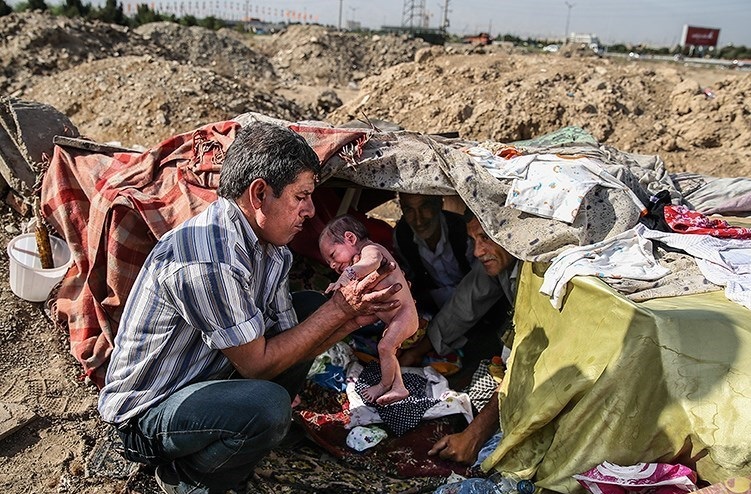
It can be seen in statistics that some families or homeless women sell their newborn babies after giving birth. Sometimes homeless women who are also addicted are also infected with HIV and will pass it on to their child if they become pregnant. We must put aside all of these disorders and focus on the fact that pregnancy for these women, who do not have access to health facilities and do not have mental and emotional peace, will be a very difficult time. In addition, giving birth to a child in these living conditions, where there is not even a roof or wall for physical protection, is completely devoid of a future outlook. That is why using a reliable method of preventing pregnancy for any woman living in these conditions is recommended. In addition, special conditions should be provided so that if these women are sexually harassed in any way or become pregnant unintentionally, they can terminate their fetus legally and under medical supervision and with regard to health. Or if they become pregnant with their consent in these unfavorable conditions, they can use
In order to choose hormonal methods, women should be under the supervision of a cardiologist and after starting to use them, they should visit their doctor at specific times for monitoring. Birth control pills are not recommended for forgetful women or those who do not have a stable and routine life, because by forgetting to take just one pill and not using an alternative method until the end of the month, there is still a chance of pregnancy. Regarding hormonal injections, women should visit their doctor every month or every three months (at a specific time) for the next injection. For homeless women, even if this visit is arranged by medical authorities, it will still be difficult to find and include them in a consistent and continuous pregnancy prevention program. Smoking is one of the contraindications for using combined hormonal methods such as estrogen and progesterone pills or injections. Unfortunately, we see in statistics that most homeless women smoke. In addition, the emotional side effects and changes in menstrual bleeding caused by using hormonal methods
For the IUD method, which is an intrauterine device inserted by a trained individual, there are also some drawbacks. The most important drawback of this method is the need for periodic check-ups, which as mentioned, may not be feasible for these individuals. Additionally, this method is not recommended for individuals who have multiple sexual partners, suffer from sexually transmitted infections, or are at high risk for them. Furthermore, the use of IUD can lead to increased menstrual bleeding and put women at risk for anemia, making it unsuitable for this group as well.
Some other methods of preventing pregnancy include tubal ligation in women (tubectomy) and vasectomy in men. Both of these methods do not have the side effects and disadvantages of hormonal and IUD methods. Apart from the need for surgery – which can sometimes be expensive – no other drawbacks have been mentioned for them.
Until the year 1391, tubectomy and vasectomy surgeries were performed for free for couples who wanted permanent sterilization, and only the consent of the spouse was sufficient for the surgery to be performed on women. After the remarks of Ayatollah Khamenei regarding population growth and the attention of officials to changing the approach to population control in the country, the free plan for tubectomy and vasectomy was abolished. In 1393, the Ministry of Health issued guidelines for the indications of tubectomy, according to which this surgery was no longer optional and could only be performed if approved by the supervisory committee (consisting of several doctors and officials) and if the issued indications were present. These indications include twenty cases, including several chronic diseases, women who have had three cesarean sections (provided they have two living children), individuals infected or affected by AIDS, individuals over 40 years old, and those with five or more children.
The discussion that is often seen in the media about homeless women is about their selective sterilization; in a way that conditions are provided to remove the legal barriers that prevent Iranian women from choosing this method, for those individuals who are facing specific living conditions.
Perhaps the best advice for preventing pregnancy in this high-risk group is to use combination methods. For example, a woman may use one of the prevention methods that is suitable for her lifestyle, but the man should also use a condom. Individuals who smoke or are addicted and do not have stable living conditions and are at risk of contracting sexually transmitted diseases should definitely use a condom not only as a method of preventing pregnancy but also as a way to prevent the transmission of sexually transmitted diseases.
In conclusion, it must be emphasized again that the government’s duty in the first stage, with long-term planning, is to eradicate poverty and improve the difficult living conditions of these individuals. In short-term and quick implementation plans, facilities should be provided for their health and sexual well-being. It is necessary to reduce maternal mortality by creating facilities and improving conditions, and at the very least, women who endure extremely difficult living conditions should be able to find peace of mind in sexual matters and have the right to control their bodies by making informed decisions and having sufficient knowledge to choose safe methods of contraception.
 Created By: Admin
 January 27, 2017
Tags
Addiction Birth Bleeding Carton bed Cigarette Condom Fatima Akhtari Grave Health HIV Homeless 2 Hormones Infant IUD Mercy Midwife Monthly Peace Line Magazine peace line Pregnancy Preventing pregnancy Prevention of disease Sexual relationship Sperm Tablet Tubectomy Vasectomy Women Women's health ماهنامه خط صلح ماهنامه خط صلح