


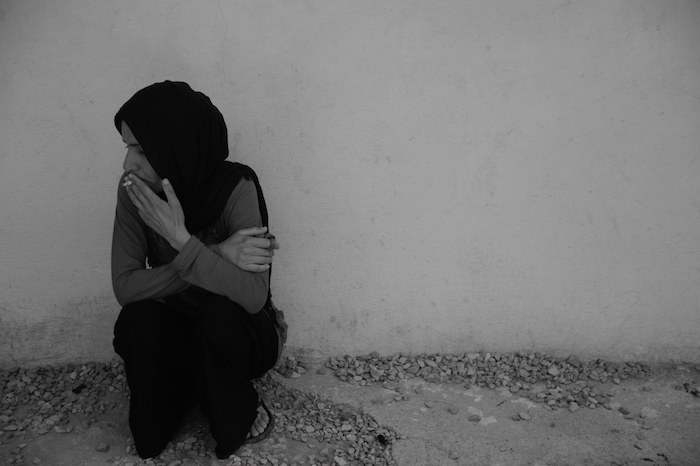
Sterilization from the perspective of international human rights standards / Shahin Sadegh Zadeh Milan
“منظوری که به آن نگاه می کنی، تغییر می کند”
“The perspective you look at, changes.”
Shahin Sadegh Zadeh Milan
After the release of images of citizens known as “grave sleepers”, the discussion of sterilization as a solution to prevent the increase of homeless individuals or “cardboard sleepers” in the virtual space was raised. Addressing the issue of sterilization from a human rights perspective and examining the human rights discourse on this issue can open a new angle for those interested in this discussion. This article provides a brief overview of the topic of sterilization from the perspective of international human rights standards.
Sterilization by force is contrary to international human rights standards.
Article 3 of the Universal Declaration of Human Rights states: “Everyone has the right to life, liberty, and personal security.” Article 5 of this declaration also states: “No one shall be subjected to torture or to cruel, inhuman or degrading treatment or punishment.” Article 7 of the International Covenant on Civil and Political Rights, which has been signed and ratified by Iran, explicitly prohibits conducting medical experiments on individuals without their consent: “No one shall be subjected to torture or to cruel, inhuman or degrading treatment or punishment. In particular, no one shall be subjected without his free consent to medical or scientific experimentation.” It is self-evident that forced sterilization is also prohibited under international law when conducting medical experiments without consent is prohibited.
Special Rapporteur on Torture and Other Cruel, Inhuman or Degrading Treatment or Punishment has also considered forced sterilization of women with disabilities as a form of torture, in addition to other cruel, inhuman and degrading behaviors and punishments. Furthermore, according to the Office of the United Nations High Commissioner for Refugees, policies or laws that prescribe forced abortion or sterilization as a form of punishment are considered a valid reason for seeking asylum, and the individual who becomes a victim of such policies is considered a victim of “gross human rights violations.” (1) The Special Rapporteur has gone even further and stated that forced pregnancy or sterilization, if systematically used against a particular group of citizens, can also be considered a crime against humanity. (2)
B: Sterilization under pressure from the perspective of international human rights institutions.
Pressure sterilization is another type of sterilization that occurs not through force, but through financial or non-financial incentives, misinformation, or threats to the individual. In this type of sterilization, the individual’s consent to be sterilized is obtained under conditions where they are in a disadvantaged social and economic position and their decision cannot be considered freely made. According to a joint statement prepared by the World Health Organization, UNICEF, the Office of the High Commissioner for Human Rights, and several other UN agencies, no one should receive incentives for sterilization, whether from their spouse, family members, medical personnel, or government officials. Offers of food, money, land, and housing are among the incentives used to persuade individuals to undergo sterilization. The World Health Organization and several other UN agencies consider these actions to be in violation of international human rights standards. One of the recommendations of the World Health Organization is to prohibit and abolish programs that provide incentives for patients to undergo sterilization. Additionally, steril
Topic: Sterilization Debate in the Context of Inequality
In the above sections, the prohibition of forced sterilization and sterilization under pressure was mentioned from the perspective of international law. However, the discussion of forced sterilization or sterilization under pressure often takes place in a context where social and economic inequality is one of its main components. In other words, forced sterilization cannot be discussed in a vacuum. Regarding the recent controversial discussion on sterilization in the Persian virtual space, the situation of individuals who were marginalized from both sides was raised: the “grave-sleepers” are both extremely poor and most likely suffer from issues such as drug addiction or other physical and mental illnesses. In other societies, sterilization is often presented as a solution to the problem of “undesirable elements”. Kurds, transgenders, and racial and ethnic minorities are among the groups targeted by such policies. In this context, sterilization becomes more than just a public health issue and turns into a means of controlling individuals who are considered harmful and worthless by a large part
Sources:
Report by Manfred Nowak, Special Rapporteur on Torture and Other Cruel, Inhuman or Degrading Treatment or Punishment, Official Website of the United Nations Office of the High Commissioner for Human Rights, January 15, 2008, p. 11.
Same, p. 12.
Contrary to his desire: Forced or pressured sterilization of women in the world, Foundation of Open Societies, p.2
Forced, pressured, or involuntary sterilization, World Health Organization website, pp. 10-9.
Same, p. 2.
Same, p. 20
Same.
“سلام دوست عزیز، امیدوارم حالت خوب باشه”
“Hello dear friend, I hope you are doing well.”
The legal director of the Iranian Center for Human Rights Documents.
 Created By: Admin
 January 27, 2017
Tags
Addiction Carton bed Childbearing Disrespect Financial incentive Grave Graveyard Homeless 2 Humiliating Identity card International rights Mandatory sterilization Medical services Monthly Peace Line Magazine Occupation peace line Shahin Sadegh Zadeh Milani Sterile Sterilization Torture 2 شکنجه ماهنامه خط صلح