


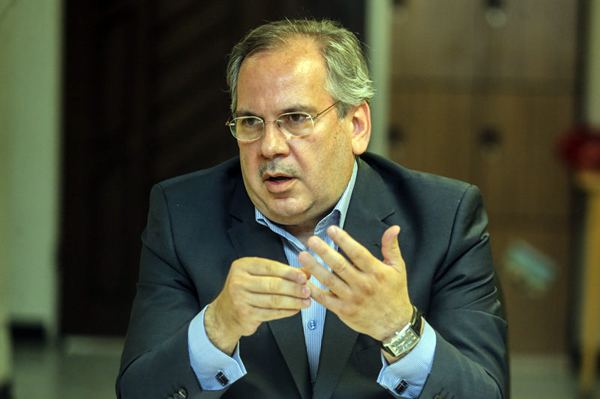
Development, Human Rights, and the School of Iranian Personality Transformation / Mohammad Mohabi
This is a caption
This is a caption
Mohammad Mohabbey
The concern for progress, development, and political stability in Iran continues. Countries similar to ours have found their way, yet we are still immersed in our own intellectual and political conflicts. Before countries like South Korea, Malaysia, and even China began discussing development, we did, but have not achieved any success in this regard. The bitter reality is that we do not think enough, we do not think correctly, we do not think collectively, and as a result, we do not properly identify our issues. We constantly change our social and political systems. Perhaps we do not like order and stability because it is too much work, and we prefer to live with excitement and current circumstances.
We have not been able to convert our very good thoughts into speeches; we translate and adapt Western thoughts very well and quickly and add our own weaving and embroidery to them.
Some want all people to be ascetics, some want everyone to be intellectuals, and some want to westernize everyone… Without realizing that each of these “isms” is a kind of imposition on the general public and society needs a diversity of classes. Homogenizing people is very harmful and deprives them of their independence. Freedom means each person gaining their own cultural identity. Our thoughts are not compatible with our actions. We speak artistically, bringing ideas that the industrial world is still striving for, we teach the world the art of conversation, we call for unity, but in reality, there is a strong prevalence of elimination, destruction, and envy among us, and we are constantly looking outside of ourselves for causes, problems, and roots. The main problem of Iran’s underdevelopment is not in our thoughts, but in our underdeveloped character (inability to create a system) and on the other hand, the foundation of Western methodology is the organization and capacity for criticism of individuals,
The book “Rationality and the Future of Development in Iran” is the product of fourteen years of research and teaching on development by Dr. Mahmoud Sari al-Qalam. It includes his theoretical framework, “The School of Iranian Personal Transformation.” Dr. Sari al-Qalam argues that the Iranian personality has not been created for development, but rather for adaptation. In this text, we will discuss the ideal personality for development from Dr. Sari al-Qalam’s perspective, and then we will refer to the relationship between development and human rights based on international legal documents.
Iranian elites and the concept of development
Every society must have a theory in order to achieve growth. In theory, there is a type of knowledge and awareness, and its function is relative; because humans act upon it, it requires trial and error. In theory, the system of cause and effect, efficiency, and chronological order are discussed, and the instability of a society is due to a crisis in its theoretical structure.
The main responsibility for increasing efficiency and coherence lies with the elites. Their duty is to align the theoretical aspects of the triangle of statehood, which is based on three elements of knowledge, security, and legitimacy, in an artistic manner with the cultural and moral foundations of their society.
There are ten key concepts that intellectual elites and tools of a society must come to a consensus on, which encompass the three areas of culture (human, society, religion, life, and time), politics (government and power), and wealth (work, wealth, and nature). These concepts and consensus are adaptable to various countries through the common inferences of elites and society, resulting in complex structures and multiple forms with the triangle of national sovereignty. Achieving this state depends on the cultural, economic, and political conditions of that society. Examples of countries that have achieved this include Malaysia, Indonesia, Singapore, South Korea, and others.
Regarding the discussion of cultural transparency, it should be added that a clear cultural framework leads to social formation. In fact, the final connection between common inferences and development is hidden in this principle. A culture that is free from minimal contradictions among its internal elements leads to a stable social formation, and then a political and economic system based on a clear culture emerges.
Transformed human characteristics
Personality and character are more important than thoughts. A person can change their thoughts through study, consultation, observation, and contemplation, but changing one’s personality, which is more stable, is much more difficult. Therefore, to understand a society, one must first look at the personalities of its people and then understand their thoughts. The capital of Japan and Germany is disciplined, responsible, hardworking, and innovative people. Of course, the problem is not in the land, oil, or even the influence and interference of foreigners, because after the revolution, foreign elements have not played a role in setting major policies, guiding society, or making decisions.
In the 37 years after the revolution, the country has had over 1400 billion dollars in revenue from oil exports, and during this period, various individuals, including dedicated and capable individuals, have been in charge of managing the country’s executive affairs. As Dr. Seryal Algham said, if we attribute the root of pre-revolution problems to foreigners and imperialism, how should we identify the causes of post-revolution problems? Why can’t we build a system and why do our problems still persist? Is the problem with our thoughts and mental tendencies, or is it that we Iranians cannot work together, coordinate, accept each other, respect each other, accept our differences, fulfill our duties and responsibilities, not weaken each other, support each other, and take pride in each other instead of destroying each other?
We need to think about why we don’t listen to each other, we don’t have a correct understanding of society and community, we are adaptable, we easily change our ways and morals, we react quickly and aggressively, we highly value those in our own group, but we easily ignore the pedestrian rights on the streets, we have a galactic reaction to the mildest criticisms, we consider ourselves the most artistic in our definitions, we hide many issues, we turn a blind eye to accepting reality, we ignore the success of others, we get angry very quickly, we are weak in self-awareness, in friendship, relationships and work, we want everything to be perfect, we don’t fulfill our share with laziness and indifference towards others, we are very weak in self-criticism, we constantly change our words and are fickle, we talk too much and think too little, we are very intelligent but also lacking in foresight, we don’t evaluate the consequences of our words and
Is this temperament and mentality a matter of thought or personality and upbringing? Do these characteristics hinder political or economic development or cause clashes of discourse? Although each of these factors exists in different proportions in different individuals, they are relatively common and, more importantly, very old. In other words, despite extensive changes in Iran and the world, as well as transformations in political systems in Iran over the past few centuries, these characteristics have remained stable and the political culture of Iran and Iranians has not changed much. Interestingly, these characteristics can also be found among various social groups and even among so-called modern elements of society. There are even those who teach or promote democracy, but have a culture and behavior similar to the authoritarian regime, and no one has the courage to even mildly criticize them. Western civilization has two great assets: first, the creation of a culture of system and structure, and second, a culture of criticism and re-evaluation of thoughts and methods. According to the writer, both of these have
This collection of behaviors has its roots in a tribal and authoritarian culture. How can we build a system and progress before correcting these behavioral and incorrect personal foundations? Based on this, we have not entered the modern era. Modernity does not come with cologne and fancy clothing, but rather with a dignified character and rational behavior; therefore, the question of whether economic development comes first or political development is indicative of our misunderstanding of the problem of underdevelopment. A rational human being needs food and air, housing and clothing, ethics and wealth, friends and solitude, to cry and to be happy, to listen to music and to study, to strive and to rest.
Development, a concept of human rights.
By examining the documents related to human rights, we can to some extent clarify the position of this concept. What is stated in human rights documents, whether explicitly or implicitly, has identified development as one of the concepts of human rights.
Human rights concepts have the characteristic of considering and recognizing rights for individuals. For example, the concept of “right to life” indicates the fact that human beings have a right called “life” and therefore, this right has been officially recognized. These concepts carry a weight of value and discuss the fundamental rights of every human being; for example, “freedom” is a right that cannot be separated from a person. Therefore, human rights concepts have three characteristics:
They have valuable possessions.
2- They are human beings;
3- Their subject is also human.
But does development also have these qualities? Has the use of this term in human rights literature been considered with regard to these characteristics?
In the preamble of the Universal Declaration of Human Rights, it is stated: “Since it is essential to promote friendly relations between nations…”
“Since the people of the United Nations have reaffirmed their faith in fundamental human rights, the dignity and worth of the human person, and the equal rights of men and women, and have firmly resolved to promote social progress and better standards of life in larger freedom.”
In these two documents, the right to development has been explicitly addressed. In the first paragraph, development is considered in the context of friendly relations between nations, both in a specific and general sense. This is because friendly relations between nations are specific, but it is general in terms of which relationships are being referred to and in what areas this development should take place. In the second paragraph, development is viewed in the direction of social progress and a better life.
In any case, what can be derived from these two clauses is that development, as a concept of human rights, is mentioned in conjunction with other human rights concepts in relevant documents. This meaning can be found more clearly in other clauses and human rights documents.
The International Human Rights Conference Declaration (Tehran) also addressed this issue. This declaration, adopted in 1968, states in Article 12 that the growing gap between developed and developing countries economically hinders the realization of human rights in the international community. The failure of two decades of development to achieve its limited goals highlights the need for each country to make the maximum effort within its means to bridge this gap.
Furthermore, Article 13 states: “As fundamental human rights and freedoms are indivisible, the full realization of civil and political rights is not possible without the enjoyment of economic, social, and cultural rights. Ensuring sustainable progress in the implementation of human rights depends on the adoption of appropriate and effective national and international policies in the areas of economic and social development.”
In these two substances, two fundamental topics have been mentioned:
Development is not just a legal concept, but it is also a fundamental element in realizing human rights. Without development, or if it is not widespread, human rights will not come into existence. Therefore, what prevents the realization of human rights in all dimensions and development is the lack of such an approach.
B) Development, from the perspective of the mentioned declaration, is an economic development and ultimately, a social development. In other words, there can be no separation between human rights and the full realization of civil, political, cultural, social, and economic rights depends on some national and international policies effective in the field of economic, political, social, and cultural development. But how can we talk about civil and political rights when there is no program for development in various dimensions?
Article 8 of the International Covenant on Economic, Social and Cultural Rights states in paragraph (a): “Everyone has the right to form trade unions for the protection and advancement of their economic and social interests, in accordance with the rules of the relevant organizations.”
This article recognizes development as a personal right; meaning it looks at it from an individual perspective and in economic and social dimensions. This is while a comprehensive understanding of this concept has not yet been formed and although it also includes the title of cultural covenant, in this clause it only mentions its economic and social aspect.
In Part 2 of Article 11 of the First Chapter, the right to development has also been addressed: “Improving methods of production, preservation, and distribution of food by fully utilizing technical and scientific knowledge, spreading principles of education, nutrition, development, or reforming the agricultural system in a way that ensures maximum effective development and utilization of natural resources.”
This task is the responsibility of the countries involved in this agreement; meaning on one hand, development is recognized as an individual right, and on the other hand, this right must be implemented by the countries, meaning that I am against the countries that go against this right.
In Article 15, paragraphs 2 and 4 also refer to development as a right. Paragraph 2 discusses measures that will be taken to ensure the full implementation of the right to development by the countries party to this covenant. These commitments include necessary measures for the preservation, development, and promotion of science and culture. The main focus is on science and culture, which must be considered in three stages: preservation, development, and promotion. Development cannot be separated from culture; culture is present everywhere, although it imposes itself invisibly, but the various aspects of development cannot be separated from each other.
In Article 4, it identifies the countries involved in this treaty in relation to the benefits of promoting and developing cooperation and international contacts in the fields of science and culture.
Article 18 states: The Economic and Social Council, in accordance with the responsibilities assigned to it under the United Nations Charter in the field of human rights and fundamental freedoms.
One of the responsibilities and duties of the Economic Council is related to development, both in economic and social dimensions. Therefore, it can be said that development is among the concepts of human rights and fundamental freedoms.
In the Universal Declaration of the Rights of the Child (1959), it is stated in the first paragraph of the introduction: “…have resolved to promote social progress, improve living conditions and ensure wider freedom.”
In the preamble of the Convention on the Elimination of All Forms of Discrimination against Women, the provision “the full and complete development of a country, global welfare and the establishment of peace, require the participation of women in all areas on equal terms with men” has been mentioned. This clause has placed development in all dimensions as a comprehensive concept that, with its unique feature, is not possible without the participation of women.
It seems that the founders of this convention have believed that its development is so extensive and the concept of development is so comprehensive that it is not possible without the presence of women; although this presence is conditional on the existence of equality, not discrimination.
In Article 3, development is considered as the introductory step towards the implementation of human rights and the enjoyment of fundamental freedoms; where it states: “Member states shall take all necessary measures… for the full development and progress of women in order to ensure the implementation of human rights and their enjoyment of fundamental freedoms on the basis of equality with men.”
Final note
“We have no way other than development to expand the concept of human rights, and there is no way other than transformation in the Iranian personality, which many of its components are anti-development, for development. Development is actually a pattern that leads to serious changes in various dimensions; in a way that with the termination of various dependencies on other countries, the flow and escape of capital and brains from the country turns into the accumulation of capital and brains within it, and provides a human life for all its inhabitants. In conclusion, it must be said that many of the problems of development and human rights in Iran are due to the weakness of society and the Iranian personality, and governments have little influence in this process.”
 Created By: Mohammad Mohebi
 December 27, 2015
Tags
Mahmoud, the fast writer, magazine issue number 55. Mohammad Mohabbey Monthly Peace Line Magazine