


The right of women’s political participation in all aspects of society / Hossein Raeisi.
These days, there has been a collective effort by women to change the masculine face of the Iranian parliament. This has become a topic of many discussions. Since the issue of oversight by the Guardian Council is often mentioned, in order to prevent repetition, I am interested in looking more closely at the structure of political rights in the country. To do so, I begin with this question: What is the role of the parliament in legislation and governing society in Iran? What position do women hold in the structure of governing society? I pose this question in order to challenge the structure of the legislative and governing system based on the rule of law, as claimed by the president.
To answer the posed questions, it is appropriate to consider two important legal statements: 1) Regardless of the supervisory oversight, what percentage of control over the administration of society do those who pass through government filters and reach positions such as the parliament, presidency, and city councils have? 2) Why does the demand for women’s political participation not tend towards non-elected powerful institutions such as Friday prayer leaders, the presidency, and the leadership of Iran?
Answering the above questions will clarify the situation of women’s access to social institutions. In response to the first question, it can be assumed that the campaign has been successful and 50% of the seats in parliament have been allocated to women. Now, the Islamic Penal Code or the Criminal Procedure Code, both of which are experimental and must be renewed every 5 years, need to be permanently amended. The law on the conditions for selecting judges is also on the agenda of parliament. Assuming that all women who have reached parliament are sensitive to anti-women stereotypes in the law, they all vote in favor of a proposal to remove gender-based provisions in these three laws. As a result, parliament enters into a debate to remove these stereotypes, including equalizing the age of criminal responsibility between men and women, removing the age of 9 for girls and 15 for boys and increasing it to 18, equalizing the blood money for men and women, equalizing men and women in cases of
Members of the Guardian Council.
The heads of the three branches of power.
Members of the Assembly of Determining the Expediency of the System.
Five members of the Assembly of Experts for Leadership.
Ten people chosen for leadership position.
Three members of the Council of Ministers.
Three members of the judiciary.
Ten representatives of the Islamic Consultative Assembly.
Three university students.
“The method of work and the quality of its selection and conditions are determined by a specific law. The decisions of the council must be approved and signed by the leadership authority and must be approved by the absolute majority of participants through a general vote. Compliance with the fifty-ninth principle regarding the referendum on “Reviewing the Constitution” is not necessary. The content of the principles related to the Islamic nature of the system and the basis of all laws and regulations based on Islamic standards and the goals of the Islamic Republic of Iran and the republicanism of the government and the guardianship of the affairs of the country, relying on the general vote and the official religion of Iran, is unchangeable.”
With this constitutional structure, the possibility of legislation in important matters such as amending the constitution, which is a necessary requirement for any type of change and reform in the administration of society, is practically faced with a deadlock; unless popular reforms and movements are successful in penetrating the government. Therefore, the widespread presence of women in the parliament will not give them access to real power and the ability to change the anti-women and discriminatory foundations.
To answer the second question regarding the necessity of questioning the role of non-elected institutions in governing society, it must be said that two statements are true in this regard: First, the study of the Iranian Constitution, especially Article 110, which grants powers or, better said, authorities to the leadership of Iran, the removal, appointment, and acceptance of resignation of the highest position in the judicial branch, the jurists of the Guardian Council, the commander-in-chief of the armed forces, and the head of the national broadcasting organization, as well as the right to declare a general referendum and amend the Constitution, show that more than half of the concentration of power is allocated to one individual who, according to the Constitution, can never be a woman (the leader). Additionally, according to Article 113 of the Constitution, women cannot run for the presidency and no woman can become an Imam of any city or village. The role of Imam of Friday prayers is important in terms of their significant involvement in governing
***
According to the plan, political participation is an inalienable right for women, emphasized in Article 25 of the International Covenant on Civil and Political Rights, and the Islamic Republic is obligated to implement it. However, today women not only lack access to political participation in all important branches of government, but they also face blatant discrimination from the legal structure without any debate. Therefore, women’s demands must be transformed into maximum and comprehensive demands for their rights, so that the legislator, whether male or female, cannot pass and enforce discriminatory laws. Therefore, changing the male-dominated face of the parliament requires changing the legal and governmental structures as a whole. This is impossible without amending the constitution, separating religion from law and politics, and holding free elections.
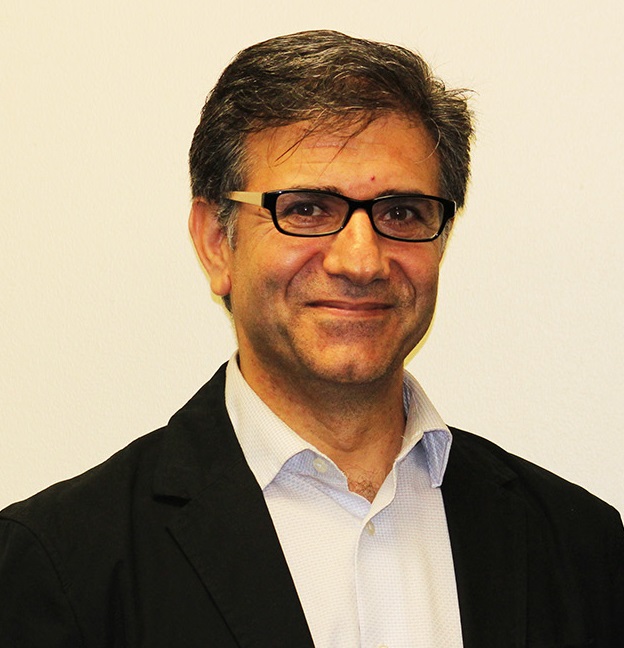 Created By: Hossein Raeesi
 December 2, 2015
Tags
Hossein Raeisi Monthly magazine number 55 Monthly Peace Line Magazine Political participation of women