


A Look at Women and Politics in Neighboring Countries of Iran / Ali Kalaei
As the elections for the Iranian Parliament and Assembly of Experts approach, one of the questions that occupies the minds of observers and becomes a concern for those who believe in equal rights for all humans is: to what extent have women in Iran achieved their true political position? In fact, the question is how much of the gender society in Iran has reached their true rank in the decision-making and implementation process in the political arena, and during the years after the beginning of modernization in Iran, what is the current status of this position and rank, and what growth or decline has it experienced?
We know that the political participation of women and their presence in the political arena and defense of their rights in this field is a challenging and controversial issue in developing countries. Now, in this region where all countries are in a state of “development”, observers can ask, by considering the close cultural ties between Iran and the countries of the region and most of its neighbors, about the status of women in neighboring countries and whether this cultural closeness (Middle Eastern, religious, and sometimes ethnic closeness – considering the diversity of Iran – linguistic, etc.) can provide a close estimate of the conditions of political presence in this country?
After the 1995 Beijing International Conference and the adoption of the famous document “Platform for Action,” which served as the basis for the implementation of the Convention on the Elimination of All Forms of Discrimination against Women, two major indicators for women’s participation in the development process were introduced in the United Nations Development Programme (UNDP) Human Development Reports.
The Gender Development Index (GDI) is determined by calculating the life expectancy rate, growth, income ratio, and literacy rate of women compared to men.
The Gender Empowerment Measure (GEM) examines the level of women’s access to political and parliamentary positions, as well as technical and specialized professions.
According to Article 7 (consisting of three paragraphs) and Article 8 (consisting of one paragraph) of the Convention on the Elimination of All Forms of Discrimination Against Women, the presence of women in various political dimensions is one of the most important issues that governments must pay attention to, corresponding to the Gender Empowerment Measure (GEM).
Let’s first go to neighboring countries of Iran and briefly examine the situation of women’s presence in politics in these countries, so that in the end we can come to a final conclusion by looking at the situation in Iran.
First, we head to Afghanistan, our large eastern neighbor with whom we also share a common language. From the formation of present-day Afghanistan until the time of Amanullah Khan (King of Afghanistan from 1919 to 1929 AD), women did not participate in any areas of this country. Not only did women not participate, but they were also absent from the public eye. The position of women was confined within the four walls of their homes. However, during the time of Amanullah Khan, the situation of women changed slightly. His wife, Soraya, appeared in public on the day of Afghanistan’s independence celebration and her status became somewhat different. After that, Afghan women were able to appear in public to some extent. However, these women still did not have a presence in any areas. With the fall of Amanullah Khan’s government and Habibullah Kalakani’s rise to power, the situation returned to its previous state. Until 2001 and the US
After the occupation of Afghanistan and only in a short period of time, with the clarification of the Afghan election law that at least two female candidates must be elected from each province, as a result, at least 68 women are elected to the House of Representatives and 23 women are elected to the Senate from the 34 provinces of Afghanistan.
In the 1389 elections for the Afghan parliament, out of 406 female candidates who were all approved for qualification, 67 of them were elected to the parliament. The total number of seats in the parliament is 242, with the remaining 175 seats allocated to men.
In addition, in the recent government of Afghanistan, there are 4 female ministers in the cabinet. Farida Momand is the Minister of Higher Education, Nasrin Oryakhil is the Minister of Labor, Social Affairs, Martyrs, and Disabled, Salam Azimi is the Minister of Counter Narcotics, and Delbar Nazari is the Minister of Women. These four women are part of the cabinet of Afghanistan.
Afghanistan, which has undergone significant changes after the events of 2001, has been able to achieve a relatively good ranking among countries in the region in terms of women’s political presence. The work has reached a high level and the desire for women’s political presence in Afghanistan has grown to the point where these 4 female ministers in the cabinet can be seen as a result of pressure from civil society and women activists in this field. On February 3, 2015, Afghan women took part in a widespread march and, referring to the 38% female presence in the elections, demanded that the President appoint at least 4 female ministers in the cabinet. And this is happening. (3).
Pakistan is a neighbor of Afghanistan and another eastern neighbor of Iran, but it has a longer and more tumultuous history of women’s presence in politics. In the constitution of this country, article 25 in the chapter on the fundamental rights of citizens, highlights equality for women in the political arena. This article explicitly rejects any discrimination based on gender between men and women. Additionally, in another chapter (principles of politics), articles 32 and 34 of this law guarantee and confirm the full participation of women in politics in this country.
However, this presence must also be guaranteed for women in addition to being mentioned in the law in the social sphere. In addition, the political arena of Pakistan is a volatile and dangerous one. Benazir Bhutto, the Prime Minister from 1988 to 1990 and 1993 to 1996, was the daughter of Zulfikar Ali Bhutto (a prominent Pakistani politician, Prime Minister from 1971 to 1973, and founder of the Pakistan People’s Party, who was overthrown in a coup by Zia-ul-Haq and later assassinated) and the wife of Asif Ali Zardari (Prime Minister from 2008 to 2013, currently facing financial charges). Despite belonging to a powerful family and being married to a powerful spouse with a title in the political arena, she was assassinated in a suicide attack on December 27, 2007 in Rawalpindi, Punjab province.
Another example is Huma Qureshi, a women’s rights activist and Minister of Social Welfare in Punjab, Pakistan, who was also assassinated in 2007.
In fact, the political arena in Pakistan is a field of quick and short-lived coups, and as a result, women either have to adapt to this trend and risk in the political arena, or they will be eliminated.
Pakistan also joined the Convention on the Elimination of All Forms of Discrimination against Women in 1996, with the condition that any issues, laws, or events resulting from it are not in conflict with Islamic laws. Like Iran, Pakistan defines and introduces its government as an Islamic Republic, and therefore has this condition in dealing with international laws.
But let’s take a look at the process of allocating seats for women in the Pakistani parliament. In 1973, there were only a minimum of 10 seats out of the total seats in the parliament that were reserved for women, marking the beginning of women’s presence in the political decision-making arena in Pakistan. During the era of General Zia-ul-Haq, the number of seats for women increased to a minimum of 20. However, this law had an expiration date and was temporary, so when it expired in 1988, the next three parliaments in Pakistan were formed without the presence of women, and were completely male-dominated.
However, Parviz Mosherf, with his powerful influence, increased this number to a minimum of 60 seats and did not consider a limit or expiration date for it until this law remains in place until the approval of another law or any changes. Today, in the current parliament, out of a total of 340 seats, 70 female representatives are seated in legislative seats in Pakistan and are present in the field of representation in Pakistan. (5).
This statistic is while in 2005 (only ten years ago) only two women were elected to the parliament and the rest were present based on the quota of women’s seats and relying on their relationships with men in the parliament. In those years, perhaps the most prominent example is Sumera Lari, a member of parliament, who was the granddaughter of the former ruler of West Pakistan.
In Pakistan, Hina Rabbani Khar is the first female Foreign Minister and the youngest woman to hold a ministerial position in Pakistan. Pakistan is the first Islamic country where a woman, Benazir Bhutto, became the Prime Minister and its parliament has a female spokesperson named Fahmida Mirza. It should also be noted that 4000 women serve in the armed forces of Pakistan.
However, observers in Pakistan consider this number to be very low. Approximately 48% of the Pakistani population is made up of women and this number should account for 40 to 50% of government officials. However, the actual number is much lower. This statistic is the same in different states of Pakistan. In some states, there is not even a single woman in a major government position. In the state of Punjab, which houses 56% of the country’s population, only two women hold ministerial positions. In Sindh, this number is only one. This is despite the fact that Nawaz Sharif, the current Prime Minister of Pakistan, has repeatedly called for government policies to promote women’s participation and even Siraj-ul-Haq, the leader of the Jamaat-e-Islami party, has stated that Islam does not prohibit women from being involved in society and has given them all their rights. (7).
It seems that the problem of the absence of women in the political arena in Pakistan is a cultural issue; the dominant male culture of this country and its traditional construction are lagging behind in terms of legal rights, which results in fewer women being willing to participate in politics despite the possibility of their presence in this field.
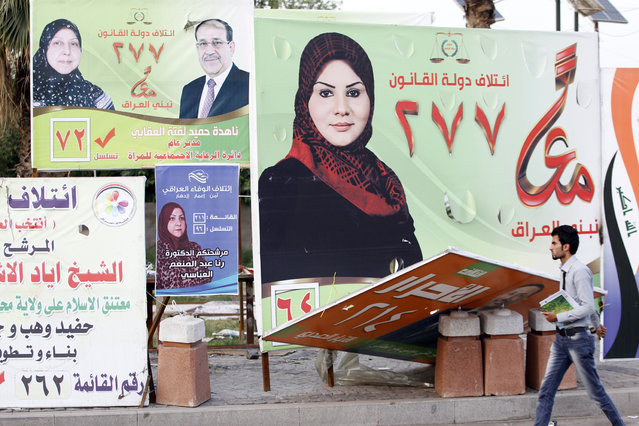
Let’s travel to western Iran. Our neighbors, with whom we share kilometers of common border, and we have been at war with the Baath regime for eight years. In 2003, Iraq began a new chapter in its political life with the American invasion. Before that, during the rule of the Baath Party officers, the government had a completely masculine dominance and there was no presence of women in the political arena. Generally, during Saddam Hussein’s rule, except for the first person of the country, there was no news or influence from another person in the political arena and all governance in Iraq was summarized in him. To the extent that even opposition from his family members would result in their death. However, during Saddam Hussein’s rule, some reforms were made in the social rights of women, such as the right to divorce, and there was also some opening for women to join the army and police. But there was no news of women’s presence in the political arena, from decision-making
During this period of openness, opportunities for Iraqi women in the workforce were also provided, but after the sanctions imposed against Iraq following the invasion of Kuwait in 1990, difficult conditions for Iraqi women in this field also emerged. Iraqi writer Omar Al-Jaffari describes the situation of those days in his articles for Al-Monitor, stating that women were caught between two difficult situations. They could either stay at home and take care of their children, or work for the government in conditions where their salary only covered the cost of commuting to work. Iraqi women chose the former and stayed at home. (8).
In 2003, after the American invasion of Iraq and the occupation of the country, a new era of women’s presence in the political arena in Iraq began. In the new Iraqi constitution, women were given a 25% quota in parliament. However, Iraqi women were demanding a 40% share of power and decision-making after 2003. But political conditions and the priorities of the occupiers resulted in only a 25% quota being allocated to Iraqi women.
Since the 2005 elections, Iraqi women have made great efforts in this regard, despite the negative atmosphere that initially hindered their progress. Despite the belief that Iraqi women lacked the necessary knowledge and abilities to participate in parliament and decision-making processes, they proved to be active and productive members. This ultimately led to 87 women being elected to the 328-member parliament in the 2014 elections, accounting for 26.5% of the parliament’s representation.
However, in the government of Iraq, it seems that the presence of women is still not believed. In recent Iraqi governments, there are generally no women present, and it seems that the traditions and cultural boundaries of society do not believe in or request the presence of women in the government. This is while Iraqi female politicians, such as Amia Najji Jabara, the advisor to the governor of Salahuddin province, take up arms and go to war against ISIS, sacrificing their lives in the fight against ISIS and defense of Iraq.
Samira Al-Mousawi, an Iraqi parliamentarian, addressed the Maliki government in 2010, stating that the government is only a reflection of the male-dominated society in Iraq. She protested, “This is unacceptable! We are in the process of building a modern, civilized, and democratic government where women play a role in all aspects!” (9).
Although the efforts of women to achieve their political, social, and civil rights in Turkey began in the last years of the Ottoman Empire, civil reforms for women’s rights were made possible in 1926 and the right to vote and be elected in the political arena was granted in 1934 during the Republic of Turkey. It should be noted that Turkey was the first country in the region to give women the right to vote and be elected, showing Turkey’s pioneering role in this field.
The first elections in Turkey after the establishment of the right to vote and elect women were held in 1935, and 18 women were elected to the parliament, which was a significant 4.6% presence and one of the highest levels of female political representation in decision-making and decision-making at the global level.
The presence of Turkish women in the parliament continued in the next two elections, and in the years 1939 and 1943, Turkish women, with a number of 15 and 16 women in the parliament, made up 3.8% and 3.7% of the parliament’s presence.
With the failure of the founding party of the Turkish Republic, Mustafa Kemal, in the years following, the presence of women in the political arena of Turkey did not have much growth. In all parliamentary elections between 1946 and 1977, women were only able to have a presence of between 0.6% and 2% in the parliament. This number reached 3% again in 1983, but once again we witnessed its decline in the following years, even reaching as low as 1.3%.
Since the years after the rise of the movement associated with Recep Tayyip Erdogan, the presence of women in the Turkish parliament has seen a significant increase. This statistic has risen from 4.4% in the 2002 elections to 17.7% in the first round and 14.9% in the second round of the latest elections in the current year (2015).
This issue may not be unrelated to the Islamic-oriented movement in Turkey’s view of women’s freedom to participate in various social arenas. Muslim women, whether veiled or unveiled, have entered the scene with the emergence of an Islamic-oriented movement and have made their presence known by introducing their candidates and increasing their numbers in Turkey’s decision-making arena. Furthermore, in the recent elections, the participation of Kurdish women and the official establishment of a party defending the rights of Kurds in Turkey, whose rights as an independent ethnic group have not been recognized for decades, has led to an increasing and more significant presence of women.
Perhaps it would be better to mention the history of women’s presence in Turkey here.
Turkey had a Senate during the years 1961 to 1980. During this time, 5 women were able to enter this Senate, including Behice Boran, the only female politician of Turkey who was assassinated on October 6, 1990.
The first woman to lead a political party and movement in Turkey, Behice Boran, was a labor leader who was elected as the first person of the Workers’ Party of Turkey in 1970. She remained the first person of this labor party until the order to close all parties in 1980.
In addition, 7 other women have also held leadership positions in political parties and organizations throughout the years of the Turkish Republic.
However, Turkey has only seen one female prime minister throughout all these years. Tansu Ciller, an economics professor, was able to serve as Turkey’s prime minister in a coalition government from 1993 to 1996. A role that has never been repeated for women in Turkey.
So far, there have been twenty women in Turkey who have held positions in the Ministry of this country, collectively responsible for 27 terms in various ministries of Turkey.
Turkey today has 82 women in its parliament and we have to wait for the formation of the new government of this country to determine how many women will be present in the future cabinet. Half plus one of the seats in the parliament are held by the Islamist Justice and Development Party, but serious competitors from the Republican and Nationalist parties of Turkey will also be present. Additionally, many of the women currently in the Turkish parliament are from the Democratic People’s Party, who have managed to overcome all the challenges of this period, from explosions to the burning of their party offices, and secure a ten percent presence in parliament.
It should also be mentioned that the 2015 elections for the Turkish Parliament were the first in Turkey’s history where all women, veiled or unveiled, had the opportunity to participate. It remains to be seen what the future holds for Turkey, where all women, regardless of their attire, have the ability to be involved in the political arena.
One of the northern neighbors of Iran is the Republic of Azerbaijan. This republic, which gained independence from the former Soviet Union in August 1991 during its collapse, has gradually taken steps towards women’s participation in political governance. In 2005, fifteen Azerbaijani women were members of the parliament of this country, which increased to nineteen in 2010, accounting for 15.6% of the total parliament of Azerbaijan.
Azerbaijani women have so far reached positions such as ministry (3 ministers), parliamentary spokesperson, and various managerial and directorial positions, and perhaps the only position that has been out of their reach is the presidency.
The highest rate of women’s presence in the ministries of this country, according to the 2011 statistics, is in the Ministry of Health with 79.5%, and the lowest is in the Ministry of Foreign Affairs with 19.4%. (10).
However, since 2010, with the issue of unveiling being put on the agenda in the government of Ilham Aliyev, it has caused and will continue to cause a decrease in the presence of women in political and social arenas in this country. A country where more than 95% of the population is Muslim, such treatment and laws can have a negative impact on the participation of citizens in the government as a whole, and specifically on the participation of veiled Muslim women in political and social affairs. (11)
Turkmenistan also gained independence in 1991. This northeastern neighbor of Iran, despite the declaration of the Human Rights Network that women in this country are considered second-class citizens (12), has 32 female representatives in its parliament, accounting for 25.8% of the members of this assembly. In one of the first cabinets of this country after independence, only one woman was seen alongside the president. In the current cabinet of this country, there is at least one female minister working in the Ministry of Culture and Media.
In the Persian Gulf region, if we look at the countries of Bahrain, Kuwait, and the United Arab Emirates, given the monarchical nature of their political regimes, we cannot expect any social class or group to have a significant and influential presence or be a source of change in their political structures and laws. However, among these countries, Bahrain and the UAE, with 7.5% and 17.5% respectively, have a higher percentage of women in their parliaments compared to Iran, while Kuwait, with only 1.5%, falls behind Iran with 3.1%.
Yes! Iran ranks with a 3.1% female representation in parliament, significantly lower than all other neighboring countries except for the United Arab Emirates, which is a major outlier.
But perhaps it should be asked, considering the above analysis and mentioned statistics, and the brief overview of past events in neighboring countries of Iran, what factors could or have been able to influence the high presence of women in the political sphere of these countries?
It is certain that in this short article, it is not possible to accurately and scientifically summarize the mentioned situations and obtain a precise and accurate output of the causes and factors. However, some factors can be observed and tracked in this field to increase women’s presence in the political arena.
The democratic nature of governments is one of these factors; meaning that all citizens have the opportunity for political participation through parties, organizations, and institutions, and that non-governmental media and organizations also have a presence as helpers and monitors in this matter. The higher the level of democracy in governments, the greater the possibility for women to participate. This democracy is not dependent on the name of a republic or the name of a governmental structure, but rather on the real method of governing and its legal and legitimate rights in that country.
Complete separation of religion from government and secularism is another factor. Whether in countries where hijab (as a fundamental religious factor that is used by the government as a tool to exert its power) is mandatory or in countries where it is banned, in both cases, this mandatory factor leads to a decrease in women’s presence in the political arena.
Determining a specific percentage for women’s presence higher than their presence at the time of approval of that percentage may be considered as another factor. It is true that at the time of approval of the law (as in the case of Pakistan), except for a few selected, the rest are chosen in other ways and only for the purpose of filling seats, but this special space for women causes active women in society to be encouraged to participate in the political arena and strive towards filling those empty seats. In fact, with the two-way relationship between law and public culture, by taking a step towards promoting the existing law, this law also brings along the public culture. Although on the other hand, this rule also applies. That is, with the advancement of public culture, laws must inevitably change. But in this situation, this public culture is faced with the resistance of dominant powers, which, as they have power, makes it very difficult to change them.
Now, considering the experiences of the countries around us and the very low percentage of 3.1% of women in the Iranian parliament, it must be asked whether these approaches are feasible for Iran in the real world. What can be done to increase the number of women in decision-making and implementation positions through the experience of education from the countries around us in the region? Is it possible to extract and explain other detailed approaches from the experiences of the countries around us, so that after localizing them, we can implement them in Iran as well?
There are many questions, but the concern is very serious. Half of the Iranian society has a very small share in the social and political atmosphere of Iran, and the politics and male-dominated society of Iran ignores this half of the society by enacting laws that are only beneficial to men. Perhaps something else needs to be done…
Sources and explanations:
A brief look at the current situation of women in Afghanistan, the website of the Ministry of Women’s Affairs of Afghanistan.
2- A Look at the Biography of the Minister of Women in the New Government of the Afghan Women’s News Agency.
3- Afghan Women’s March in Protest of the Absence of Women in the Cabinet, BBC Persian Website, February 3rd, 2015.
4- Objects, Lights, Women’s Political Participation in Pakistan, My English Language Website, October 20, 2014.
5- Mehdi, Taher, Women in Politics, English language website “Dawn”, May 25, 2015.
6- Salahaddin.
Oh Saadi, violence against women in Pakistan, BBC Persian website, January 2, 2005.
7- Compassion, Ali, Weak Women Representative in Cabinet, English Website of The Nation, June 1st, 2015.
8- Jafal, Omar, and Iraqi women are mostly absent from the political scene, according to the English-language website Al-Monitor, January 21, 2014.
9- “Kami, a native, pressure on women for more jobs in the new cabinet of Iraq,” Reuters, December 23, 2010.
10- Manafua, Sabiha, Gender Balance and the Role of Women in the Republic of Azerbaijan, Sladisher, April 6, 2013.
11- The situation of women in the Republic of Azerbaijan, Seda va Sima website, 9 February 2013.
12- Women citizens in Turkmenistan, Human Rights Watch report (Helsinki), September 26, 2012.
The latest statistics on women’s presence in the assemblies of countries, in addition to local resources and relevant materials, have been extracted from the official website of the Inter-Parliamentary Union (IPU).
 Created By: Ali Kalaei
 December 2, 2015
Tags
Ali Kala'i Monthly magazine number 55 Monthly Peace Line Magazine ماهنامه خط صلح