


Iranian Refugees’ Haven in Turkey / Keyvan Soltani
This is not a complete sentence, so it cannot be accurately translated. It appears to be a caption for an image, but without context, it is difficult to provide an accurate translation. 
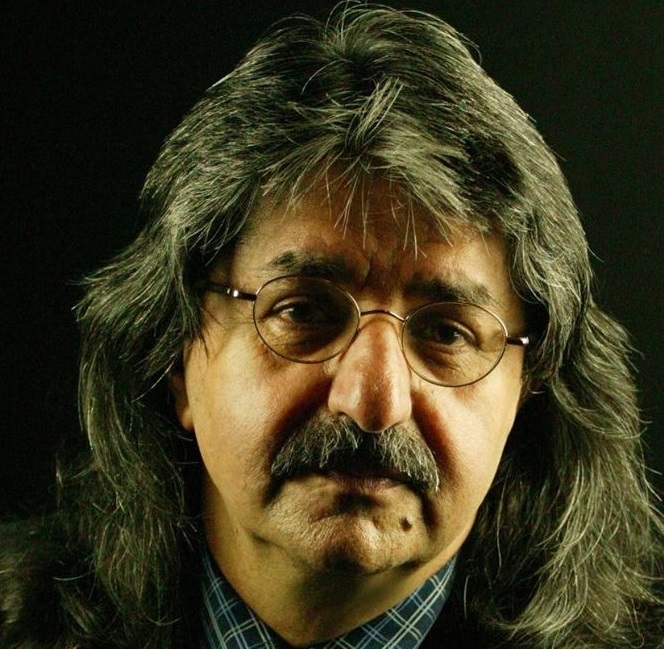
Kian Soltani
Writing about the situation of refugees, especially in Turkey, without mentioning the plight of Syrian refugees, who make up the vast majority of refugees living in Turkey, is impossible and, in my opinion, not accurate. This issue, even if it is referred to in the theme and subject of a website, media outlet, or specific conference, is not a way to escape from the Syrian desert. What has put the issue of refugees at the center of global compassion is the pain and suffering of Syrian refugees. The image of Alan Kurdi on the washed-up shores of Turkish tourist beaches suddenly reminded us of the “humanity” that some of them had ignored for years, walking carelessly on these same shores, ignoring the millions of displaced and homeless people.
Asylum is defined within the narrow and gloomy circle and on the coordinate axis called “rights”. With such a definition, rights become irrelevant to human nature, and this division is based on the axis of “right”. Right can also be feared on the axis of “natural” – “fundamental” which begins with human birth, such as the right to life, breathing, food and drink, etc. which should be obvious, but we know that in some places it is not so and “right” which is considered optional and supplementary, is caught in the webs of protocols and laws and seems to be crucified on the geography, borders, security and negotiations, and whatever the rulers and border guards approve of, they give it to the “rightful” ones. And this explanation, based on the human need for a peaceful and balanced life, is not doubled.
It is a universal truth that seeking refuge is a right, and there is no doubt about it. However, in the history of geography, after World War II, victorious countries sought to control the movement of those who were seeking a safer place during those troubled times, to protect their own lives and the lives of their families from potential dangers. In 1949, the Geneva Convention was drafted in the midst of the struggle between these statesmen and those who uphold human rights. This convention, which was adopted by the majority of member nations of the organization of the same name in 1951, was primarily aimed at resolving the legal issue of refugees who were coming from Eastern Europe and beyond the “Iron Curtain” to the “free world”. Host countries had to have legal justification in order to accept refugees fleeing from the world of communism, and by signing this convention, they were able to refrain from extraditing or returning refugees to their home countries. In other words, the Geneva Convention was a product
By suppressing this wave and starting a new wave of refugees from Asian countries, especially those fleeing from the legal barriers of colonial walls, most of these “fugitives from the post-colonial world” were included, and in this way, additional protocols were formulated. Of course, some countries did not want to sign these protocols, and some countries that had not signed the treaty, for various reasons, signed the additional protocols, which was not the only contradiction; there are still some countries in the world that have not signed this treaty and protocol.
Iran signed the Geneva Convention, which consists of four protocols, in 1957. Although they also signed the first and second protocols, they have not ratified them (they needed to be ratified by the parliament at that time) and have not even signed the third protocol. However, Iran has hosted refugees from Iraq, Kuwait, and Afghanistan at times.
In addition, Turkey signed the Geneva Convention in 1954 but did not sign the first and second protocols, and while it signed the third additional protocol, it has not ratified it. Therefore, Turkey is not obligated to accept citizens who are under threat of life or financial security in international conflicts or who are victims of racial discrimination and leave their country as refugees (first protocol), and it is also not obligated to protect refugees who are forced to leave their homes and country due to internal conflicts (civil war) (second protocol). Despite signing the third protocol, Turkey is not obligated to provide protection for refugees due to its lack of ratification. It should be noted that the third protocol allows for the Red Cross and similar relief forces to establish themselves in signatory countries with their flags.
Turkey, due to its proximity to Iran and being the main transit route for land transportation from Iran, is a place where Iranian refugees are likely to seek shelter more than other countries. Another reason for the high number of Iranian refugees crossing the Turkish border is the fact that a part of the shared border separates national minorities of Azeri and Kurdish, who are often targeted by the security forces of the Iranian regime. As of the end of 2014, there were 1.9 million registered refugees in Turkey (according to the United Nations), with the majority being from Syria and residing in 26 camps. At the beginning of 2015, it was announced that 14,250 of these refugees were Iranian, with 4,000 of them having arrived in 2014. According to statistics and claims from the United Nations High Commissioner for Refugees, all 10,250 Iranian refugees in Turkey as of January 2014 were under the protection of this office. However, since
Barry, for the issue of Iranian refugees in Turkey, which injects $320 million and 160 thousand dollars (2) into the Turkish economy through the EU, of which $28 million and 370 thousand dollars should be spent on non-Syrian refugees, including 60 thousand refugees, but this budget will neither be permanent nor will it solve the problem. It is also unrealistic to expect millions of Iranians who have been living in safe countries for two to three decades to use their resources and abilities to transfer refugees to other countries. The reality is that compared to the situation of Syrian and other refugees, the situation of Iranian refugees in Turkey is not a priority for international organizations, charities, etc., although this issue requires a serious solution.
On the other hand, the Islamic government’s communications with Iran – although it has a different angle in the midst of political disputes over the Syrian issue with the Islamic Republic – ultimately does not benefit the Iranian refugees remaining in Turkey. Although the presence of approximately 14,000 Iranian refugees in Turkey may not seem significant compared to the 2 million refugees in Turkey, it should be noted that the number of Iranian refugees in Turkey in 1993 was less than 1,400, and a decade later in 2002, it reached 1,800. However, as of December 31, 2014, this number has reached 14,250. Considering that Turkey is a transit country for Iranian refugees, the increase in this number of refugees in Turkey means an increase in the number of refugees who, due to lack of the possibility of being transferred to a safe permanent country, are at risk of being trapped in a limbo-like life and sinking in such conditions in Turkey. With
In the current situation, all of Europe is focused on providing financial assistance and support to Turkey in order to prevent the flow of migrants to Europe; however, it does not seem like a solution. The government of Davutoglu has accepted a deal with Europe to return refugees from Europe to Turkey in a business-like interaction, in exchange for the cancellation of visa requirements for 70 million Turkish citizens within the next three years. According to this law, which will be implemented from October 1st, Turkey will accept refugees who have gone to Europe when they are expelled from Europe. This is a victory for Turkey on the brink of elections, but refugees who have escaped from the hell of Turkey and have endured great hardships to reach Europe will easily be returned to Turkey. Such refugees will most likely lose the support of the High Commissioner for Refugees and there is a possibility of them being returned to their original country, where they fled from due to the threat to their lives. The approval of such a
What is seen on the horizon of refuge in 2015 and on the eve of 2016 is dark and murky, and in this regard, the situation of Iranian refugees in Turkey is perilous.
Resources
1- For further study, please refer to the website of the United Nations High Commissioner for Refugees.
The link leads to the official website of the United Nations High Commissioner for Refugees (UNHCR).
2- Same.
 Created By: Keyvan Soltani
 September 29, 2015
Tags
Bazrkhord Bazrkhord means "eating" or "having a meal" in English. Geneva Convention Kian Soltani Monthly magazine number 53 Monthly Peace Line Magazine Political refugee Refugee Turkey