


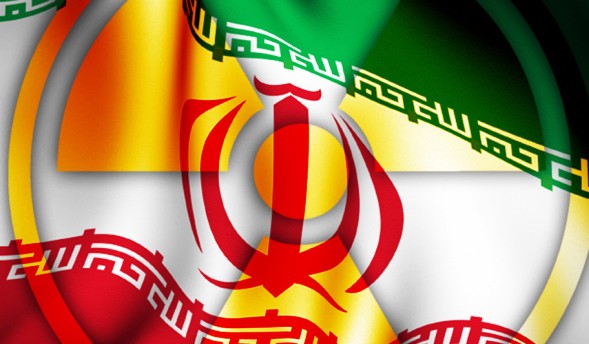
Nuclear file and the wrong path of the West / Hossein Torkashvand
This is not a valid Farsi text. Please provide a valid Farsi text for translation. 
Hossein Torkashvand
If we want to talk about the relationship between human rights and the Iranian nuclear issue, we must try to limit the topic and examine a specific aspect of this issue in order to reach the expected conclusion within that scope. Therefore, the writer in this article tries to provide an analysis of the interests of the Iranian people, the interests of Western countries, and the overlap between the two, as well as related issues, and come to conclusions.
The hypothesis considered in this writing is that moving towards human rights and promoting democracy in Iran ensures the interests of the Iranian people, and the more the ruling system in Iran is accountable, democratic, and defender of human rights, the more we will witness the growth of standards for a healthy, prosperous, and hopeful life.
It must be said that the approach of Western countries towards the nuclear issue of the Islamic Republic of Iran is viewed from the perspective of their national interests. Therefore, if Western countries are seeking to limit the Islamic Republic’s system in obtaining nuclear weapons, the main motivation and concern is that the leaders of these countries believe that a nuclear Islamic Republic is taking steps that endanger their interests and there is a possibility that the Islamic Republic, with the reliance on nuclear weapons, may cause events that will have irreparable consequences for Western countries (without a doubt, other motivations and concerns also play a role in the decision-making of Western governments, which the writer does not intend to address).
The main point of this article is that Western countries are taking steps that will ultimately not benefit their own national interests or the interests of the Iranian people. In fact, the problem is not just the “Islamic Republic of Iran” which is dangerous, but if the Islamic Republic system were a democratic, accountable and defender of rights, a significant portion of these countries’ concerns would be addressed through a more cost-effective means. Therefore, if Western countries were faced with a democratic system, they would be able to resolve issues between them more easily and at a lower cost. In a democratic system, compared to an authoritarian structure, government decisions are more based on the opinions of the people and experts in various fields. As a result, decision-making in different areas is done by considering the advantages and benefits of the subjects in those areas. As a specific example, if experts in Iran were able to freely express their opinions and the government benefited from their views, it is very likely that while in various sectors there is
But currently, the path taken by Western countries is to sing the anthem of openness. Western countries must accept that if instead of focusing solely on the nuclear issue, they strive for the Islamic Republic to move towards democracy and human rights, they will become closer to their own national interests and take steps towards securing the interests of the Iranian people.
Currently, the situation of democracy and human rights indicators in Iran is chaotic and the government is also trying to divert all domestic and foreign attention to the nuclear issue. So far, Western countries have also played exactly in the same field and are trying to defend their national interests by ignoring the issues of democracy and human rights and putting pressure on the Islamic Republic. Unaware that if the nuclear issue has turned into a crisis today, tomorrow the political system of Iran, which is not based on the will of the people, will create other crises. The Islamic Republic, relying on its special worldview, has fostered the spread of terrorism. The growth of Shia fundamentalism in the Middle East is also closely related to the desires of the current government in Iran (although it is not the only reason). As a result, we will see that Western countries will have to deal with the Islamic Republic on various issues every day.
If this trend continues, Western countries, led by the United States, will have no choice but to take a conservative approach towards democracy and human rights with Iran after resolving the nuclear dispute. This is because they are highly susceptible to being accused of pretext, as they have considered these issues to be secondary and unimportant compared to the nuclear issue. One of the main proponents of this view is Barack Obama, and contrary to popular belief that as a member of the Democratic Party he should be more sensitive towards human rights, he has shown in practice that he deliberately ignores these issues instead of taking them seriously.
Taking into consideration the mentioned points, there must be a fundamental confrontation with the Islamic Republic; meaning that we must accept the fact that a dictatorial political system not only does not have any attachment to the interests of its own people, but it also puts at risk the interests and security of countries that it considers as enemies in its ideology. The nuclear issue should be considered as a very important topic, but in comparison to more important issues such as democracy and human rights. Without a doubt, pursuing this perspective will also have long-term and fundamental benefits for the people of Iran.
 Created By: Hossein Torkashvand
 June 27, 2015
Tags
Hossein Torkashounz Monthly Peace Line Magazine