


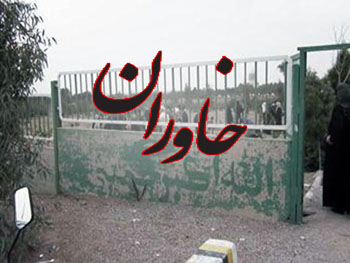
“Killing 67; Current in John Date/Morteza Hamounian”
During the consecutive nights for about fourteen years until the passing of my grandmother, she would wake up and cry for her lost daughter in the year 58. My grandmother passed away a few years ago, but what remains in our memories is the sorrow she carried as a survivor of a tragic accident that took the lives of her daughter and granddaughter fourteen years ago.
My grandmother had the opportunity to mourn for her lost daughter and granddaughter, and for almost four decades, she suffered in grief over the loss of her loved ones. She had the chance to mourn and cope with the blow and shock of the tragedy, but the pain and sorrow did not leave her for fourteen years.
Decades after the Holocaust, as a human tragedy, psychological studies are still being conducted on survivors of this tragedy. It seems as though the pain and suffering of the Holocaust has not left them. The children of victims, who were affected by the pain and suffering of the tragedy, did not even have the opportunity to mention the suffering they went through. This prohibition was not imposed by an external force, but rather to maintain their psychological balance within the family. The suffering that still does not leave the families of Holocaust victims after decades (1). Professor Avraham N. Burl, a psychologist from the Max Stern Academic College in Israel, regarding Holocaust survivors, says “Six decades (until 2010) after the end of World War II, we are still studying the impact of the Holocaust on its victims.” He continues, “They have the ability to overcome the suffering caused by the tragedy, and even this suffering and pain has led to their emotional and psychological growth.” And then he says, “
Psychological impacts caused by the loss and losing of loved ones, especially in a tragedy like the Holocaust, have never left the second and third generations after the tragedy. In fact, with the end of the main tragedy during the time of the great massacre, the suffering and pain of the families and survivors of that tragedy still come down upon them, and that suffering takes victims among them. The victims of the great disasters brought upon humans by the killing regimes are not only the victims themselves, but the psychological effects extend to generations and decades, and it seems that the tragedy does not let go of generations, and with every event, the unjust shedding of blood boils and erupts once again.
More than three decades have passed since the tragedy known as the 67 Massacre in Iran. The widespread executions of political and ideological prisoners in the summer of 1367, ordered by the then leader of the Islamic Republic, resulted in thousands of victims and left their families devastated. Reza Alijani, as one of the witnesses of these executions from inside the prisons of the Islamic Republic, years ago referred to this event as the “Iranian Holocaust” (at least the first time the writer heard it from him) and this interpretation has become an official view among the victims of this horrific tragedy.
Regarding the massacre of 67 years, words and cries have emerged from the midst of the lives and souls of Iranians. For years, both Iranian and non-Iranian individuals have written about this tragedy. They have recounted its victims – those whose names we know – and have narrated the events of their imprisonment and execution. For years, there have been painful accounts of frozen meat trucks and anonymous graves, which will forever leave a mark of shame on the Islamic Republic of Iran and humanity. Just recently, news of the identification and location of the burial site of these massacre victims was published by news agencies in Kazeroon, revealing to at least the people of Kazeroon where some of those who fell on those days are buried.
But what has been less talked about, are the survivors of that tragedy. The mothers, sisters, fathers, brothers, children, and spouses who witnessed those days. They have received the belongings of their loved ones. They have waited behind prison doors to hear whether their loved ones are alive or have been executed. They never knew where their loved ones were buried. They never had a formal time to mourn, like everyone else who loses a loved one. They couldn’t mourn in public places, attend funerals, or even speak about the pain and wounds they have endured for years. Simply put, for three decades, the tragedy that took thousands of lives through torture, force, and deception, continues to claim victims. This time, not among prisoners, but among those who are supposedly free and living their lives, but carry an unhealed wound in their hearts. A wound that never had the chance to be mourned and remains open. Sometimes, it scabs over, but with the slightest
There are three stages that can be identified for the manifestation of suffering in these families. These are the times when heartache and anguish can reach their peak for them.
Meetings have been cut off and families have no visitation. No one knows what is happening inside the prison. Jafar Bahkish, one of the prisoners, talks about the coming and going of families and the rumors that have spread. Families do not know exactly what is happening to their loved ones. Rumors can sometimes be more deadly than the tragedy itself. Tragedy has a certainty that must be dealt with, but rumor is staying in the limbo of fear and hope. Fear that may have stronger evidence and hope that is rooted in love for loved ones in captivity. Bahkish says, “My mother and father are returning home. My mother is calling families of prisoners in other wards on the phone. No one has had a visit. The suspension of visits continues. Time is passing quickly. It is mid-August. My mother and father are going back to Gohardasht. No one has the right to visit yet. Families are very worried. Rumors
Families remain unaware until Azar 1367. They suffer months of not knowing. Rumors spread, but they do not know what has happened to their loved ones.
From the fourth of Azar month in 1367, families are contacted. The second phase of the families’ suffering is approaching. The execution sacks are ready. Families who have been unaware of their loved ones for months, when they go to meet them, they only return with one news and one open sack.
They asked families to send the head of the family to pick up the bags. Farough Shalalvand, the nephew of one of the victims named Hamza Shalalvand, describes, “When my grandmother (naneh) after a long time of no contact and complete absence, visited Evin prison for a meeting, she asked him to send the head of the family. They didn’t know that the bravest person in our family was that loyal naneh who never left her son alone for a moment.” (5)
But Forough explains that her uncle went back and forth to get news about Hamzeh. Forough says, “On his way back home, he was not at ease. He was walking restlessly and sometimes crying. He told my uncle to quickly go to Evin Prison and find out why the man of the house had to go there. He was so firm that my uncle immediately left. I still remember when my uncle returned with a green bag in his hand, he put it on the ground and facing my aunt, with a trembling voice, said, “This is Hamzeh’s bag.” My aunt, who hadn’t eaten for days, stood up and said, “What happened? What happened to him? Hamzeh, my dear, did you see Khomeini? Didn’t you have any honor?” Her screams reached God. My uncle, who had been holding back his tears, said they won’t give us the body and they won’t tell us the grave
And after that, what this survivor describes, is nothing but a narration of suffering, misery, curse, and the painful remembrance of lost loved ones, each of whom comes out of the sack. He ends his narration with the words “No one else saw that sack. In the end, the mother, with a heart full of regret, left us and found peace from nightmares and sleepless nights.” (5)
This family is just one example of the thousands of families who lost their lives in the 1967 massacre, where the tragedy left them homeless and destroyed. The “Nanas” never forgot, and in the end, some of them today have tears in their eyes and blood on their faces, buried under the soil, and in the minds and conscience of Iran, they will remain eternal symbols of justice.
And as for the third suffering, or the suffering that continues until today, it ranges from the letters of surviving children to families. There is neither a grave nor the possibility of a formal complaint in Iran after years. Amnesty International considers the behavior of the Iranian government towards the families of the victims of the 1967 massacre as an example of organized torture and a crime against humanity. Not only was that massacre a crime against humanity and a genocide, but the behavior of the regime and its consequences are still examples of criminal titles in this organized crime and the endless crime of the Islamic Republic regime is completely evident. Amnesty International had previously declared the killings of the victims of 1967 as a crime in a detailed statement on “extrajudicial executions” and had referred to the victims of those years as “forcibly disappeared”. In its recent statement, Amnesty International also says about the families, “After three decades since the Iranian government forcibly disappeared and secretly killed thousands of political dissidents, and buried
This is not the only bitter account of families not knowing the truth about the massacre and burial place of their loved ones. The children of the victims of that massacre, the second generation after this Iranian holocaust, still suffer from what they experienced and their family history is recorded in their suffering. These children are now at least thirty years old, but every time they talk about it, tears fill their eyes and they speak of the pain of those years.
Three years after the execution of his father, he realizes that at the time of his arrest, he was only two years old and three years after his arrest, his father was executed. For three years, his family kept him hidden and after three years, his mother tells him the reason for the family’s grief. During those three years, this young child has been waiting every day for his father to be released and return. I know a girl who is one of the children of the 67 martyrs and is now on the verge of turning 40. Even today, when she talks about her father, who was serving his sentence at the time, her eyes turn red and her voice trembles, remembering the absence of her father and those days of waiting.
For these children, the East and the Easts are a symbolic and non-symbolic place of safety for those who lost their lives in that tragedy. They say, “The East? The East is like a sanctuary. I have never been able to express my feelings to the East. The East is not just parents and friends that you see there. The East is something that has given me and us an identity throughout the years of silence. The East is like a document, that when you go there, you believe you exist. The East is a mixture of our hope and identity. I cannot describe this feeling. The East is a place that has given me an identity and will always remain a document of my identity.” (7)
The discovery of this identity and document also has its own detailed story. A story that even reading it is heart-wrenching. Farrokh Tabakhs (mother of Lotfi) narrates that “… on the fortieth day, we went and placed flowers. Suddenly, my sister said, “Oh no, what is this hand doing here?” We turned back and looked, and saw that yes, a hand had emerged from the ground. The young men had leveled the ground. All the women screamed. One person had brought a camera with them to capture the situation as the mothers were screaming, and took a photo. I myself saw the bodies of some of the young men, a young man with an arrow in his forehead. Then quickly, a patrol car arrived. They set up the camera. Later, I heard that one day in the morning they came with a projector and took a photo. But the first time was for that day, when it reached the hands of those
More than three decades have passed since the Iranian Holocaust, known as the 67 Massacre. More than three decades have passed since the crime that has not been fully resolved. A crime in which the victims are not only those who lie buried in unknown places, but also those who live in Iran and outside of Iran. Families who still mourn the tragedy of 67 and wake up every morning with the memory of their loved ones, looking at their faces in pictures and frames, and go to sleep at night. Mothers who still hear the voices of their children in their ears. Children who have now become some of them fathers and mothers themselves, but still wait for the door to open and for their parents to come in. Sisters and brothers whose childhood games are not a source of joy, but a reminder of a heartbreaking grief. And spouses who still live with the memories of their love buried in the ground. The 67 Massacre, the killings and tortures, does not belong to the past
Notes:
1 – “The Wounded Generation of Holocaust Survivors, Elic Kiersta, The Guardian, March 15, 2014.”
2 – The psychological traumas of the Holocaust still haunt its victims, American Psychological Association (APA), September 20, 2010.
3- Identification and introduction of the mass grave of executed individuals in Kazerun, Herana, July 16, 2019.
“Summer Massacre of 1967” from two perspectives, and some questions, by Jafar Behkish, Radio Farda, July 20, 2019.
In 1967 massacre, they gave the bodies but the funerals… Forough Shalalvand, Iran’s News, October 2018.
6 – International Amnesty’s objection to “merciless” behavior towards the families of the victims of the 1967 massacre, Deutsche Welle Persian, June 26, 2019.
7 – Identity Without Borders, Interview with the Child of One of the Victims of the 67 Massacre, Interviewer: Shokofeh Montazeri, Deutsche Welle Persian, August 24, 2007.
8 – Simple Text of Unfinished Story Report, Justice for Iran, 22 September 2015
 Created By: Morteza Hamounian
 July 23, 2019
Tags