


Shah, Human Rights, and the February 1979 Revolution by Morteza Kazemian.
In explaining the effective political changes during the rise of the social movement and the occurrence and victory of the 1957 revolution, one cannot ignore the events that took place in the mid-1950s inside Iran and in the international arena, particularly in the issue of “human rights”. The violent behavior of the authoritarian Shah regime towards its opponents led to protests by international human rights organizations and their expansion. These protests were not without impact from the political and propaganda activities of students and opposition groups outside the country; the role of the Student Confederation and Islamic associations in this regard is noteworthy.
The collection of these efforts and other forms of information and advertising against the monarchy reached a point where in late 1353, Amnesty International accused Tehran of violating human rights principles and standards against opponents and political prisoners. The International Commission of Jurists in Geneva also criticized the violation of civil rights and use of torture in Iran. Additionally, the United Nations Human Rights Committee, in a letter to the Shah, demanded the cessation of these actions and “the improvement of the deplorable human rights situation in Iran”. The visit of William J. Butler, the head of the Executive Committee of the International Commission of Jurists, to Iran in the fall of 1354 and his meetings with the Shah, and ultimately his report titled “Human Rights and the Legal System in Iran” are among the important cases.
Western media were also influenced by the efforts of opposition political forces outside the country (such as Iranian student associations in Europe and America and the World Federation of Students) and the information and news transmitted to them, and reflected the behaviors of the monarchy towards its political opponents.
The Shah, in explaining this situation, writes in his memoirs: “From late 1976 onwards, there was a significant foreign-backed attack on the Iranian regime. The International Red Cross, the International Association of Lawyers, and several other organizations requested to come to Iran for investigation.” He adds: “The global media caused a great uproar about their reports and criticisms, but they forgot about our decisions and reforms and put them in the backseat.”
In response to the request of Amnesty International to visit prisons in Iran, the Shah stated in July 1976 that if we allow such a thing, it will only increase their expectations. He believed that with his bad experience of issuing a permit for Eric Pace, a New York Times reporter, to visit prisons (the article by the said reporter revealed some unpleasant realities in the regime’s prisons), he should prevent the disclosure of the situation of Iran’s prisons in the international arena.
However, gradually and under the influence of internal and international pressures, measures were taken to reduce external and internal political and social pressures. These included in the winter of 1355 and the first six months of 1356, the government allowed three reputable international organizations (International Red Cross, Amnesty International, and International Commission of Jurists) to travel to Iran to investigate the human rights situation in the country and meet with political prisoners. In the spring of 1356, the International Red Cross Commission met and held discussions with some political prisoners in Iran.
Abbas Samakar’s report (the writer and filmmaker who was arrested in 1352 along with Khusro Golshakhi and Karamat Daneshian) of the mentioned meeting is noteworthy: “In our meeting with representatives of the Red Cross, we discussed in detail the history of torture, massacres, and inhumane behavior of SAVAK and the police. They informed us that for over two months, they have been going from prison to prison, questioning the conditions and observance of human rights of different prisoners. They also mentioned that the prison police and SAVAK have been hiding many prisoners from their sight…”
Since the end of 1355, pressures, turmoil, and police-security surveillance on political opponents have significantly decreased, along with restrictions and harassment of political prisoners. In the month of Bahman of that year, the regime pardoned around 66 prisoners and in the month of Esfand, allowed the International Red Cross to visit 20 prisons.
Carter and human rights
It should be noted that the activity and movement of international human rights institutions coincided with the US presidential election and the nomination of Jimmy Carter by the Democrats. Carter emphasized the defense of human rights around the world during the preliminary stages of the 1976 presidential election (1355) and in the final stage of the election, he listed Iran among the countries that America should take more effective steps to preserve the political and social freedoms of its people.
Shah, who saw Carter’s programs and slogans advocating for the realization of human rights as a threat to his own interests and a conspiracy against his regime, was not pleased with his victory in the US presidential election. In the summer of 1979, he had said: “If Carter becomes president, because he will probably follow a policy similar to Kennedy’s, we prefer Gerald Ford to be elected as US president again.”
Carter, aware of the people’s frustration with the interventionist policies of Johnson, Nixon, and Kissinger, tried to follow through on his election promises of “no more Vietnam” and “no more Watergate”.
Three months after the start of his presidency, Cyrus Vance sends the Minister of Foreign Affairs to Tehran to inform the Shah of Washington’s views on human rights policies and restrictions on sending weapons to Iran. The US Secretary of State reports: “I emphasized that human rights are a fundamental element of our foreign policy and the President has made it a national priority. I reminded him that promoting human rights around the world is a focus for us and added that Iran’s recent actions, such as improving treatment of prisoners and the Shah’s agreement to allow international human rights organizations to visit and assess the situation in Iran, are encouraging to us.”
The President of the United States also writes in his memoirs, referring to “acts of violence and suppression of any opposition” by the “Shah and Savak”: “It has been reported that there are 2500 political prisoners in Iran (the Shah said, this number is less than 2500). The Shah believes that immediate suppression of opponents is the most appropriate response to the opposition. He ridicules the criticism of leaders of Western countries (including myself) for using such tactics [criticism of human rights violations].”
Carter also writes about the discussions he had with the Shah during his trip to the United States: “I told him, I am aware of the way some of the issues you are dealing with. You have heard my statements about human rights. Many people in your country claim that these rights have never been respected and upheld by the government in Iran… The new middle class and students in Iran and abroad are also seeking more political rights. In the midst of this, Iran’s reputation and credibility in the world has been damaged due to the complaints and demands of these groups. Is there any other way to solve this problem besides getting closer and talking to opposing groups and reducing some of the harsh police actions? The Shah listened carefully to my words and after a few moments of silence, he said with a hint of sadness, “No, I can’t do anything… I have to enforce the laws of the country, which emphasize the fight against communism… These groups are a small minority and do not have
At that time, the Shah said in an interview in response to the question “Has human rights also been discussed in bilateral negotiations?” “Although there have been no official negotiations on this matter, I have mentioned the actions taken to improve the situation of those who have been imprisoned for various reasons.”
1356; Opening of the political space
The Shah, due to external pressures, showed a positive reaction; he did not want to jeopardize his “special relationship” with Washington and access to American weapons; and he also did not want to lose the image of being a reformer and modernizer eager to bring the benefits of Western civilization to Iran; an image that had been presented at great cost. On the other hand, the Shah – and by extension, his regime – believed that his reforms had gained such acceptance and popularity that he could continue without fear, despite the level of suffocation, oppression, surveillance, and censorship.
This was the year 1356, the year of widespread freedom for political prisoners who were released from prison on various occasions; more than 560 prisoners were freed in this year. In addition, international human rights organizations and institutions (such as Amnesty International, the International Commission of Jurists, and the International Red Cross) were able to fully visit prisons. Furthermore, the treatment of political suspects and detainees was different and the presence of a lawyer in court was made possible; judicial sentences were also greatly reduced, to the extent of issuing fines.
In August 1977, the Shah explicitly told his close associates in the regime that the attention of the people must be drawn to the fact that he personally initiated the creation of a political open space, and this was not a result of pressures from Carter or Amnesty International; because the Shah himself had come to the conclusion that the people of Iran had now reached a sufficient level of political maturity.
The Shah, at the head of the regime, accepted the granting of freedoms, at least to the extent promised. In multiple statements in the second half of 1956, he emphasizes that “we have no talk about freedom at all”; he also says, “A true political democracy is being established in Iran.” In an interview with the editor-in-chief of Newsweek in the fall of 1956, the Shah also responds to his question about the situation of human rights and political opponents in Iran: “We have made changes in our laws so that people have more opportunities to defend themselves and assert their rights, and in prisons, better treatment is given to prisoners…”
In addition to the Shah himself, some figures of the regime also focused on promoting open and free space, and after a while, political development also became a concern for the government.
Opening up the political space, breathing life into the movement.
However, the opening of the political space meant the activation of critical and opposing forces; while the process of reducing political pressures and suppression, although on one hand it led to a decrease in international and domestic public opinion pressure, on the other hand, it naturally directed the social movement towards changing the political system, as it strongly questioned and criticized the current situation.
In June 1977, a group of the most prominent and famous researchers, writers, and poets of the country, in an open letter to Hoveyda, criticized the “strict censorship regulations” and “undemocratic restrictions and pressures”. Fereydoun Adamiyat, Dariush Ashoori, Mahmoud Etemadzadeh (Baha’ Azin), Bahram Beyzaie, Bagher Parham, Ali Asghar Haj Seyyed Javadi, Simin Daneshvar, Gholamhossein Saadi, Mohammad Ali Spanlou, Siavash Kasraei, Houshang Golshiri, Asadollah Mobasheri, Ne’mat Mirzazadeh, and Manouchehr Hazarkhani were among the signatories of this letter.
Open letter from 55 judges to the head of the Supreme Court in September 1356, requesting the resistance of the judicial power against the “interference” of the executive power and the “preservation of the individual and collective rights of the Iranian nation” is noteworthy. The poetry nights held at the Goethe Institute (Iranian-German Cultural Society) from 18 to 27 Mehr 1356, which were met with widespread reception, provided a safe and suitable space for expressing the strongest protests against the state of freedom of speech and belief in Iran.
The formation and establishment of the Iranian Committee for Defense of Freedom and Human Rights on December 7, 1977, and the publication of their open letters to the Secretary-General of the United Nations and other international organizations, from then on, is significant in the midst of the political changes of that period; especially since some of the most prominent political activists (including Ayatollah Seyyed Abolfazl Zanjani, Engineer Mehdi Bazargan, Dr. Yadollah Sahabi, Dr. Abdul Karim Lahiji, Dr. Asadollah Mobasheri, Dr. Naser Minachi, Dr. Karim Sanjabi, Dr. Kazem Sami, Dr. Habibollah Peyman, Dr. Mohammad Maleki, and Engineer Hashem Sabaghian) were actively involved in it.
Ayatollah Khomeini also stated in the summer of 56 about the political atmosphere and the suitable opportunity that had been provided for the opposition: “Today, a window of opportunity has opened in Iran; consider this opportunity as a blessing. If this window and opportunity had not been created, these circumstances would not have arisen… Now, writers of political parties are protesting, objecting, writing letters and signing them; you also write, have a few of the scholars sign. Listen to the issues, voice your concerns. Today is the day to speak up. If you speak up, things will move forward… Bring the Shah’s crimes to light… Write down the issues… Like several others we have seen who raised concerns, spoke out and signed, but no one did anything.”
Despite the efforts of the Shah to present a different image of his regime, in mid-1356, Amnesty International criticizes the harsh treatment, torture, and executions in Iran in a report. Although the reports of the organization are accompanied by severe criticism and dissatisfaction of the Shah and the Tehran regime, the situation becomes even more unpleasant when, during the same period, the Nobel Peace Prize is awarded to Amnesty International. The Iranian ambassador in England states that “receiving such news for the authorities in Tehran is very terrifying.”
It seems that the Shah’s policy of opening up the political space, although influenced by global public opinion and efforts of opposition both inside and outside the country, was aimed at hitting two birds with one stone and pleasing Washington as well. The reduction of suppression and suffocation, albeit for a few months, provided the conditions and grounds for writing open letters and gatherings of intellectuals and opposition, as well as the activities of opposing parties and groups, and ultimately, the strengthening of opposition and the emergence of a protest movement. This movement gained widespread and deep-rooted dimensions to the point where it could no longer be contained.
Perhaps William Butler – from the International Commission of Jurists – was right in describing the Shah’s efforts to implement reforms with the simple phrase “too little, too late.”
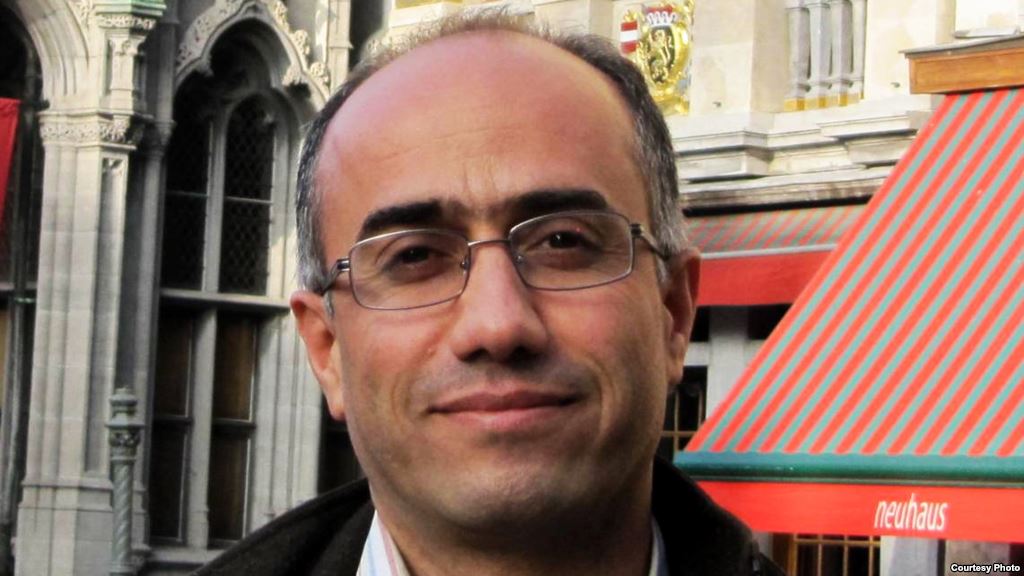 Created By: Morteza Kazemian
 February 24, 2015
Tags
Magazine number 46 Monthly Peace Line Magazine Morteza Kazemian The Revolution of Bahman 57