


All your political actions are in service of authoritarian conservatism / Reza Najafi
Peace Line – It is astonishing that an activity in society is considered forbidden not because of the nature of the activity itself, but because of the gender of the individual. For example, it is not logical for cycling to be considered a shameful activity, but for women it is deemed shameful. It is difficult to justify such a prohibition with reason, as sound logic dictates that an activity is either shameful or not, regardless of whether it is performed by a man or a woman. However, the truth is that not only in Iran, but in our world, we have witnessed a history of creating discrimination and inequality for women in various social spheres. Listing these inequalities in the history of Iran or the world is unnecessary and unnecessary. Even mentioning the fact that the overall trend in the world is towards eliminating these discriminations and that women today can benefit from equal opportunities and facilities as men, is a repetition of the obvious. What may be worth paying attention to is that in the past three decades, unlike most countries
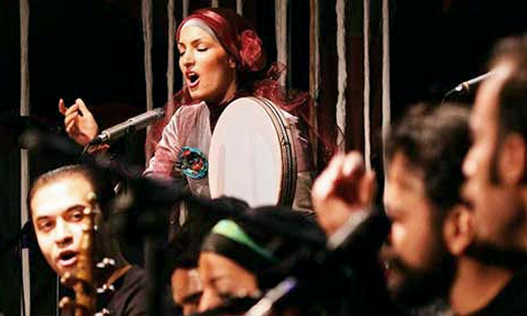
The truth is that creating barriers and obstacles for women’s participation in cultural, artistic, and even social fields in Iran is not a new phenomenon limited to the 35-year rule of the Islamic government. For example, the ban on women singing or playing music has its roots in some traditional Shia jurisprudence texts, and throughout our country’s history, there have been numerous restrictions on women’s activities. However, the point is that with the passage of time and our entry into the modern era, while we see the elimination of discrimination and increased participation of women in all social and cultural fields in other countries, in Iran, instead of removing or easing the historical patriarchal strictness, the limited freedoms that women had gained since the Constitutional Revolution have been taken back by force, and certain parts of the government have tried to move against the natural course of history in today’s modern world.
Some of these violations of rights in Iran are very fundamental and include lack of freedom in clothing, presence in certain places such as stadiums, and choice of certain professions. These restrictions are universal and are more visible and criticized. However, some of the restrictions and resulting damages have been less discussed. For example, some arts or activities have been practically banned for women since the beginning of the new regime, such as dancing, singing, judging, and even playing musical instruments. These bans not only led to the masculinization of certain areas (which requires a critical analysis of the damage to society itself), but also essentially destroyed talents that, if allowed to flourish, could have created great benefits for society. The absence of these untapped talents is sometimes not noticed, but if we look at the talents that flourished in migration or the talents that presented their art before the revolution, we may realize the extent of our losses. Undoubtedly, if it weren’t for these current prohibitions and restrictions, Iranian
The fist sample of statistical analysis of the growth of female writers in the past two decades shows that while before the revolution, female writers were few in number, the statistics show that in the past two decades, the number of female writers has increased by ten and a half times (compared to only one and a half times growth in male writers). By looking at the results of literary awards and judging, it can be seen that this growth has not only been quantitative, but also qualitative. It is also worth mentioning the remarkable growth of female students compared to male students, with their numbers now exceeding their male counterparts. These statistics show that despite greater limitations, there is a desire for greater participation among Iranian women in society, and perhaps if suitable legal platforms are provided and instead of restrictions, women are supported and encouraged, we will witness a great transformation in society.
It is worth mentioning that these restrictions and limitations are not only an injustice to hundreds and thousands of potential artists and suppressed women, but also an injustice to the entire Iranian society. The exclusion of half of the society in the areas we mentioned or forgot about is not only not beneficial to the other half, but it also leads to the impoverishment and coarsening of the entire society. An example of this is the ban on women’s presence in sports stadiums, which on the surface is done to protect their dignity, but in reality we see that the absence of women in these places has led to the spread of immoral and unethical behaviors.
It should be noted that these restrictions and limitations are not solely the result of misguided laws in the past thirty-five years, but are sometimes rooted in the cultural poverty, patriarchy, and traditionalism of Iranian society. Who doesn’t know that even before the revolution, most families looked down upon acting, dancing, or singing by women with disdain and disgust. But this criticism also extends to the lawmakers who, instead of defending the rights of women who had talent or interest in these fields, gave legal legitimacy to prejudices, bad taste, and misunderstandings.
Undoubtedly, this issue has been opened by Baba and the need for dozens of analyses and researches in this regard is felt, including the reasons for the efforts to eliminate half of the society in various fields, which arise from a totalitarian thought to enslave the whole society through double oppression of women. This short note is only an invitation to thinkers to explore the traditional roots of misogyny in the history of our country, as well as to criticize the efforts of totalitarians in the political arena to legalize this patriarchal tradition.
Reza Najafi
Author and translator
 Created By: Reza Najafi
 November 24, 2014
Tags
Gender discrimination 2 Gender equality Peace Agreement Number 43 Peace Agreement of Azar Month Peace Line Magazine Issue 43 Reza Najafi Women