


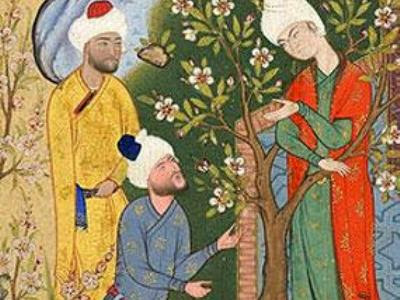
Homosexuality has a strong presence in Eastern literature / Iman Nikinezhad
When Mahmoud Ahmadinejad denied the existence of homosexuality in Iran, similar to the West, during his Q&A at Columbia University, no one in the audience was there to ask him if what Mohammad Hashem Mosavai Hosseini has narrated in his book about Iranian society is true.
The society that is presented to the reader in this history book, from the reign of Shah Hussein Safavi to the fall of the Zand dynasty, is a society where homosexuality is prevalent and the king himself is known to have such tendencies. However, if we want to examine the social history of Iran and find traces of Iranians’ encounters with this issue, we can search and investigate in the history and culture of Iran. We can go back to the fifth century AH and take a look at the book “Qabusnameh” written by Qabus ibn Washmgir.
Or why go the long way, if you open the fifth and sixth chapters of the spiritual Masnavi of Jalal al-Din Muhammad Balkhi, we will see the story of the love of Mahmud Ghaznavi for Ayaz. A love that does not have a Platonic origin. Even if it does, it is, in essence, the same-sex love that justifies the love poems of Hafez and other ancient poets. In fact, Platonic love is same-sex love!
They believe that those who compare their love for a same-sex lover to their love for God while interpreting the romantic verses of Hafez Shirazi’s Divan, Hafez’s effort to open the shirt and pants (a type of white men’s pants) of the simple (immature and without a beard) witness (male lover) in a unique way, which is considered a metaphor for reaching the divine meeting, are no different from Ahmadinejad!
Love, youth, and ruby wine/ Gathering of friends and companions and endless drinking.
The cupbearer is sweet-mouthed and the musician speaks sweetly / Good deeds and good company.
A glimpse of the kindness and purity of the envy of life / Beauty in the beauty and goodness of the full moon of our jealousy.
“Sometimes the heart is like a palace in paradise / Its garden is like a shrine of peace”
ل
A row of kind and diligent people with manners/ Friends of secret holders and perfect companions.
The bitter, sharp, delicious and light-colored wine/ Transferred from the ruby and transferred from the raw sapphire.
“من به تازگی به کشور جدیدی مهاجرت کردهام”
“I have recently immigrated to a new country.”
“Knowledge is like a sweet speech giver, and generosity is like a world illuminator, just like the wise Hafez.”
Whoever does not desire this joy, happiness will be ruined for him / And whoever does not seek this gathering, life will be forbidden for him.

Anyone who has any doubt about the purpose and meaning of the above poems must be invited to engage in a discussion. The sweet poet explains in sweet Persian language what desires he has in mind. The witnesses, rivals, and so on (competitors) all refer to the absent masculine pronoun.
The greatest service that Dr. Cyrus Shamisa did for Persian literature was the publication of his great research entitled “Witnessing the Game in Persian Literature”, which was published by Ferdows Publications in 1381. Although the book was confiscated, this censorship and book burning could not hide anything from historical reality.
“Watch the game in Persian literature, the result of over 30 years of research in the ancient treasure of Persian literature, presents a true image of the life and era of male and sometimes female homosexuality in the mirror of Persian literature in front of the reader.”
The author, by examining and delving into the prominent works of ancient literature, reveals a corner of the veil of social taboos and shows that in ancient Iran, love between men or between women was not punishable like it is today.
Although in an Islamic society, love between men is forbidden, in many parts of the history of this country, during the Safavid and Zand dynasties when they were shaping the identity of the Iranian nation, there was room for such bold expressions to reveal their sexual identity. This issue no longer remained a secret and even in some parts of Isfahan, there were coffee shops that resembled modern-day gay and lesbian clubs. In such an environment, literature inevitably praised and glorified this pure love. If we put Rumi aside, Manuchehr Damghani and other court poets depicted their relationships with their same-sex masters in exchange for receiving great love.
In the book “Witnessing the Game in Persian Literature”, we read that in the history of Iran, declaring a same-sex orientation did not result in someone being expelled from society or executed. Poems are written about this matter and considering the image that remains for today, throughout the poetry of this period in Iranian history, no part of the world is seen in literature.
Many Western researchers believe that the level of discussion about homosexuality in Iranian literature has never existed in Western literature; from the oldest Persian poets to the modern era, a significant portion of this treasure has had such an atmosphere.
 Created By: Iman Nikinezhad
 October 24, 2014
Tags
Monthly Magazine Number 42