


Labor unions, a global experience / Farid Rahnama
Labor unions and the gathering of workers for their trade interests have a long historical background. From the time of the Spartacus uprising (109-71 BC) to the beginning of industrialization and the emergence of new concepts of labor, labor unions and workers’ rights and humanity have come a long way. The characteristic of striving to be together as humans to achieve something superior and higher for a group or community has also gradually evolved among workers throughout history and has emerged in its present form, bringing many blessings. England was a country that established itself in a different era, which had industrialization in its background earlier than others. It was in the mid-18th century that conditions were ripe for the industrial revolution; an era that began in the 1760s and lasted until the 1840s. The years of the industrial revolution in England saw the creation of the steam engine and steam generators by creative humans, marking a turning point for this uprising; a turning point that was reached in the late
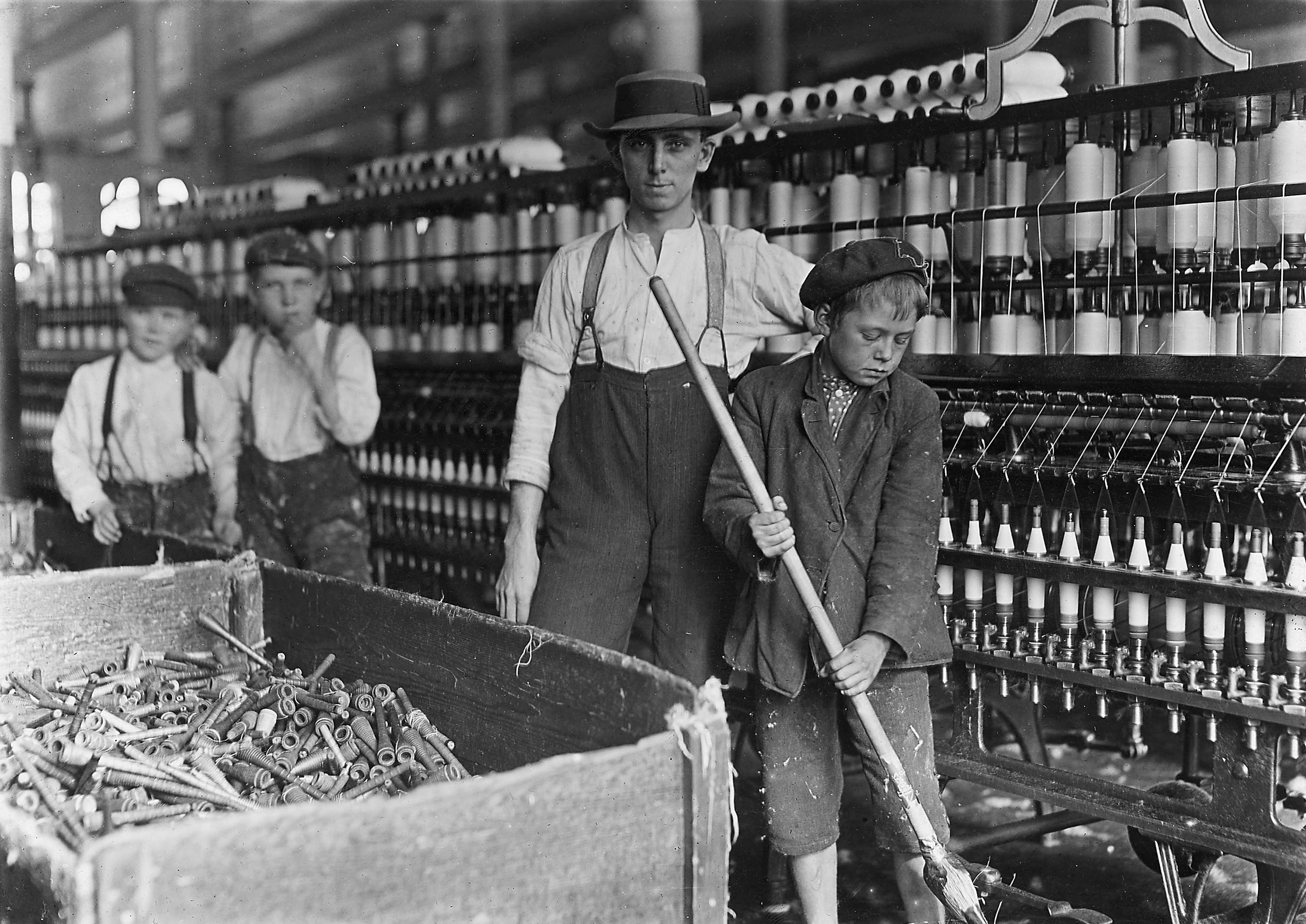
With the rise of industrialization, traditional industries such as handicrafts and apprenticeships were put under pressure and with the emergence of new industries, new issues arose such as working hours and wages for workers or unfavorable working conditions with 15 to 18 hours of work per day; a situation in which women and children were also employed, for example in the textile industry.
This was the same situation that led to the first public protests by workers. The first recorded instance of worker rebellion was in the 16th century, when a worker named “Ludd” broke a weaving machine. In the 18th century, in the years 1765, 1771, 1783, 1789, 1791, and 1794, this story continued and workers would break industrial machines in the style of “Ludd” as a form of protest. They even destroyed coal mines and set fire to the coal.
In 1792, the first union of weavers was formed in Lancashire. A labor union is an organization created by and for workers, aiming to protect their rights, from wages to benefits, and to improve labor laws and increase the power of workers.
But the first union, initially only played the role of mutual fund and gradually accepted the leadership of strikes. Their main duty as skilled workers was essentially to not lose their jobs. Because employment, work, and income were a matter of life and death.
Those who were not skilled workers continued to destroy machines. In 1796, a severe law was passed against these vandals. The late 18th and 19th centuries saw ongoing wars between England and France, leading to a worsening of the situation for workers and an increase in strikes and protests. This led to the British Parliament passing stricter laws in 1799, 1800, 1811, and 1812, with the latest law sentencing supporters of machine destruction to death.
But the workers resisted against unfair and violating laws. After the 1815 war between England and France, workers’ activities expanded and these activities, along with the efforts of democratic elements, led to a great victory for English workers in 1842; the British Parliament abolished all anti-worker laws.
But English workers did not sit idly by. In 1825, during the first economic crisis, workers expanded the scope of strikes. In the midst of this crisis and strikes, the British Parliament passed a new law to prevent the spread of strikes and also support strikebreakers. By the late 1830s, the number of union members reached 600,000 and all workers, from skilled to unskilled, gained access to fundamental unions.

In the 19th century, in the 1830s, a broad movement for reform and addressing issues was initiated by workers in England, which aimed to address Parliament. In 1839, a petition was submitted to Parliament with the signatures of one million people. However, Parliament did not take any action and the police arrested more than 400 of the signatories.
In the 1840s, workers became more active and came to the field, striving for strikes and achieving workers’ rights.
The lesson of these activities was the importance of collective action for labor activists to advocate for their rights and the necessity of solidarity and dialogue among them. This unionization was aimed at advancing the power of production and work.
We talked about the war between England and France in the late 18th and 19th century. France also has experience of major strikes in its labor unions.
In 1815, there were only 15 steam engines in France. Then in 1820, the number of factories with steam engines reached 65, and in 1830 it reached 125. The construction of the first railway also began in 1823. The growth rate, especially in the use of machines, was slower in France compared to England, but by 1848 the number of machine factories reached 5000.
And then the issue of long working hours and employing children arose; the working hours were 12 to 17 hours and the income was not enough to cover living expenses; in 1840, it was reported that 12% of the workers were children who had to work 15 to 16 hours a day like adults.
In 1806, mutual aid organizations (workers’ cooperatives) were formed in France and developed in most French cities in the early years of the century. In the early 19th century, strikes and protests by workers against machines and production institutions also took place in France, similar to those in England, but with no positive results.
In the past 50 years, mutual aid societies were formed (worker assistance funds created by workers and providing them with worker loans). These societies were the only worker communities at that time that could bring workers closer together to some extent.
In 1862, the French Workers’ Delegation visited the London Industrial Exhibition. During these visits, the French workers became familiar with labor unions and decided to establish similar unions in France. The efforts of the French workers through strikes and gradual organization led to some changes in the anti-labor laws of the Third Napoleon, known as “Loi Ollivier”. This was a kind of victory, although it came late, as other laws were passed that imposed fines of up to 3000 francs on “agitators” of strikes. However, the change in the Loi Ollivier paved the way for unity and solidarity among French workers, and finally in 1868, they were able to establish free trade unions.
The other traditional European power is Germany; with a historical background and a determining role in the past century. Germans were later than the English and French in moving towards industrialization.

Since 1820, with the implementation of steam engines, there has been an unprecedented increase in the number of factories and workers in a short period of time. With the growth of industry and steam engines, the number of German workers increased from 300,000 in 1832 to 700,000 in 1848, but Germany was still less developed than England and France.
The issue of low wages was raised. The daily working hours were between 12-16 hours and the working conditions, especially for women and children, were unbearable. The first labor strikes in the cities of Aachen and Essen were in 1828 and 1838, and the first labor movement in 1842 was led by Silesian weavers. The rebellion resulted in clashes with the police and the death of more than 20 people. However, the struggle continued. The protests of 1848-1849 were a continuation of them; in fact, the German labor union was formed in the early years of the 19th century and began to emerge.
The first workers’ organizations in Germany were joint cooperatives called “strike funds”. The money collected in these funds was used to support striking workers. The growth of these funds led to an increase in awareness among workers and brought them closer to success. However, labor activists in Germany faced harsh police crackdowns, with the most extreme violence being used against them. Many German labor activists were forced to leave the country and live abroad under this pressure. The fleeing workers did not remain unemployed and formed organizations outside of the country.
After 1849, labor unions became illegal and over the course of ten years, the number of steam engines increased sixfold and production volume doubled. However, the working conditions for German workers remained terrible, with a daily work shift of 16-13 hours. The workers fought for a daily work shift of 12-11 hours.
German workers stood up and formed their secret unions. In the 1860s, large strikes took place in the industrial cities of Berlin, Hamburg, and Leipzig, leading to the expansion of worker organizations and unions in Germany.
The sixth decade of the 19th century was a time of expansion for syndicalist and labor activities throughout Germany; Germany had become one of the most important centers of the labor movement in Europe.
Labor organizations and labor unions at this time were pursuing the preservation and protection of workers’ interests and the enforcement of their rights through various approaches and with different perspectives. Each group, with its own set of resources, pursued its own practical path towards achieving this common goal of the trade union, which was directly related to the lives of workers. However, the rule of Adolf Hitler and the Nazi party, “National Socialism” in Germany, and the subsequent severe suppression of labor leaders and parties led to the disintegration of unions and the German labor movement during World War II.
There is a specific path in these three experiences: the struggle for workers’ rights only through perseverance, resistance, unity, and solidarity with the labor movement and action. The fight against child and women labor and working 15, 16, 17, and 18 hours a day. The workers’ struggle is a struggle for life. A fight for their human rights. To make life more humane and perhaps it can be said that there is no difference between workers’ rights and human rights in this regard. Of course, here human rights are not in the form of the 30 articles mentioned in the Universal Declaration, but as a human ideal.
But in the daily calendar, it is also considered as Labor Day. It’s not a bad idea to also take a trip to the United States and follow the struggles of workers there.
The situation of American workers, like workers in other parts of the world, was difficult and exhausting. Until the mid-19th century, slavery was still practiced in agriculture and against black people, and the majority of agricultural workers were black slaves.
The first labor union was established in the city of Philadelphia in the late 18th century. Then, in the early 19th century, unions were formed in Baltimore, New York, and other cities in America. By 1930, the number of unions had reached 150 and their membership had grown to 300,000.
The first successful strike by unions took place in 1835 in the city of Philadelphia with the goal of reducing working hours and increasing wages. With the victory of the strike, the daily working hours were reduced to 10 hours.
The results of the victory of Philadelphia workers also spread to other areas and ultimately, in the 4th decade of the 19th century, daily working hours throughout America decreased to 11 and a half hours (on average).
United employers would dismiss union members from their jobs and prevent them from being employed. They would also attack unions with armed government forces and take no action against it.
American workers, along with a portion of the capitalists in this country, rose up and stood against slavery and eventually the fight against slavery turned into a civil war in America between the northern and southern regions, which lasted from 1861 to 1865.
In September 1862, the Emancipation Proclamation was passed and put into effect, and the Civil War ended in 1865 with the victory of the North, who were advocates for the abolition of slavery. However, racial discrimination continued to exist culturally against black people.
The companionship of workers in the fight against slavery demonstrates another aspect of companionship and solidarity in human rights and workers’ rights.
During and after the Civil War, the number of unions increased and by 1865, it reached 300, encompassing hundreds of thousands of workers from various industries. In the late 19th century, with the development of industries, agriculture, and transportation in America, unions experienced even more growth.
In 1886, more than 300,000 American workers (especially in Chicago) went on strike on the first day of May, demanding higher wages, improved working conditions, reduced working hours, and the freedom to form unions. In response to the striking workers, force was used and many were killed and imprisoned; however, ultimately most of these workers achieved their goal of an 8-hour work day.
This victorious strike led to the expansion and progress of the labor movement in America and other parts of the world. In honor of this historic day, the first of May (11th of Ordibehesht) is celebrated as International Workers’ Day every year in 1889.
Sources:
ان
The portal of the Institute for Humanities and Cultural Studies under the discussion of human rights and workers’ rights.
– The website of the Publications Committee of the Pak Foundation – The Research and Educational Foundation of Workers.
Special edition for International Workers’ Day, website of the Human Rights Reporters Committee.
Website of the History of Labor Unions
 Created By: Fereydoun Rahnama
 September 26, 2014
Tags
Monthly magazine number 41