


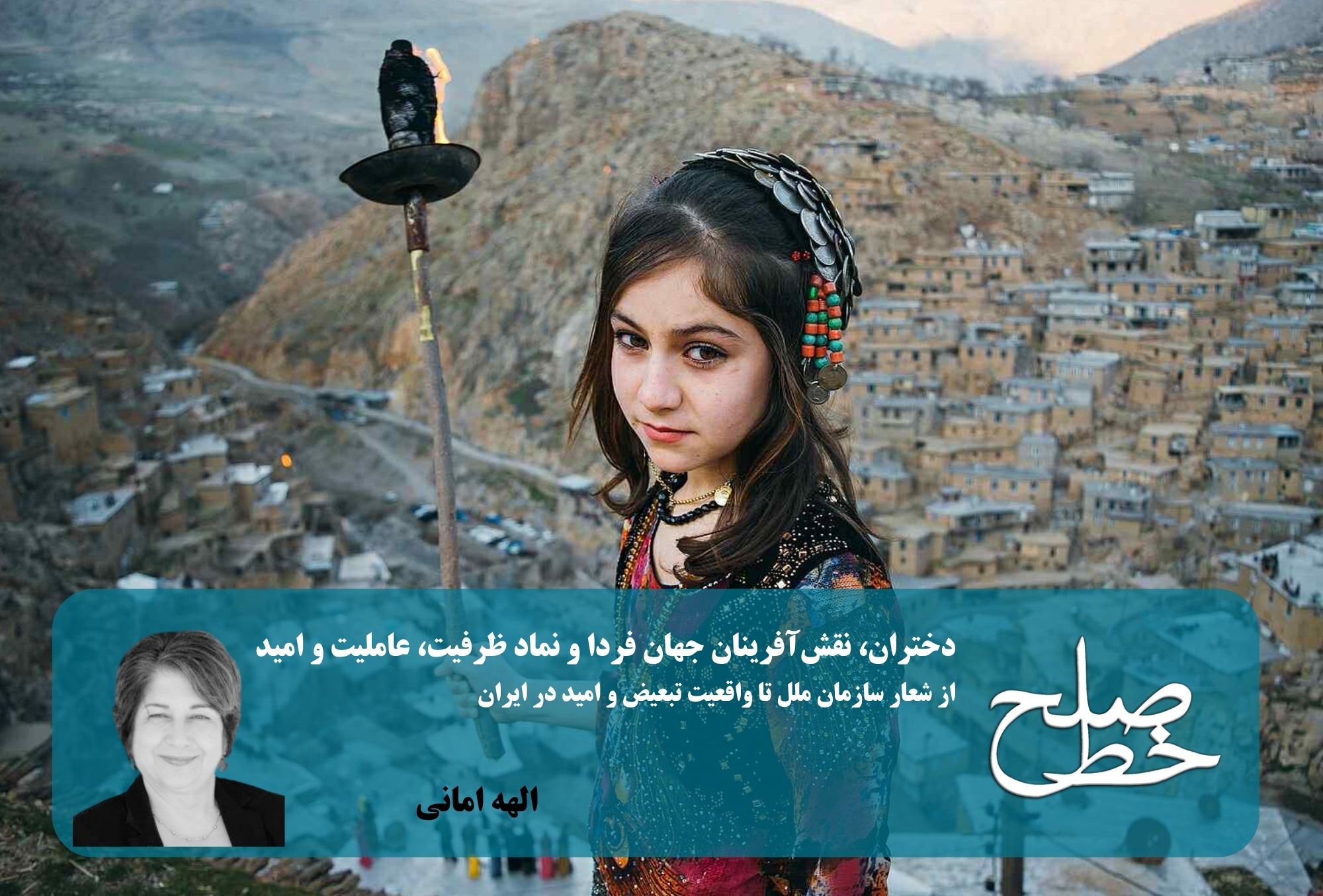
Girls: Architects of Tomorrow and Symbols of Capacity, Agency, and Hope/ Elahe Amani
In today’s world, girls are no longer mere observers of change; they are themselves the driving force behind transformation. By standing against discrimination, with an informed mind and active presence in society, they are redefining the path to the future. From classrooms to social movements, from scientific innovations to civic engagement, girls are symbols of hope, resilience, and change. Their role in building an equal, humane, and sustainable world is not only essential but also inspirational, because every empowered girl propels the world toward a better place.
Each year, in honor of the International Day of the Girl, a theme is selected. The theme chosen by the United Nations for 2025 speaks volumes about the significance of girls in the world’s future: “The Girl I Am, the Change I Lead.” This slogan calls for the recognition of girls’ leadership in confronting the multiple crises facing the world today.
The concept of the “Girl Child” and the United Nations’ efforts toward the rights and empowerment of girl children have evolved over decades of activism embedded in the broader struggle for gender equality. At the heart of these efforts lies the International Day of the Girl Child, established to highlight and address the unique challenges girls face globally.
The International Day of the Girl was initiated by the “Because I Am a Girl” campaign of Plan International, aimed at drawing global attention to structural discrimination against girls and advancing their right to education, health, and protection from violence. Gender equality activists and advocates for girls’ rights in Canada, in collaboration with Plan International, appealed to the UN General Assembly to adopt this international day. On December 19, 2011, the United Nations formally endorsed it. The first celebration of this day was held on October 11, 2012, focusing on “Empowering Girls and Investing in Them” as a necessity for breaking cycles of discrimination and poverty.
The UN’s work on girl children falls within its broader gender equality commitments—especially Sustainable Development Goal 5 (SDG 5), which calls for ending discrimination and violence against women and girls, abolishing harmful practices such as child marriage and female genital mutilation, and ensuring equal access to education, leadership, and reproductive health. However, all Sustainable Development Goals, especially Goal 5 on gender equality, show a significant gap between expectations and actual progress, and in many countries—including the United States and some Eastern European nations—there have even been setbacks.
Agencies such as UNICEF, UN Women, UNESCO, and the United Nations Population Fund (UNFPA) coordinate their awareness and anti-discrimination programs with civil society organizations in various countries. These efforts largely include campaigns to improve girls’ digital literacy, ensure equal access to education, encourage their participation in science, and tackle climate crises.
Several major initiatives, supported by the United Nations, have addressed structural barriers to girls’ empowerment:
The United Nations Girls’ Education Initiative (UNGEI) was launched in 2000 by then-UN Secretary-General Kofi Annan. This program coordinated the efforts of governments, civil society organizations, and UN agencies to close the gender gap in education and remains one of the leading bodies promoting gender-responsive educational systems.
Education Plus (2021–2025) is a joint effort led by UNAIDS, focusing on secondary education and empowerment of adolescent girls in sub-Saharan Africa. It links education with health, HIV prevention, and economic independence.
UNICEF’s educational programs include various initiatives that promote girls’ rights, education, health, and empowerment to combat the many obstacles they face from childhood to adolescence. Notable among these is the “Skills for Girls” program, which prepares adolescent girls for higher education and meaningful employment by teaching 21st-century skills such as science, technology, entrepreneurship, digital literacy, and life skills. Additionally, the joint UNFPA-UNICEF program to end child marriage operates in countries with high early marriage rates. Its goal is to prevent child marriages, keep girls in school, offer life skills and reproductive health education, and change harmful norms through community dialogue and participation. UNICEF also runs programs to end female genital mutilation, expand access to education, and improve menstrual hygiene management—transforming schools into safe, inclusive, and supportive environments for girls. Overall, UNICEF integrates a comprehensive approach to gender equality in education, protection, health, and empowerment, aiming to remove structural inequalities—such as poverty, discrimination, and restrictive norms—while establishing systems that empower girls as agents of change. By embedding these efforts within national development frameworks and SDGs, UNICEF not only supports girls but also promotes their active role in building more equal, resilient, and humane societies.
The Beijing Platform for Action (1995): The concept of the “Girl Child” was formally recognized at the Fourth World Conference on Women in Beijing as one of the twelve critical areas of concern in the Beijing Declaration and Platform for Action. This milestone marked the first time that the status and rights of girls—distinct from women or boys—were recognized as a central issue in international policymaking and advocacy by the 189 participating governments. Before the Beijing Conference, development and human rights data showed that girls faced deeper discrimination and vulnerabilities compared to boys in various areas of life, including education, health, nutrition, and access to opportunities. Girls were more exposed to malnutrition, denial of education, early marriage, and gender-based violence—a harsh reality that revealed age and gender as dual axes of inequality. Including the “Girl Child” in the Beijing document created a global framework for action to eliminate discrimination, ensure their full growth and participation, and protect them from exploitation and abuse. This framework also laid the groundwork for future initiatives, including the International Day of the Girl Child (recognized by the UN in 2011) and the inclusion of girls’ empowerment in the Sustainable Development Goals (SDGs), solidifying girls’ status at the heart of the global human rights and development agenda.
Each year, the International Day of the Girl provides a platform to amplify girls’ voices and renew commitments to their advancement and well-being. With a specific theme chosen annually—ranging from combating gender-based violence to expanding access to science, technology, engineering, and math (STEM) fields—governments and organizations are prompted to assess progress and refocus on their promises. Overall, the UN’s frameworks—emphasizing education, leadership opportunities, and equal access as the driving force behind sustainable development—have transformed the notion of “Girl Child” from a symbol of vulnerability to one of capacity, agency, and hope.
Discrimination Against Girl Children, 30 Years After the Beijing Conference
Global data indicates that discrimination against girl children remains widespread across sectors including education, health, safety, and economic opportunity. While progress has been made since the Beijing Platform for Action in 1995, persistent inequalities continue to shape the lives of girls around the world.
Educational Disparities
According to the World Bank and UNESCO, nearly 121 million girls (34 million of primary school age and 87 million of secondary school age) are out of school globally. Although two-thirds of countries have achieved gender parity in school enrollment, completion rates remain lower for girls—especially in low-income and conflict-affected regions. In these settings, girls are 2.5 times more likely than boys to be out of school and 90% more likely to miss out on secondary education. Globally, 4 out of every 10 adolescent girls and young women do not complete secondary school, and 50 million remain illiterate.
Digital and Economic Inequities
Digital inequality exacerbates educational gaps. In low-income countries, 9 out of 10 adolescent girls lack internet access, and their male peers are twice as likely to be online. In many countries—especially in South Asia and sub-Saharan Africa—girls aged 15–19 are three times less likely than boys to be in school, employed, or receiving training.
Gender-Based and Sexual Violence
UNICEF reports that 650 million women and girls alive today experienced gender-based sexual violence during childhood. Approximately 50 million girls worldwide have suffered sexual violence, and 1 in 4 adolescent girls who are married or in relationships report partner violence. This violence is deeply intertwined with entrenched gender norms.
Harmful and Unsafe Cultural Practices
Despite some progress, child marriage and female genital mutilation (FGM) remain prevalent. One in five girls is married before the age of 18. While the global FGM rate has declined, achieving its eradication by 2030 requires a rate of decline 27 times faster than current trends. In 2025, the United Nations and its partner agencies estimate that nearly 4.4 million girls will be at risk of FGM—a number influenced by population growth in regions where the practice is common.
Health, Nutrition, and Reproductive Concerns
Adolescent girls remain disproportionately affected by malnutrition and early pregnancy. In 2025, about 12 million girls aged 15–19 and more than 325,000 girls aged 10–14 are expected to give birth. The proportion of girls aged 10–19 who are underweight has decreased by just 2% globally in recent decades, reflecting minimal improvement in key health outcomes.
Overall, discrimination against girls—both direct and structural—has been exacerbated by contemporary global challenges such as the rise of religious extremism, right-wing and fascist movements, deepening class divides, and the spread of armed conflict. Examples like Noor al-Dalou, a 19-year-old Palestinian girl who lost her mother, sister, niece, and both legs in the Gaza war, persist. Global organizations such as UNICEF, UN Women, and the World Bank emphasize that improving girls’ conditions requires allocating more resources toward girls’ education, digital skills, safety, and opportunities for social participation and health—investments with transformative impacts on society.
The Situation of Girls in Iran
In Iran, Girl’s Day has not been aligned with global goals or activism. It was designated on May 9, 2007 (29 April 2007), to coincide with the birthday of Fatemeh Zahra. Nevertheless, Iranian media also observe October 11 as the “International Day of the Girl Child.” Internationally, the term “girl” refers to a female under the age of 18 and is unrelated to concepts of virginity. The status of girls in Iran reflects deep-rooted gender inequalities across education, health, child marriage and fertility, gender-based violence, economic empowerment, legal protection, and political and social participation.
According to Iran’s Ministry of Education, during the 2023–2024 academic year, 928,729 children were out of school (1), a rise from the previous year, disproportionately affecting girls. Dropout rates in rural and deprived provinces are higher due to early marriage, economic hardship, and gender discrimination. Although literacy and enrollment rates for girls in primary and lower secondary education exceed 90%, access to upper secondary and university education is increasingly challenged by economic inequality and gender-segregated educational policies. In Sistan and Baluchestan, some girls attend school but receive no diploma because they lack birth certificates. In this province, 148,769 children aged 7–18 are deprived of public education for various reasons, with 81,325 of them being girls. According to Gholamreza Najafi, Deputy for Social Affairs and Crime Prevention at the Sistan and Baluchestan Judiciary: dropout rates are particularly alarming in upper secondary school, with 24% of 15–17-year-olds having left school—an issue that, in the long term, not only institutionalizes social harm but also triggers many developmental and social challenges. (2)
Regarding girls’ health, child marriage and adolescent fertility are of particular concern. The adolescent birth rate in Iran dropped from 5 per 1,000 girls aged 15–19 in 2020 to 4 in 2021, partly due to stigma and underreporting. Approximately 6.68% of women aged 15–49 in Iran use modern family planning methods, but access varies significantly between urban and rural areas. Sexual and reproductive health education—which is standard in secondary school curricula in other countries—is severely restricted in Iran. Mental health issues among adolescents are on the rise, fueled by poverty, social pressure, and forced marriages.
Child marriage remains one of Iran’s gravest issues. According to Girls Not Brides, 17% of girls marry before age 18, and 3% before age 15. Between 2021 and 2022, over 27,000 marriages of girls under 15 were officially recorded, with unregistered marriages still widespread in rural areas. Article 1041 of Iran’s Civil Code sets the legal age of marriage for girls at 13, and allows even younger marriages with court approval. Practices like temporary marriage (sigheh), “blood marriages”, and early betrothal remain common in tribal and marginalized communities.
Women and girls face systemic gender-based discrimination and lack legal protection from domestic and sexual violence. UN Women data shows that 6.17% of women aged 15–49 experienced physical or sexual violence by an intimate partner in the past year. Legal exemptions—such as Article 301 of Iran’s Islamic Penal Code, which exempts fathers and paternal grandfathers from the death penalty if they kill their daughters—undermine accountability for violence against girls. Honor killings of girl children, such as Romina, Rojin, and hundreds of others, highlight the devastating effects of patriarchal laws and outdated beliefs. Girls, like women in Iran, are often forced by poverty to sell their labor cheaply in the informal economy. Women’s labor force participation in 2024 was a mere 4.13%, compared to 66.3% for men. As such, adolescent girls’ participation in formal employment or entrepreneurship is virtually nonexistent, due to gender segregation, early marriage, discriminatory laws, and a patriarchal cultural narrative. Girls from low-income families contribute significantly to unpaid care and domestic work, spending over one-fifth of their productive time on these tasks.
In terms of political and social participation, women hold only 6.5% of the seats in Iran’s parliament (as of February 2024), indicating minimal political inclusion. Girls’ and young women’s social participation is limited due to restrictions on mixed-gender activities, family mistrust in public safety, and other barriers. Yet, despite these challenges, high school girls are active in many civil society organizations—especially in major cities—working on environmental issues, supporting child laborers, aiding the underprivileged, and protecting animals. Still, their potential, like that of all women—half the population—remains underutilized due to structural restrictions and the political will of those in power with regressive ideologies.
Internationally, some countries allow youth aged 16 and 17 to vote, although higher ages are required for candidacy. In many nations, youth under 18 participate in government and city or state commissions to voice their generation’s concerns. We live in a world where girls, as future leaders of humanity, bring hope to the global stage. Notable examples include:
Malala Yousafzai, the young Pakistani activist who championed girls’ right to education and won the Nobel Peace Prize at age 17 in 2014.
Sophie Cruz, who gained recognition in 2015 when, at age 5, she crossed barriers at the National Mall in the U.S. to hand Pope Francis a letter asking him to prevent her parents’ deportation. She is now 15 and an active social and political advocate for refugees and immigrants.
Marley Dias, a 16-year-old American activist and author who launched the #BlackGirlBooks campaign to challenge stereotypes and promote stories featuring Black girls as protagonists.
There is no doubt that Iranian society has thousands upon thousands of girls capable of becoming influential and renowned, challenging the discrimination imposed upon them. The Women, Life, Freedom movement brought many of these girls to the streets, and some, like Sarina and Nika, lost their lives at a young age in their pursuit of political and social engagement.
Legally, although Iran has signed the Convention on the Rights of the Child (CRC), it has failed to align domestic laws with its international obligations. In Iran, the age of criminal responsibility for girls is 9 lunar years, enabling severe prosecution of children. Iran has neither signed nor ratified the Convention on the Elimination of All Forms of Discrimination Against Women (CEDAW), depriving girls of international mechanisms to pursue gender-based rights violations.
Evidence shows that Iranian girls face institutionalized structural discrimination embedded in national laws, with severe restrictions on education, social mobility, personal autonomy, and political and social participation. In this context, the International Day of the Girl Child in Iran is a reminder of a bitter truth: the daily challenges Iranian girls face are the result of intertwined factors such as discriminatory laws, entrenched patriarchy, and economic inequality—problems that persist due to the lack of political will to improve children’s lives. Until these structures are reformed and girls are recognized as human beings with equal rights, this day remains a painful reminder of the suffering of millions of Iranian girls. Yet history has shown that Iranian girls—through civil resistance regarding dress codes and tireless pursuit of what they believe they deserve—have the power to challenge patriarchal power dynamics and the discrimination and deprivation imposed upon them.
Empowering girls is not only their right but a cornerstone of societal health and progress. Every small step in reversing discrimination—from creating safe schools to allowing choice of clothing, to enabling motorcycle and bicycle riding, to fostering political and social participation, to allocating budgets for girls’ development, and enacting fair laws that bridge the deep inequalities between major cities and border provinces—is an investment in building a more humane, freer, and equal future.
As Eleanor Roosevelt aptly reminded us: “The future belongs to those who believe in the beauty of their dreams.” Iranian girls believe in their collective and beautiful dreams, and they stand fearlessly at the forefront of structural transformation to build that future.
Footnotes:
1- Decrease in dropout rates and increase in number of children out of school, ISNA, May 15, 2025 (26 Ordibehesht 1404).
2- Alarm bells for school dropouts in Sistan and Baluchestan: from poor planning to traditional culture, IRNA, August 28, 2024 (6 Shahrivar 1403).
3- Girls’ Goals: 30 Years of Unequal Progress for Adolescent Girls, UNICEF USA.
4- Girls’ Goals: What Has Changed for Adolescent Girls? Joint report by UNICEF USA, Plan International, and UN Women, UNICEF USA.
5- Review of Girls’ Education, World Bank.
6- Sustainable Development Goals, UN Statistics Division.
7- Key Data on Girls’ and Women’s Right to Education, UNESCO.
8- 30 Years of Progress on Gender Equality: Achievements, UN News.
9- International Day of the Girl Child 2025 Statement, Global Campaign for Education.
 Created By: Elahe Amani
 October 23, 2025
Tags
Elahe Amani Gender inequality Girl child International Day of the Girl Child Malnutrition Malnutrition in children Marriage of young girls peace line United Nations ماهنامه خط صلح