


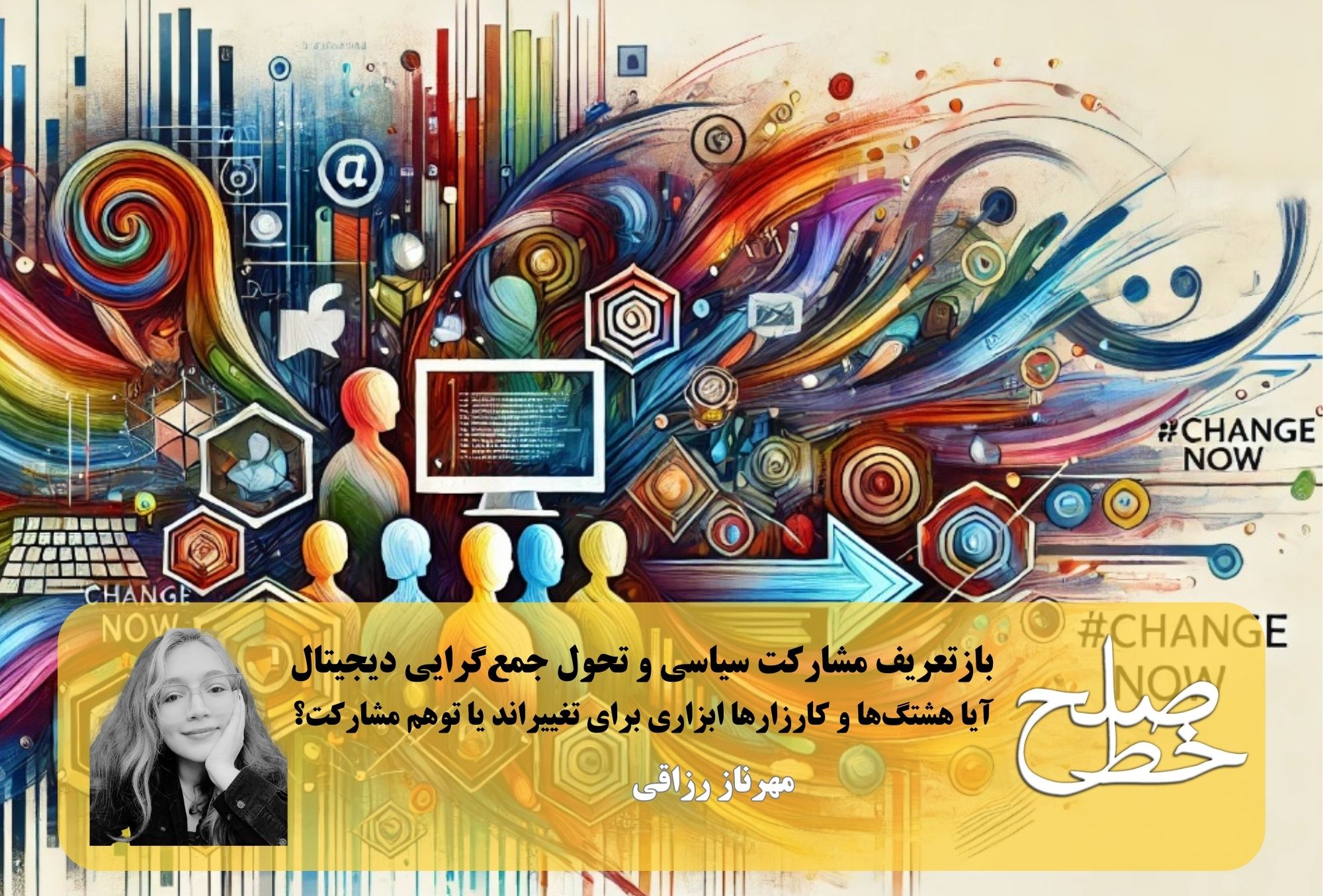
Are Hashtags and Campaigns Tools for Change or Illusions of Participation?/ Mehrnaz Razaghi
Today, social media has become a key platform for activism, enabling everything from public support for political and social causes to the organization of protests. This digital space gained even more significance during the COVID-19 pandemic when people turned to digital media more than ever before. Now, every gathering or protest is not just a street event but also a live spectacle on Instagram profiles, X (formerly Twitter), TikTok, or Telegram. From the “Arab Spring” to movements like “Me Too” and “Black Lives Matter,” these networks have shaped collective identities and created powerful transnational movements. Yet, amidst these achievements, doubts persist. Platforms once promising equality and freedom have transformed into commercialized spaces where economic interests dominate. These platforms, instead of protecting activists from harassment and hate speech, now enable governments, lobby groups, and even far-right movements to flex their power. This paradox places digital activism at a crossroads: while more tools are available to amplify movements, can these platforms still fulfill their liberating potential?
Online Campaigns: Effective Tools for Change or Limited Impact?
Online campaigns, a hallmark of digital activism, play a pivotal role in drawing public attention, pressuring decision-makers, and driving social change. These campaigns leverage the power of social media to enable rapid and widespread mobilization. A simple request can become the voice of millions. In Iran, online campaigns have exemplified digital activism, swiftly prioritizing social and political issues in the public consciousness. From protests against the destruction of Qeytarieh Park to calls for the removal of Tehran’s mayor or demands to lift internet censorship, these campaigns have amplified the voices of diverse societal groups. By utilizing social media, these movements have garnered broad support and exerted pressure on policymakers. However, challenges like censorship, internet restrictions, unresponsive institutions, restrictive algorithms, and the commercialization of platforms can limit their effectiveness.
Emotional Communities, Playful Activism, and the Power of Online Campaigns
Emotions—especially positive ones—are the driving force behind today’s digital activism. They not only encourage individuals to participate but also ignite sparks that spread through social media, creating widespread waves. The concept that explains this phenomenon is “Affective Publics”: groups formed around the expression of emotions, fostering a sense of empowerment and solidarity among members. These communities, by creating a sense of belonging and shared purpose, can become a platform for social change.
Hashtags play a crucial role in forming these communities. This simple yet powerful tool brings together individuals with similar concerns, reflecting collective emotions on a global scale. From global protests against racism under the hashtag #BlackLivesMatter to the “Me Too” movement against sexual violence, hashtags have facilitated awareness and collective mobilization. However, this space is not exclusive to progressive movements. Far-right groups have also utilized alternative networks and digital techniques to advance their goals.
TikTok has introduced a new dimension to digital activism. Through features like filters, narrative memes, creative videos, and hashtags, it offers a space for “playful activism.” The platform allows individuals to convey their messages creatively and engagingly, reaching new audiences. Palestinian activists, for example, have used this space to offer novel narratives about their struggles, while climate activists have fostered a sense of “shared concern” about environmental and climate crises. Iranian TikTokers, through their creative humor, have raised critical voices about the country’s political and social landscape.
Online campaigns in the digital age serve as effective tools for social and civil policymaking, enabling public mobilization and fundamental changes in political and social structures. By using social media and digital platforms, individuals and groups can simultaneously amplify their voices globally, addressing issues such as human rights, social justice, and environmental concerns. The power of these campaigns lies in their unique characteristics, such as speed, global accessibility, and low costs.
One prominent feature of online campaigns is their rapid global spread. Unlike traditional methods, which require significant time and resources for organizing protests, online campaigns can quickly scale from local to global levels. This process is particularly vital during crises like human rights violations, wars, or environmental disasters. Campaigns can instantly disseminate information and attract numerous participants worldwide.
In terms of costs, online campaigns have a significant advantage. Unlike street protests or other forms of activism that require substantial financial resources, equipment, and physical presence, online campaigns leverage digital platforms to achieve broad impacts with minimal costs, requiring only an internet connection. This is especially advantageous for social and political groups with limited resources, including human rights movements in developing countries.
Moreover, online campaigns can lead to significant cultural and social changes. By providing information, raising awareness, and mobilizing the public, these campaigns can deeply alter societal attitudes. However, challenges remain in advancing online campaigns. A major issue is the risk of misinformation. Campaigns can easily become targets for spreading false or misleading information, which can undermine their effectiveness. Although these campaigns are used as democratic practices, government surveillance and filtering can pose serious obstacles to achieving their goals. In authoritarian countries, governments restrict access to campaigns by blocking websites or imposing strict limitations.
Digitalization of Political Discourse or Political Consumerism?
In today’s world, digitalization has become a transformative force not only in economic and social spheres but also in the political realm. Political discourses are increasingly shifting online, where opinions and ideas can quickly reach thousands of people worldwide. However, this digitalization can manifest in two different ways: on one hand, it promotes political awareness and public participation, while on the other, it may lead to political consumerism and the polarization of social and political conflicts.
One of the key benefits of digitalizing political discourse is access to information and free exchange of ideas. Social media platforms like X (formerly Twitter), Instagram, and Facebook have become tools enabling politicians, activists, and citizens to share their opinions rapidly. In this space, online campaigns have become effective tools for drawing public attention to various issues. These campaigns are typically created to gain support for an idea, legislative reforms, or protests against specific policies, allowing citizens to participate in political processes even if they are not physically present in political circles.
Furthermore, the digitalization of political discourse helps expose corruption, abuses, and injustices. This has become increasingly important in promoting democracy and human rights. Social media can act as a catalyst, connecting people and driving social and political change.
Despite the advantages of digitalization, the risk of the online space becoming a hub for political consumerism exists. In this context, people may merely consume content and follow political news without taking concrete action. This form of political consumerism limits public awareness of social and political issues to superficial news and attractive content rather than in-depth analysis and genuine participation in political processes. Political consumerism in the digital space may expand in a way that people seek to confirm their own opinions online rather than engage in deeper discussions. Consequently, not only does political thought lose depth, but social responsibility and genuine participation in public affairs also diminish. This process could weaken civil society and reinforce superficial and short-term policies.
Online campaigns, particularly those developed in recent decades using digital platforms, are one manifestation of the digitalization of political discourse. These campaigns can effectively garner public support for specific ideas and demands. Some campaigns, such as those calling for legal changes, supporting human rights, and combating corruption, have achieved significant global success. But the question remains: do these campaigns lead to real changes, or do they merely occupy consumers with superficial and symbolic engagement?
In reality, many online campaigns are limited to gathering signatures and public support rather than fostering deep political and social engagement. These campaigns may not produce tangible impacts on laws and policies unless accompanied by practical actions and pressure from social groups and legal institutions. In other words, campaigns alone cannot bring about structural changes in a country’s policies unless they evolve into broader social movements.
Conclusion
In today’s world, political participation is no longer confined to street protests or traditional gatherings. The expansion of digital spaces has brought profound changes in how social protests and participation occur. Online social networks have become a new battleground for political activists, where a single hashtag can mobilize millions and drive global change.
This digital transformation eliminates the need for traditional media and geographic borders, enabling activists to make their voices heard worldwide from any location. Online campaigns are powerful tools with high speed and low costs. With a single click, millions can join a cause, create change, and even compel politicians to respond.
However, this digital power comes with its own risks. In the world of platforms and online campaigns, dangers like filtering, censorship, and misinformation always loom. Sometimes, these tools, instead of facilitating positive change, become instruments for manipulating public opinion and undermining democratic processes. Moreover, campaigns that outwardly rise for social justice may, in practice, become “propaganda tools” focused more on stirring emotions and creating fleeting waves than achieving deep and lasting change.
Despite these challenges, there is no doubt that the digital space remains one of the most powerful tools for social change. If used correctly, these platforms hold the potential to create a future where people everywhere can influence policies and social transformations. These changes are not only essential for democracy but also for a fairer and more informed future than ever before.
References
1- Rachimoellah, M., Lubis, P. H., & Utimadini, N. J. (2024). Digital activism and political change: Challenges of social media’s impact on political development. Journal of Middle East and Islamic Studies, 11(3), 2.
2- Li, Y., Bernard, J.-G., & Luczak-Roesch, M. (2021). Beyond clicktivism: What makes digitally native activism effective? An exploration of the Sleeping Giants movement. Social Media + Society, 7(3).
3- Kyroglou, G., & Henn, M. (2017). Political consumerism as a neoliberal response to youth political disengagement. Societies, 7(4), 34.
 Created By: Mehrnaz Razaghi
 January 20, 2025
Tags
3 Peace Treaty 1653 Advertising campaign Digital power Freedom of life Hashtag Internet Mehrnaz Razaghi peace line Social networks Woman ماهنامه خط صلح ه چیز را دوست دارم I love everything.