


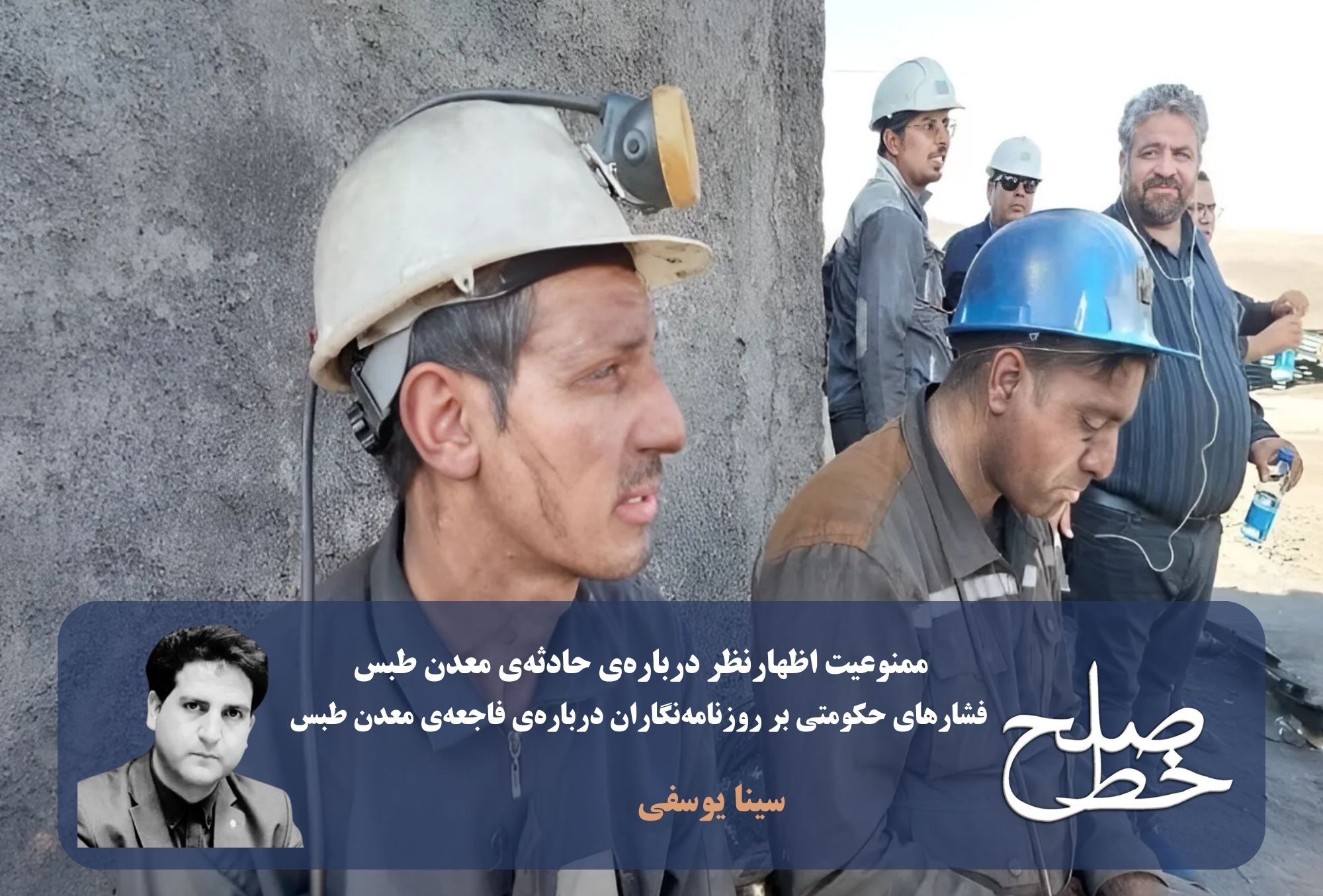
Government Pressure on Journalists Regarding the Tabas Mine Tragedy/ Sina Yousefi
The tragic “Tabas Mine” incident, which involved an explosion or collapse in one of the coal mines in the region, claimed the lives of several workers and left many families mourning. This incident is one of those bitter events that once again highlights the fundamental problems in the field of workplace safety and the lack of adequate oversight of mines in Iran.
In this mine, many workers were operating under difficult conditions with minimal safety measures. Unfortunately, while mining is considered one of the most dangerous jobs in the world, safety standards in Iran’s mines are often ignored. The occurrence of such accidents demonstrates that workers in this industry continue to fall victim to neglect of safety infrastructure and a lack of appropriate protective equipment.
In the aftermath of this incident, there was a widespread reaction from the public, media, and labor rights activists. Many experts and activists in this field believe that the failure to strictly enforce safety regulations and the lack of effective oversight by relevant institutions are among the primary factors contributing to such disasters.
Following this incident, significant criticism was directed at mine management and employers, as some believe that profiteering and disregard for workers’ rights played a major role in the occurrence of this event. Additionally, issues related to rescue equipment and emergency response were discussed, as the timing and quality of rescue operations in similar incidents are often inadequate and slow.
The Tabas disaster, beyond the grief and sorrow it brought, prominently revealed fundamental problems in the areas of workers’ rights, workplace safety, and employer responsibility. This incident showed that many of the country’s mines have become dangerous workplaces for workers due to a lack of investment in safety infrastructure and non-compliance with labor standards. Unfortunately, this is not the first time such a disaster has occurred in Iran’s mines, and it seems that as long as there is no fundamental shift in how these mines are monitored and safety laws are not more rigorously enforced, the likelihood of such accidents recurring remains high.
After this tragic event, the Attorney General banned any public commentary on the disaster. This decision sparked widespread reactions and debates. Such a ban meant restricting journalists and media activists from freely expressing their opinions about the causes and consequences of the incident. Some journalists were forced to delete their comments on various social media platforms, including X (formerly Twitter), where they had criticized the management of the mines, the government, and relevant officials. This action reflects the government’s pressure to control media narratives and prevent the spread of information that, by informing the public, might escalate public dissatisfaction or damage the government’s credibility. In such cases, authorities usually attempt to limit the flow of information for security, social, or political reasons and to disseminate news through official and controlled sources. Although this approach is ostensibly aimed at preventing the spread of rumors or exacerbating social protests, it also imposes serious limitations on press freedom and the public’s right to access information.
It can be said that the government’s approach to the media during the Tabas mine incident, by restricting freedom of speech and information, is in conflict with legal principles and has seriously violated some of the fundamental rights of citizens, which are recognized both in domestic and international laws.
One of the most important rights violated in such cases is the right to freedom of expression and information dissemination. This right is recognized in Article 24 of the Constitution of the Islamic Republic of Iran, which states that “publications and the press have freedom of expression except where it is detrimental to the fundamental principles of Islam or public rights.” Restricting public commentary on the Tabas mine tragedy, without valid legal grounds, is a serious violation of this principle. Additionally, according to international human rights norms, particularly Article 19 of the Universal Declaration of Human Rights and Article 19 of the International Covenant on Civil and Political Rights, which refer to the freedom of expression and the freedom to seek, receive, and disseminate information, every individual has the right to access and disseminate information through any media without interference. Government pressure on journalists to delete tweets and publish controlled news constitutes a blatant violation of these codified legal rights.
Furthermore, the right to access information is another important right violated in these government actions. According to the Law on the Publication and Free Access to Information, passed in 2008 in Iran, individuals have the right to access public information unless access to such information is contrary to the law. In the Tabas incident, the strict control of information and the ban on public commentary deprived the public and media of access to accurate and complete information about the dimensions of this disaster, which constitutes a violation of this right. Of course, the government’s approach to media professionals and civil activists critical of the government’s actions in this matter was not limited to the violation of freedom of expression and the right to free access to information. Judicial authorities, through security-related actions against any criticism, deprived protesting citizens of their right to criticize the government and officials’ actions, a fundamental principle of modern legal systems. This right, within the framework of freedom of expression and peaceful protest, is recognized in both domestic and international laws. In Iran, this right is confirmed in Article 27 of the Constitution, with the condition of “not carrying weapons and not being detrimental to the principles of Islam.” However, the restrictions imposed to prevent criticism and commentary on the performance of officials in this incident indicate a widespread and serious violation of this right.
Looking at the dimensions of this incident and the government’s actions, one can say that the Tabas mine tragedy symbolizes deep shortcomings in the country’s safety and management structures. However, instead of focusing on solving these problems, the government’s reaction has been to suppress freedom of expression and limit access to information. Judicial and security actions against journalists and media activists were not only an inappropriate response to public concerns, but these actions also exacerbated mistrust and a failure to acknowledge responsibility. It must be said that as long as, instead of silencing critical voices and planning to violate citizens’ rights and systematically suppress critics, the emphasis is not placed on transparency, accountability, and structural reforms, the likelihood of such disasters repeating will remain high.
 Created By: Sina Yousefi
 October 22, 2024
Tags
Attorney General Coal mine Freedom of speech Journalists Miner Miners peace line Peace Treaty 162 Sina Yousefi Tabas Mine The Tabas coal mine. Work accidents Worker safety Workers' rights ماهنامه خط صلح