


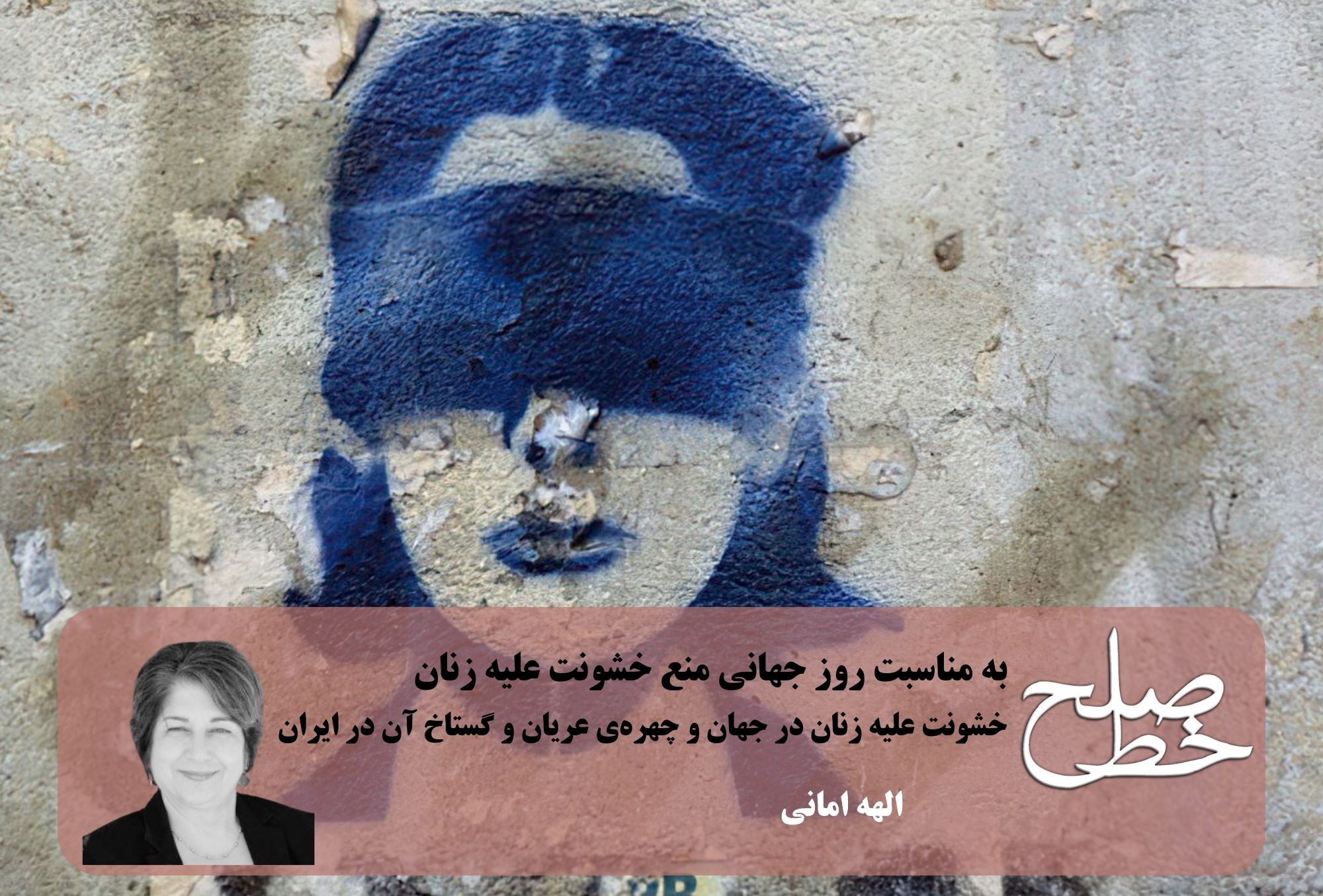
Violence against women in the world and its shameless and bold face in Iran / Elahe Amani
November 25th, which coincides with December 4th, is the International Day for the Elimination of Violence against Women. Violence against women is the root cause of gender inequality and the most widespread and pervasive symbol of human rights violations in the world.
Despite the fact that sixty-three years have passed since the assassination of the Mirabal sisters during the dictatorship of Rafael Trujillo in the Dominican Republic – which highlighted political violence against women and led to the adoption of this day as International Day for the Elimination of Violence against Women on October 17, 1999 – violence against women and girls has shifted from the margins to the center of global discussions and positive steps have been taken to prevent it on a global scale. However, the immense volume of sexual and gender-based violence remains one of the most challenging obstacles to achieving equality for all humans and respecting their human rights and dignity, with various bright spots in many countries around the world.
Various forms of sexual and gender-based violence.
Nowadays, women experience violence in private, public, social, and virtual spaces – as relatively new arenas. According to reports published on internet access from 2019 to 2022, 63% of women in the world have internet access and many of them experience various forms of sexual and gender-based violence in this space. This issue itself is a major barrier to empowering and promoting the political, economic, and social participation of women. The Economist Intelligence Unit, in a recent study, emphasized that 38% of women and girls who are present in the virtual space have experienced some form of gender-based violence, and 85% of women have witnessed or observed the harassment and abuse of other women in the virtual space.
Furthermore, according to the United Nations report, in the current world, despite the fact that 162 countries have laws supporting victims of domestic violence, many of these laws still lack effective implementation and accountability mechanisms. Additionally, nearly one billion women in the world live in countries where there is no legal protection against violence that women experience, and there is no punishment for acts of violence in the private sphere. Most of the countries that do not have laws against violence against women are located in Western Asia, the Middle East, and North Africa; including Syria, Yemen, Iraq, Iran, Sudan, Libya, and Armenia.
In general, in today’s world, approximately 736 million women (almost one in every three women) have experienced physical, sexual, emotional, and psychological violence from their intimate partners during their lifetime. The United Nations estimates that globally, only 40% of women who have experienced violence seek help, meaning that many cases of violence never become public.
The economic and social presence of women and the work environment is not exempt from violence, harassment, and sexual abuse. This is especially prominent in professions where women’s presence is relatively new, although the dominant discourse on gender in the workplace is constantly changing. According to a study conducted on women in the technology sector, 44% of women in this field have experienced some form of gender-based harassment and abuse. (1) Even in Western countries where sexual harassment and gender-based harassment are defined and laws have been developed in this regard, there are still numerous shortcomings in implementing these laws. The American Association of University Women has published a comprehensive report on the “chilling climate” in order to encourage girls and female students to pursue careers in technology, mathematics, and science, as well as to increase the presence of women in these fields. According to this report, women make up 34% of the workforce in these fields in America. Without a doubt, if such a comprehensive study were to be conducted
Environmental crises and its intersection with violence against women is one of the areas that has received more attention in recent years, and its damages, with a perspective of sexual-gender sensitivity, provide a clearer picture of the intersectionality of environmental crises and their impacts on the half of the world’s population. According to a recent report by the Organization for Economic Cooperation and Development (OECD) published in September of this year, women are more likely to lose their lives in these crises compared to men. Additionally, women are more vulnerable to economic insecurity and are more likely to be forced to leave their living environment compared to men. Women’s displacement with their families and children in a new space and environment makes their daily lives more challenging and exposes them to food and economic insecurity, as well as the experience of sexual-gender-based violence. Sexual assault and violence against women who are affected by environmental damages have been studied. One example is the experience of women after Hurricane Katrina in the United States, where 53.
The impacts and damages of major environmental crises on the level of violence against women and the gender roles of women in various societies are one of the main reasons why the global community sees the widespread presence of women as key to effectively addressing and managing environmental crises at the highest level of decision-making today.
One of the other areas of violence against women is wars and military conflicts, both small and large. The intersection of war and violence with various forms of sexual and gender-based violence leads to catastrophic consequences and irreparable damages for women. In addition to the heavy human toll of these wars in general, women experience higher levels of sexual and gender-based violence. The capture of women and the lack of adequate facilities to quickly place women and children in a safe environment, along with the insecurity in terms of water, food, and health, results in much greater harm to women. Reproductive health and necessary care for pregnant women, which is limited or non-existent in times of war, also has significant negative effects on women and infants. According to a 2022 report by the United Nations, it is estimated that 600 million women and girls live in conflict-affected and highly militarized areas. (2) At the beginning of the Hamas-Israel conflict, 5,000 pregnant women were residing in
In addition, the conditions of war and insecurity have led to a significant increase in the harm, arrest, imprisonment, torture, and political violence against women human rights defenders and activists of the women’s movement and feminists. During the years 2022-2020, political violence against women has increased by 50%. 73% of female journalists have experienced violence in the virtual space, and 20% of them have also experienced violence in the public space following violence and harassment in the virtual space. Additionally, 82% of women who have been present in parliaments around the world have reported experiencing some form of psychological violence while in office. This violence includes receiving inappropriate images and harassment, humiliation, insults, sexual harassment, threats, and marginalization for their presence in politics and their activities.
Further investment to end violence.
The United Nations always provides guidelines to the global community to combat violence against women and promote gender equality. Unfortunately, in most cases, countries do not pay attention to these guidelines and there is a lack of political will to eliminate violence against women – even in countries where violence against women is considered a crime in the private sphere. This is despite the fact that violence against women always imposes a significant economic cost on countries around the world.
The current theme for November 25, International Day for the Elimination of Violence against Women, is “Increased Investment for Ending Sexual and Gender-Based Violence.” (3) Encouraging more investment in preventing various forms of violence against women is necessary because the world today pays nearly $1.5 trillion annually for the economic costs of violence against women. The cost of sexual and gender-based violence in the European Union is estimated at 366 billion euros, of which 79% (amounting to 289 billion euros) is the cost of violence against women. As an example to demonstrate the high cost and level of government investment (part of the budget) in supporting victims of violence and addressing existing gaps, it can be noted that only 0.04% of the European Union’s budget is allocated to shelters for women affected by violence. (4).
Invitation for investment with a focus on preventing violence, in addition to governments, also targets the private sector, which covers a percentage of the costs of violence against women (including absence from work, physical and psychological treatment costs). Foundations and organizations that financially support women’s institutions, human rights, anti-violence, etc. are also the target audience for this issue.
In a study, twelve countries that allocated a significant budget to prevent violence against women in private, public, and social spheres, and took actions in the areas of public education on violence, legislation, effective enforcement of laws, and new policies to respond to violence against women and support women’s organizations, women’s rights defenders, and research in this regard, have paid less economic cost. The positive effects of investing in preventing violence against women show that if there is political will and necessary budget along with mechanisms of freedom of expression and media in the areas of transparency and information dissemination on violence against women – which plays a key role in shaping culture – positive steps can be taken towards eliminating all forms of violence against women. It should be noted that Sustainable Development Goal 5 focuses on gender equality, which is one of the goals with the largest gap to achieve by 2030 globally.
One of the successful strategies in the field of eliminating violence against women is solidarity and collaboration with other movements that fight against discrimination and social divides. Without a doubt, the fight against violence against women intersects with movements such as anti-racism, anti-classism, anti-nationalism, and anti-religious discrimination. Additionally, the overlap and intersection of national and global efforts to combat environmental crises, war, instability, and global epidemics (such as COVID-19) which all deepen gender-based divides and make violence against women more widespread, is a global call for the active presence of women not only in social movements, but also in leadership and crisis management positions that all have significant impacts on gender-based violence.
The economic, social, and political participation of women, the expansion of women’s rights and freedoms, and encouraging conditions for addressing sexual and gender-based violence in the world today face serious challenges. The overall trend of growth in religious extremism in all religions, especially in countries with a Muslim majority, and the rise of right-wing and populist forces have posed serious obstacles and challenges to global efforts and struggles for gender equality and the elimination of sexual and gender-based violence. Both right-wing political forces and the growth of religious extremism emphasize the definition and redefinition of women’s roles and positions in the home and society. These inhibitory trends can be seen today from India to America, from Israel to Italy and other European countries, related to right-wing forces, and in countries such as Iran and Afghanistan, where religious extremism is in power, as well as in countries like Pakistan and Turkey, where right-wing and religious extremist forces are on the rise.
Naked and brazen face of violence against women in Iran.
Sexual and gender-based violence in Iran, like other countries in the world, occurs in private, public, social, and online spaces. However, these forms of violence are more prevalent in Iran than in most other countries (excluding Afghanistan). Violence against women in Iran is a clear example and a fundamental part of the definition of violence by the United Nations General Assembly, which defines it as any act of gender-based violence that results in physical, sexual, or psychological harm, including threats, coercion, or arbitrary deprivation of liberty, whether in public or private life.
The 1993 Declaration on the Elimination of Violence against Women also states that this violence can be perpetrated by individuals of the same gender, family members, and governments. Sexual and gender-based violence in the private, public, social, and even virtual spheres of Iran is a result of organized state violence that has violated women’s human rights for four decades and has not only failed to address various forms of violence, but has also produced and reproduced it.
The violence-ridden society of Iran blames women for the responsibility of sexual and gender-based violence in both private and public spheres. This accusation itself is a reflection of the patriarchal and anti-women mindset of the government, which once again puts women in a cycle of violence, accusation, humiliation, and degradation.
During the past four decades, not even one comprehensive research has been conducted on the dimensions and forms of violence in the family, including physical, sexual, emotional, and psychological violence, in Iran. The conditions and opportunities for conducting such research by civil institutions do not exist due to the violation of fundamental freedoms. Women’s and human rights organizations in Iran are oppressed, do not have financial resources, are not completely independent from the government, and do not have access to fundamental freedoms to conduct such research.
Although on the occasion of the International Day for the Elimination of Violence against Women in 2023, the global community emphasizes on increased investment from both government and private sectors, as well as civil institutions, to prevent various forms of violence, in Iran, the perpetrators of power have been showing for four decades that they not only do not have the political will to eliminate sexual and gender-based violence, but also systematically produce and reproduce them. The bill to protect the family through the culture of chastity and hijab, by adding more than 30 new crimes to the country’s criminal system and punishments – from detention to monetary fines – casts a darker shadow of organized violence against women and girls in Iran than ever before.
Such feminist policies, considering that 78% of countries in the world have allocated funds to combat violence against women in their budgets, mostly indicate that not only there is no political will in Iran to address violence against women, but also it is not possible to expect such a thing from the nature of those in power who themselves perpetrate state violence.
Alongside the lack of criminalization and disregard for protective laws for perpetrators of violence in private spaces, alongside organized state violence in public spaces, alongside laws that discriminate against women in matters of divorce, custody, and other issues, sexual-gender-based violence in virtual spaces and the workplace is neither defined nor addressed, and there is no accountability for these perpetrators by the government. The only possibility for holding perpetrators accountable for harassment and abuse in the workplace or other relationships in society is through social media and limited resources, while widespread violence in virtual spaces and social networks has created a very toxic and damaging environment for women.
In the face of all these challenges and various forms of violence, which are actually the desires of those in power and the patriarchal and regressive ideologies that are intertwined with the power dynamics of patriarchal and traditional norms in society, the movement for “women’s freedom” takes shape and sheds light of hope on a future free from gender and violence in one of the darkest periods of political life in Iranian society. Iranian women and girls will not remain silent in this historic battle. Let us be their voice…
Notes:
1- The status of women in the field of technology and startups,
Website.
Women Who Tech, 2020.
2- . (This text is incomplete and cannot be translated.)
Report.
The United Nations Women’s Commission in 2022…
3- Unite! Invest to prevent violence against women and girls.
Website.
United Nations Women’s Commission (Europe and Central Asia Section), November 10, 2023.
4- Gender-based violence costs the European Union 366 billion euros annually.
Website.
European Institute for Gender Equality, July 7, 2021.
 Created By: Elahe Amani
 November 22, 2023
Tags
Gender discrimination 2 Goddess Amani International Day for the Elimination of Violence against Women Monthly Peace Line Magazine November 25th peace line Peace Line 151 Preventing violence against women Sexual harassment Technology United Nations Violence Virtual space Women's rights