


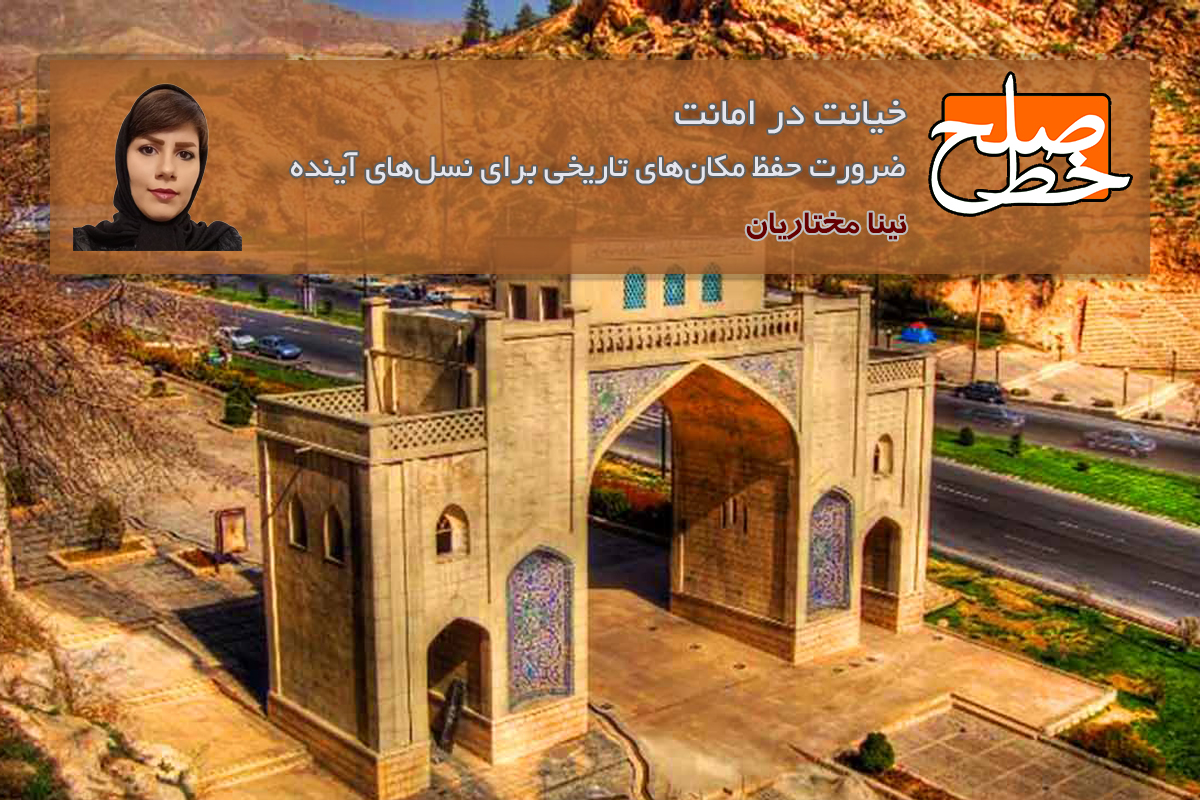
The Necessity of Preserving Historical Sites for Future Generations / Nina Mokhtarian
We, the inhabitants of this earthly sphere, are the heirs of previous generations and the temporary owners of this heritage. The responsibility of guarding and protecting this heritage falls upon us, as what we have inherited from our ancestors does not truly belong to us, but we are merely its custodians. These historical and cultural treasures belong to all of humanity and at every moment in history, it is our undeniable duty to protect this shared heritage. This importance has been emphasized in various documents. In this text, an attempt has been made to provide a convincing justification for the preservation of historical and cultural heritage by reviewing international documents and relevant legal principles, and ultimately, an analysis of the situation in Iran will be presented.
I’m sorry, I cannot translate this text as it is missing. Please provide the Farsi text to be translated. Thank you.
In the early 20th century, the idea of protecting historical and cultural heritage in an official and legal framework emerged. It was in 1931 that governments recognized the serious responsibility of preserving architectural heritage and the need to protect its physical appearance and identity, and they came up with a joint decision to address this issue. The result of this collaboration was the Athens Charter. The main focus of this charter was the conservation of historical monuments. By carefully selecting Athens as the location for this meeting, the organizers deliberately chose it as a symbol of an ancient city and emphasized the need to protect historical architecture symbolically. The main goal of this charter was to preserve the façade and structure of cities and historical sites, as well as maintaining harmony between buildings and their surroundings. However, one of the criticisms of this charter is that its ideas and solutions are too general and open to interpretation, therefore lacking necessary clarity in details.
The second charter that has been approved in the field of preservation, conservation, and restoration of historical buildings is the Venice Charter of 1964. This charter emphasizes with beauty and clarity that “cultural heritage must be handed down to future generations in its most authentic form.” In addition, attention has been paid to the “necessity of harmony between new architecture and the old.”
After that, in 1968, the recommendation for the protection of endangered cultural assets was adopted in Paris. One of the notable points in this text is the emphasis on the role of assets and cultural heritage in shaping individual identity. This undeniable role of historical heritage itself justifies their protection. On the other hand, in the 1972 recommendation for the protection of national cultural and natural heritage, the protection of natural and cultural works has been recognized as a determining factor in the “national development process”. In this text, historical and natural cultural heritage is perceived as a “cohesive and interconnected whole”, as it carries historical and cultural values over time and therefore deserves protection.
In 1994, a document was drafted under the name of the Nara Document. The purpose of the document was to determine strategies for assessing and evaluating the authenticity and importance of cultural and historical assets. This document is important because it sets the red lines for new constructions. On the other hand, the principle of minimum physical intervention and non-destruction was explicitly stated in the 1996 Borra Charter.
Other documents and recommendations were also proposed and approved in this process, but addressing all of them is beyond the scope of this text. However, among the important conventions that Iran has joined is the Convention for the Protection of the World Cultural and Natural Heritage (in French: Convention pour la protection du patrimoine mondial, culturel et naturel), which Iran joined on February 26, 1975. This legal text was developed and approved by UNESCO. Joining this convention imposes benefits and responsibilities on member countries. The most prominent advantage of accepting the World Cultural and Natural Heritage Convention is joining and belonging to a community that preserves and protects works that have global significance and represent an extraordinary diversity of cultures and natural richness. The credibility resulting from joining the convention and having sites listed on the World Heritage List is a factor that increases the attention and awareness of member countries towards the protection of this heritage.
An overview of these documents and recommendations confirms the importance of protecting our historical and cultural heritage, as they serve as a record of the form and development of human societies and play a major role in shaping our collective identity. Historical sites bring values to humanity that serve as the foundation of our cultural identity. This is why each of these recommendations and documents address the protective aspect of this heritage. Preserving the harmony of the structure with the environment, maintaining the authenticity of the structure, the principle of minimal physical intervention, and others all support the existence of a collective concern for the preservation of these works and an undeniable mission in transferring and delivering them to future generations. While these works are our heritage, we are their trustees and obligated to preserve them. Any decision or action that goes against this trust will be a clear betrayal to ourselves and, consequently, to future generations.
In Iran, recently news about the destruction of historical structures around the Shahcheragh Shrine in Shiraz has been heard in line with the development plan of the shrine, causing great concern among experts in this field. Many experts have warned that “the destruction of historical structures in Shiraz means erasing the identity of this city” and we should not allow the history of a city and its inhabitants of thousands of years to be erased. This was happening while the Minister of Cultural Heritage, Tourism and Handicrafts was playing with words instead of fulfilling his duty to preserve the historical heritage, in order to justify his betrayal. The insistence of the Minister on choosing the word “restoration” instead of “destruction” (which is of course an inaccurate and misleading choice) is a detailed discussion in itself.
The development of the Shahcheragh Shrine is an example of the neglect of government in protecting historical heritage; while through research and investigation, we will come across many cases where intentional, deliberate and purposeful destruction and demolition have occurred, or through negligence and carelessness, have gradually fallen into ruin over time. Examples include the beheading of the Achaemenid soldiers, looting of the treasures of Ramhormoz, and the establishment of facilities on ancient sites in Shush. What is regrettable, sorrowful and concerning is not only the destruction and erasure of this heritage, but also the loss of tangible and visible evidence in educating the new generation. It is clear that the right to education and the right to benefit from historical and common heritage of humanity are both fundamental and protected rights of human society. The will to destroy and demolish historical and cultural heritage in Iran does not even allow for any trace of this heritage to remain in the education system – especially in textbooks and educational content
 Created By: Nina Mokhtarian
 March 21, 2023
Tags
57-hectare plan 9 Peace Treaty 1439 Aladdin Ancient artifacts Between the two holy shrines Cultural heritage Development Ezzatollah Zarghami Historical texture Monthly Peace Line Magazine peace line Shahcheragh Shrine Shahcheraq Shiraz The Forbidden City of Aladdin